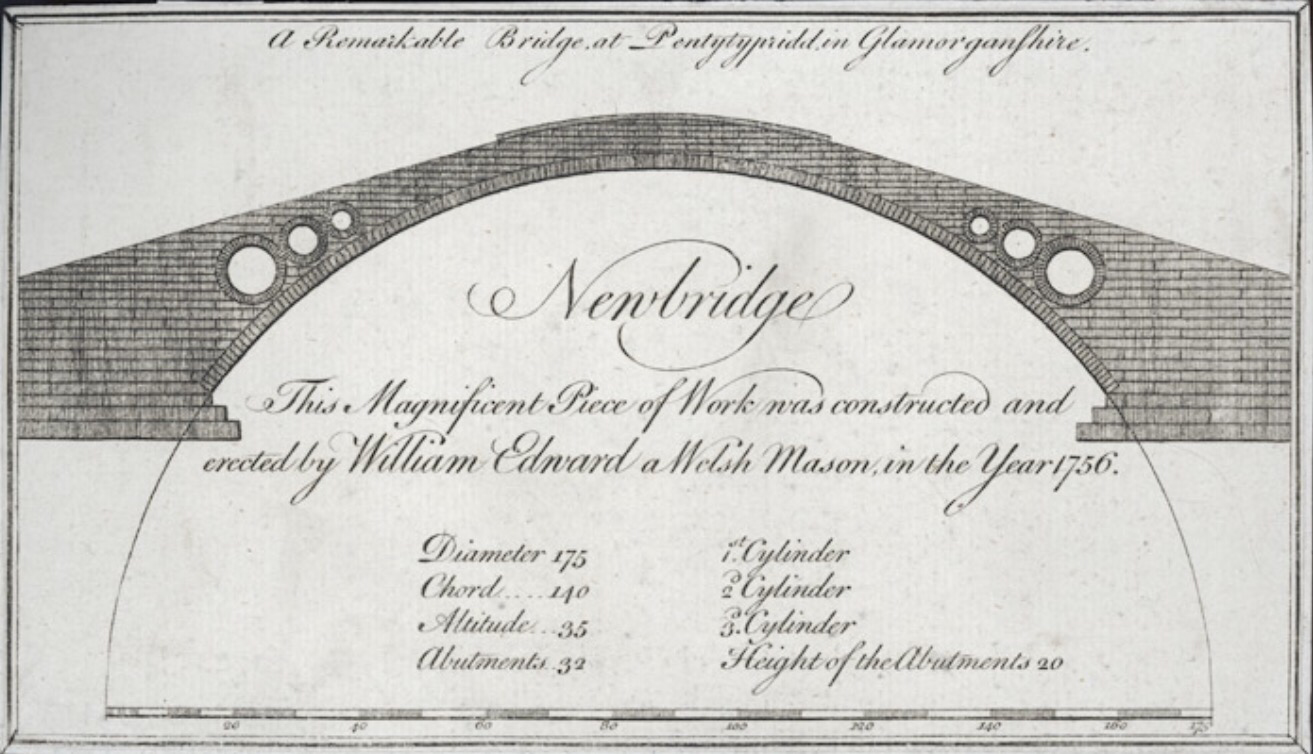

I’ve been reclaiming some bricks from a pile of debris I dug up from the base of an old shed in the garden. It’s been fun.
Then the inevitable questions were asked, “that’s lovely, but what are you going to do with a pile of old bricks?”
Finding a useful purpose for some less than perfect bricks was a challenge, but here’s the story…
It starts with a falling down old shed. Before anyone asks, yes, I did recycle the shed tin-sheeting. The cleared space now has bee hives.

That yielded a pile of mostly broken bricks.
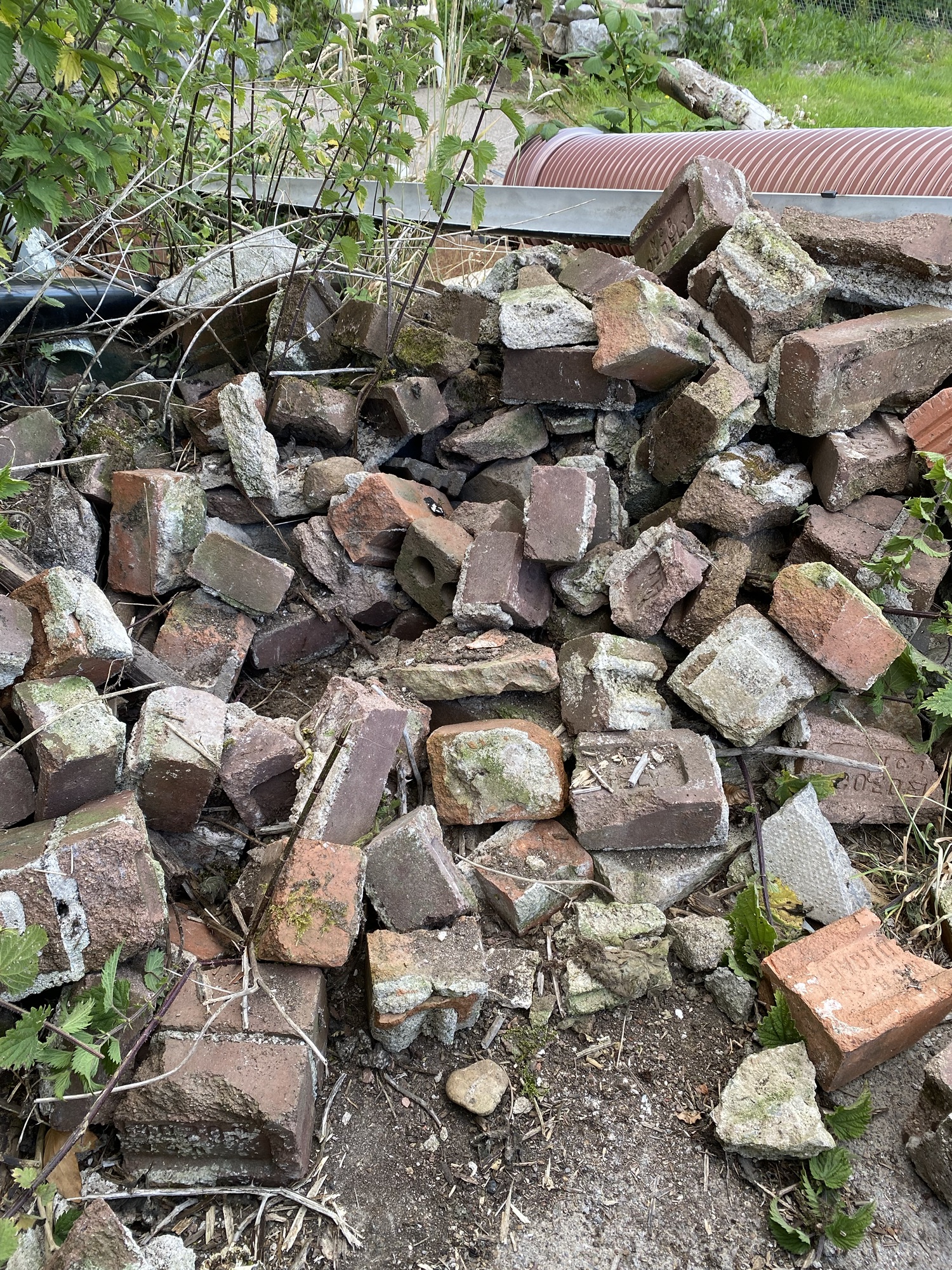
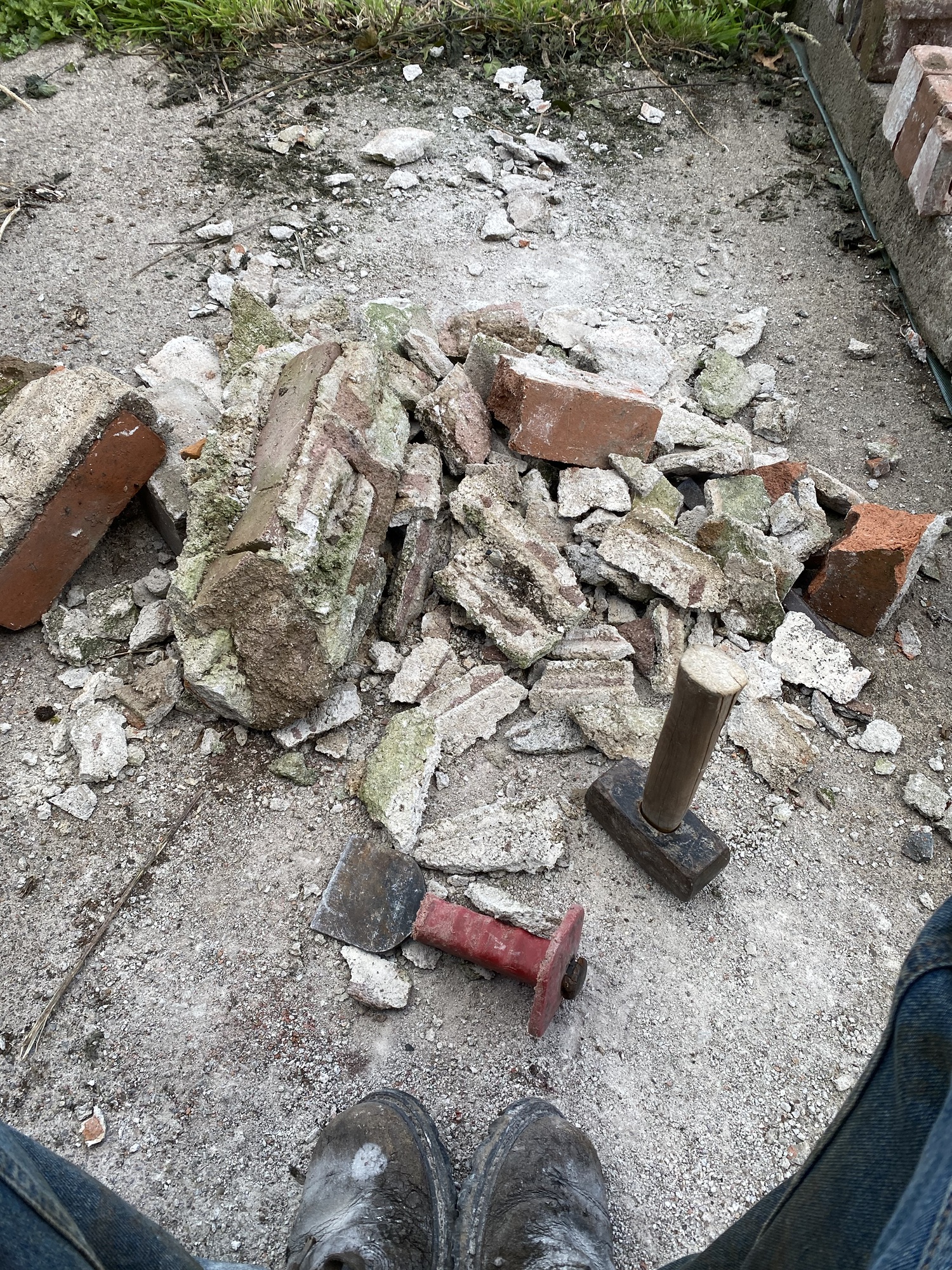
Getting a decent(ish) reclaimed brick involves a fair bit of chiselling off lime mortar – these are quite old bricks I think. Chiselling lime mortar off bricks is a strangely soothing pastime.
Trahlaah! And your bricks emerge. Some lovely NCB TREDEGAR and NCB COEDELY.

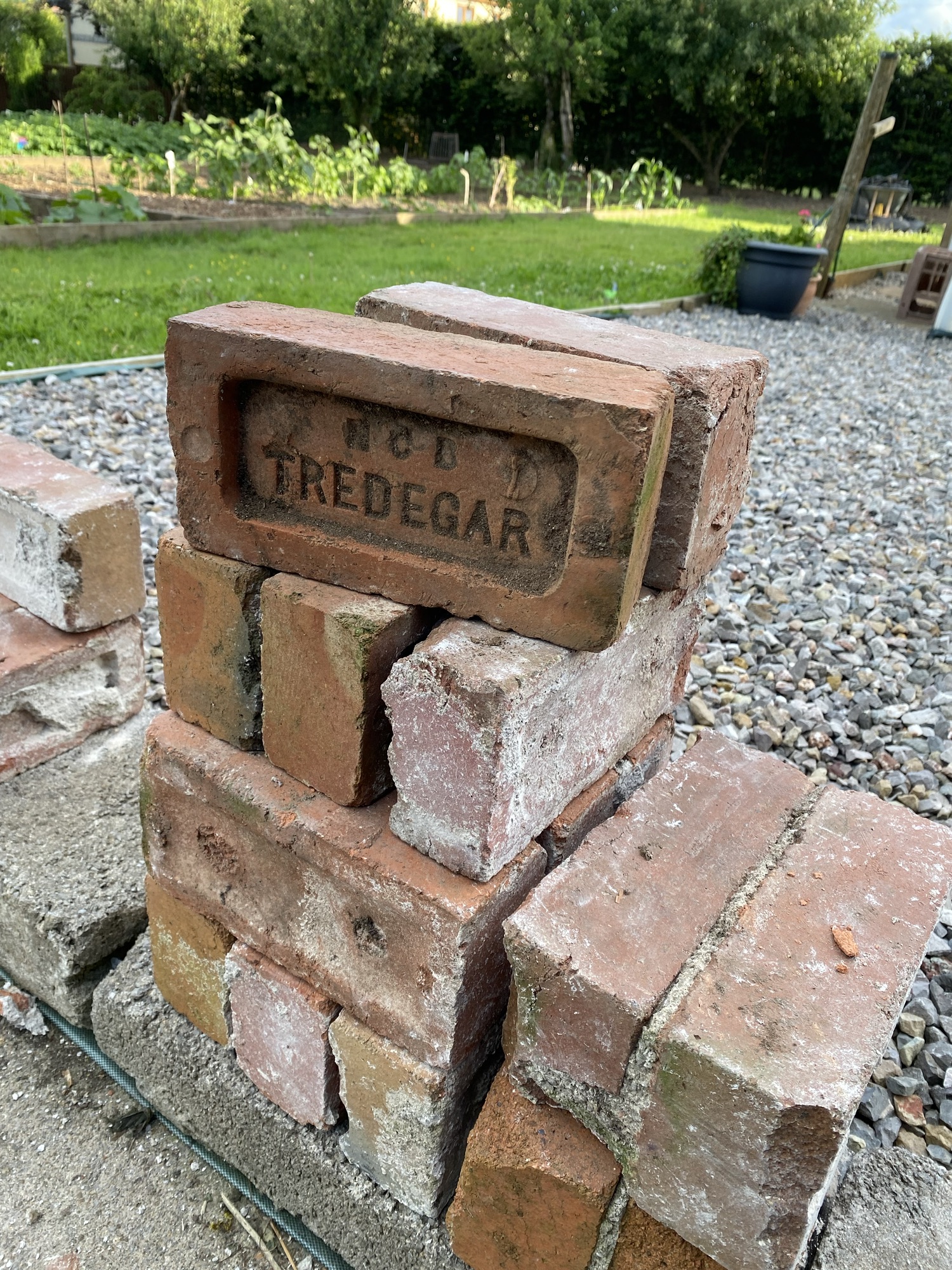
I’m no expert on brick quality, but the NCB TREDEGAR bricks felt like far better quality than the NCB COEDELY – possibly ‘seconds’ if there’s such a thing. NCB stands for National Coal Board. These bricks were manufactured at NCB Coal Mine sites, sometime between the 1940s and 1980’s
So, what did I do with the bricks? There weren’t enough to build a pizza oven (a secret fantasy) and they probably aren’t the right type of brick.
However, there was a spot between a stone hardstanding and grassed area that needed a bit of tidying up. A brick border felt like the perfect solution.
Here’s the 3m of reclaimed brick edging. Far more attractive than reclaimed concrete pavers.
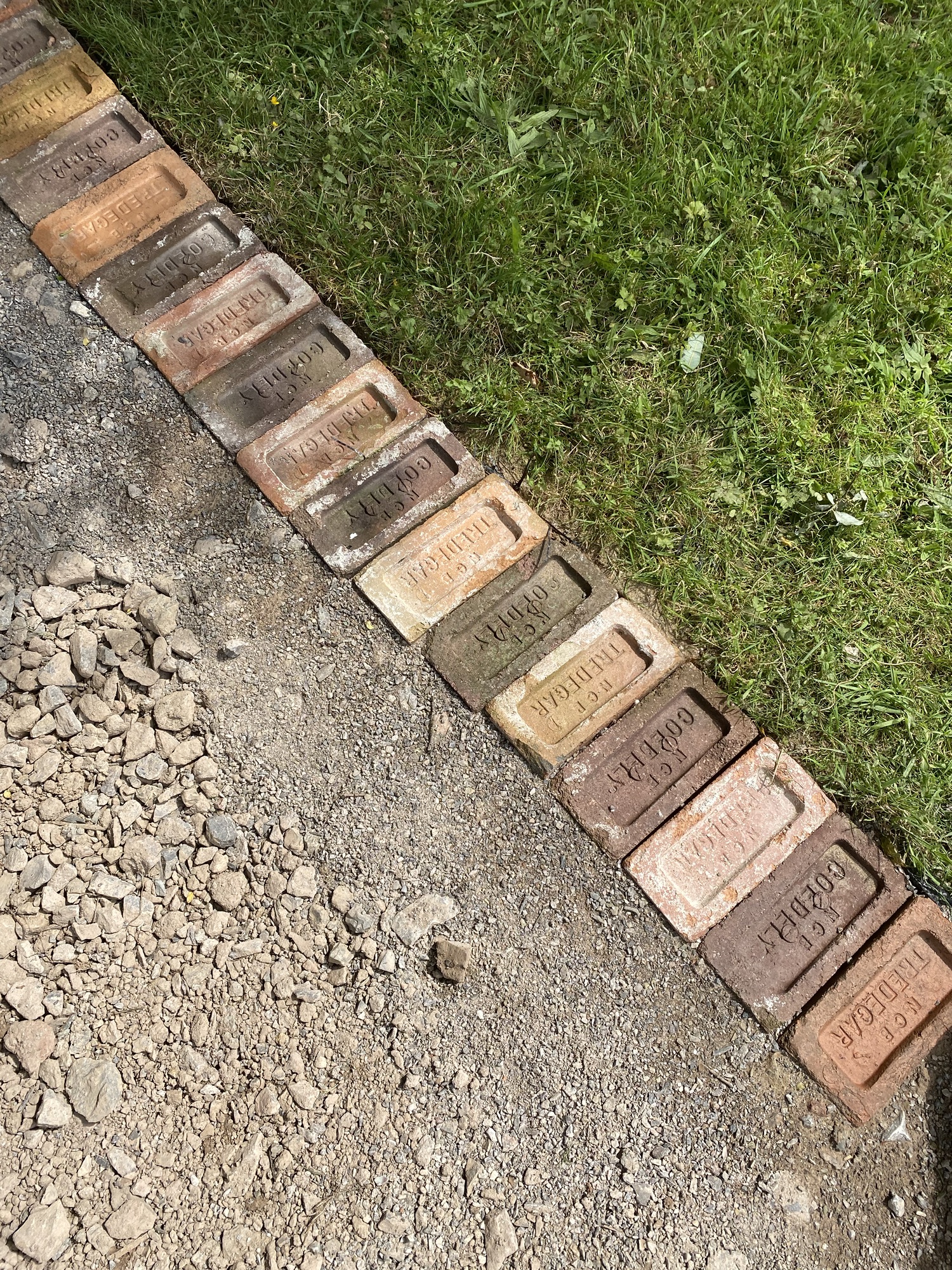
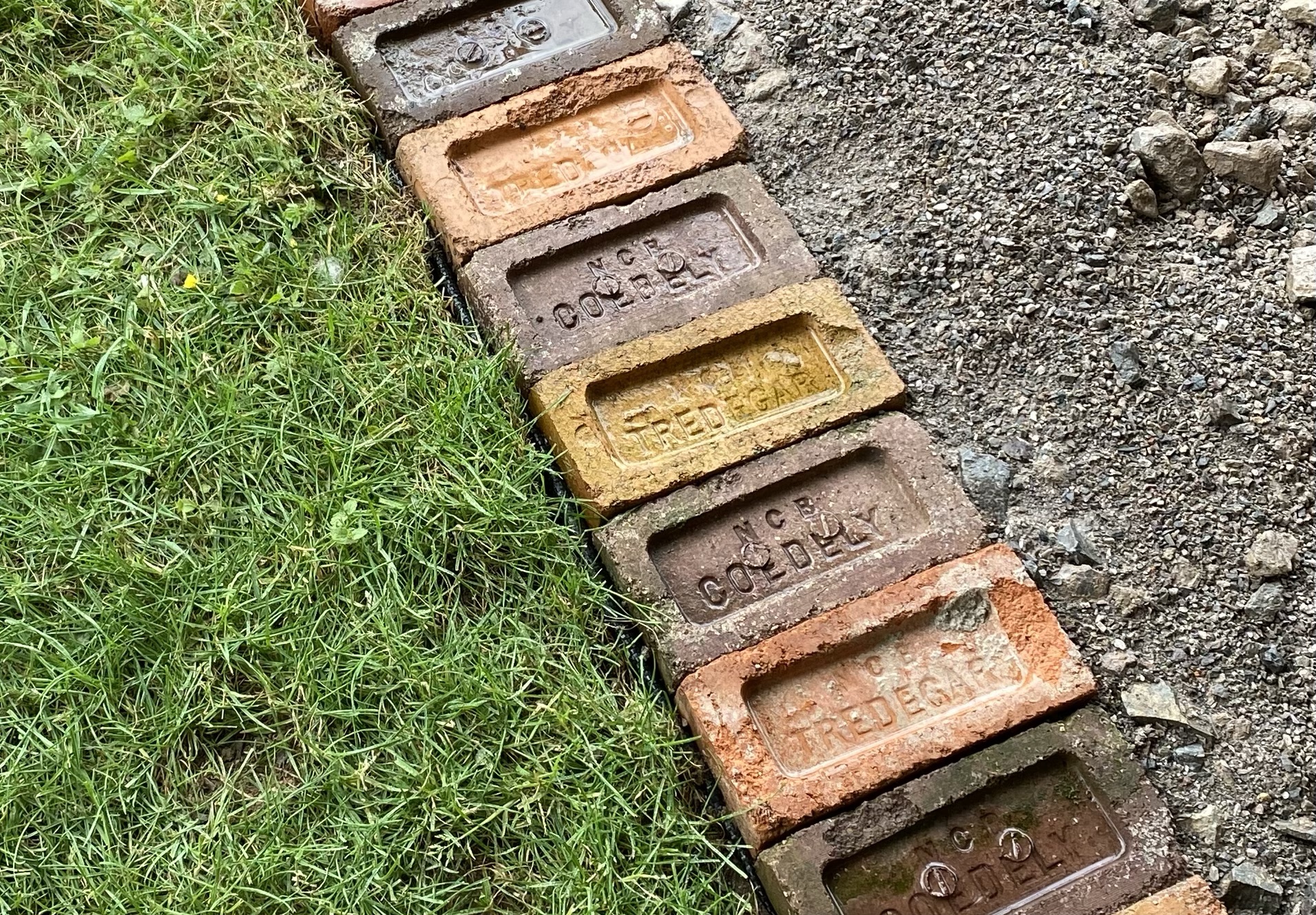
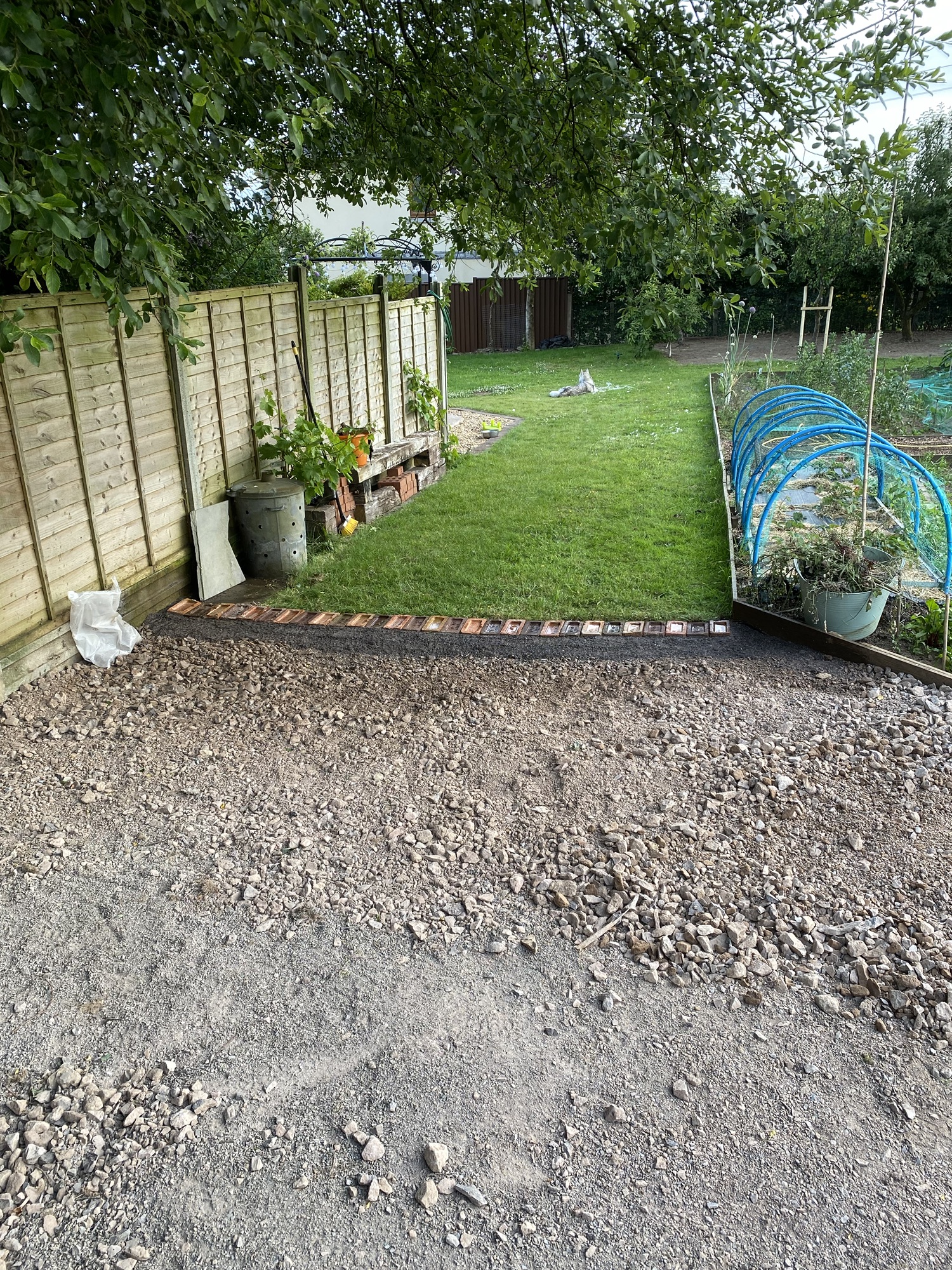
There’s a bit more to this than just bricks…
I did mention that these bricks would have been manufactured at NCB Coal Mine sites. Historically in South Wales there was a lot of brick manufacture associated with coal mines. They had everything you need; clay, coal to heat the brick kilns, labour to do the work and things nearby that needed building.
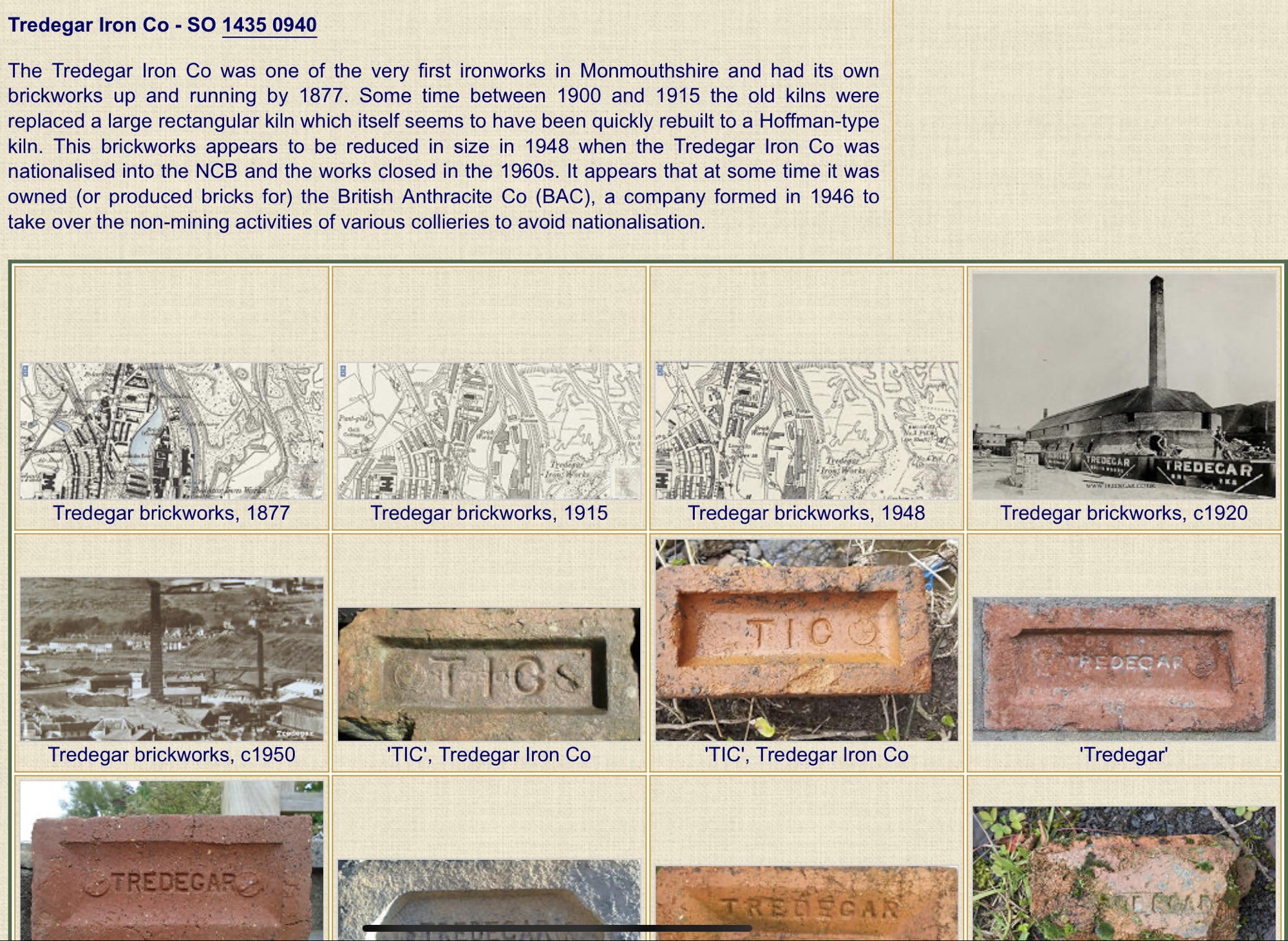
NCB Coedely was quite close to where I live, so I can understand those bricks turning up in my garden. NCB Tredegar on the other hand was about 30 miles away on the northern outcrop of the coalfield.
The scale of brickmaking used to be huge in South Wales. Literally all that remains are ruins and the ‘timestamps’ of the bricks they produced.
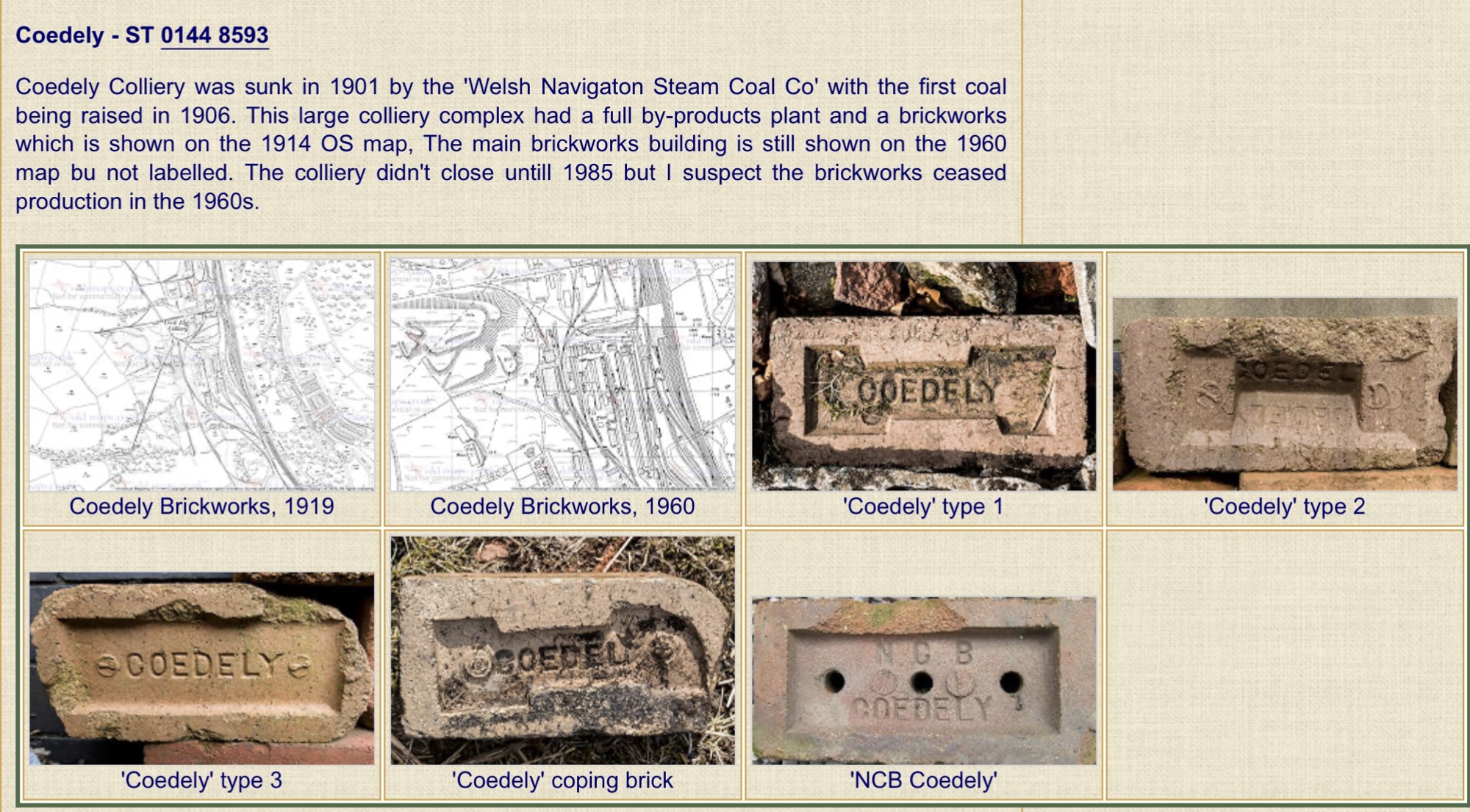
If you are interested in this sort of thing I’d hugely recommend a look at the Brickworks of Wales website, curated by Phil Jenkins.
Phil has given me permission to share these screenshots of the details of Coedely and Tredegar Brickworks.
Finally. I’ve kept 3 of the best examples of the Tredegar and Coedely bricks for a future project (in safe storage). What that might be is currently undetermined… but I do have some vague ideas. It might also involve collecting a few more ‘interesting’ bricks…
 What's the PONT
Leave a comment