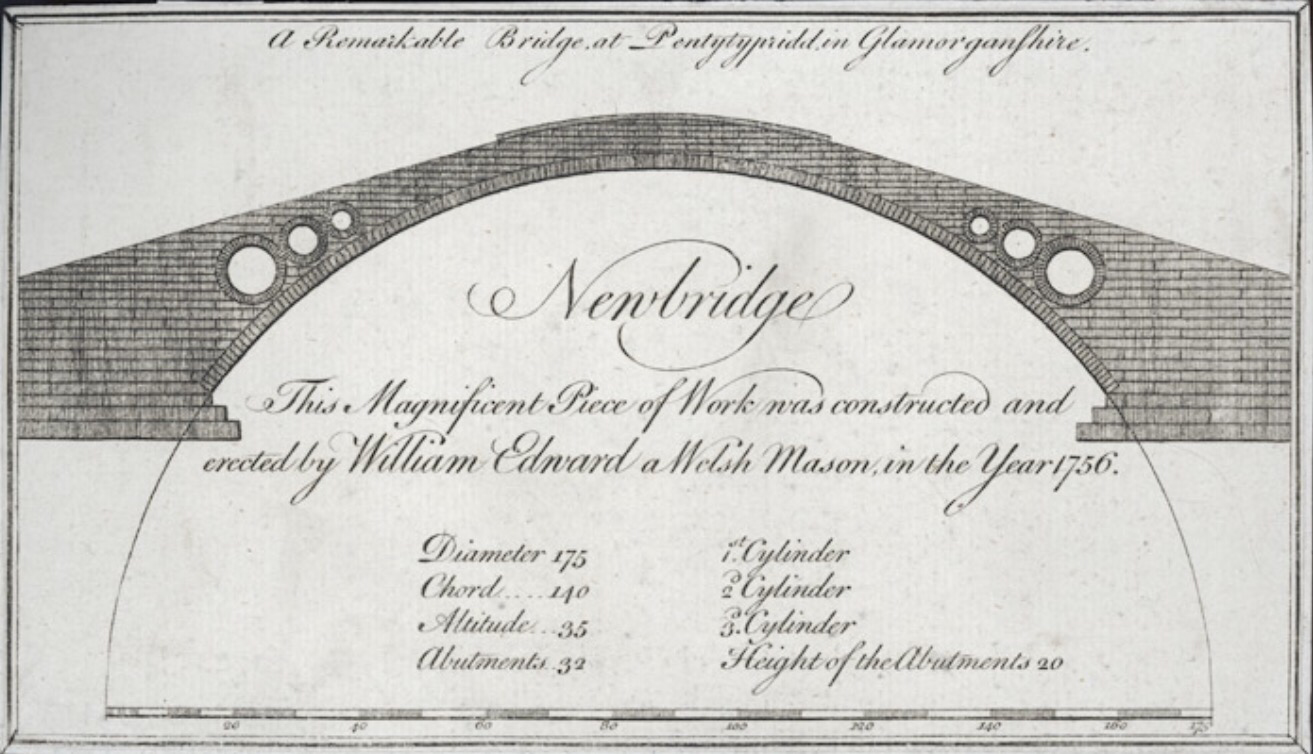
Specifically, would the Bridge in Pontypridd look like it does now if William Edwards had been on a Camino Pilgrimage?
Bear with me on this.
I’ve been told not to keep trying to connect everything back to Old South Wales, like we are the Centre of the Universe or something.
But this is relevant (kind of).
Here’s a picture of the Puente La Reina bridge from above the bed in the Puente La Reina room in a hotel I slept in this week.

Knowledge Transfer (the new old idea). I’ve been wondering about this quite a lot during my plodding this last week.
People who undertook the Pilgrimage in historical times will have; come from somewhere, experienced things along the way and gone back to somewhere.
If they were anything like modern Peregrinos, they don’t half like to talk.
Was the historic Camino a means of transfer knowledge, informally, across Europe.
I’d like it think so.
I’ve only done some cursory digging online but I can’t find a PhD on it – yet – there must be something?
This is where my mind goes with endless plodding.
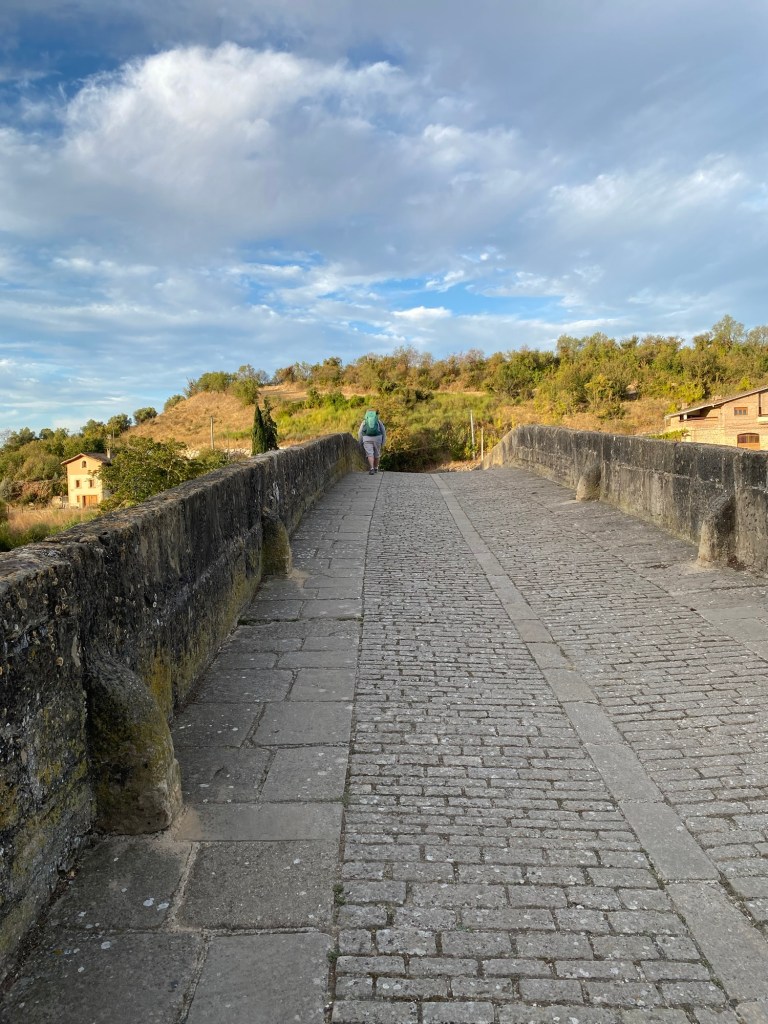
Puente La Reina. The Queens Bridge crosses the River Arga and was built in the 11th century. It was apparently built by a local Queen so that Peregrinos could get across the river easier.
A couple of points to note:
- The River Agra is pretty wide at this point (wider than the River Taff at Pontypridd)
- It rises in the Pyrenees near Ziburi (we walked through the area) so will have seen a fair few floods over hundreds years.
- It’s got 5 arches and is reasonably easy to climb and descent as old stone bridges go.
- Important Point. There are holes in the buttress between each arch and above the piers in the river bed. The doorway shaped things.
- Their purpose is apparently to let through flood water and to reduce the weight of the bridge.
- The bridge was built over 500 years before the attempt to build a bridge over the River Taff at Pontypridd.
- Apologies if I’ve offended any bridge engineers with my ignorance.
Here’s the picture of Puente La Reina again to refresh your memory.
Pontypridd Bridge. I hold Ponty Bridge very dearly in my heart, so I need to be careful what I say here.
To start a picture (of a drawing) for comparison.
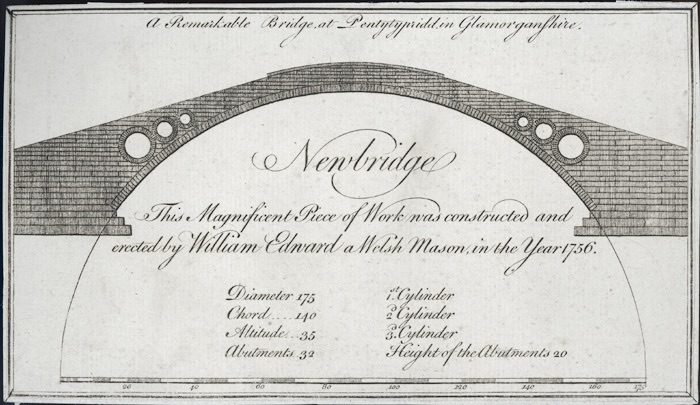
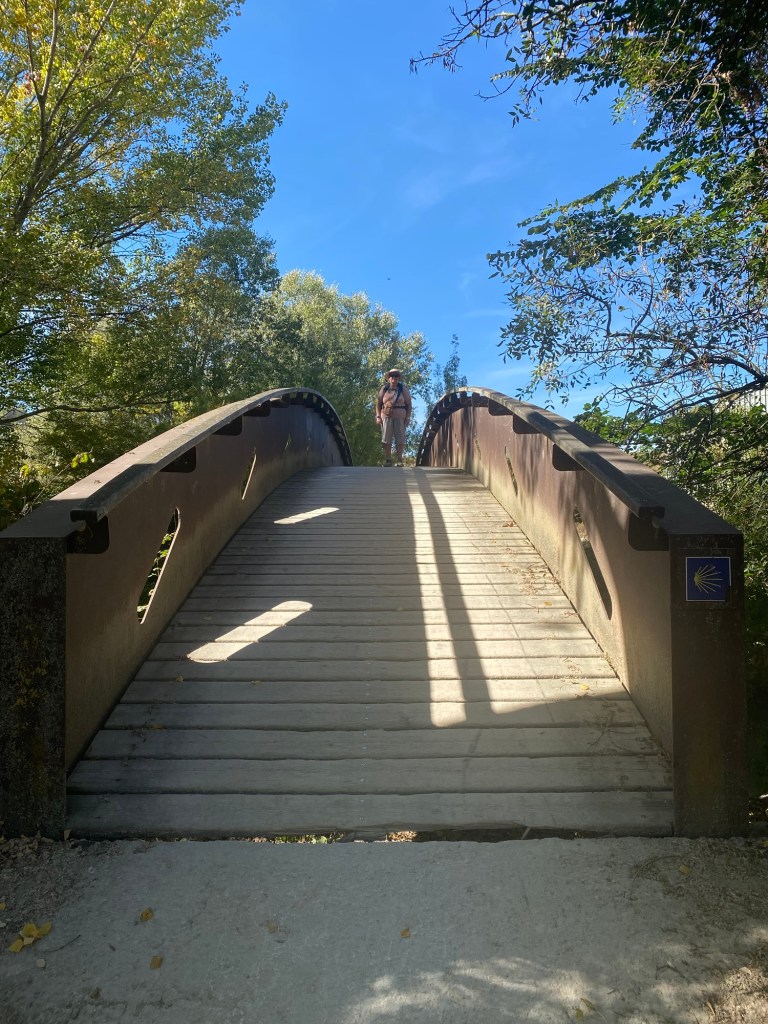
The thing to note is that it is single span and quite steep.
So steep in fact that it was a bit of a struggle to get a loaded horse and cart across it.
For Puente La Reina, even an old donkey like me gets across with relative ease.
My last trip across Ponty Bridge about 2 years ago and was somewhat sketchy shall we say.

The details of how William Edwards eventually build a bridge at Pontypridd are worth a read.
It took four attempts before the existing bridge was completed in 1756.
There’s a lot to celebrate in having what is claimed at the time to have been the longest single span bridge in Europe.
The 3 cylindrical holes in each buttress have a lot to do with its success, reducing the weight and pressure on the crown.
But it’s not that easy to walk over ( speaking as an old donkey) and a bit of a struggle with a horse and cart.
Did William Edwards travel much?
The first attempt William Edwards had at building the Pontypridd Bridge involved three arches, with two piers in the river.
This bridge was destroyed in a flood in 1746 when debris became trapped between the two piers in the river.
I’m wondering… if William Edwards had seen the design at Puente La Reina, would he have tried something different?
Would a trip along the Camino de Santiago – looking at bridges – helped with some knowledge transfer, and 18th Century South Wales bridge building?
A sort of ‘knowledge transfer’ field trip before you start placing stones and mortar.
It’s just a thought (for my day off walking).
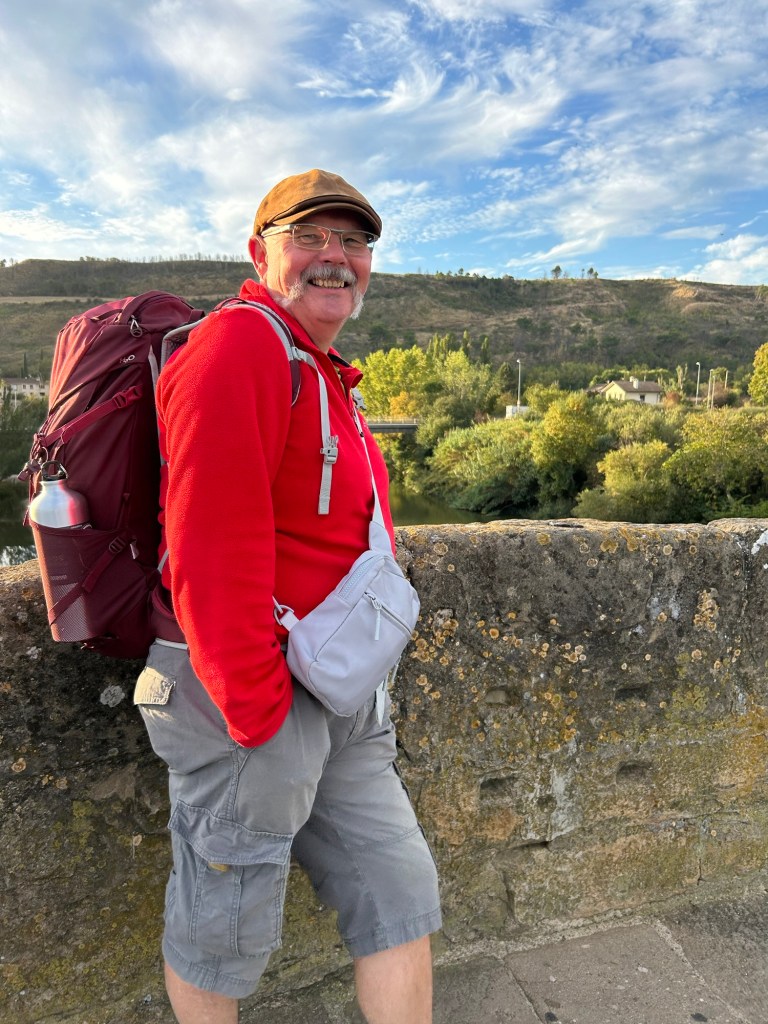
Here’s a picture of an old donkey on Puente La Reina and an incredibly steep single span footbridge on the outskirts of Estella.
 What's the PONT
Leave a comment