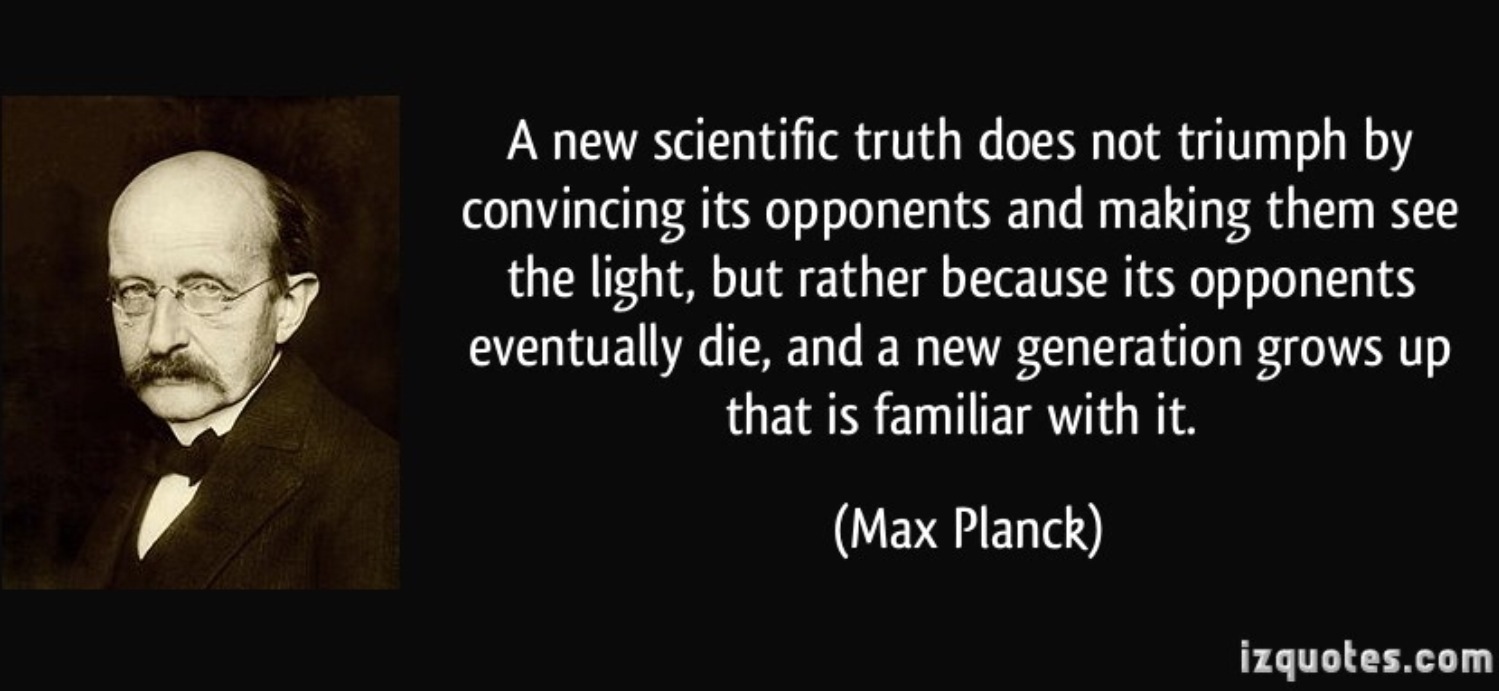
“We cannot solve our problems with the same thinking we used when we created them” Albert Einstein. I know the picture is of Max Planck, there is a reason. You are probably fed up of seeing the Einstein quote, often stated as an instruction… ‘change the way you think!’. It may be just me, but sometimes it is hard to see evidence of different thinking. The language people use changes to fit in with the latest ‘paradigm’, but the thinking stays the same.
Max Plank did also say, “Science progresses funeral by funeral”. A bit depressing but, rather than ‘waiting for funerals (or voluntary early severance)’ I think there is opportunity to change thinking by introducing new people. Activities like Hackdays and Co-production (a form of crowdsourcing) offer the perfect opportunity to introduce new people to different ways of thinking.
The Wisdom of Crowds. Before getting on to why diversity is important, it is worth reflecting on what makes crowds wise, and the fact that not all decisions made by crowds are good. If you want an illustration, take a look at the ‘online witch hunt’ that followed the Boston bombings in 2013.
There are 4 things that contribute to making a crowd wise rather than irrational:
- Expertise – they need to be reasonably smart and have some knowledge of the subject,
- Diversity – different perspectives will help the crowd come up with a better answer than a single genius or group of deep experts (I’ll cover this later),
- Independence – for real wisdom of crowds approaches to work, contributors must not know what others are contributing. If they do they will adjust their contribution in response, and
- Separate Decision Making – decisions are made by someone detached from the crowd, to avoid bias.
Scott E Page and Diversity. I’m grateful to Peter Miles (@complexitysol) who pointed me in the direction of Scott E Page and this 83 minute video of him giving a lecture about diversity in teams, crowds and other groups. Yes, I did watch the full 83 minutes and here are a few things I learnt:
- Different ways of thinking are the key – the term ‘cognitive diversity’ was used to emphasise that this is about different ways of thinking, experience or how you see things (perspective).
- Diverse teams out-performed mono-cultures – A diverse team with a few deep experts, tacking a tough problem, will outperform a group of single subject experts.
- Some organisations get this – Scott mentioned that some companies were deliberately recruiting for diversity to get economic and performance benefits. Diversity wasn’t just driven by equalities and employment law. For these organisations there are tangible benefits that support better performance, ability to innovate and better products for service users.
 This got me thinking, diversity should be one of the main features of Hackdays and Co-production. You gather a group of strangers, get then to tackle a difficult problem, maximise the wisdom of crowds and bingo, you have a brilliant result! But does it always work like that? How do you guarantee diverse thinking? What if the people who turn up all think the same way?
Hackdays, Co-production and ‘whoever turns up’. Recently I attended the NHS Hackday in Cardiff. One of the questions asked on the fringes was, ‘beyond being physically present, how do people get involved? A good question. How do you make sure there is wide diversity of thinking and different perspectives?
The good news on the Cardiff NHS Hackday was that the co-orgaiser, Ann Marie Cunningham (@amcunningham) worked hard to involve as many people as possible. More specifically she was active in trying to involve people with a different perspective – patients, carers, people with the ‘service user’ view of the NHS. This went as far as holding meetings the week before, which has got to be good for the cognitive diversity of the crowd that were involved.
From the co-production angle I’ve recently been involved with Working With Not To. They run events that have a very wide attendance, which seems to satisfy the requirements of creating a ‘wise crowd’. In addition to the ‘usual suspect service providers’; citizens and service users participate fully. 20 years of experience of using a service develops deep expertise and very clear perspective. As with the NHS Hackday, bringing together a diverse group of people requires effort and determination.
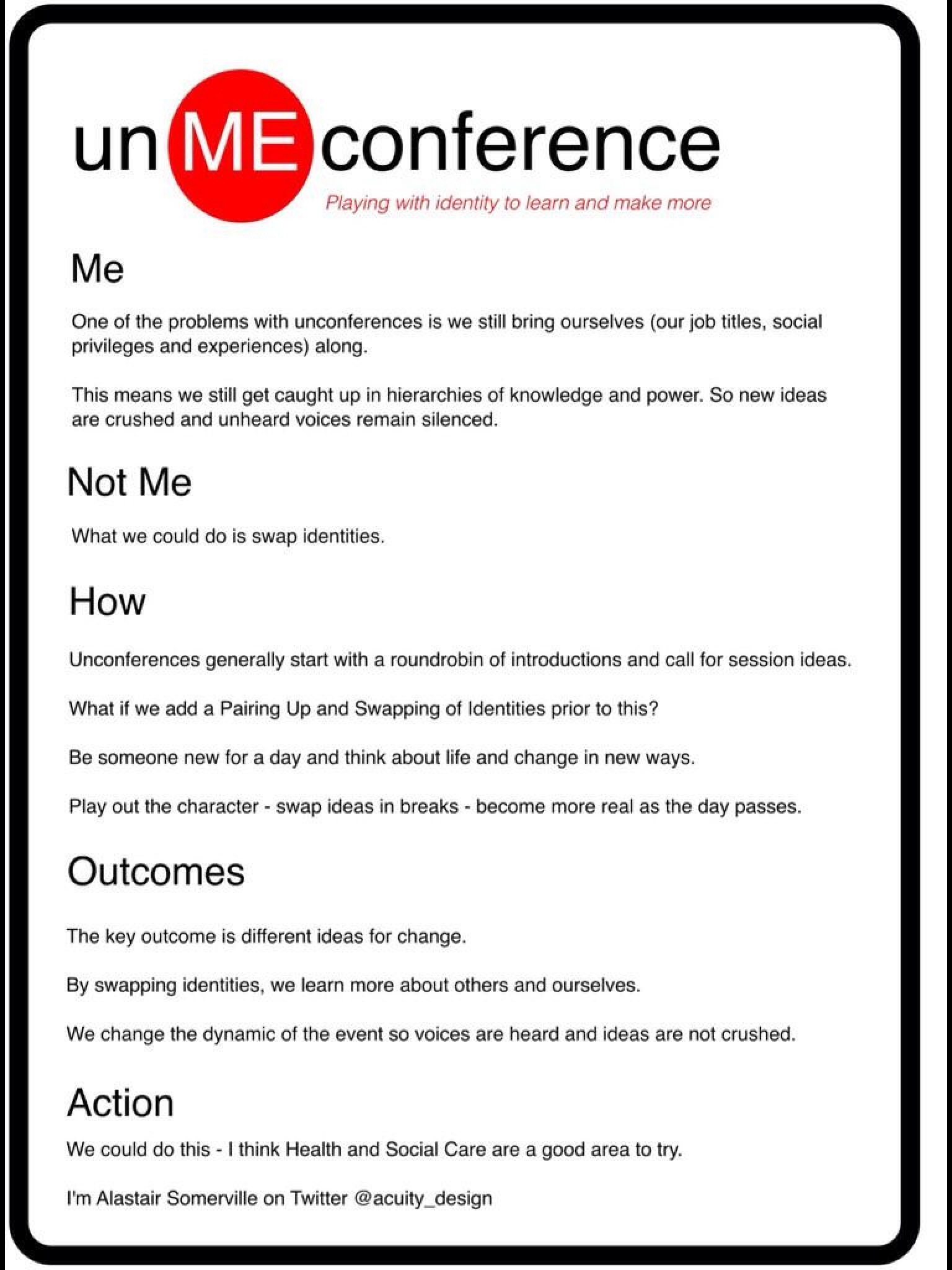
Overcoming Social Privilege and ‘un-ME-conferences’. For another perspective on how to increase the cognitive diversity at an unconference (another variation on the crowdsourcing theme) have a look at what Alastair Somerville (@Acuitiy_Design) has been doing. This post ‘building tools for invisible people’, talks about the need to make sure that everyone who could contribute to a Hackday, Un-conference or Co-production event is able to do so. If you are about to organise an event it is well worth pausing to read it. Without people who could contribute, how do you know if you are getting the cognitive diversity you need to make the crowd ‘wise’? Can you afford to leave it to chance and ‘whoever turns up?’.
One final thing from Alastair, have a look at this link to un-ME-conferences. A clever idea that you swap your ‘me’ with someone else and become a different identity for the conference. A clever idea that could do a lot to introduce some cognitive diversity and help people get around social privilege. I like it.
So, whats the PONT?
- Crowd activities (Hackdays, Unconferences & Co-production) can be wise as well as irrational.
- Diversity is one of the requirements that help a crowd out perform other ‘single focus’ groups.
- Getting around ‘whoever turns up’, and making sure you have diversity in your crowd is a conscious act, and takes some effort.
Picture sources: Max Planck quote: izquotes.com
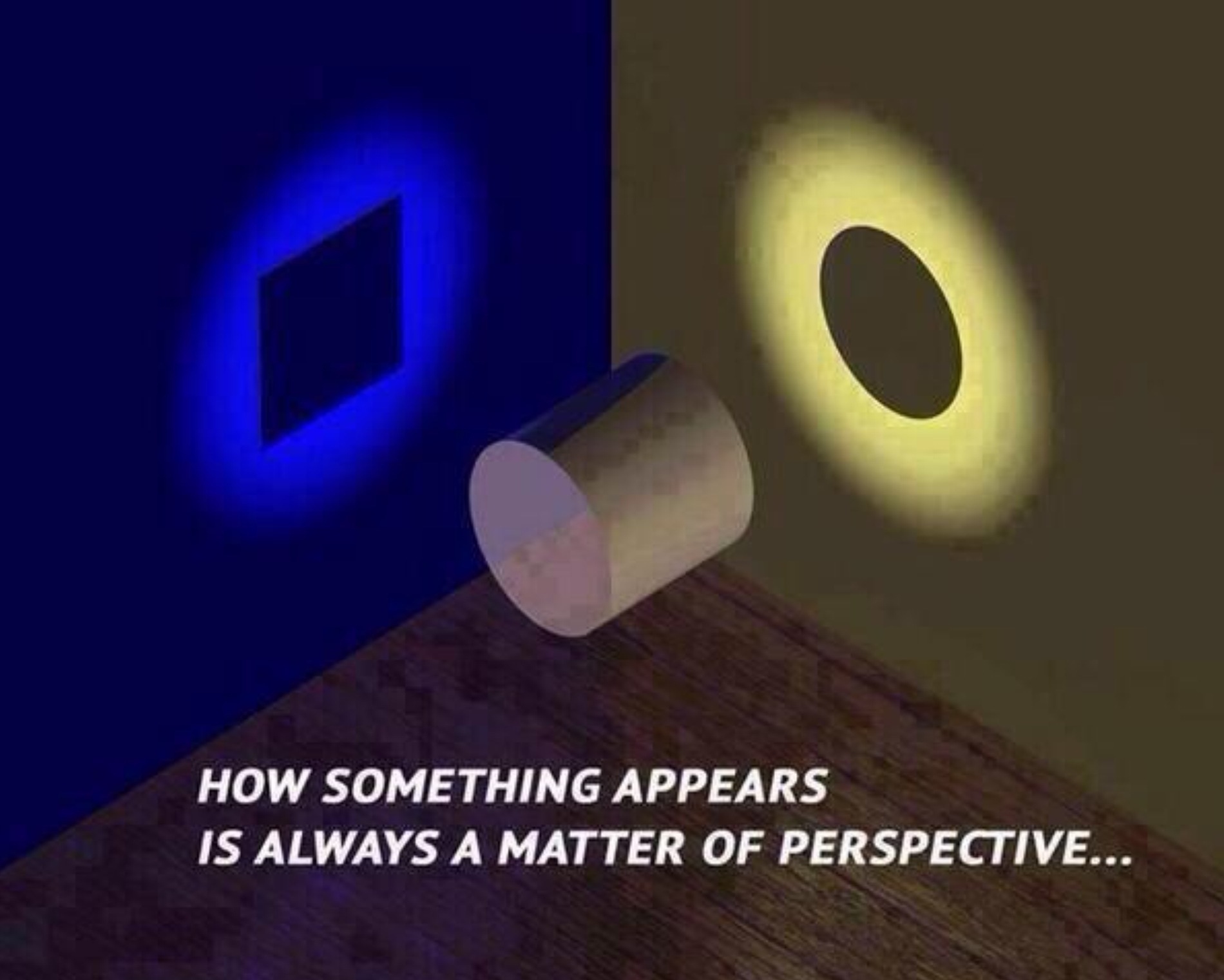
How something appears is always a matter of perspective. https://plus.google.com/+ScottCramer/posts/NhcXbznfWs3
 What's the PONT
Leave a comment