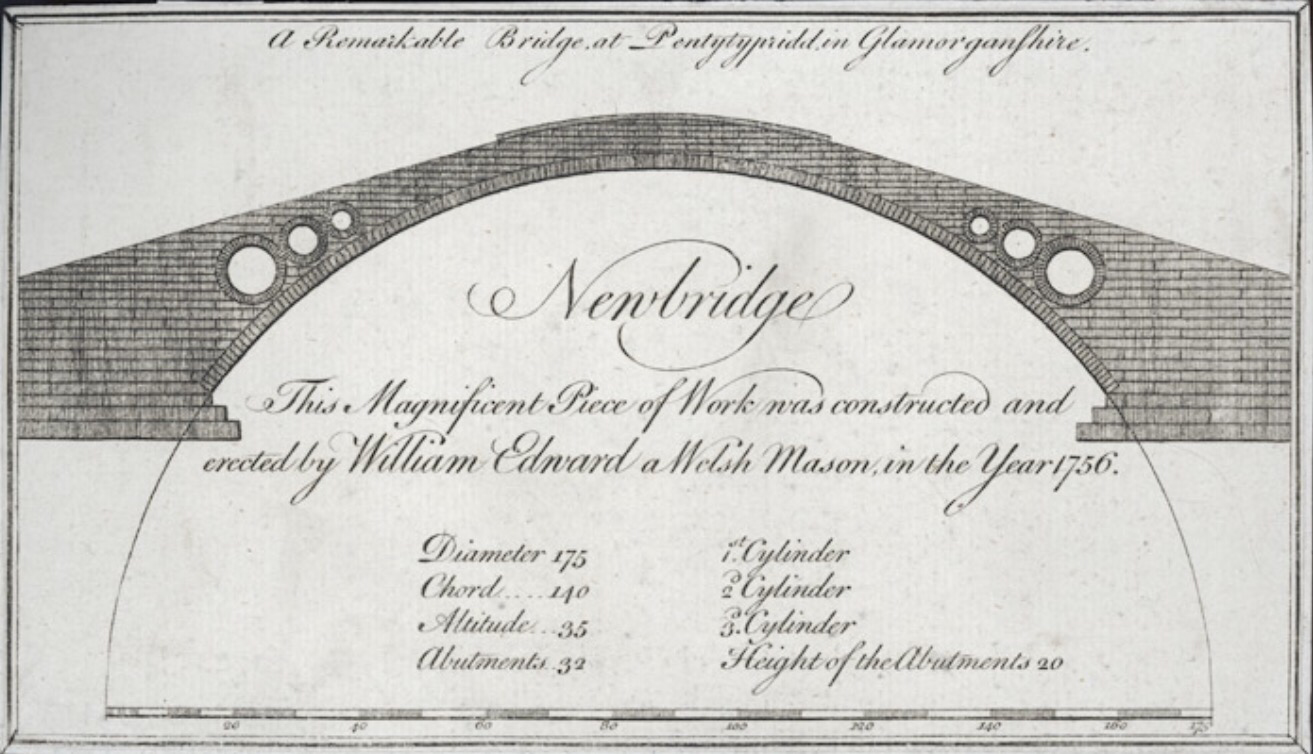
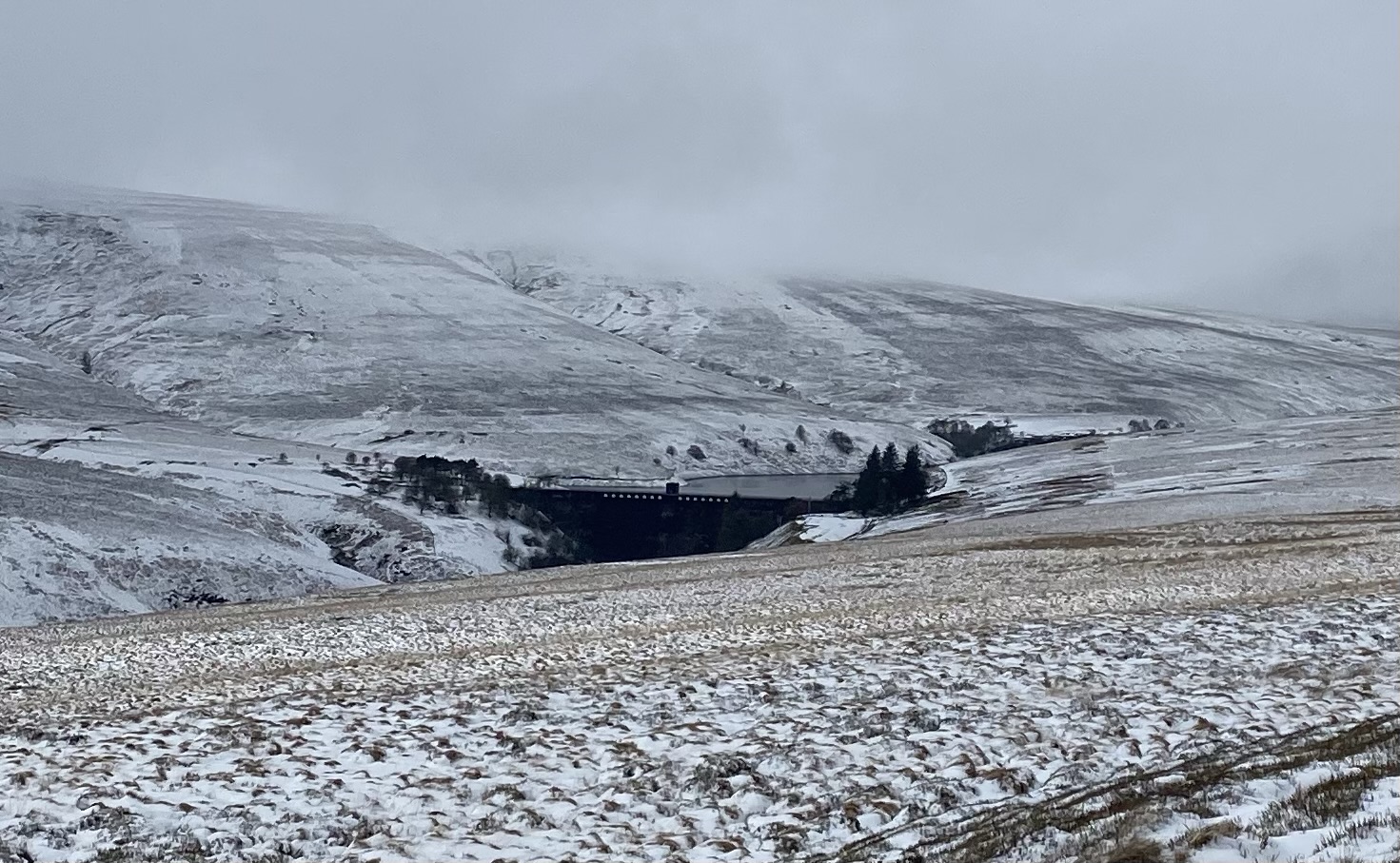
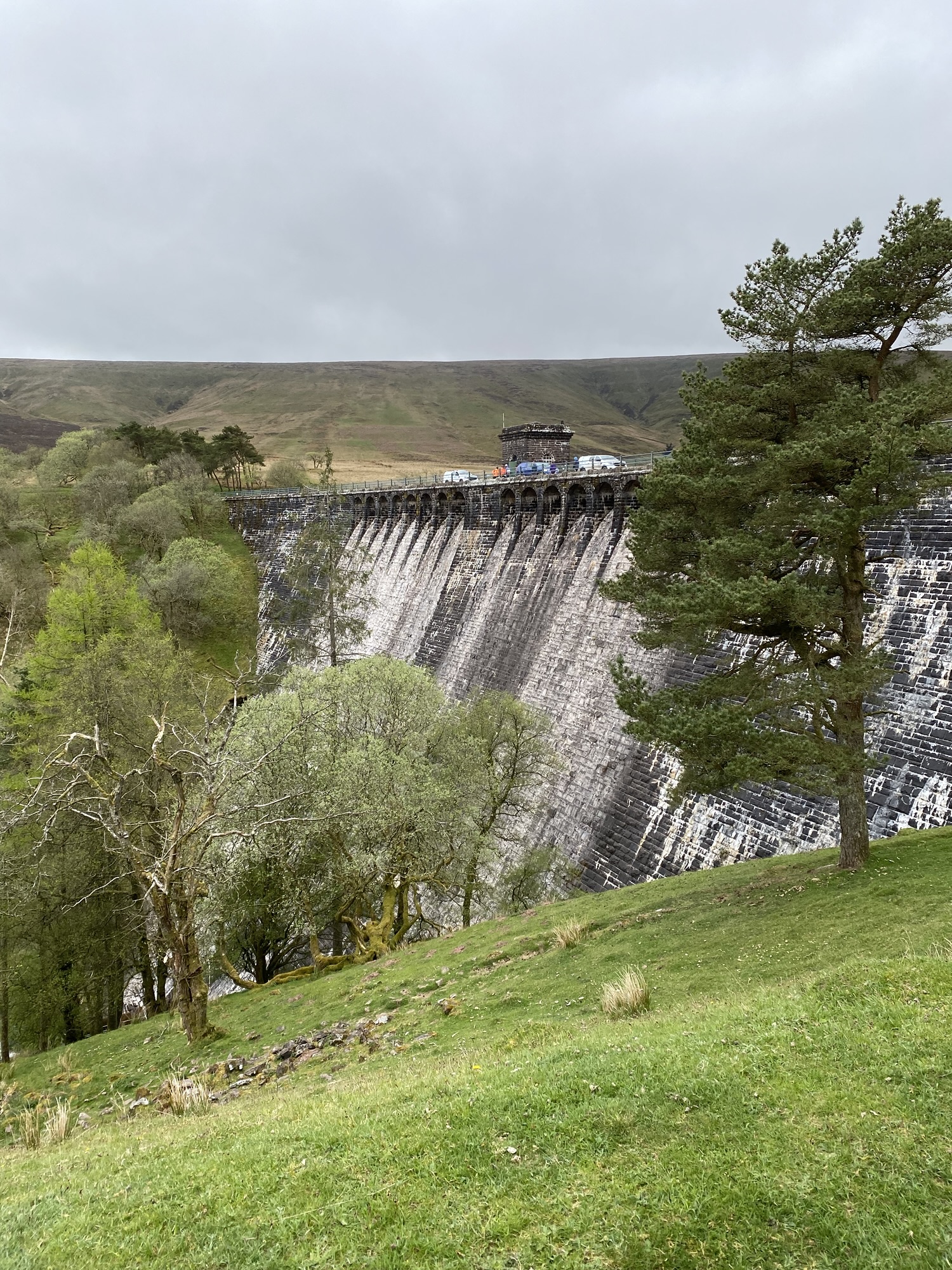
Remember when Communities did big ambitious things? Above are two of my pictures of the Grwyne Fawr Reservoir sitting about 16 km (10 miles) north of Abergavenny in the Black Mountains.
The first picture gives a sense of the challenges of the environment (taken 1st March 2024). The second gives a sense of what a monumental structure it is.
The purpose of these pictures is to make a point. Grwyne Fawr Reservoir was built between 1912-28 by the former Abertillery and District Water Board. By and For the Community
The reservoir collected (clean) water at around 525m (1,725ft) and moved it by gravity through 35 km (22miles) of pipes to Cwmtillery Treatment Works. Then onwards to people, homes and business in the valley. By and For the Community.
Just for reference, Urban District Councils (UDC) were not exactly ‘mega corporations’, with endless resources.
They were the most ‘foundational’ layer of civic society and local government. The combined population the 4 UDCs served probably was no more than about 70,000 people (at it’s peak). This really is ‘local’. By and For the Community.
Small is beautiful (and effective).
A question. Nowadays, what are the chances of 4 Urban District Councils getting together to build a large reservoir and 22miles of pipeline to supply their communities? Or anything else on a similar scale?
“The past is a foreign country: they do things differently there.” From the 1953 novel by L.P. Hartley ‘The Go-Between’.
On my first visit to Grwyne Fawr reservoir I was utterly astonished that a bunch of local people from Abertillery could have got together a hundred years ago to build it.
Since then I’ve been sitting back and thinking a bit.
This kind of thing is actually not that rare in bits of South Wales. There are examples on literally every street corner where people got together to build chapels, clubs and institutes – some of them enormous and ‘built by subscription…’.
But it goes bigger than that. Here are a few examples of things done By and For Communities that are dear to my heart.
Talygarn Miners Rehabilitation Centre. In 1922 the South Wales Miners Federation bought a grand country estate to create a convalescence home for injured miners; their members and community. Paul Robeson was a big supporter and sang there.
Tredegar Medical Aid Society. Two things to say here; Aneurin Bevan and the NHS. Maybe I have been seduced by the theatre play ‘Nye’, but I do like to think South Wales played a large part in the creation of the NHS .
The Aberdare and District Cooperative Society. This was a huge operation that ran right up until 1989. At one point it was responsible for 45% of all retail trade in the Aberdare Valley.
In my mind there is a clear connection between the South Wales Miners Federation Talygarn Rehabilitation Centre, Tredegar Medical Aid Society, Aberdare and District Cooperative Society and the Abertillery District Water Board.
They were all about things done By and For the Community, and (I hope) the ability to do these things is still embedded in our collective indigenous memory.
If we’ve done amazing things in the past, can we do them again today? The past doesn’t have to be a foreign country. We just have to remember what we have forgotten…
“The future is already here, it’s just unevenly distributed.” William M. Gibson.
Recently I went to the Valleys Cymunedoil Cymmoedd event in Pontypridd. There is a lot of brilliant work happening around this to develop communities.
What is also happening is a reawaken of our indigenous memory.
During the meeting the organisers Beth Winter and Leanne Wood showed a film ‘The Coal Beneath our Feet. the Wind Above our Heads’. The film unearthed indigenous memories and stepped into that future that is already with us.
Not to spoil the plot (because you need to see the film) it shares the story of two young people, destined to leave the Valley for a ‘better’ life. But they discover hope.
The miners buyout of Tower Colliery in 1995 features strongly in the film. It stirs up an indigenous memory that I’m ashamed to say I’d let slip to the back of my mind.
Then the future. Mynydd y Gwwrhyd Community Owned (Awel Coop) Wind Farm about 20 miles north of Swansea. How a community can own and control one of the basics; energy. This is so good that the Welsh Government have written a case study about it. You can also read more on the Community Energy Wales website.
The future is absolutely already with us, just unevenly distributed (in lots of ways).
So. what’s the PONT?
- The past can be a foreign country. It can be difficult to relate to how our communities did things in the past. Even if the were brilliant, monumental and hugely relevant to now.
- The indigenous memory should still be with us (I hope). Its just a case of working out how we stir it up and reawaken us to what is possible.
- And maybe, we don’t have to look to far. The future is already with us. It might be already living in the next valley or village. Just go of a bit of a walk and have a look.
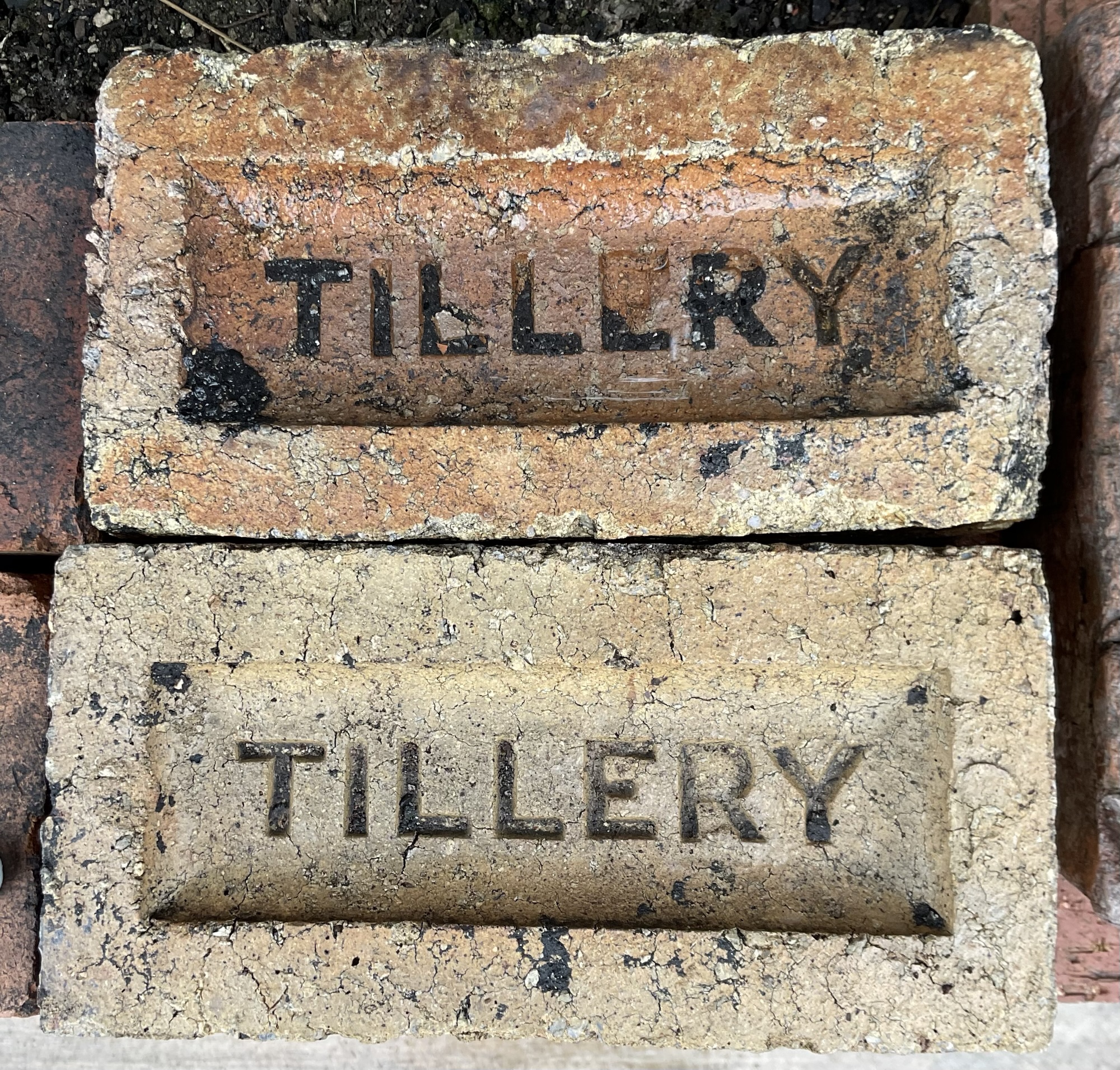
Some old bricks I’ve collected from the Abertillery Brick Works. No reason other than I like old bricks.
 What's the PONT
Leave a reply to Have we lost our ability to do big, ambitious things as communities? – Paul Taylor Cancel reply