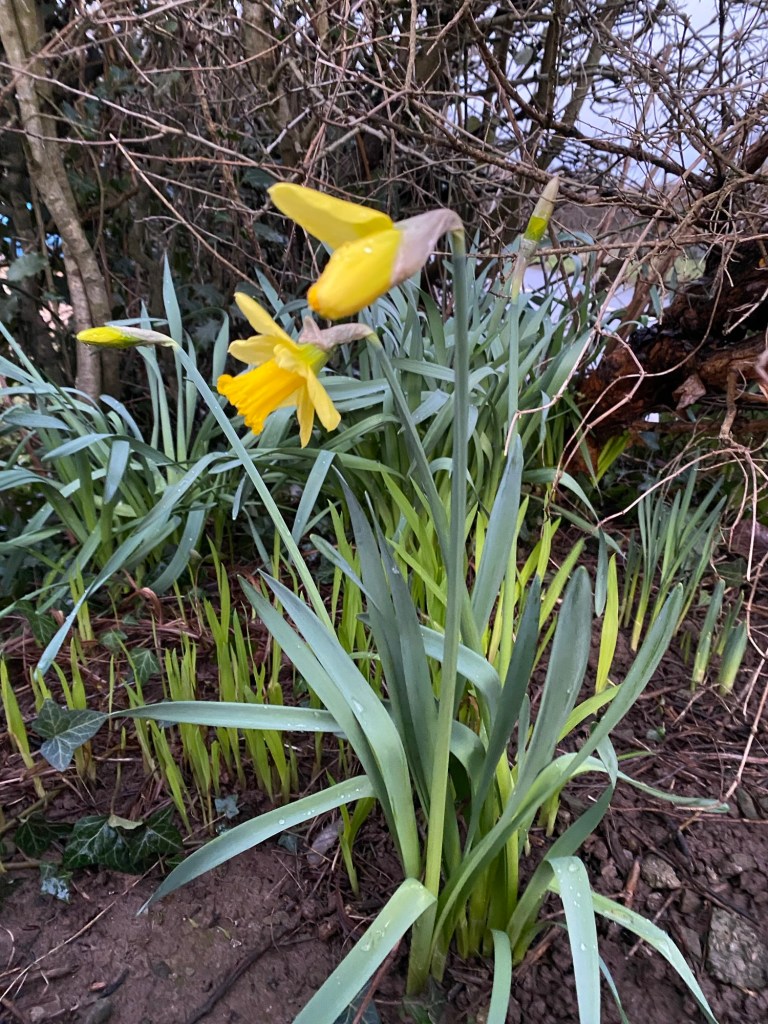
It is the festival of Imbloc round these parts. The ancient Celtic festival at the beginning of February where we used to celebrate the midpoint between the Winter Solstice the Spring Equinox.
Looking forward, with hope, to a time when Spring is beginning and things start to grow again.
The exact timing of an early or late spring used to be a big deal and could mean the difference between survival, or not.
It’s also time for Groundhog Day.
Six more weeks of winter or spring?
If you are familiar with the 1993 film Groundhog Day, you will know the story.
The reaction of a Groundhog, Punxsutawney Pete is used to predict the weather. If the Groundhog comes out of its burrow on the 2nd February and sees its shadow (because it is sunny) there will be six more weeks of winter.
If the Groundhog doesn’t see its shadow (no sun) there will be an early spring.
I’m sure there’s no surprise to hear that this is all based on European folkelore and was carried to America and Punxsutawney by immigrants.
The European versions involved a mixture of; Hedgehogs, Badgers, Snakes, Birds and even Bears. It all depends on what you’ve got living locally I guess.
There’s something in Groundhog Day about understanding the origins of customs and practices, and occasionally going back to the original roots.
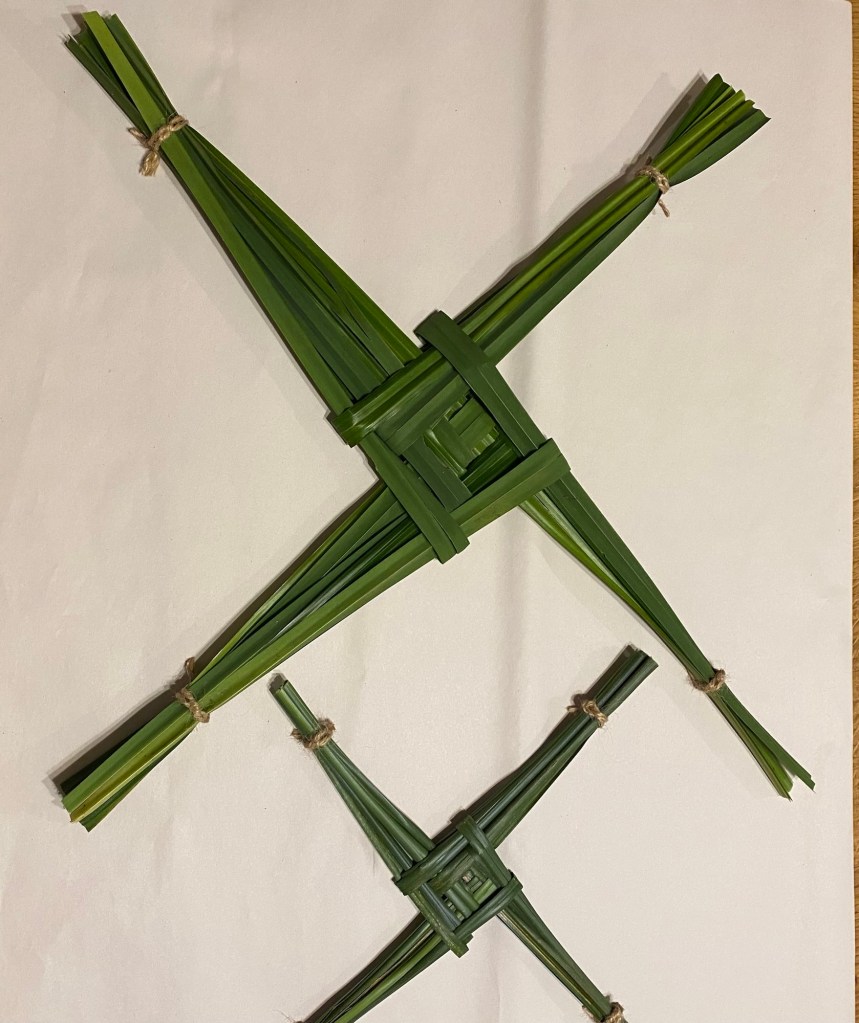
Personally, I’m going to try and make a Saint Brigid’s cross out of rushes this evening, but that will require a walk to the local wetland / bog before it gets dark, and it’s raining.
More on that shortly.
But what about life on a tedious repeating loop?
The other modern ‘meaning’ of Imbloc comes from the film Groundhog Day, a tedious activity or event that keeps on repeating, in a sort of loop.
Apparently ‘Groundhog Day’ became a common expression after the film was released.
Back in 2014 I wrote about Groundhog Day in the context of how the ‘tyranny of best practice’. How ‘best practice’ was being pushed constantly as the solution to all sorts of problems. I’m not sure much has changes, other than my level of tolerance…
On one level the phrase ‘Groundhog Day’ captures the idea that life can feel like a monotonous series of the same things repeating themselves, if you let it.
At one level our ancient ancestors might have worked this out by having distinct practices and festivals. Marking the progress and transition from one phase of the year to the next.
Otherwise every day feels like the rest.
Ancient wisdom is still wisdom.
Just before moving on from Groundhog Day, I always used to think about what it would be like to live a day of my life over and over, doing whatever I wanted.
Like the film, would I go through stages of; confusion, hedonism, despair and then ultimately enlightenment, based on finding joy in love for others and helping to make life better?
Alas, I am deeply flawed, wrestling with confusion, hedonism and despair, but I’m working on the enlightenment bit.
Back to Saint Brigid.
There’s a ton of things to know about Saint Brigid of Kildare c.452 – c.525. But I’d like to focus on St Brigid’s cross, woven from rushes it is traditionally made in the evening of the 1st February and hung on your door for St Brigid to bless as she passes through.
A blessing will help with all sorts of things like protecting the home from fire, evil and all sorts of other misfortunes. And unlike a smoke detector, it doesn’t need a battery.
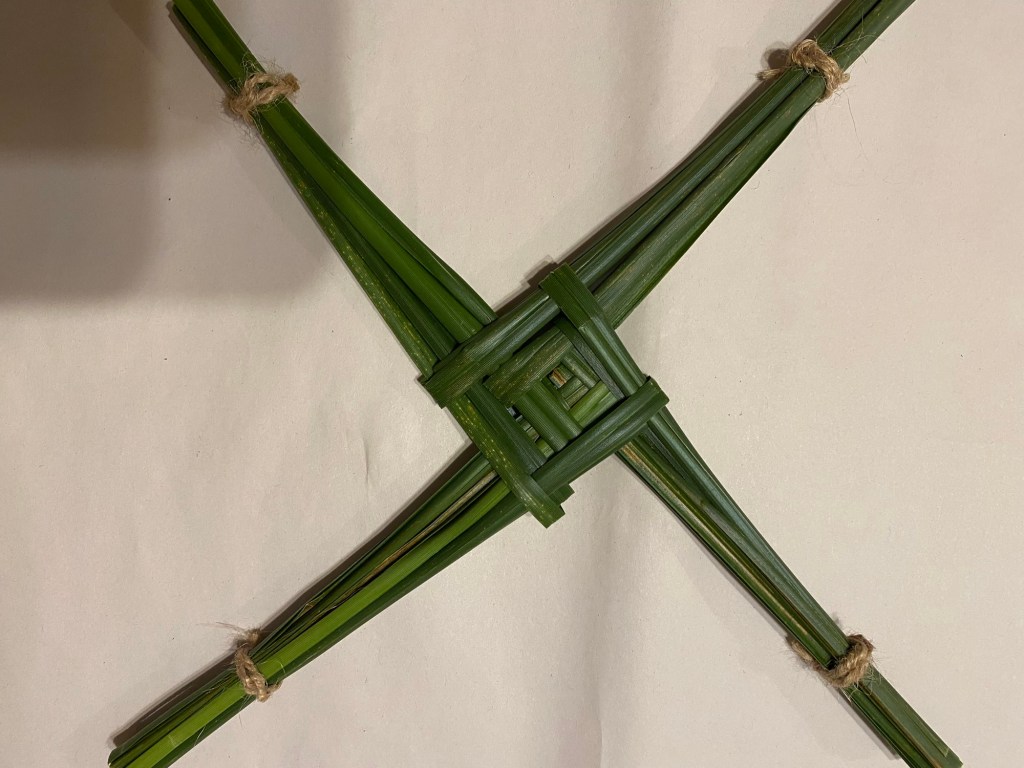
My main reason for doing this is to do something with others (my wife, who’s the only one who will indulge me in this sort of thing) rather than watching telly.
A bit of Kama Muta (ancient wisdom from another culture) if you get my drift.
So, What’s the PONT?
- If you let it, life can feel like a repeating loop of the same old thing day after day.
- Maybe our ancestors recognised this and marked changes and transitions with events and festivals linked to the natural world around them?
- Try a bit of Kama Muta with your nearest and dearest. You might experience shared joy in some low quality amateur rush weaving.
 What's the PONT
Leave a comment