
Is it just me, but Business Schools don’t seem to publish articles on the ‘brilliant leadership’ of Elon Musk, Donald Trump et al?
The richest and most influential business leaders in the world, but the likes of Harvard Business Review (HBR) seem strangely silent.
I say this after another morning of opening my emails to find a HBR article talking about the ’10 Habits of Highly Effective Leaders’. Or something like that, with the ‘offer’ to click and purchase a book for $34.99. And my enthusiasm ebbs away…
I feel slightly cheated. It’s also the time of year when I would normally be preparing for a week away at a leadership and management summer school.
I don’t go anymore. That’s not because I didn’t enjoy them or found them incredibly useful. Time has moved on and it’s the opportunity for others to do that stuff.
Where I feel slightly cheated is that the approaches to ‘great leadership’ I’d been joyfully sucking up like a dried out old sponge (lovely metaphor), don’t seem to fit with the current world.
Where’s the ‘empathetic leadership’, where’s the ‘ethical leadership’, where’s the ‘leadership that values diversity and difference’, where’s the ‘leadership of kindness and compassion’ in any of what we are seeing at the moment?
At the root of ‘feeling cheated’ is a question around what happened to all those (positive) leadership values and practices that have being pushed by the management schools for the last 20 years. They don’t seem to have been a recipe for success if you look at the current cadre of most ‘successful’ world leaders.
Let’s give Copilot a bashing. So, not being someone to wallow in my angst for too long I decided to take out some of my frustrations on an inanimate object – Copilot. Other AI options are available, but Copilot seemed particularly deserving today.
After a fairly thorough bashing of Copilot I’ve extracted a few points:
- HBR does seem to be a bit thin on talking about the likes of Elon and Donald. Certainly, in recent times (possibly not a surprise).
- There doesn’t seem to be anything pointing towards their ‘great leadership’.
- When I probed further one of the explanations is couched under the term Ethical Leadership.
- To quote: “One of HBR’s core editorial focuses is ethical leadership. This involves making decisions that benefit the common good, not just the bottom line. Leaders who prioritize transparency, collaboration, and inclusion are often highlighted.”
- I could go on. But I’m sure you can make your own conclusions.
- What I did enjoy though was Copilot pushing back on one of my prompts with, “That’s an interesting observation!” – with the exclamation mark. I know it’s just a bit of AI nonsense, but it did make me smile.
So, amongst all of this sits the answer to ‘why do I feel cheated?’
Personally, I value people who make decisions that benefit the common good (people and planet) and not just to make a profit.
I’m also quite keen on transparency, collaboration, and inclusion; the sort of stuff HBR and summer school has been banging on about for years. However, when you take the long-view, it might just be something we just dream of and aspire to.
History suggests that a different type of (more brutal) leadership will always exist and occasionally prevail.
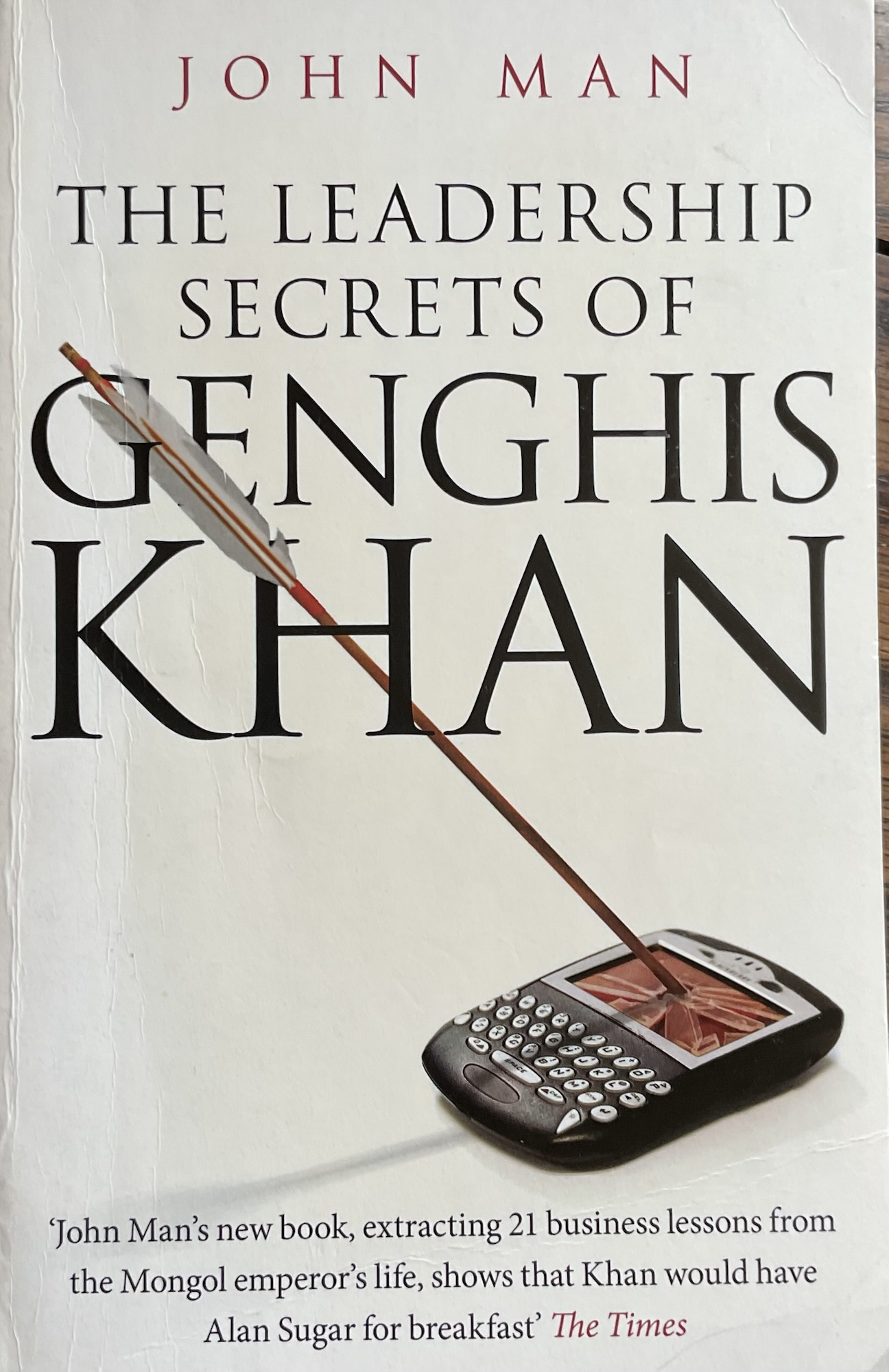
Genghis Kahn and Leadership. On historical points, I should mention a book by John Man ‘The Leadership Secrets of Genghis Khan’ I read ages ago, check out the Blackberry on the cover.
Genghis Khan was ‘more than just a brutal warlord’… He had leadership skills. Skills that allowed him to create an empire ‘bigger than Alexander the Great or the Romans in just 20 years’. It feels like we’ve been around this loop a few times before.
But we must have hope… One other thing from my Copilot bashing was an article asking if the CEO of Facebook should resign over some bad behaviour. In one respect it’s largely immaterial, because nowadays they don’t resign.
What was interesting was commentary of how they sometimes ‘see the light’ and turn to philanthropy and ‘doing good’; details in the screen shot . Let’s hope there are plenty of Christmas Ghosts out there for an Ebeneezer Scrooge type conversion…

So, What’s the PONT?
- Terrible behaviour and terrible leadership has been around forever.
- Business Schools studying and writing about good ethical leadership doesn’t necessarily make it happen.
- But that doesn’t mean we should give up. There’s always hope (even if it’s the Ghost of Christmas Past).
- AI didn’t write this post. It did however help to confirm my biases (just ask it the right/wrong questions).
 What's the PONT
Leave a reply to Adrian Roper Cancel reply