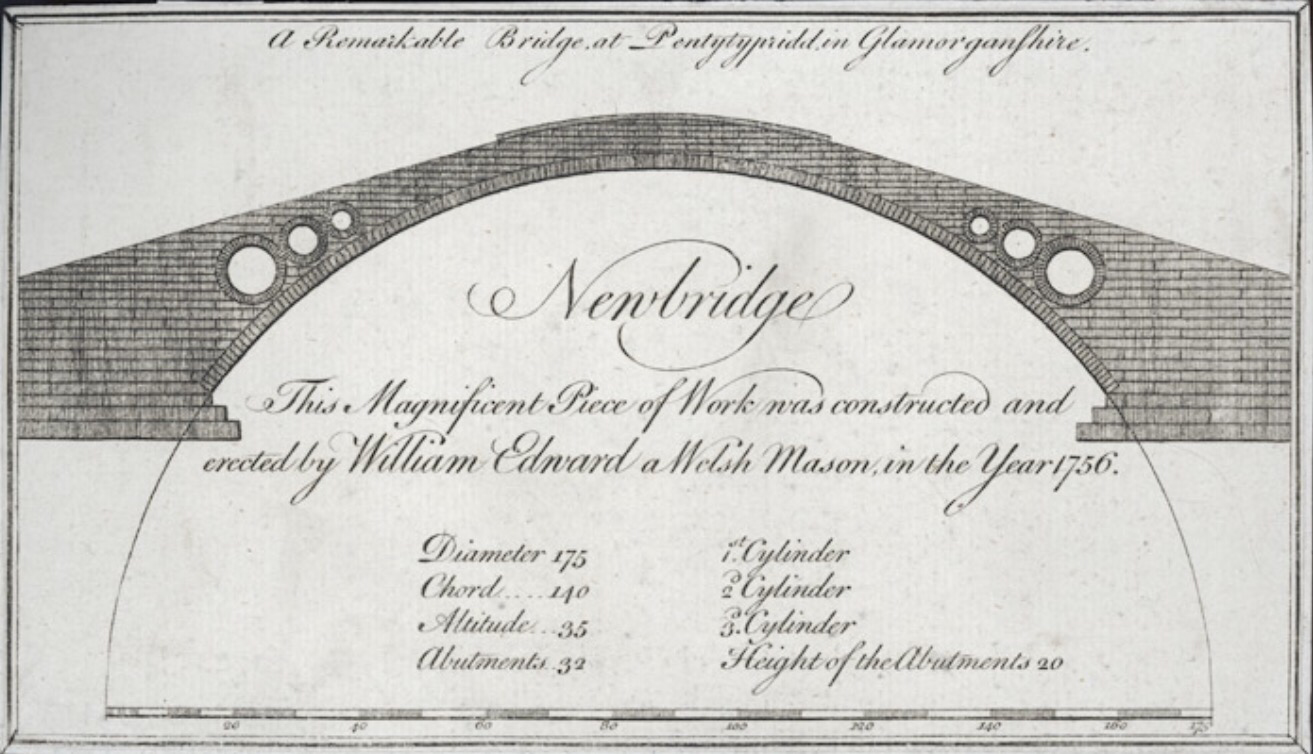

How does a Board move from squeezing the data to having a conversation?
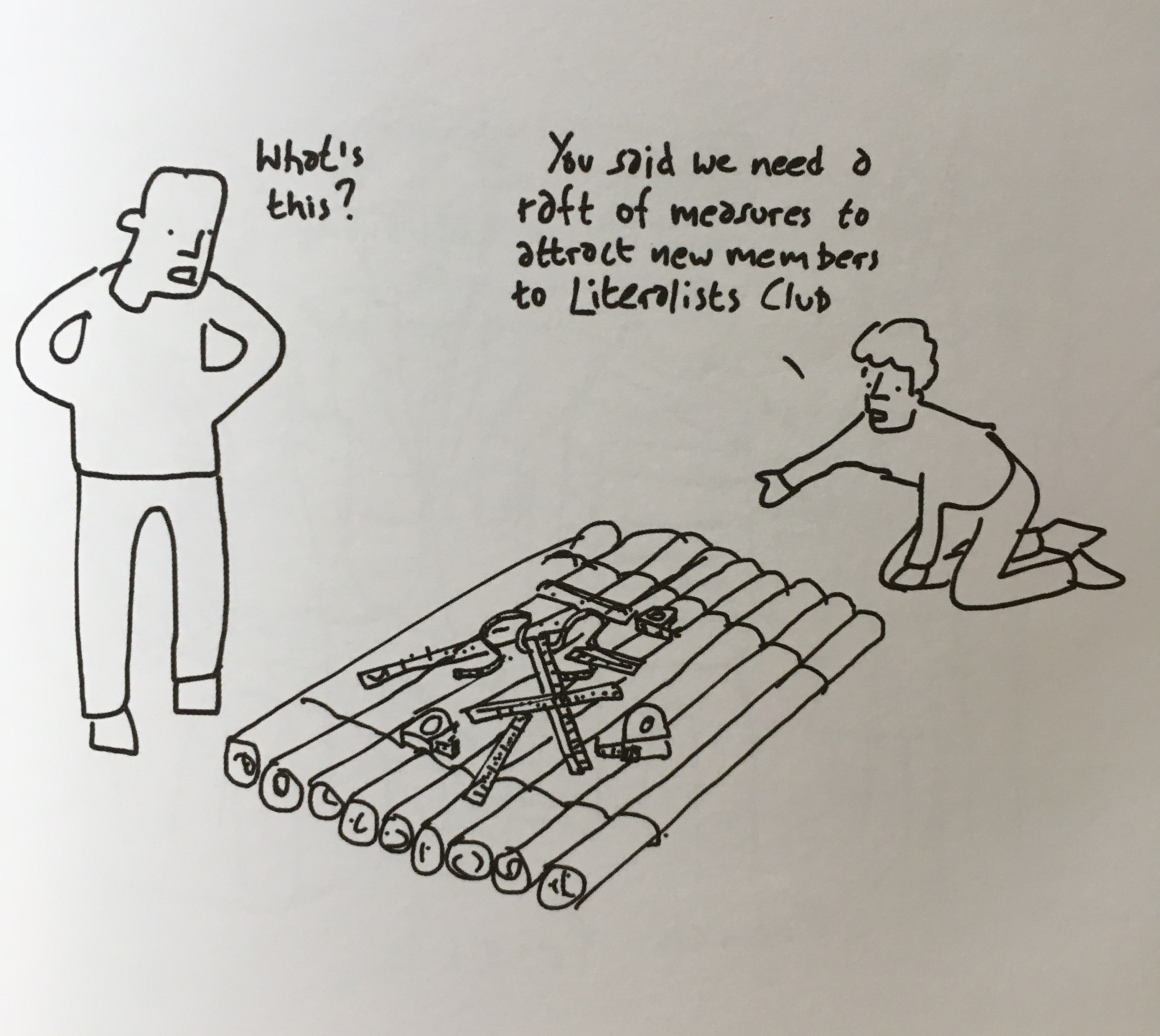
Thank you to Moose Allain (@mooseallain.bsky.social) for the excellent illustration of how to use a raft of measures, to attract new members to the Literalists Club.
Smorgasbord or Dashboard? This post is a bit of a gallop through some blogs I’ve written about measurement. Specifically how decision makers in organisations use the; data, information and knowledge that comes from measurement.
What I’m aiming at is prompting a few thoughts with people attending the Housing Sector Disruptive Innovators Network session on ‘from Dashboards to Conversations’.
In a complex world, certainty is an illusion… what I mean by this is that you can rarely rely upon a single hard, quantifiable number. There’s always more…
Here goes with the blog post gallop.
- Start by questioning what you’re actually measuring — and why?
The hard data Boards rely on is often just the pip of the olive. The hard woody bit at the center surrounded by lots of olive ‘flesh.
The pip feels safe and objective, but it represents a tiny fraction of what could be known. Before accepting the numbers on the table, ask whose choices shaped what got counted in the first place, and what got left out?
A materiality judgement is always a human judgement, with all the biases that entails.
More details in this post : The dangerous olive of evidence.

- Understand what kind of problem you’re dealing with
Not everything is straightforward or even (just) complicated — some things are genuinely complex.
The Cynefin Framework is useful here, helping you decide how to respond to the context or situation you are facing.
In a complex situation many human and organisational challenges are beyond simple KPIs and line graphs.
Things like Campbell’s Law and the Cobra Effect come into play. People will ‘game’ targets and measures, Campbell’s Law, and there are often unintended consequences, the Cobra Effect.
The first conversation worth having with a Board is “what Cynefin domain are we in?” That should re-frame how you think about how and what you measure.
More details in this post: Campbell’s Law and why outcome measurement is a dead Cobra.
- Don’t attack the data — extend the conversation
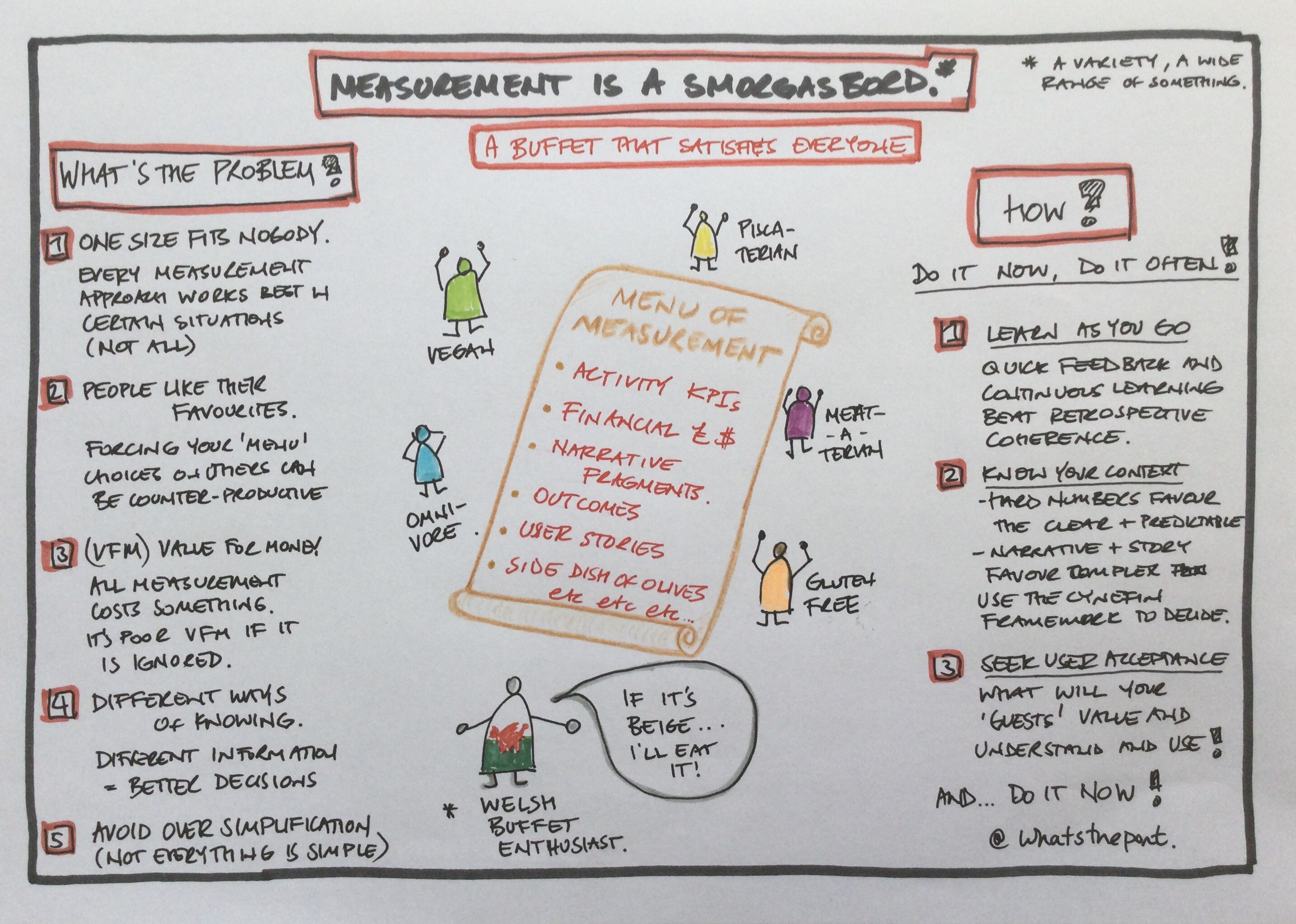
The Smorgasbord approach. Rather than dismissing numbers offer more. “Here’s what the data shows — and here are some stories from people who’ve experienced this directly.”
Position narrative not as the soft alternative to hard evidence, but as a different and an equally valid form of knowing.
Decision-makers who feel their metrics are being challenged can get defensive; ones who feel they’re getting a richer picture might engage a bit more.
More details in this post: Measurement is a Smorgasbord
- Use authentic stories, not corporate ones
A polished case study with the organisation as hero will be seen through immediately by many people. What can help shift perception in a Board room is a real, unvarnished story told in someone’s own words — with the rough edges still on it. Something that creates a moment of recognition at an emotional level that data alone rarely achieves.
More details in this post: Cool story Bro… be cautious of organisational story telling.
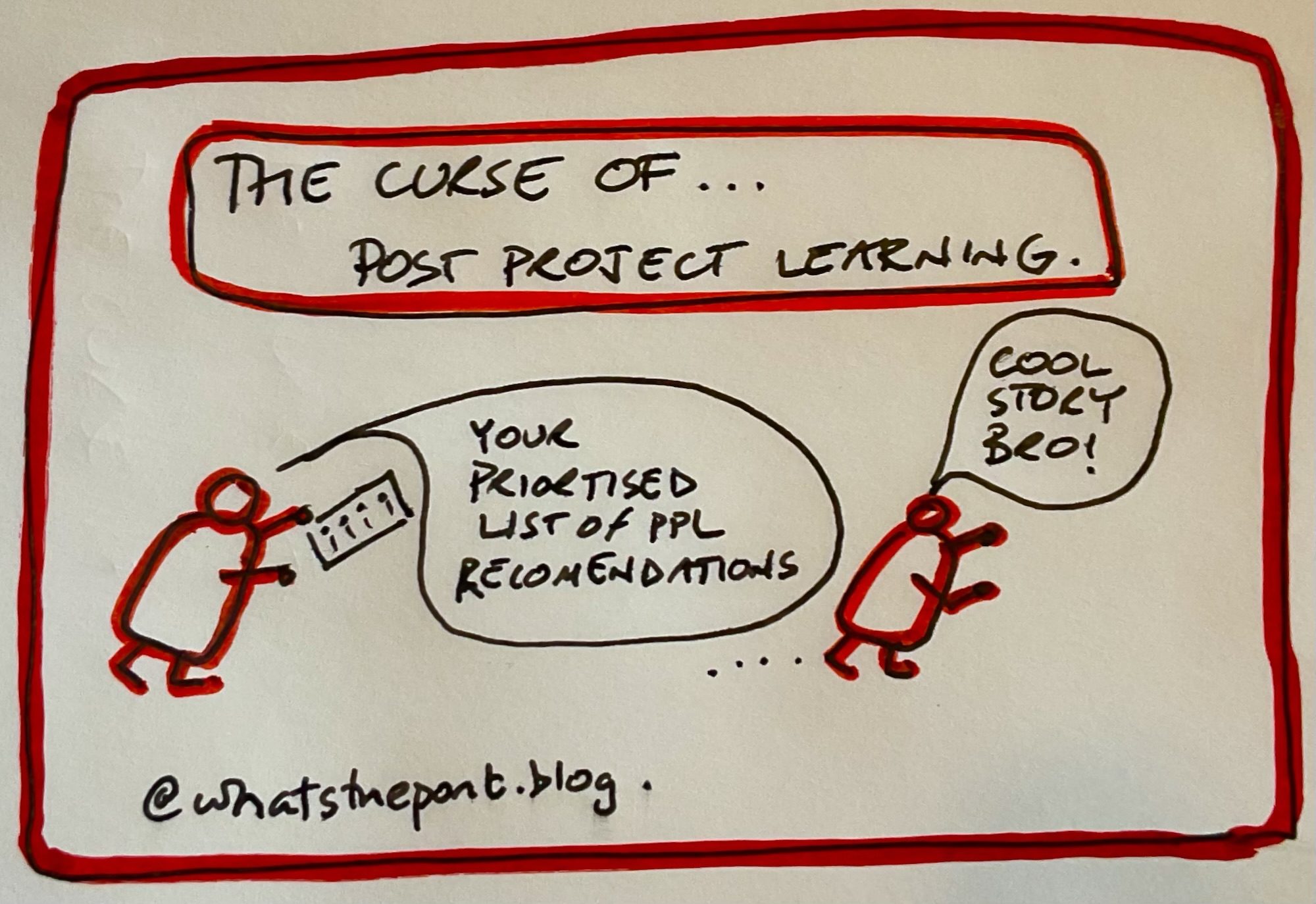
- Be very careful how you frame and facilitate the narrative
Emplotment is a concept anyone involved in organisational story telling will be familiar with.
However, ‘plotting’ out a story cuts both ways. Story can open conversations up, but a curated narrative can also close them down.
The goal is epistemic justice, allowing people to tell, and interpret their stories in their own way – without the interference of ‘mediators’.
This helps decision-makers encounter the actual experiences of the people affected, not a version that’s been smoothed into a digestible message. The facilitation matters as much as the story itself.
More details in this post: Emplotment, the curse of post project learning (and corporate stories)

- Offer a different measure of success
“The Story is the Measure” approach is something we should be aiming for. Real world stories people tell about their experiences.
If they are changing in the right direction — more of the good ones, fewer of the bad ones — that’s a meaningful signal. An indicator of movement in the right direction.
Stories and narrative won’t replace a balance sheet, but they can sit alongside one as a legitimate indicator that something real is shifting.
More details in this post : The Tell of Captain Walker… Mad Max, ‘Poxyclips’ and Tribal Stories.

- Finally, the deeper point (pont) — and the hardest sell
The real conversation you’re trying to create isn’t just about adding narrative to a dashboard.
It’s about helping decision-makers accept that in a complex world, certainty is an illusion, and the hard data they find comforting is often measuring the wrong thing.
That’s a significant shift in how power and accountability work in organisations — which is why it takes time, trust, and the right stories to get there.
More details in this post: Obsessive Measurement Infinity Loops (OMI Loops).


Leave a Reply