• Tilting at Windmills. The pursuit of pointless things.

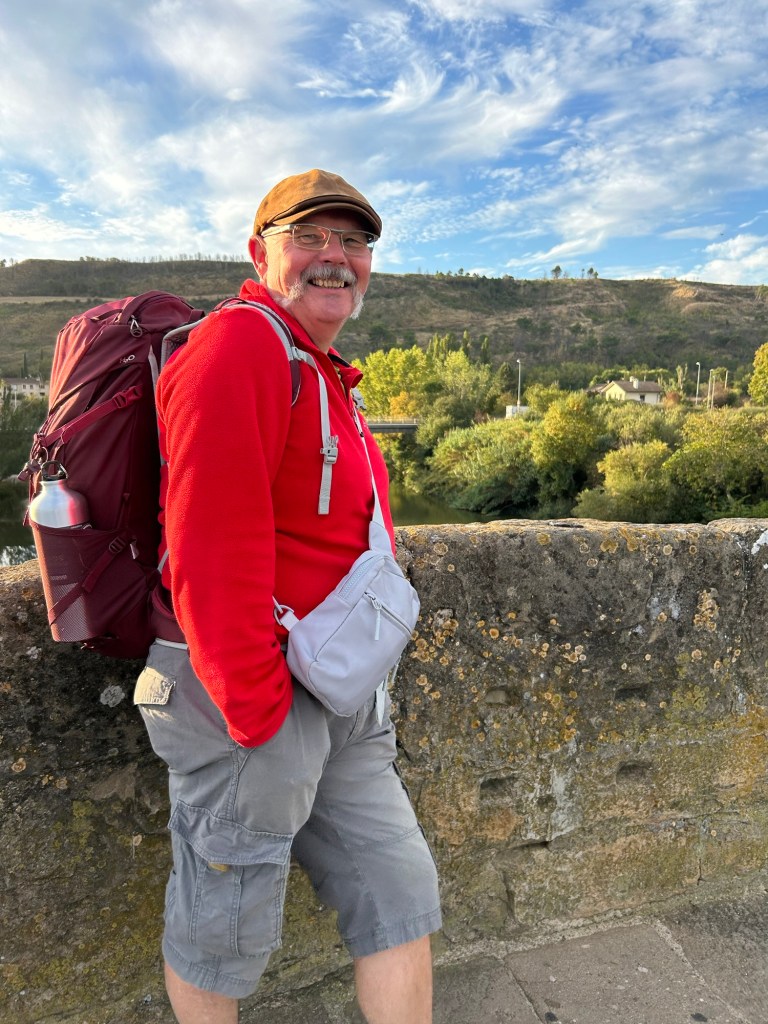
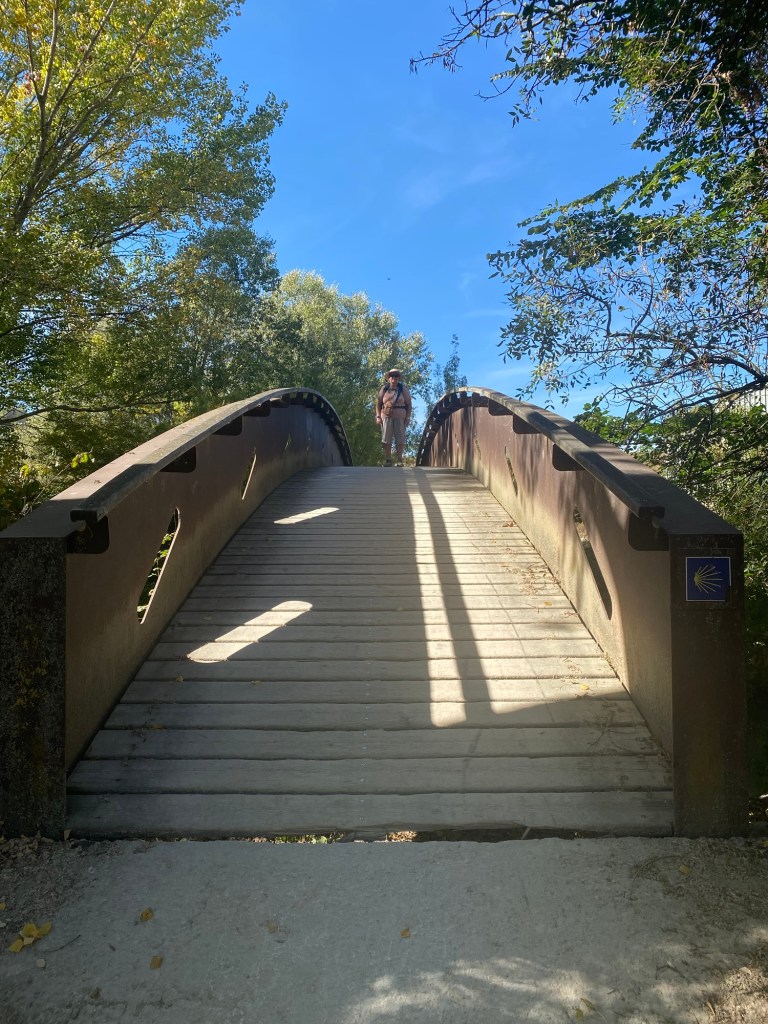
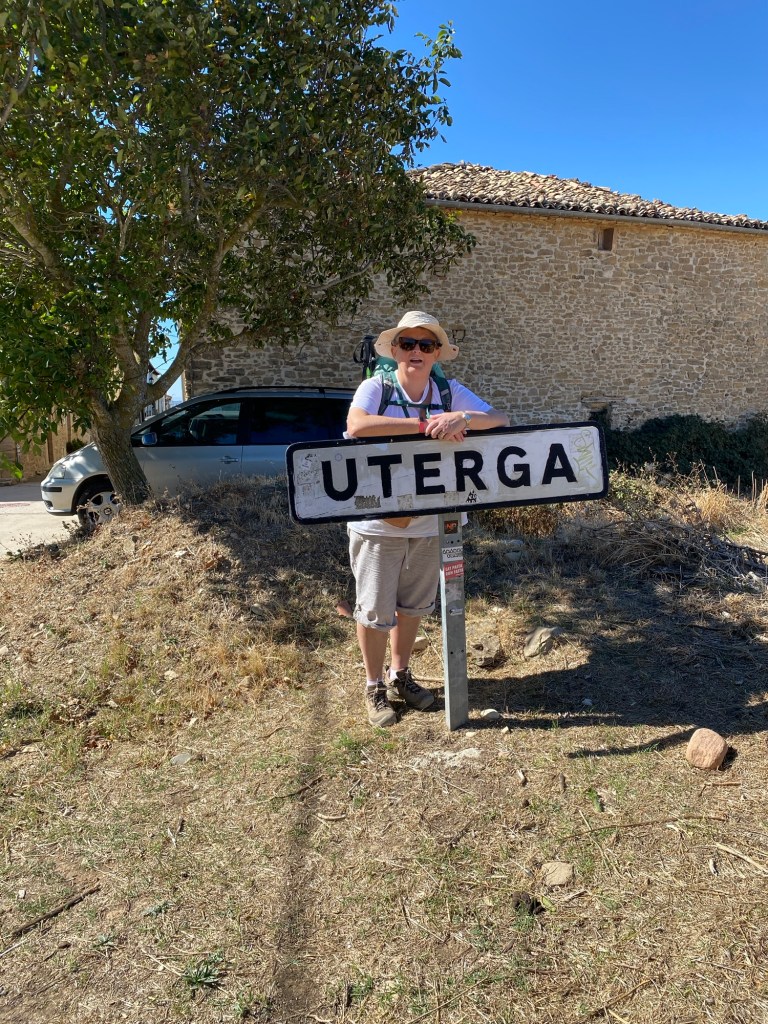
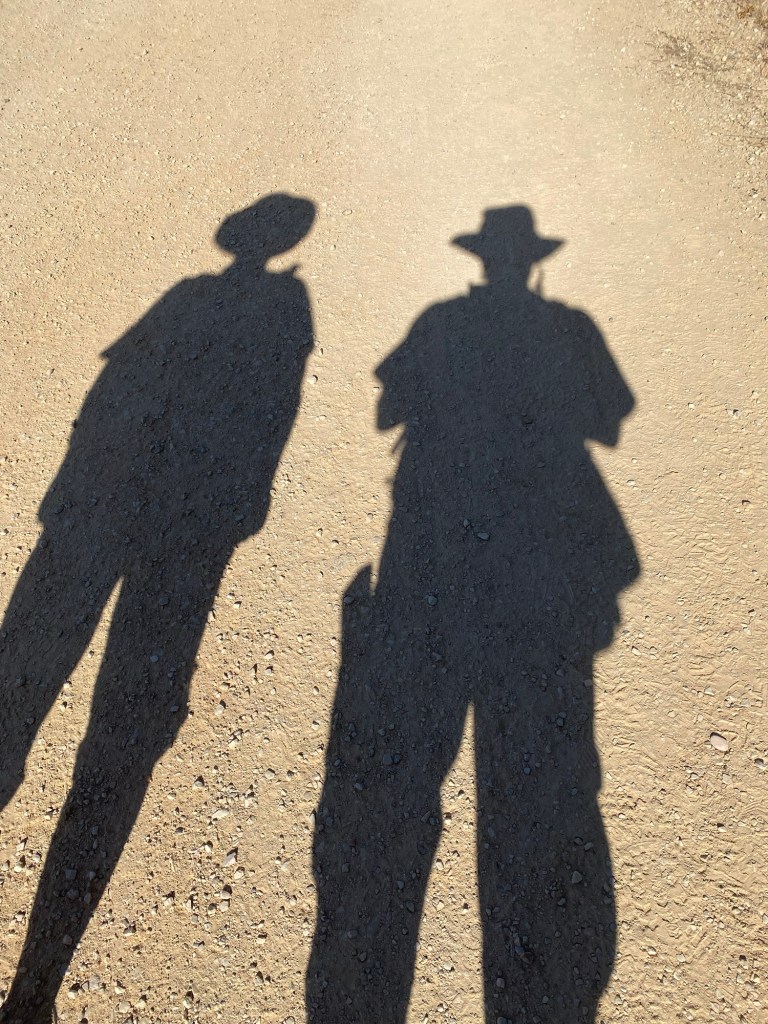
    Here’s a picture of me and SB pretending to be Don Quixote and Sancho Panzer.

    One of us might be slightly ‘Quixotic’. Mildly bonkers, occasionally seeing the world through the lens of romantic, idealistic fantasy. Whilst the other individual is a down to earth pragmatist. Very much keeping the bonkers one’s feet on the ground.

    I’m not prepared to say which one is which.

    A cool picture though.

    ‘Sanchification’ versus ‘Quixotization’?

    I must admit to previously not knowing a huge amount about the book Don Quixote published in 1605 by Spanish author Miguel de Cervantes.

    Our wanderings along the Camino de Santiago have however piqued my interest in Don Quixote.

    Sorry for mentioning the Camino de Santiago, again, I’m suffering from ‘reverse fight club syndrome’.

    I won’t shut up about the Camino (according to my family and so called friends)…

    Anyway, amongst the mountain of things written about Don Quixote is the idea that the two people take on each other’s traits after spending a lot of time together.

    Sancho Panzer takes on some of Don Quixote’s traits where his practicality and ‘earthy wit’ drifts towards imagination and romantic rhetoric. For Quixote, it’s a drift towards reality from illusion.

    This has go me thinking.

    Is the same sort of thing going on with me and SB? Are we taking on each other’s traits from days of endless plodding together in the Spanish Sun?

    Maybe.

    But maybe it’s happened already. After almost 40 years of being married it’s probably inevitable.

    And probably not a bad thing either in my case, I’ve changed for the better (I think).

    If you sup with the devil, use a long spoon.

    There is of course a negative side to this sort of thing. If you spend too much time in the ‘wrong’ sort of company, it can turn you into a ‘bad un’.

    Way back in 2012 I wrote a post about how a dysfunctional organisation can turn a good person bad.

    It was following a lecture I’d attended where all the evidence and research just backed up what we all know and our parents tell us, ‘be careful of the friends you keep’.

    Obviously it’s a bit harder to do if your ‘friends’ are co-workers in the organisation that pays your wages.

    The best advice I’ve heard on this is to have strong links outside of the organisation, so that you can keep reminding yourself of what ‘good looks like’, while you are looking for a new job.

    And don’t get drawn into the ‘culture’. If you are ‘supping with the devil’ make sure you do have a long spoon..

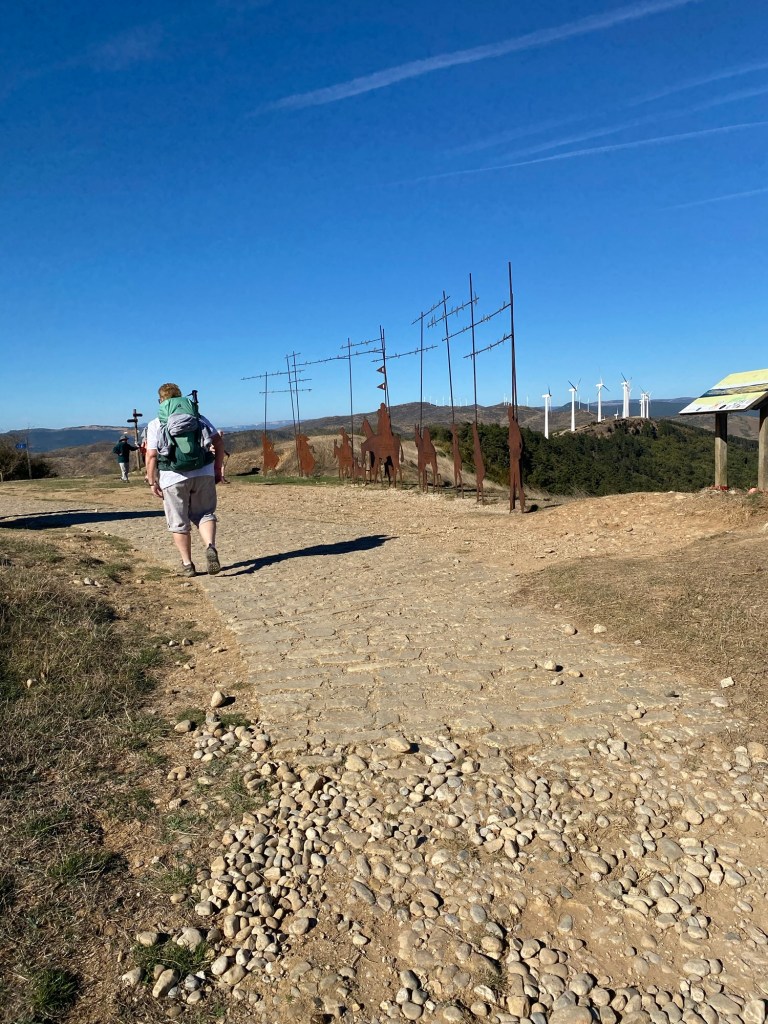
    Oooh look! Windmills, horseback riders and possibly lances…

    Tilting at Windmills.

    This is a lovely phrase I don’t hear often enough. Basically it means an activity that is pointless.

    Don Quixote in the book is famously known for charging windmills on horseback with a lance (tilting). He imagines the windmills are four armed Giants he is fighting off in a ‘Knightly’ manner, full of Chivalry.

    Of course, it is all imagined and utterly pointless.

    There are no real enemies and Sancho Panzer sits back on his mule and observes with pragmatic stoicism.

    You may have encountered some ‘tilting at windmills’ in your working or personal life?

    I’m currently on the look out, just so I can use the phrase.

    The Camino de Santiago teaches you so much (sorry, I’ve done it again).

    Here’s a video clip of Don Quixote, tilting at windmill.

    It illustrates the point perfectly.

    There are some fairly tenuous links in this post, but I suppose it does prove I’m not an AI bot.

    I can’t quite imagine a (semi) logical Large Language Model AI engine would have managed to have strung together such a random collection of thoughts.

    Unless… it really is badly hallucinating or somehow it’s used my previous posts as a training database. If that was the case I reckon it’s drifted into proper Don Quixote territory, completely detached from reality.

    So, What’s the PONT?

    • Be careful of the friends you keep. Good advice from your Mam. Because if you spend a lot of time with someone, you might take on some of their traits. Like Sancho Panzer and Don Quixote or SB and me (probably a good thing in my case).
    • Beware of taking on the traits of those around you in the workplace. Especially if it’s not such a great place. Keep ‘anchored’ to things outside work, and ‘if you sup with the devil’, use a long spoon.
    • If there’s a chance, please try to introduce the phrase ‘tilting at windmills’ into office speak. There will be opportunities, I’m sure of it.
    • Adios.
    From Alto del Perdon, between Pamplona and Puente la Reina on the Camino de Santiago. SB off to do some tilting.

  • Camino de Santiago. Navarrete to Najera.

    It’s our last day of walking our current endeavour on the Camino de Santiago.

    This gets us to roughly 200km or 25% of the way to Santiago de Compostela, depending which signposts you believe.

    We might finish in 3 years time at this rate.

    Here’s the 4 A Day Picture Diary of today’s events.

    Where? We started off from Navarrete in a hotel where I think we were the only people.

    Literally, please lock the door behind you when you leave.

    Slightly unnerving in a 700+ year old building with lots of ‘history’.

    No picture from the hotel bedroom.

    It was too misty and mostly overlooked other buildings.

    I was looking out and thinking about taking a picture when the person in the building opposite lifted their window blinds whist naked.

    It didn’t feel right to take a picture then…

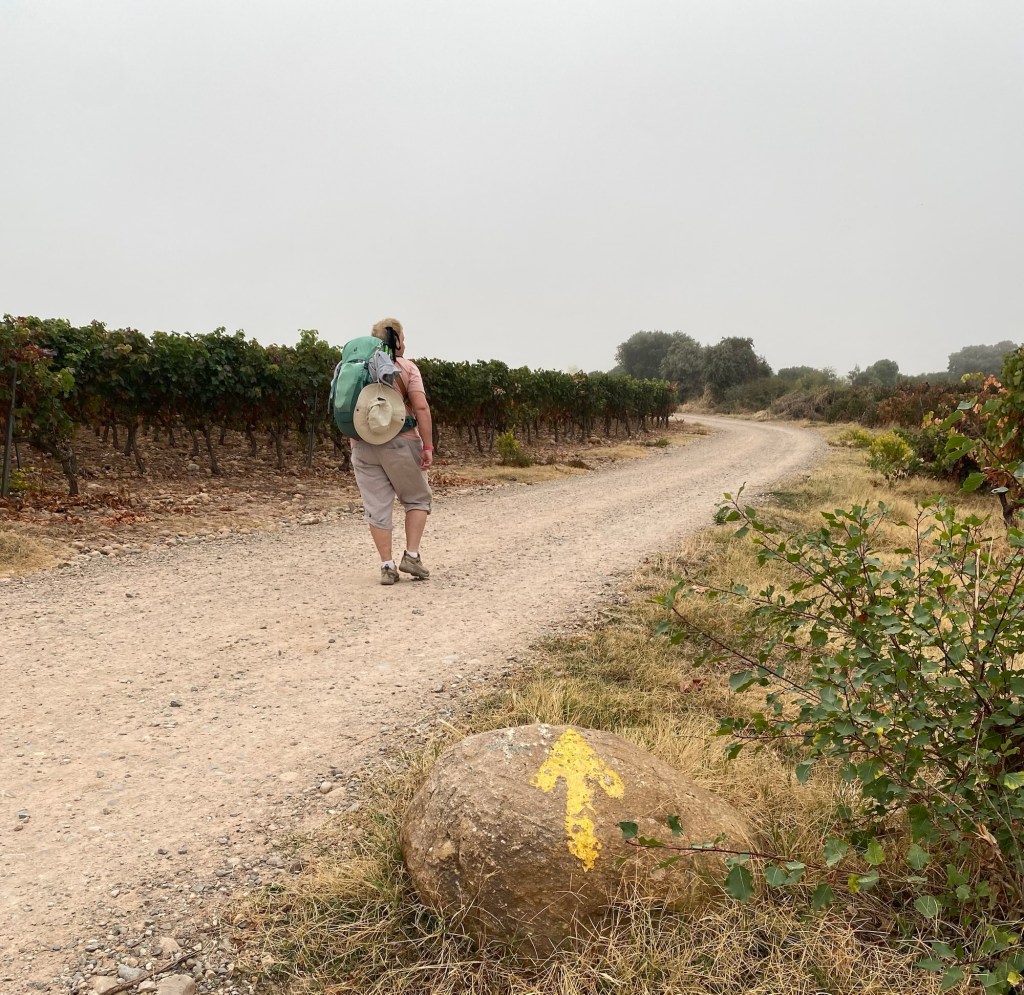
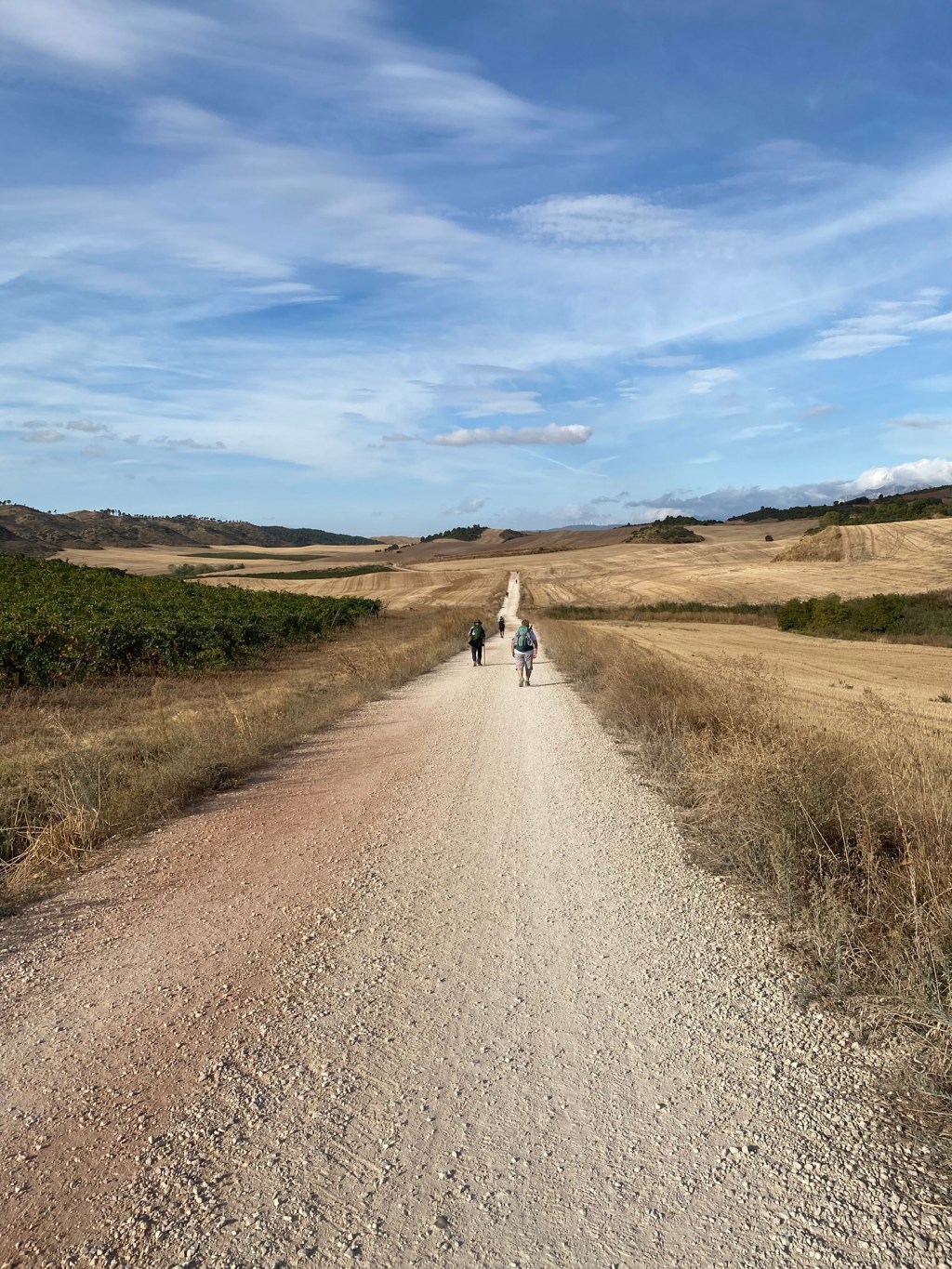
    What? Walking through mile after mile of Rioja vineyards. Following the Camino de Santiago yellow arrows.

    Below is another picture looking to Najera when the cloud / mist cleared.

    Somewhere in this vista the Battle of Navarrete / Najera happened in 1366, where the Black Prince (of Wales) got his hands on the big red Ruby that currently sits in the crown worn by UK Monarchs.

    Who?

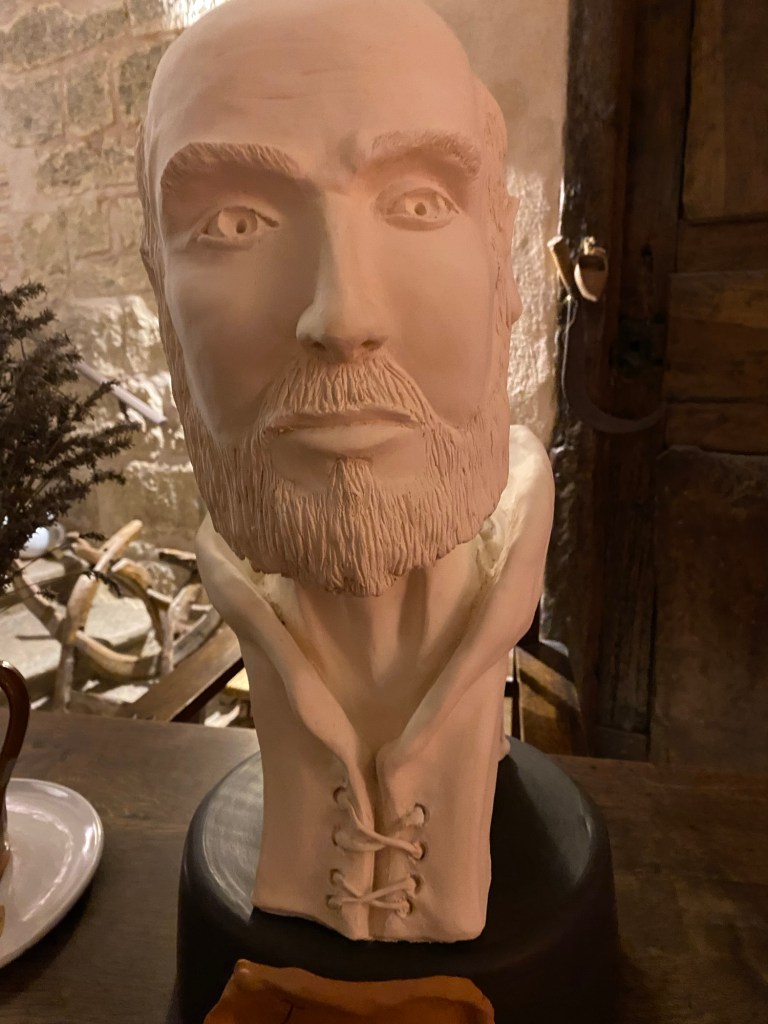
    I thought you might enjoy a picture of Saint Ignatius of Loyola.

    Before he became a Saint he was a Knight and spent between 1517 and 1521 living in the building where we spent last night.

    That was before he went on to found The Jesuits.

    There’s an Ignatius Camino named after him (400 km long).

    Handy to know in case we are looking for something after this one.

    Tell me you aren’t spooked by the thought of going to bed in an empty hotel and passing this in reception.

    Why? Why are there so many inspirational messages written on stones all long the Camino.

    Where do people find the energy?

    Anyway, this structure was like the mother ship for them.

    Every bleedin stone had some sort of message on it.

    I think this particular type of graffiti is well intentioned.

    No ‘Live, Laugh, Love’ yet though (thankfully).

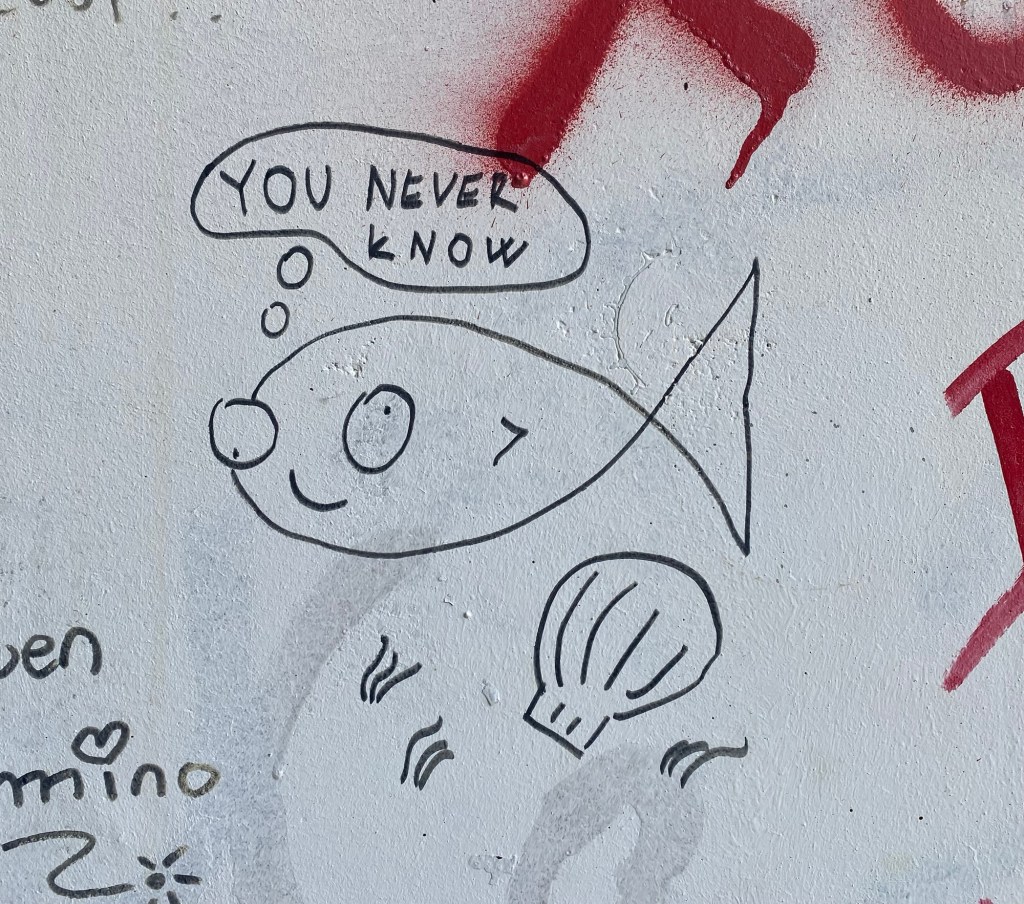
    Sadly no more Wonky Fish graffiti either.

    Final bonus picture.

    On the Camino it’s reassuring to know that Jesus will save you, or alternatively you can call a taxi.

    Hopefully we will be back in 2026 to do some more.

    Buen Camino.

  • Tin Sheds. International Edition.

    Coming this week from the Camino de Santiago.

    Other examples of Welsh Tin Sheds are also available.

    It was getting a bit crowded on the main Tin Sheds page, so I’ve created another space for International examples.

    And it’s a good one to start with.

    Feast your eyes on this.

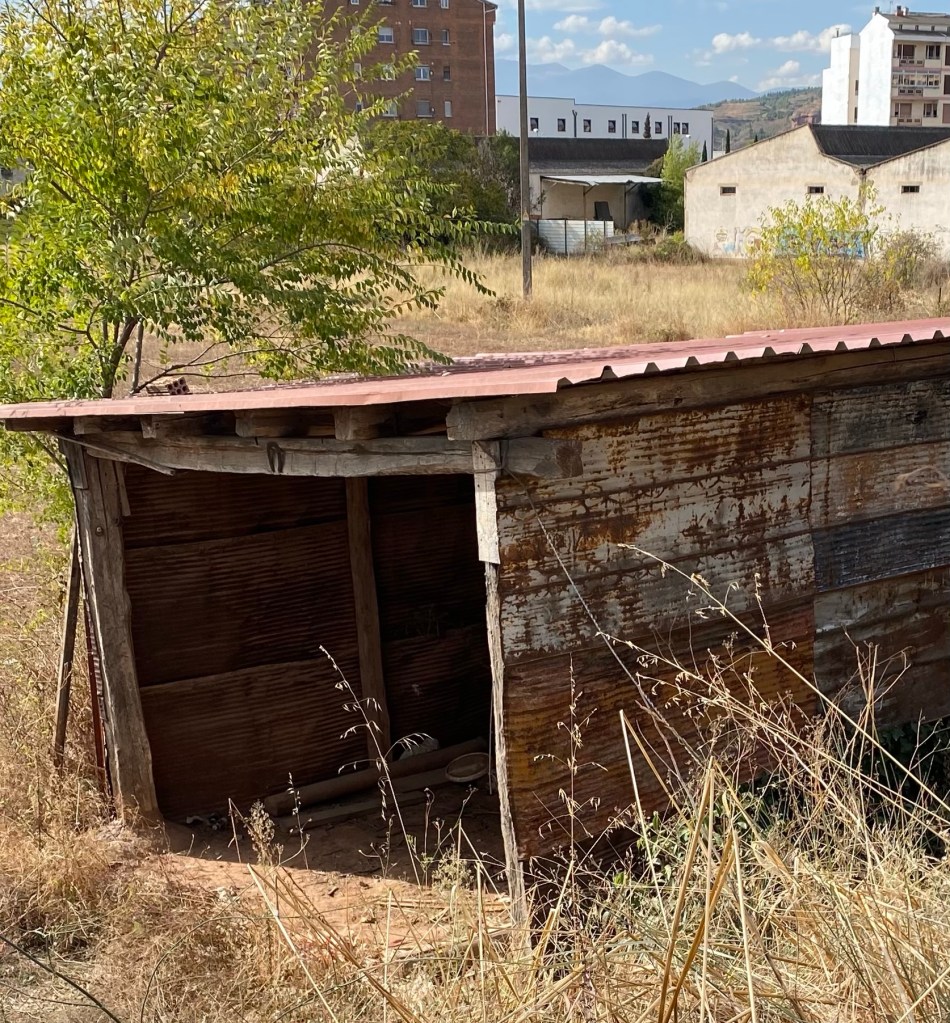
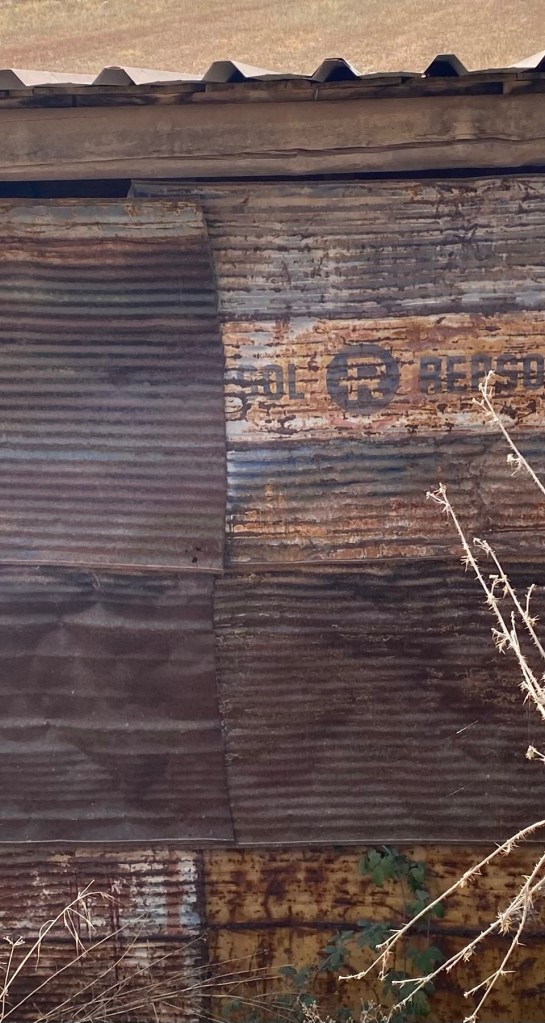
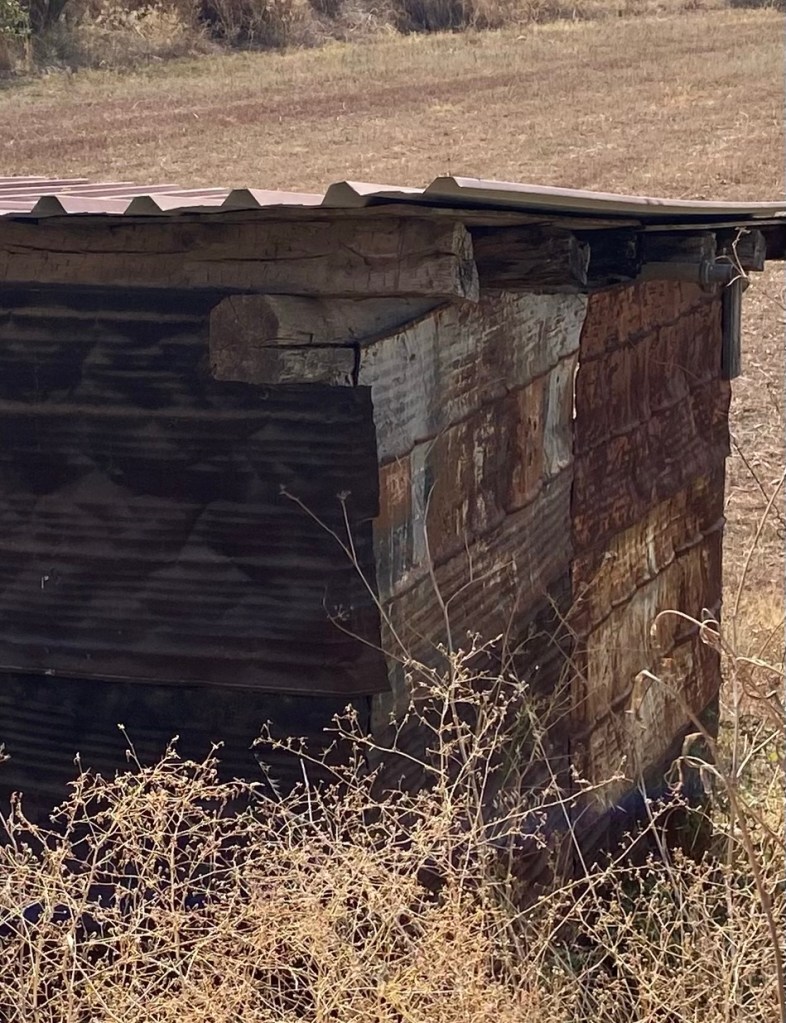
    It’s a tin shed that has been constructed from old 45 Gallon Oil Drums.

    The top and bottom removed, cut open and flattened out.

    A low cost, recycled and effective building material.

    Tin shed making in its most artisan form.

    Please tell me where I can get to see it?

    This beauty is sitting alongside the Camino de Santiago on the outskirts of Najera in the Rioja region of Northern Spain.

    Quite easy to find if you walk the 16km from Navarrete.

    Here’s the rest of the pictures.

    Check out the roof timbers, they might just be ‘over engineered’.

  • Camino de Santiago, Logrono to Navarret, Rioja

    Before I start, I just want to point out that a rest day sometimes causes more problems than cures.

    I’ve got a weird groin strain that’s making my heel go numb.

    So just as well it’s a short day from Logrono to Navarrete.

    And here’s a picture of me doing some foot stretches along The Way – it’s a common pastime.

    The 4 A Day Picture Diary.

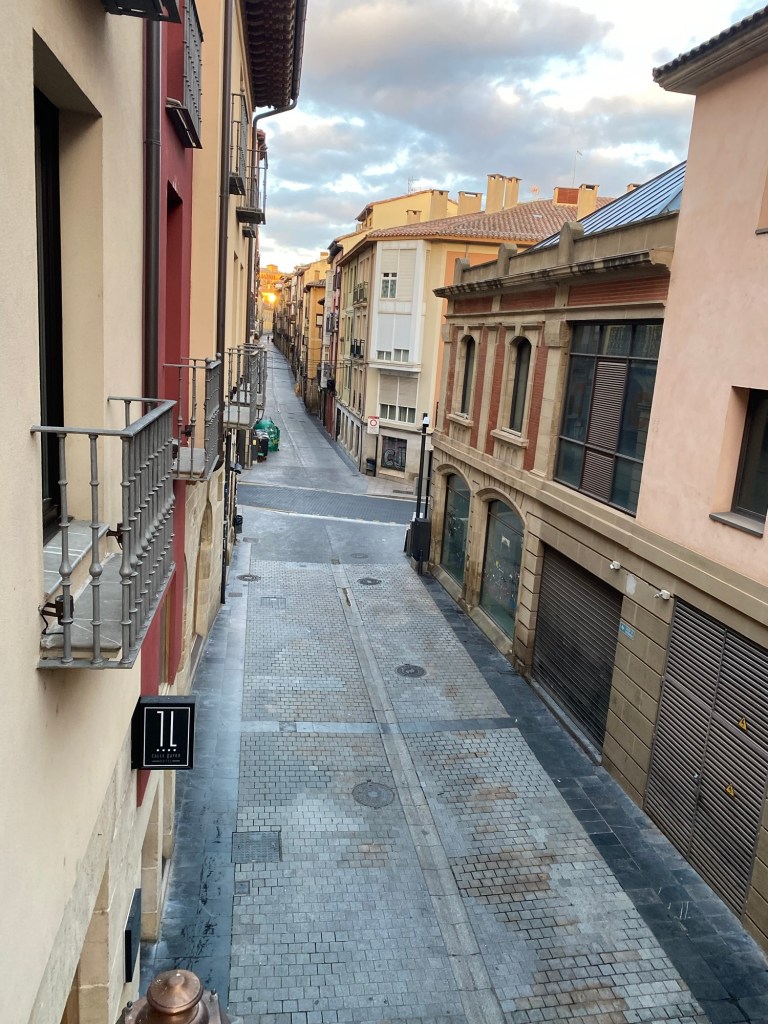
    Where? Keeping with the pattern, here’s a view from the hotel window.

    That might be sunlight reflecting off the Church of Santiago el Real in the distance.

    There are so many massive Churches it’s hard to know what’s what.

    However, the Church of Santiago el Real has a statue of King Santiago on a horse that intrigued SB.

    But that’s for another time.

    What? Walking, or more like plodding today.

    The plod out of Logrono is lovely. Once you get past the built up bit it is a few Km of attractive urban parks, then a cycleway / running track up to a reservoir.

    Very lovely.

    But busy with every Sunday morning jogger and cyclist who ever drew breath this morning.

    So no picture of that, as lovely as it was.

    Instead a bit more Camino rough stuff after they had all turned back to Logrono.

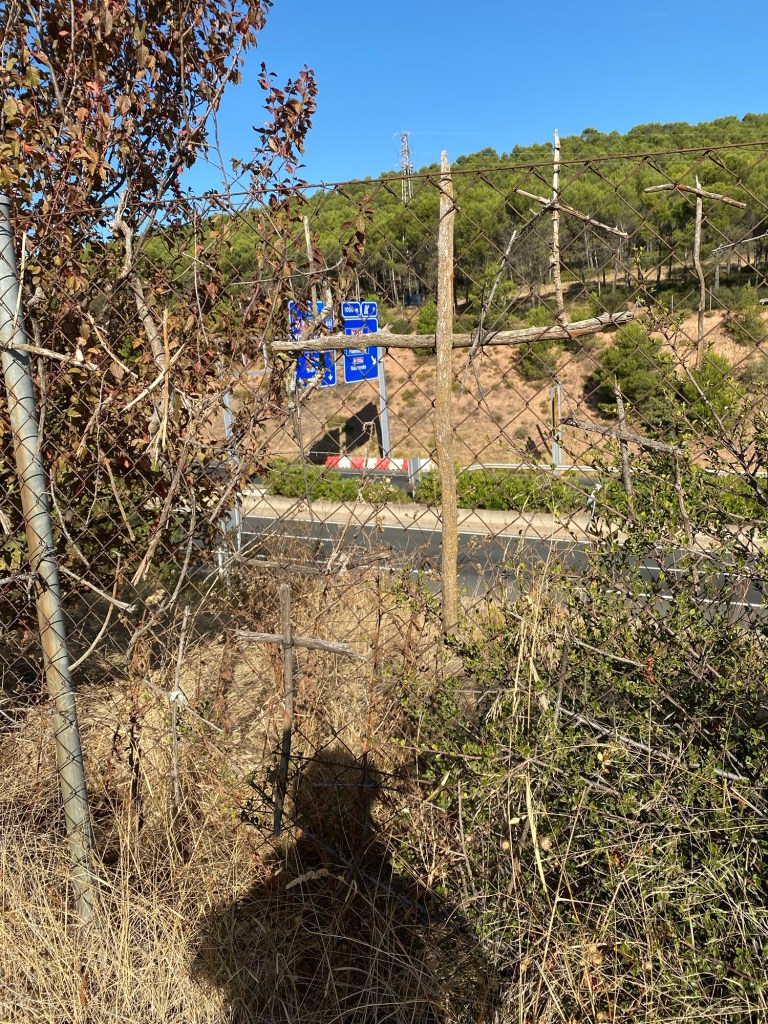
    A bit where the path runs parallel to the motorway called ‘Cross Hill’ on google maps.

    It’s obvious why when you walk it.

    Who? Us and one of the remaining Osborne Bulls.

    It’s worth a read about the history of these iconic structures.

    Started out as plain old advertising boards and became a symbol of national identity (for some).

    PS we have got better pictures of the Osborne Bull.

    Why? Why can’t I get a Camino walking outfit like this in Mountain Warehouse (or any other lesuire gear supplier).

    It looks totally swish.

    Obviously I’d ditch the book for an iPhone, you’ve got to think about weight.

    We saw this beauty in the Church in Navarrete.

    There is no bonus Wonky Fish graffiti picture.

    I didn’t see any today.

    However, here are some random plastic chairs under a road bridge (where you usually find the Wonky Fish graffiti).

    I think the plastic chairs might have been deliberately placed there for Peregrinos and others to have a rest in the shade.

    You see plastic garden chairs in all sorts of unusual locations.

    Buen Camino

  • Was the Camino de Santiago a historical means of knowledge transfer?

    Specifically, would the Bridge in Pontypridd look like it does now if William Edwards had been on a Camino Pilgrimage?

    Bear with me on this.

    I’ve been told not to keep trying to connect everything back to Old South Wales, like we are the Centre of the Universe or something.

    But this is relevant (kind of).

    Here’s a picture of the Puente La Reina bridge from above the bed in the Puente La Reina room in a hotel I slept in this week.

    Knowledge Transfer (the new old idea). I’ve been wondering about this quite a lot during my plodding this last week.

    People who undertook the Pilgrimage in historical times will have; come from somewhere, experienced things along the way and gone back to somewhere.

    If they were anything like modern Peregrinos, they don’t half like to talk.

    Was the historic Camino a means of transfer knowledge, informally, across Europe.

    I’d like it think so.

    I’ve only done some cursory digging online but I can’t find a PhD on it – yet – there must be something?

    This is where my mind goes with endless plodding.

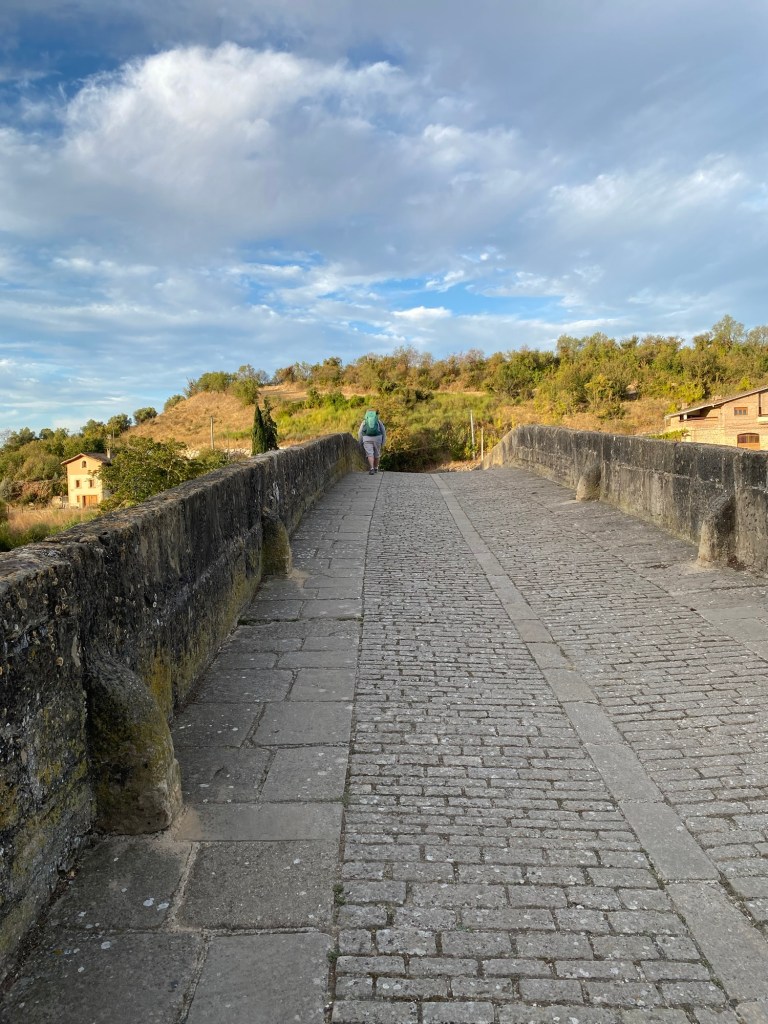
    Puente La Reina. The Queens Bridge crosses the River Arga and was built in the 11th century. It was apparently built by a local Queen so that Peregrinos could get across the river easier.

    A couple of points to note:

    • The River Agra is pretty wide at this point (wider than the River Taff at Pontypridd)
    • It rises in the Pyrenees near Ziburi (we walked through the area) so will have seen a fair few floods over hundreds years.
    • It’s got 5 arches and is reasonably easy to climb and descent as old stone bridges go.
    • Important Point. There are holes in the buttress between each arch and above the piers in the river bed. The doorway shaped things.
    • Their purpose is apparently to let through flood water and to reduce the weight of the bridge.
    • The bridge was built over 500 years before the attempt to build a bridge over the River Taff at Pontypridd.
    • Apologies if I’ve offended any bridge engineers with my ignorance.

    Here’s the picture of Puente La Reina again to refresh your memory.

    Pontypridd Bridge. I hold Ponty Bridge very dearly in my heart, so I need to be careful what I say here.

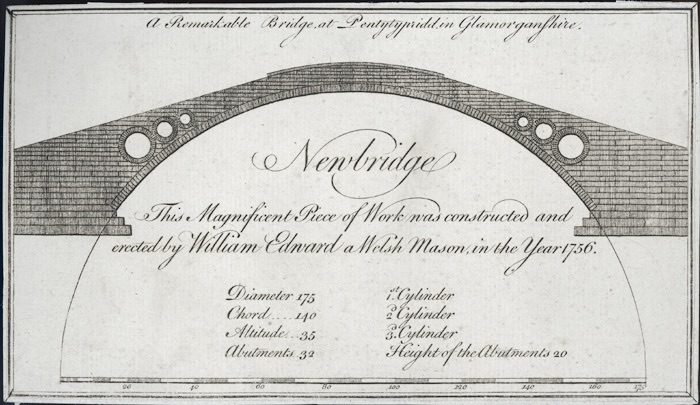
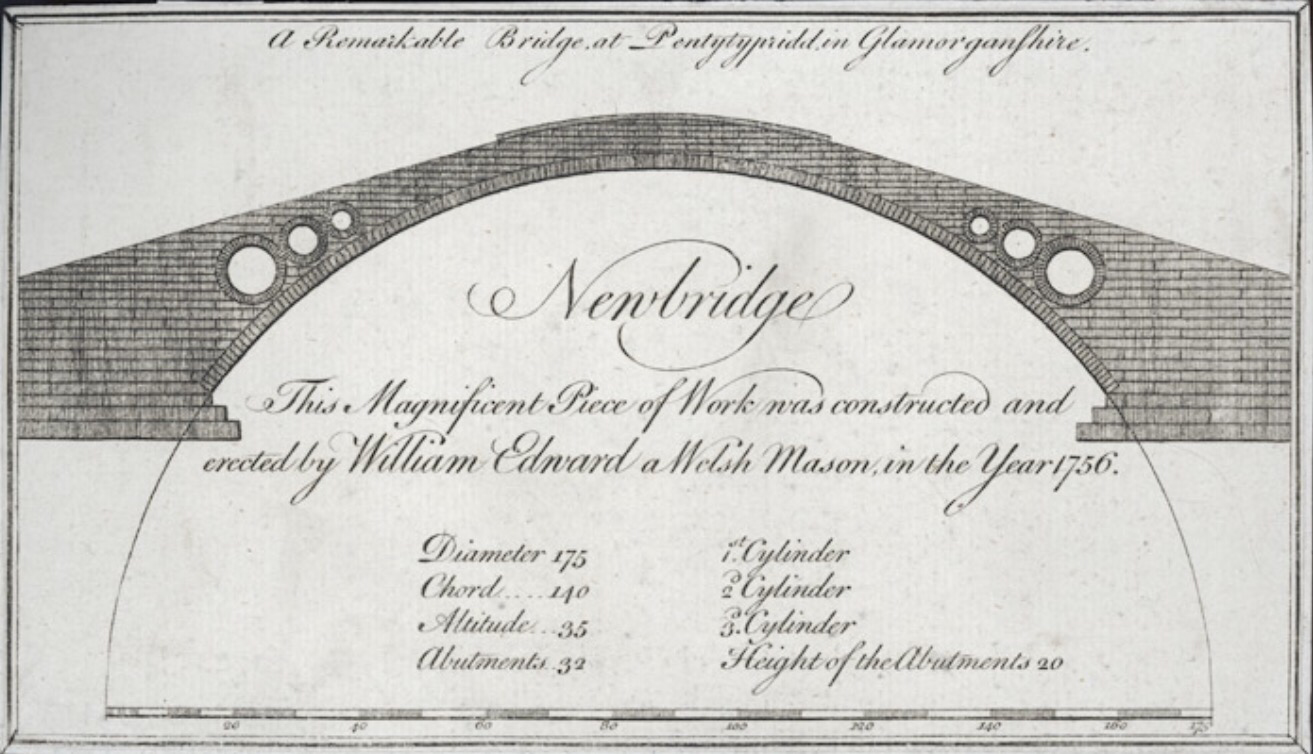
    To start a picture (of a drawing) for comparison.

    The thing to note is that it is single span and quite steep.

    So steep in fact that it was a bit of a struggle to get a loaded horse and cart across it.

    For Puente La Reina, even an old donkey like me gets across with relative ease.

    My last trip across Ponty Bridge about 2 years ago and was somewhat sketchy shall we say.

    The details of how William Edwards eventually build a bridge at Pontypridd are worth a read.

    It took four attempts before the existing bridge was completed in 1756.

    There’s a lot to celebrate in having what is claimed at the time to have been the longest single span bridge in Europe.

    The 3 cylindrical holes in each buttress have a lot to do with its success, reducing the weight and pressure on the crown.

    But it’s not that easy to walk over ( speaking as an old donkey) and a bit of a struggle with a horse and cart.

    Did William Edwards travel much?

    The first attempt William Edwards had at building the Pontypridd Bridge involved three arches, with two piers in the river.

    This bridge was destroyed in a flood in 1746 when debris became trapped between the two piers in the river.

    I’m wondering… if William Edwards had seen the design at Puente La Reina, would he have tried something different?

    Would a trip along the Camino de Santiago – looking at bridges – helped with some knowledge transfer, and 18th Century South Wales bridge building?

    A sort of ‘knowledge transfer’ field trip before you start placing stones and mortar.

    It’s just a thought (for my day off walking).

    Here’s a picture of an old donkey on Puente La Reina and an incredibly steep single span footbridge on the outskirts of Estella.

  • Camino de Santiago – End of Stage!!! Torres del Rio to Logrono

    We didn’t think we were going to do this at about lunchtime yesterday.

    The thought of another 8km in the building heat was daunting.

    Those Taxi phone numbers that appear on bus stops and lamp-posts were a serious temptation.

    But, like true Peregrinos we avoided the temptation and trudged on.

    Blimey, that sounds dramatic.

    It was fine, ignore the melodramatics.

    Here’s the 4 A Day Picture Diary.

    Where? View from our hotel room at Torres del Rio.

    The sun rising on another day of the Camino.

    They are big on the Templars in Torres del Rio.

    The other place we could have stayed looked like a Templar Museum / theme park, next to the Church apparent built by the Templars.

    I wonder if Dan Brown enthusiasts hang out there?

    What? You’ll notice a change in terrain today. A lot more up and down amongst the vineyards.

    More interesting, but more effort.

    The last few km into Logrono was on tarmac roads, downhill, with cyclists racing past.

    I had a moment of hating cyclists and their jaunty bell ringing to warn us they were about to fly past.

    That ain’t doing proper Pilgriming, where’s the ‘grim’ in cyclist?

    Who? That’s the back of Jules from Sydney trudging towards Viana.

    We walked along together for a bit and had a great chat about the connections between Old South Wales and New South Wales.

    Including; Gavin and Stacey, Barry and Julia Gillard (first Welsh Woman Prime Minister of Australia), who he bumped it in London on his way to the Camino.

    Why? Why are there so many small small snails covering just about everything on the walk down into Logrono.

    I hope it’s not a sign of trouble for the snails.

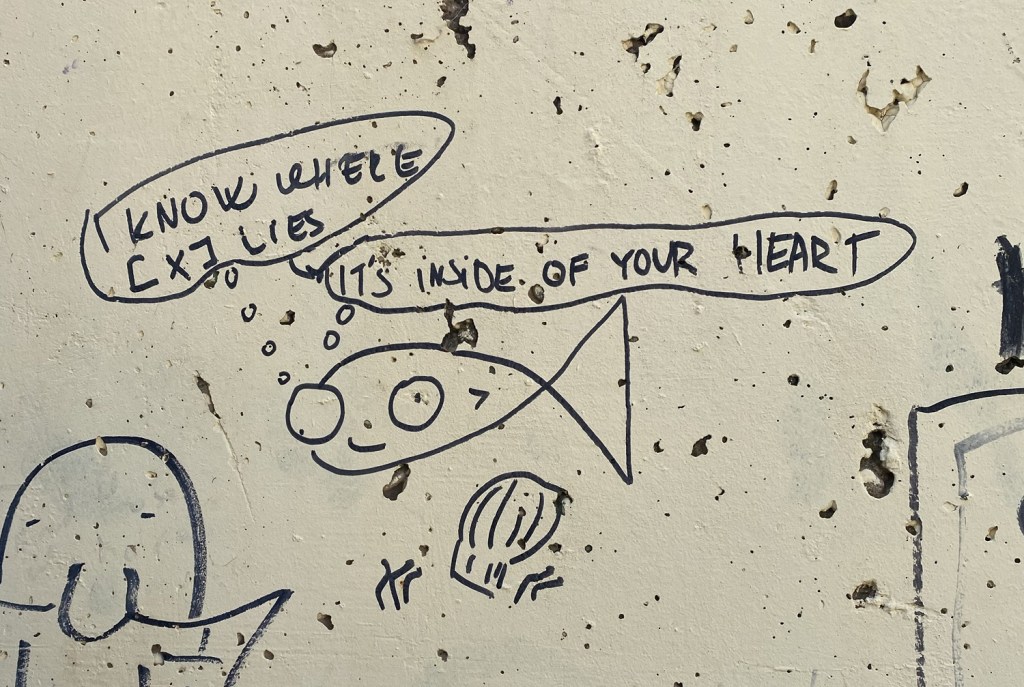
    Bonus Wonky Fish Picture.

    The Wonky Fish is starting to get interactive.

    Insert the name of your loved one [SB] here…

  • Camino de Santiago, Villamayor de Monjardin to Torres del Rio.

    I think I’ve fallen into a pattern for the 4 a day picture diary of our walk.

    Starting with a view from the hotel window where we spent the night.

    Where? Villamayor de Monjardin as the sun is rising over the local winery, Bodegas Castillo De Monjardin.

    This is unfortunately a view over the working end of things at the Bodegas rear.

    The front elevation is stunning – as are so many of the Bodegas we’ve passed.

    Some very modern and brutalist design, but all very well done.

    What? You guessed, walking.

    The Camino apps warn you to fill up with water before the next stretch to Los Arcos as it is 12km of nothing but wheat fields.

    No shade.

    No water.

    No snacks.

    There was supposed to be a food truck at about 6km, but it was just an hallucination.

    AI probably invented it.

    Who? Me and SB did stop at the imaginary food truck stop though.

    There were some trees, shade and benches for the daily roadside chiropody clinic.

    To be fair to the imaginary food truck people (I assume it was them), they had left a cooler box of water for Peregrinos in need.

    We didn’t partake.

    Having carried 2kg of water 6km I was going to drink it!

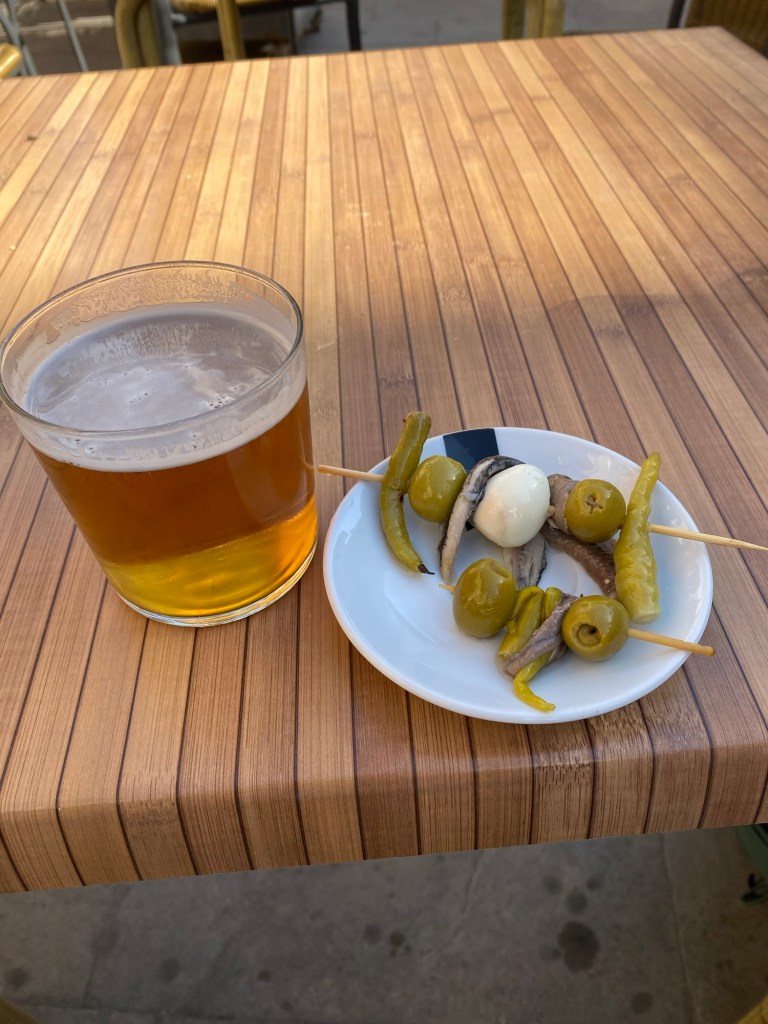
    Why? Why don’t we have snacks like this at home?

    Lunch at the Camino Café in Los Arcos.
    There’s a lot going on here.

    SB was worried I’d gone full bushtucker trial and the one stick consisted of eels and an eyeball.

    It wasn’t.

    A bantam egg, anchovies, green peppers and an olive.

    Sets you up for the next 8km!

    Bonus Wonky Fish Picture. I’m getting quite attached to the Wonky Fish graffiti now.

    They have become my friend, it says so.

  • Camino de Santiago, Estella to Villamayor de Monjardin (a short day).

    One of the preconditions / contract stipulations of SB taking part in the Camino walk is that she gets to book the hotels.

    And they have to be ones she approves of.
    Secretly I’m very appreciative of that condition.

    So the ‘short’ walking day was actually planned around a stay at a very nice boutique hotel in Villamayor de Monjardin.

    I don’t deserve such nice things…

    Back to the 4 a day picture diary.

    Where? View out of our hotel room window in Estella.

    The Church of San Miguel.

    More like a fortress, but given the history of the area that is not surprising.

    Lots of these towns are like something from a film set.

    What? In between the walking we are trying to do other stuff.

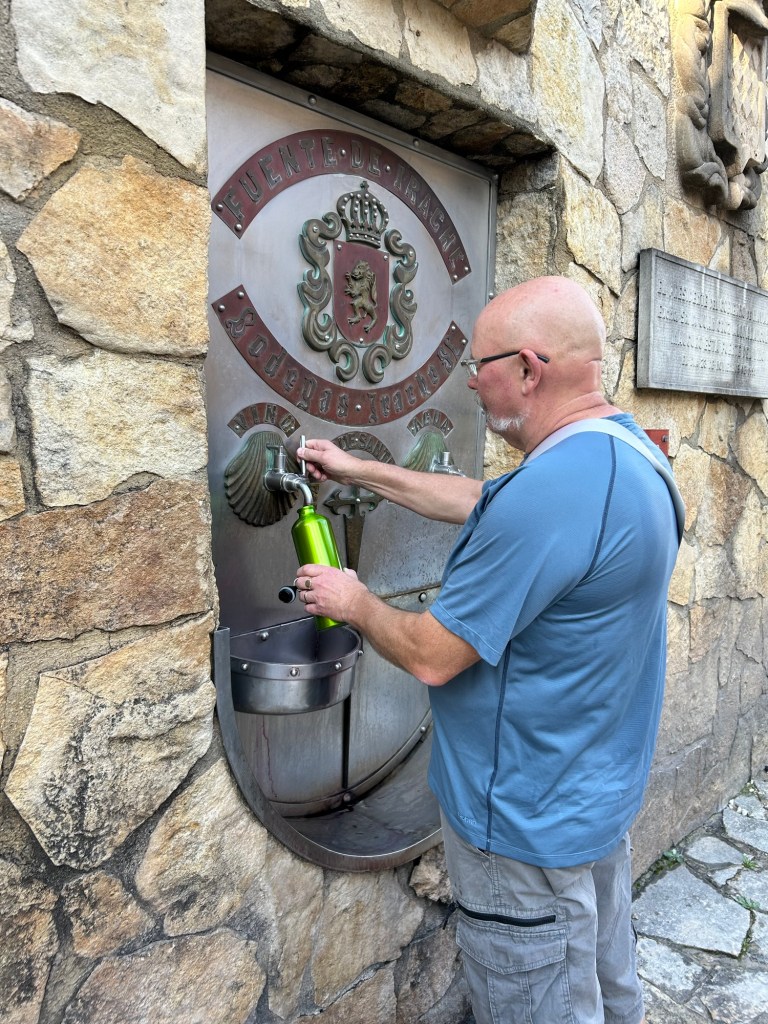
    Here I am taking part in a local ritual of having a drink from a Wine Fountain (at 9.30 am).

    Yes, you read that right.

    At Bodegas Irache Winery there’s tap where you can fill up with red wine for free.

    Also water.

    It’s keeping the ancient tradition from the nearby Monastery alive of giving wine to Pilgrims.

    Being part of traditions is important to me.

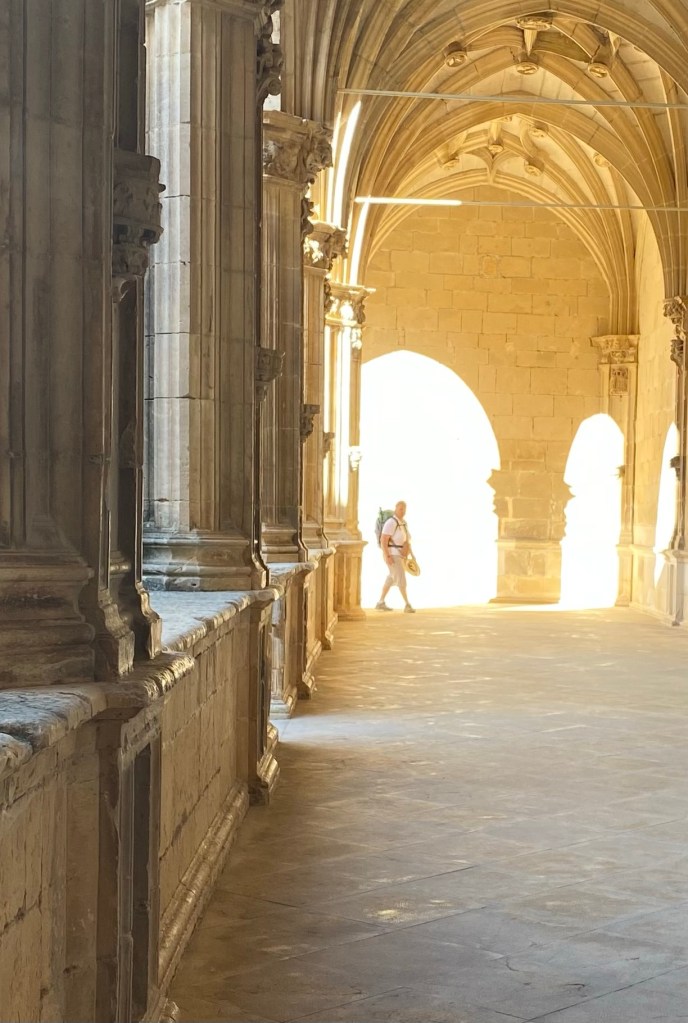
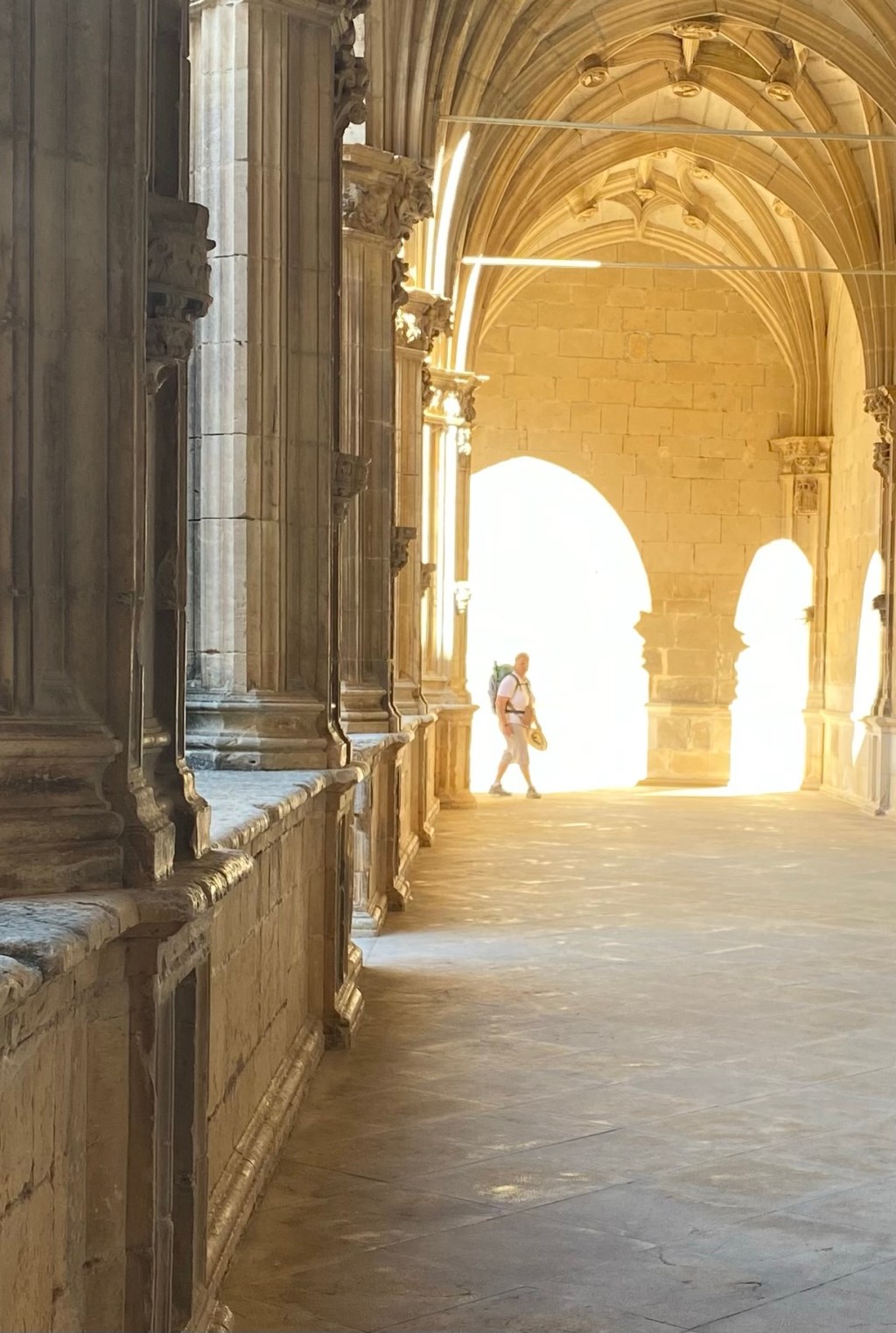
    Who? Here’s SB rounding the corner in the Cloister at the Santa Maria Monastery in Irache.

    Bathed in ‘Angelic Light’.

    Whilst I was absorbing the wonders of Medieval carvings and such like, SB was examining the electrical wring on the Church refurbishment. Apparently it is very good. Ecclesiastical Electrical Safety Certificates are currently her thing… Don’t ask.

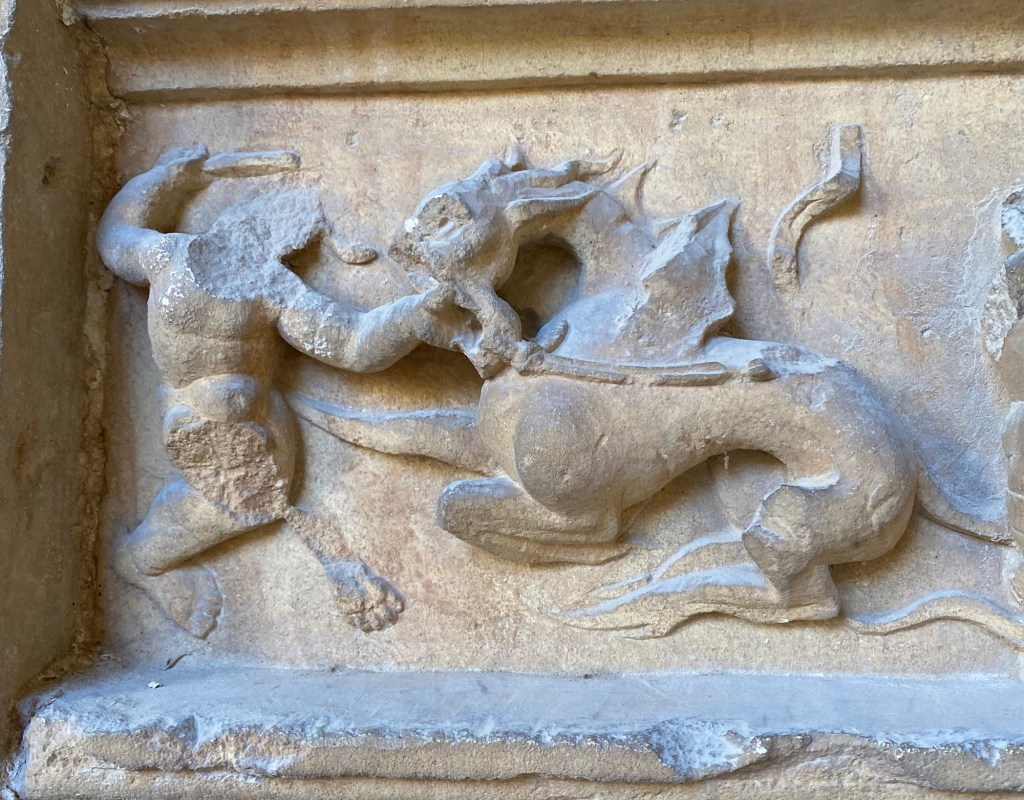
    Why? Why the archeologies and conservation people at the Monastery reckon this is Griffo is beyond me.

    It’s obviously a Dragon.

    And there was probably a Welsh Stonemason Pilgrim who travelled this way back in the day.

    A bonus picture.

    I’m starting to see this wonky fish graffiti in a few places along the Camino.

    All with cute exclamations.

    It’s the new ‘live, laugh, love’ if I get my way 🙂

    You Never Know…

  • Camino de Santiago. Puente La Reina to Estella.

    Apologies. I’m a bit delayed in posting the Where, What, Who and Why 4 a day picture blog.

    Yesterday was a bit longer than expected and very much warmer than either of us had hoped for.

    So, morale in camp was at a low ebb last night.

    I should make it clear, we are NOT camping. We stayed in a nice hotel, with a lift.

    Hotel lifts have become a more important consideration than food and drink to be honest.

    Anyway, here’s the 4 a day.

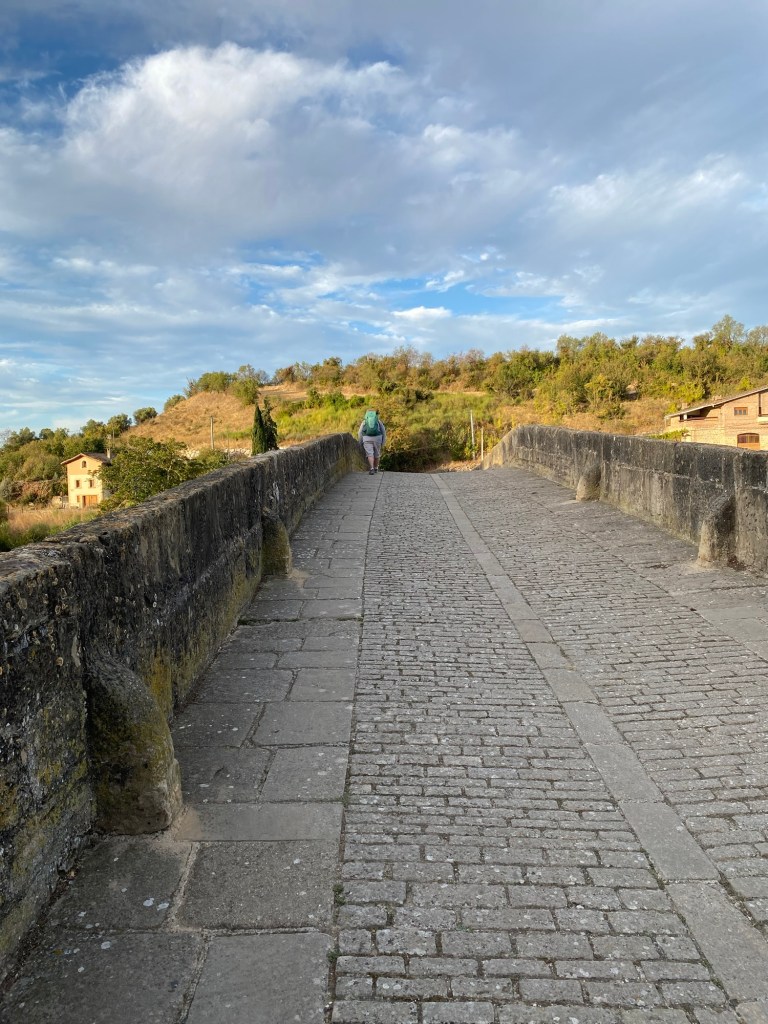
    Where? On the famous Medieval bridge out of Puente La Reina.

    One of many steep hump-back bridges you cross to the way to Estelle.

    I was warned not to compare it to the bridge crossing the River Taff in Pontypridd.

    What? Walking through the gorgeous Spanish countryside.

    We are just staring to see more olive trees and grape vines.

    There is a downside though.

    Why are all the towns and villages on top of hills.

    There’s a fair bit of up and down.

    Who? Buen Camino to the older Spanish Gents who seem to fly past us on the path.

    Carrying very little in rucksacks if anything at all. Some of them busily smoking cigarettes, some occasionally singing, but always generous with a Buen Camino.

    Unlike lots of other Pilgrims you keep bumping into, you never see these old boys twice.

    I wonder where they go?

    Why?

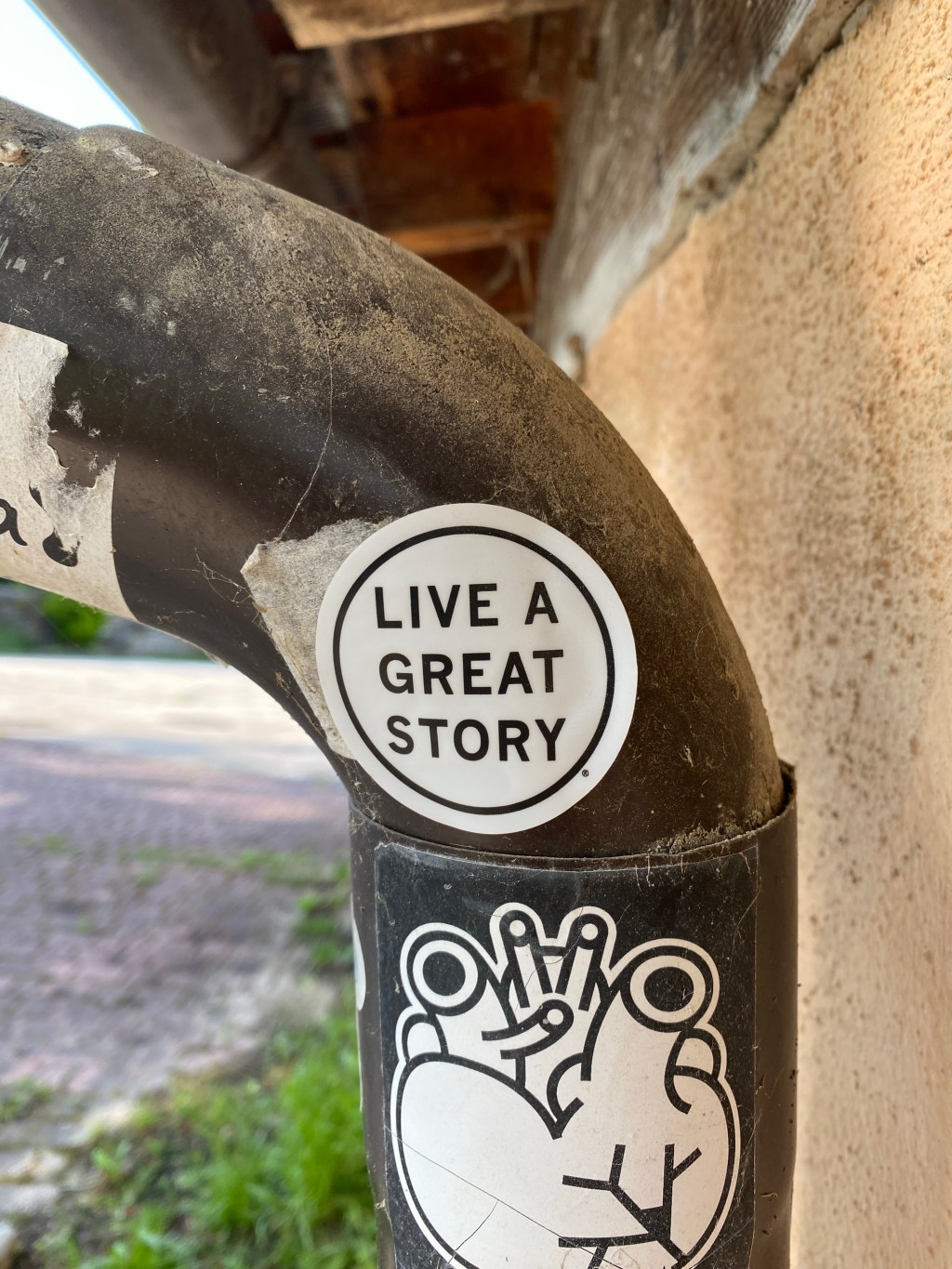
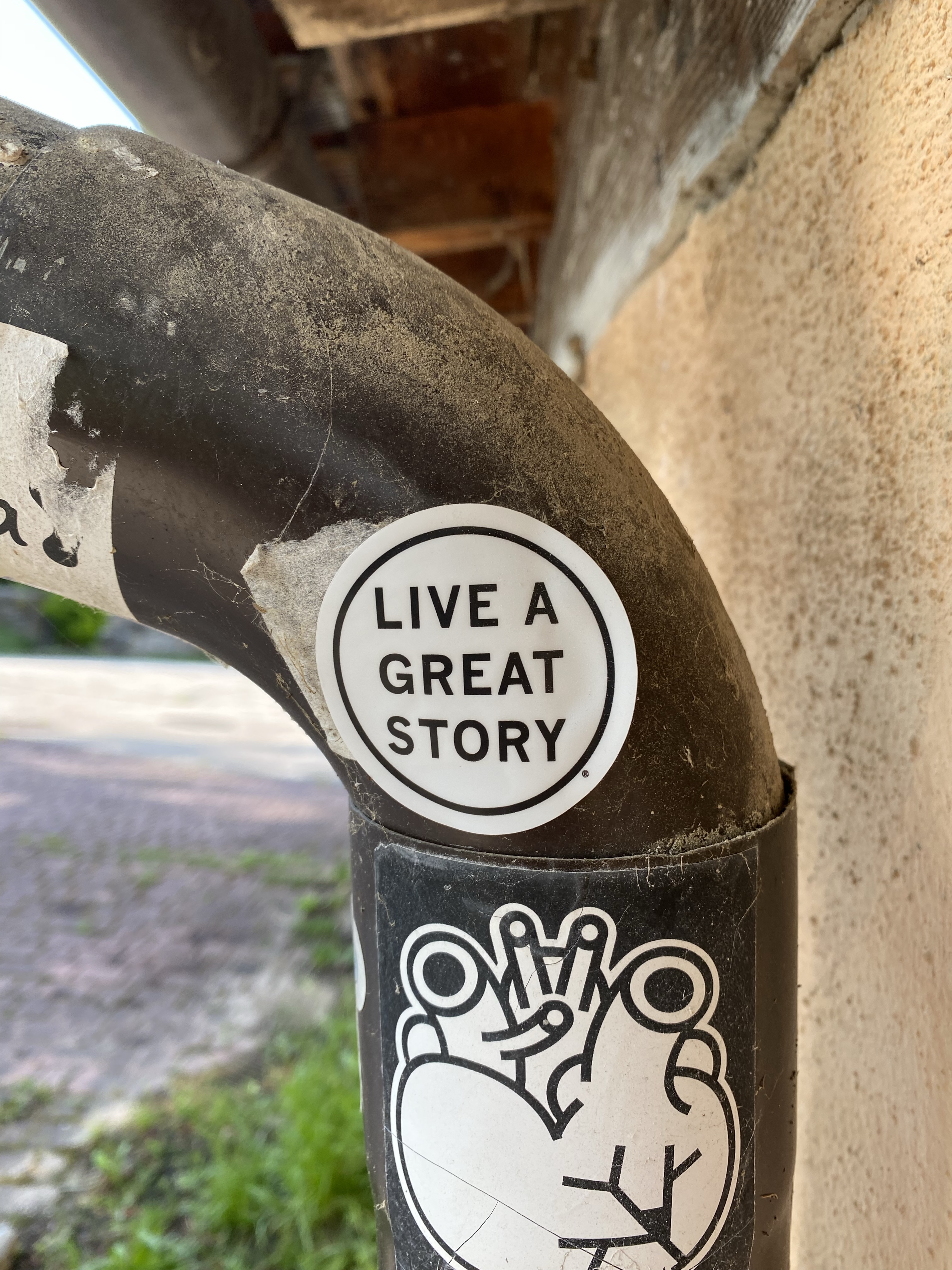
    I’ve mentioned previously that there’s a lot of curious graffiti (and stickers) along the Camino.

    Here’s one that first asks Why? and then the realisation dawned.

    “This must be what they mean when you get your second wind…”

    Or maybe it’s just us?

    Apologies.

    More tomorrow.

    PS. On the topic of graffiti, I’ve been following someone who writes motivational messages on stones. I think they went through about a month ago.

    This one helped yesterday.

  • Spade racing with Laya’s. Keeping culture alive on the Camino.

    So here’s a story, and apologies for the deviation from the 4 a day picture diary…

    We are walking into Puente La Reina when I see these iron statues.

    A man and woman poised with some sort of digging tool.

    The statues aren’t ‘ancient’ and there’s no explanation of what they are about.

    Obviously, I’m drawn to the digging tool, having a mild interest in this sort of thing. Because ‘digging is living’ as I might have said in a previous post.

    The Laya Digging Tool.

    An enquiry with the host of the place we were staying revealed that these were Laya.

    Digging tools that were used in the the Basque Country days before agricultural machinery became common.

    It was something he remembered his Grandfather using.

    A bit of a dig around the internet and it looks like the Laya may predate ploughing with animals, well before machines.

    There are even some ancient carvings of them on Churches.

    If you fancy a good dig into their history and cultural significance have a look at this video. It also features the blacksmith work required to make a Laya, using Bilbao steel.

    Speaking of cultural significance…

    In Puente La Reina there is a festival of Spade Racing.

    The Hotel Host was telling me that people run around the streets in a race using the Laya.

    The end of the video (33.40 mins) it shows Spade Racing in Puente La Reina, what looks like a gruelling pastime. A combination of stilt walking up cobbled streets.

    The important point is that the local people deliberately created the Spade Race to keep a part of history and culture alive.

    I’m left wondering what sort of similar pastimes we have in Wales?

    First I’m wondering what exists around coal mining, iron and steel making or slate quarrying that would be similar to the Spade Race?

    Second, I know I keep talking about Forestry Rutter Spades, but I’m also wondering what you could do with one of them?

    Normal service will be resumed tomorrow. We are exhausted after the walk from Puente La Reina to Estelle.

    PS. A link to other material about Laya’s

    https://es.wikipedia.org/wiki/Laya_(herramienta)

    https://www.lowimpact.org/posts/laya-wonder-tool-basque-4/

  • Camino de Santiago. Pamplona to Puente de Reina.

    The first day of proper walking on Stage 2.

    Here’s the 4 a day (approximately) picture diary of: What we are doing, Where we are, Who and Why?

    What. Walking the stretch from Pamplona to Puenta la Reina.

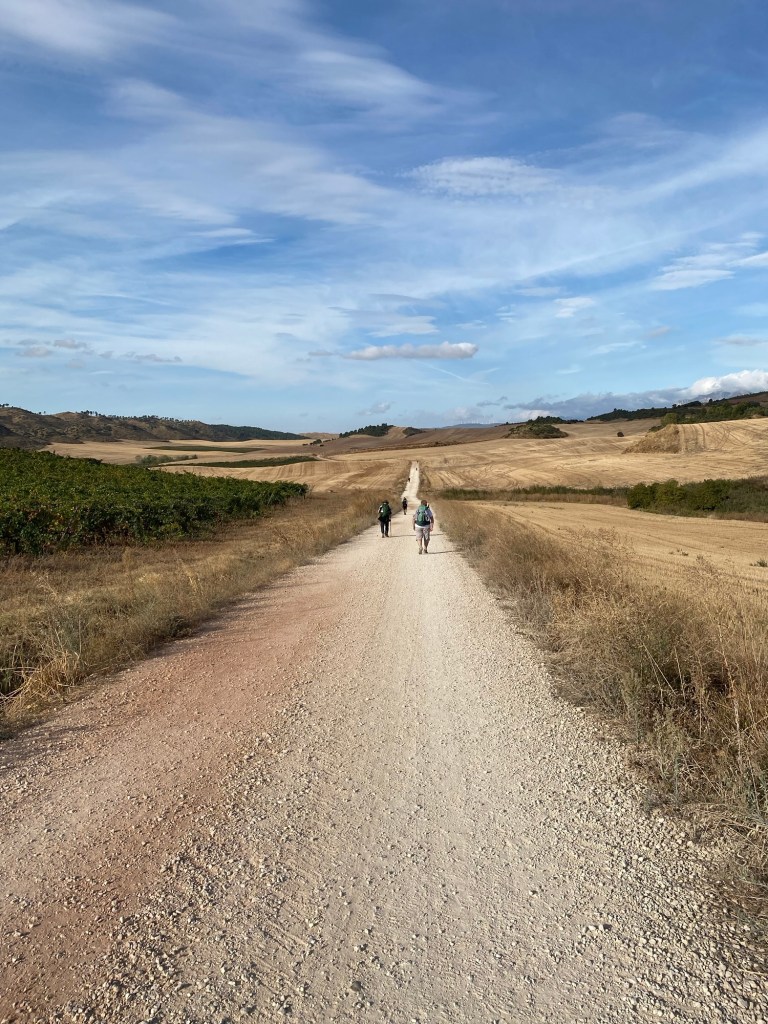
    Here’s a view of the Camino through the cereal fields with Pamplona in the background.

    It was pleasantly cool this morning, about 12 degrees C.

    Where? This stretch crosses the Sierra del Perdon Mountains.

    Not massive compared to the Pyrenees, but a fair slog up to the iconic statues at Alto de El Perdon.

    Oh and yes… much to the embarrassment of SB… when a cyclist rode past I exclaimed loudly “what, you can do this on a bike!”

    If you know, you know.

    PS. A lovely German Lady travelling in a camper van took the picture. She knew Wales quite well.

    Who? Me and SB.

    I think I’ve mixed this up with Where, but never mind.

    Uterga was a fabulous place to stop for lunch.

    Some curious vegetarian and fish combos followed by a roadside chiropody clinic.

    Digging in the rucksack to find a nail clippers to trim SB’s toenails.

    All sense of prudishness rapidly evaporates in the afternoon heat of the Camino (it was 23 degrees C).

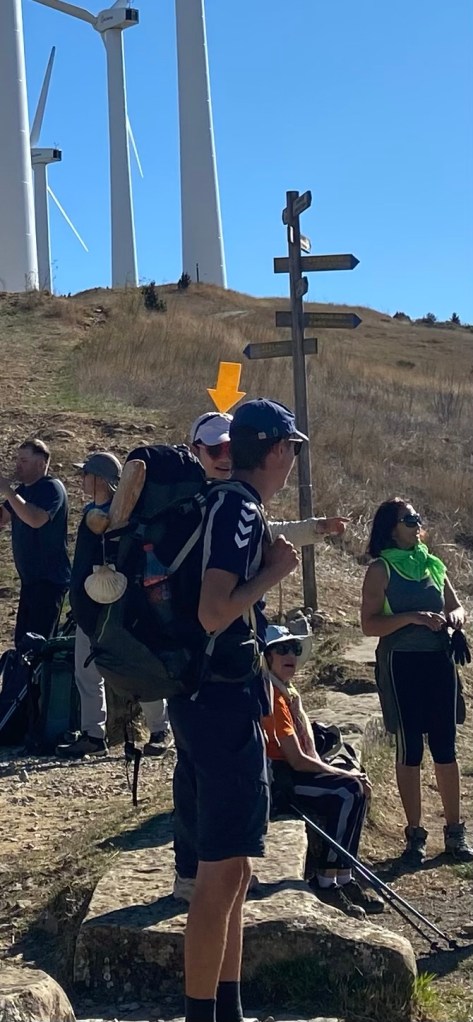
    Why? Why did this individual have a hat with a yellow arrow pointing down at them?

    Saw them around Alto de El Perdon, taking lots of ‘content’.

    Then walked down the back slope with them for a bit, but never quite had the courage to ask Why?

    And a bonus picture

    This was the town of Obanos

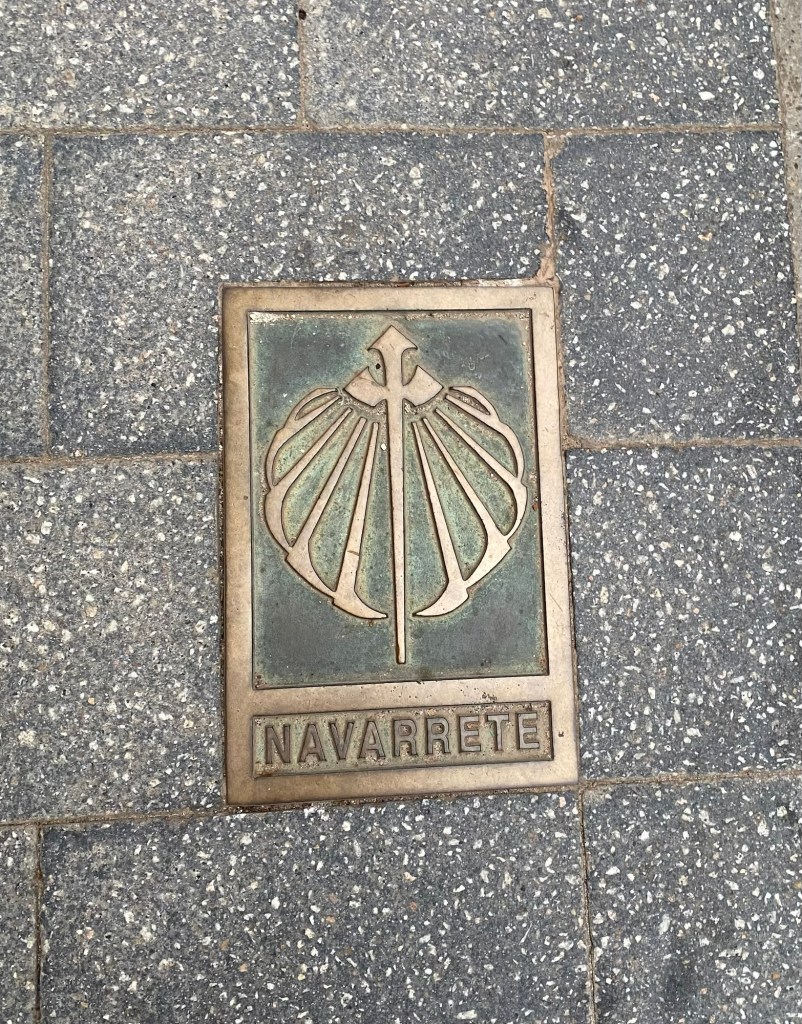
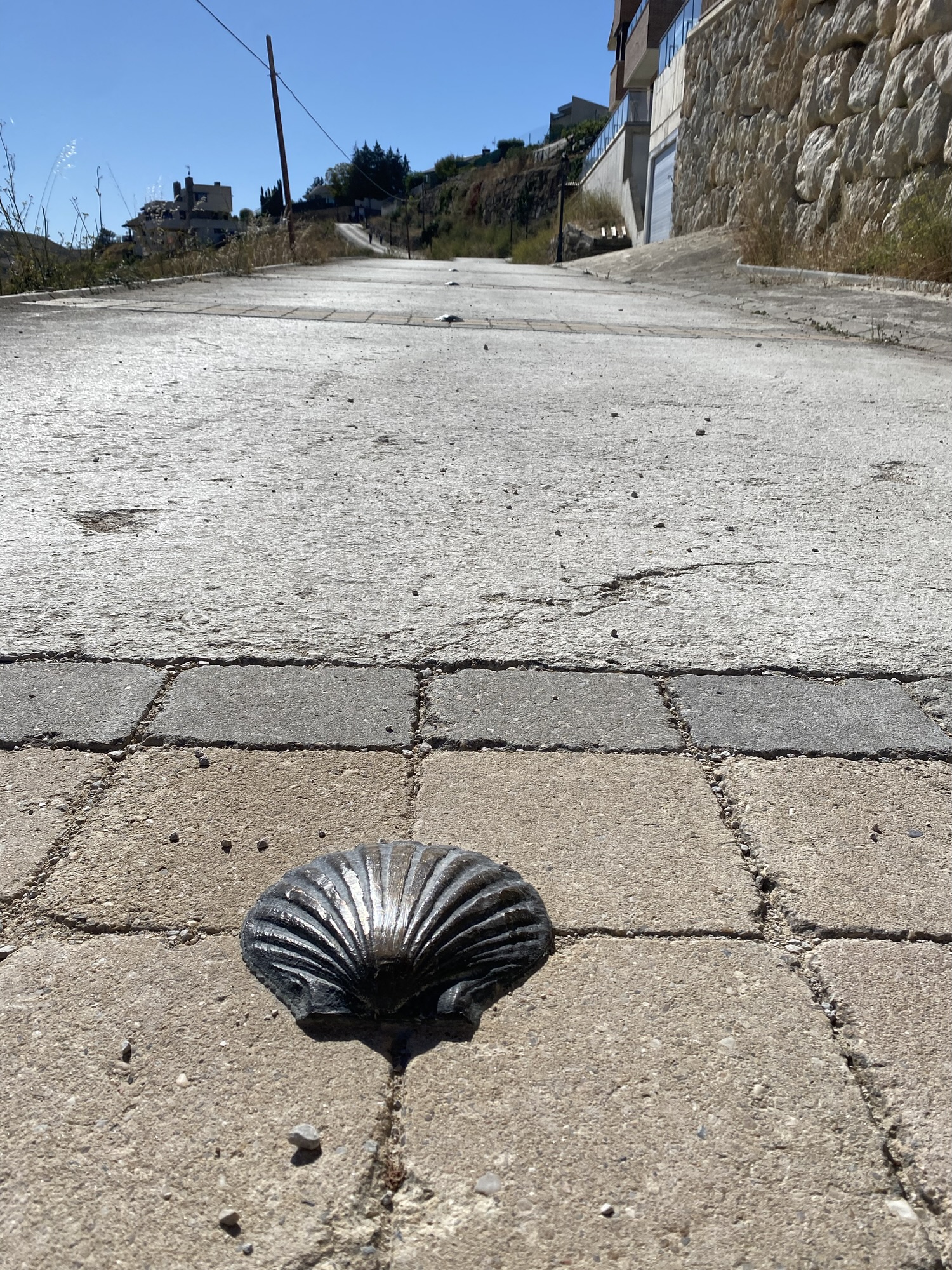
    The Camino through the town has Brass Camino Scallop Shells marking the route.

    Loads of them.

    I think there might be some money in that town.

    Not the sort of place to cut your toenails on a park bench.

  • Camino Part 2. Pamplona onwards… 4 a day picture diary.

    A quick summary of What we are doing, Where it is happening, Who is involved and Why?

    4 pictures and a bit of commentary to tell the story.

    What? We’ve come back for more. Stage 2 of the Camino de Santiago.

    Walking from Pamplona to just beyond Logrono (capital of the Rioja wine region for those interested in such things)

    Above is a picture of a slip of paper I found in my rucksack. It was given to me by the Nun who looks after the Church in Zabaldika (where I rang the ancient bell).

    The Nun gave me an English and Welsh version. She was prepared to greet Pilgrims from just about anywhere.

    I was struggling to explain the motivation for walking the Camino earlier this week.

    The points on the piece of paper pretty much cover most of it.

    “The Camino breeds community: community that greets each other, that takes interest in how the walk is going for the other, that talks and shares with the other.”

    I like that, It’s a good feature of any community, taking interest in others.

    Where? Bristol Airport.

    We’ve been delayed by a few hours because the plane was stuck in Edinburgh due to Storm Amy.

    Having arrived unfashionably early (5.30 am) it feels like we have been here forever.

    Who? Me and SB (who’s embraced the Camino lark to a degree I wasn’t expecting).

    Screenshot

    Why? Why is there so much velour on display at Bristol Airport.

    One of the consequences of hanging around the airport for hours means that I’ve become very interested in a peculiar backwater the fashion niche: ‘travel leisure-wear’.

    Why is there so much velour on show? Where do people buy it? Is it any good?

    All big questions – I’m desperately trying to wipe from my mind.

    Next stop the Bilbao Intermodal Transport Hub.

    So good that I keep asking myself, why can’t we have nice things like this in Cardiff?

  • The past is a foreign country, but the future is already here.

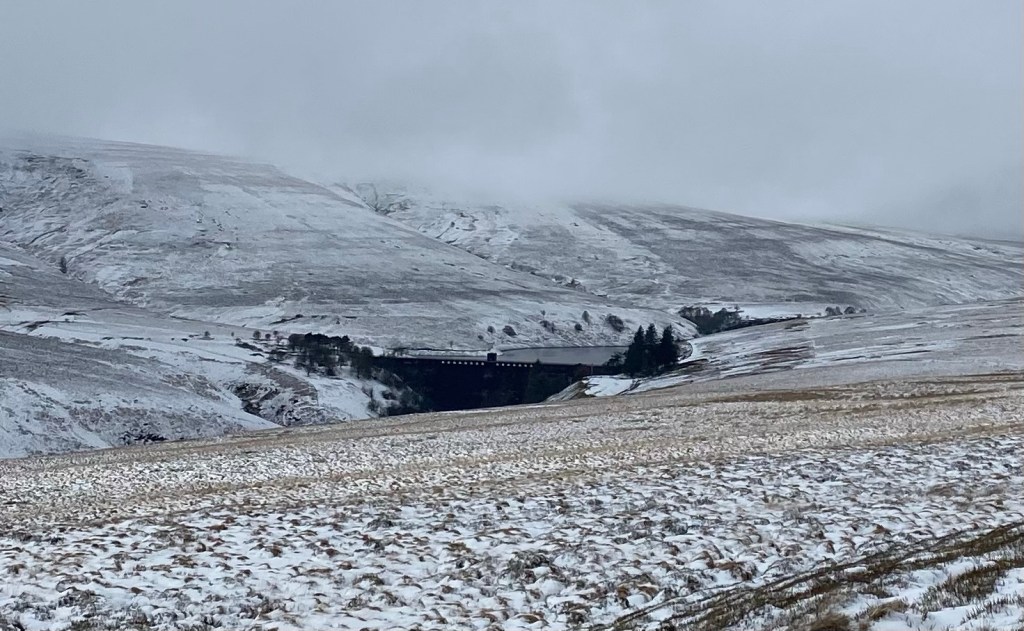
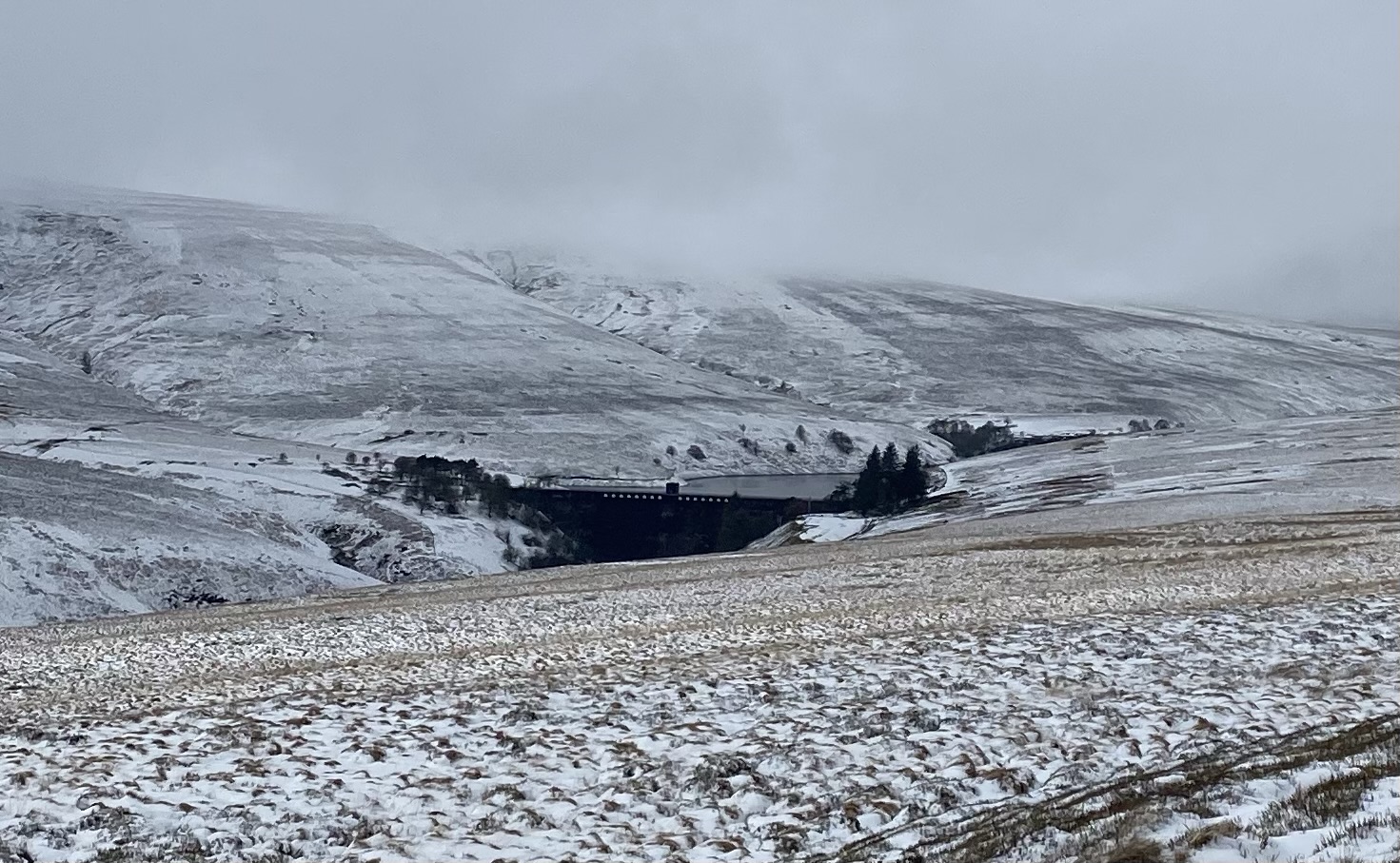
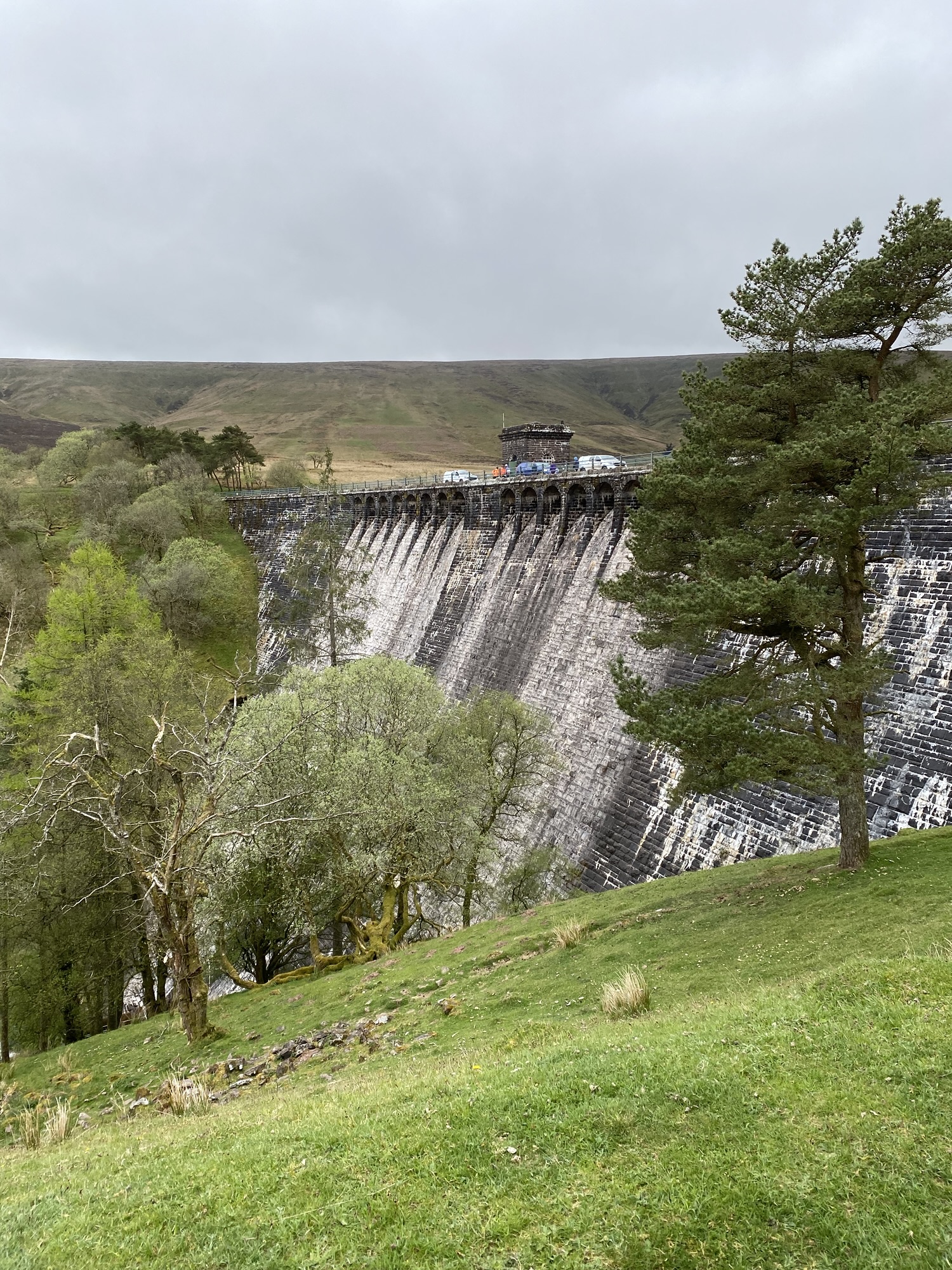
    Remember when Communities did big ambitious things? Above are two of my pictures of the Grwyne Fawr Reservoir sitting about 16 km (10 miles) north of Abergavenny in the Black Mountains.

    The first picture gives a sense of the challenges of the environment (taken 1st March 2024). The second gives a sense of what a monumental structure it is.

    The purpose of these pictures is to make a point. Grwyne Fawr Reservoir was built between 1912-28 by the former Abertillery and District Water Board. By and For the Community

    The reservoir collected (clean) water at around 525m (1,725ft) and moved it by gravity through 35 km (22miles) of pipes to Cwmtillery Treatment Works. Then onwards to people, homes and business in the valley. By and For the Community.

    The Abertillery District Water Board was formed by the Abertillery, Abercarn, Risca and Mynyddislywn Urban District Councils in 1909.

    Just for reference, Urban District Councils (UDC) were not exactly ‘mega corporations’, with endless resources.

    They were the most ‘foundational’ layer of civic society and local government. The combined population the 4 UDCs served probably was no more than about 70,000 people (at it’s peak). This really is ‘local’. By and For the Community.

    Small is beautiful (and effective).

    A question. Nowadays, what are the chances of 4 Urban District Councils getting together to build a large reservoir and 22miles of pipeline to supply their communities? Or anything else on a similar scale?

    “The past is a foreign country: they do things differently there.” From the 1953 novel by L.P. Hartley ‘The Go-Between’.

    On my first visit to Grwyne Fawr reservoir I was utterly astonished that a bunch of local people from Abertillery could have got together a hundred years ago to build it.

    Since then I’ve been sitting back and thinking a bit.

    This kind of thing is actually not that rare in bits of South Wales. There are examples on literally every street corner where people got together to build chapels, clubs and institutes – some of them enormous and ‘built by subscription…’.

    But it goes bigger than that. Here are a few examples of things done By and For Communities that are dear to my heart.

    Talygarn Miners Rehabilitation Centre. In 1922 the South Wales Miners Federation bought a grand country estate to create a convalescence home for injured miners; their members and community. Paul Robeson was a big supporter and sang there.

    Tredegar Medical Aid Society. Two things to say here; Aneurin Bevan and the NHS. Maybe I have been seduced by the theatre play ‘Nye’, but I do like to think South Wales played a large part in the creation of the NHS .

    The Aberdare and District Cooperative Society. This was a huge operation that ran right up until 1989. At one point it was responsible for 45% of all retail trade in the Aberdare Valley.

    In my mind there is a clear connection between the South Wales Miners Federation Talygarn Rehabilitation Centre, Tredegar Medical Aid Society, Aberdare and District Cooperative Society and the Abertillery District Water Board.

    They were all about things done By and For the Community, and (I hope) the ability to do these things is still embedded in our collective indigenous memory.

    If we’ve done amazing things in the past, can we do them again today? The past doesn’t have to be a foreign country. We just have to remember what we have forgotten…

    “The future is already here, it’s just unevenly distributed.” William M. Gibson.

    Recently I went to the Valleys Cymunedoil Cymmoedd event in Pontypridd. There is a lot of brilliant work happening around this to develop communities.

    What is also happening is a reawaken of our indigenous memory.

    During the meeting the organisers Beth Winter and Leanne Wood showed a film ‘The Coal Beneath our Feet. the Wind Above our Heads’. The film unearthed indigenous memories and stepped into that future that is already with us.

    Not to spoil the plot (because you need to see the film) it shares the story of two young people, destined to leave the Valley for a ‘better’ life. But they discover hope.

    The miners buyout of Tower Colliery in 1995 features strongly in the film. It stirs up an indigenous memory that I’m ashamed to say I’d let slip to the back of my mind.

    Then the future. Mynydd y Gwwrhyd Community Owned (Awel Coop) Wind Farm about 20 miles north of Swansea. How a community can own and control one of the basics; energy. This is so good that the Welsh Government have written a case study about it. You can also read more on the Community Energy Wales website.

    The future is absolutely already with us, just unevenly distributed (in lots of ways).

    So. what’s the PONT?

    1. The past can be a foreign country. It can be difficult to relate to how our communities did things in the past. Even if the were brilliant, monumental and hugely relevant to now.
    2. The indigenous memory should still be with us (I hope). Its just a case of working out how we stir it up and reawaken us to what is possible.
    3. And maybe, we don’t have to look to far. The future is already with us. It might be already living in the next valley or village. Just go of a bit of a walk and have a look.

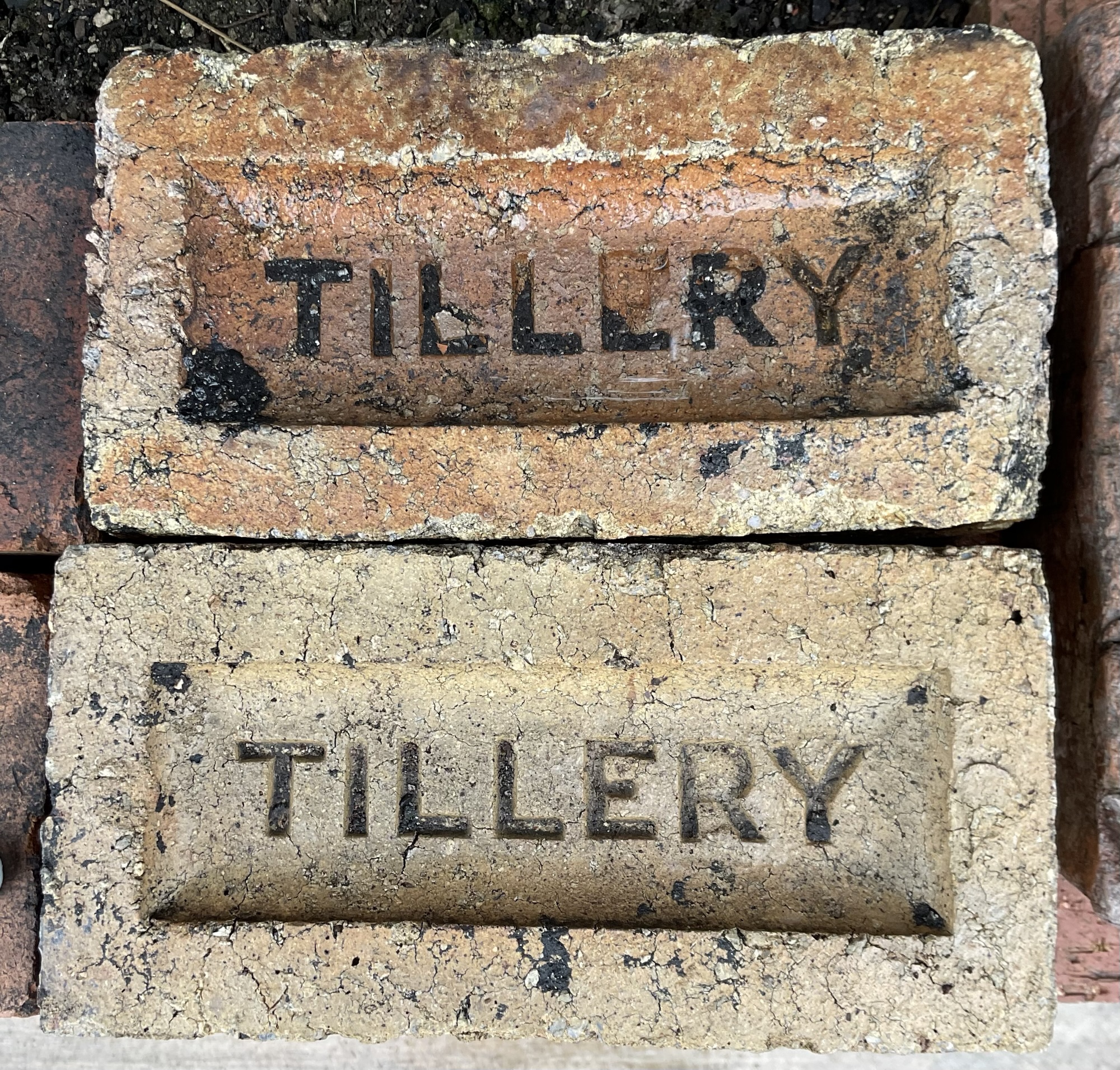
    Some old bricks I’ve collected from the Abertillery Brick Works. No reason other than I like old bricks.

  • If you shouldn’t call a Spade a Shovel, what is this?

    I absolutely love modified hand tools.

    The sort of things that someone has made or changed to do a very specific piece of work.

    So feast your eyes on this little beauty.

    Today I’ve enjoyed some time with two individuals who repair broken sewers for a living.

    It was great.

    Nobody spoke about the wonders of AI. It felt like an honest days work, doing something genuinely useful.

    Believe me, if you can’t flush the toilet in the house your priorities very rapidly realign to the more practical side of life…

    Anyway, amongst the high tech drain cameras, epoxy resin drain lining sleeves, pressure testers and the suchlike, they had hand tools.

    Because you can’t get away from digging.

    Digging is living (in my books).

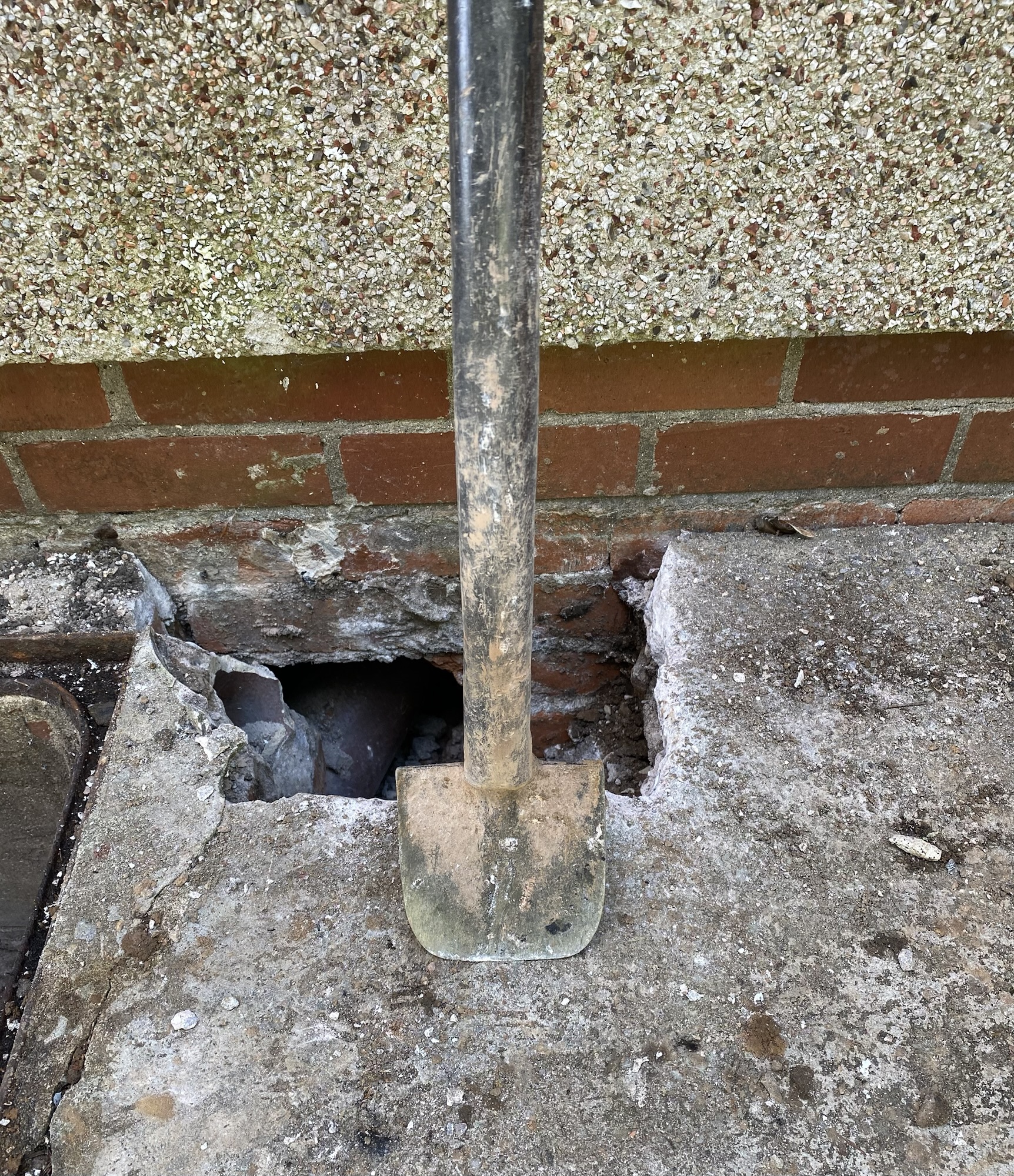
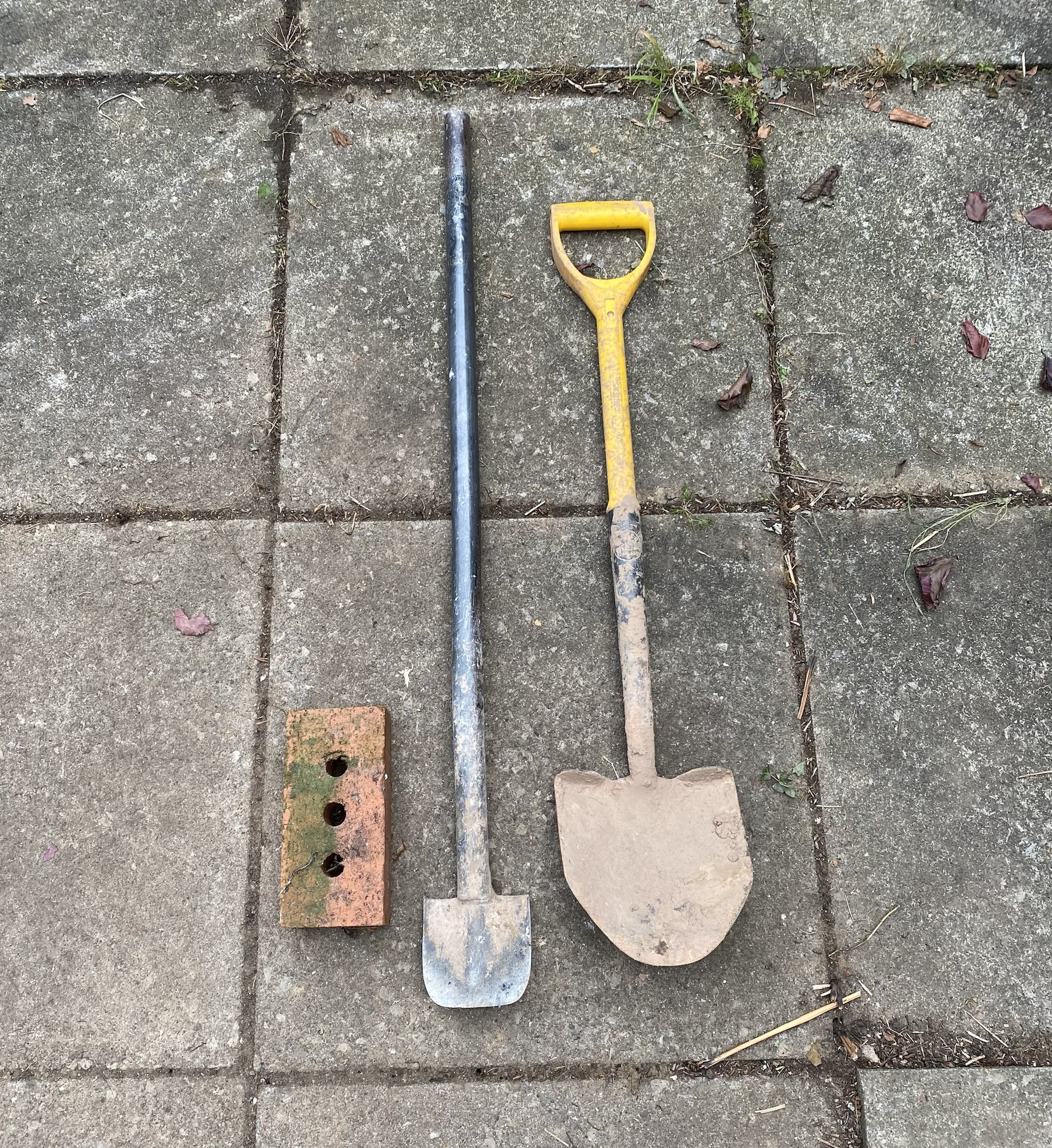
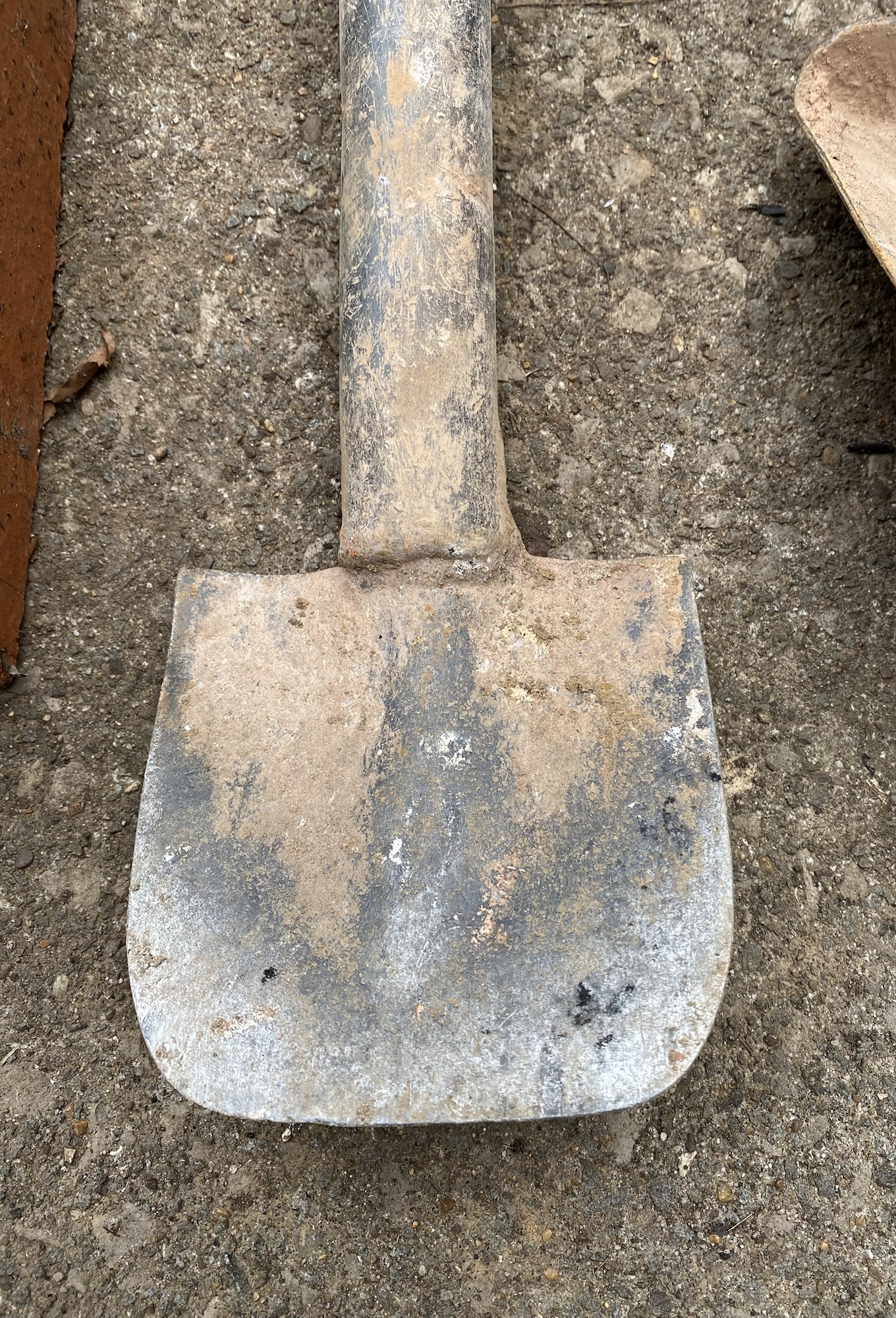
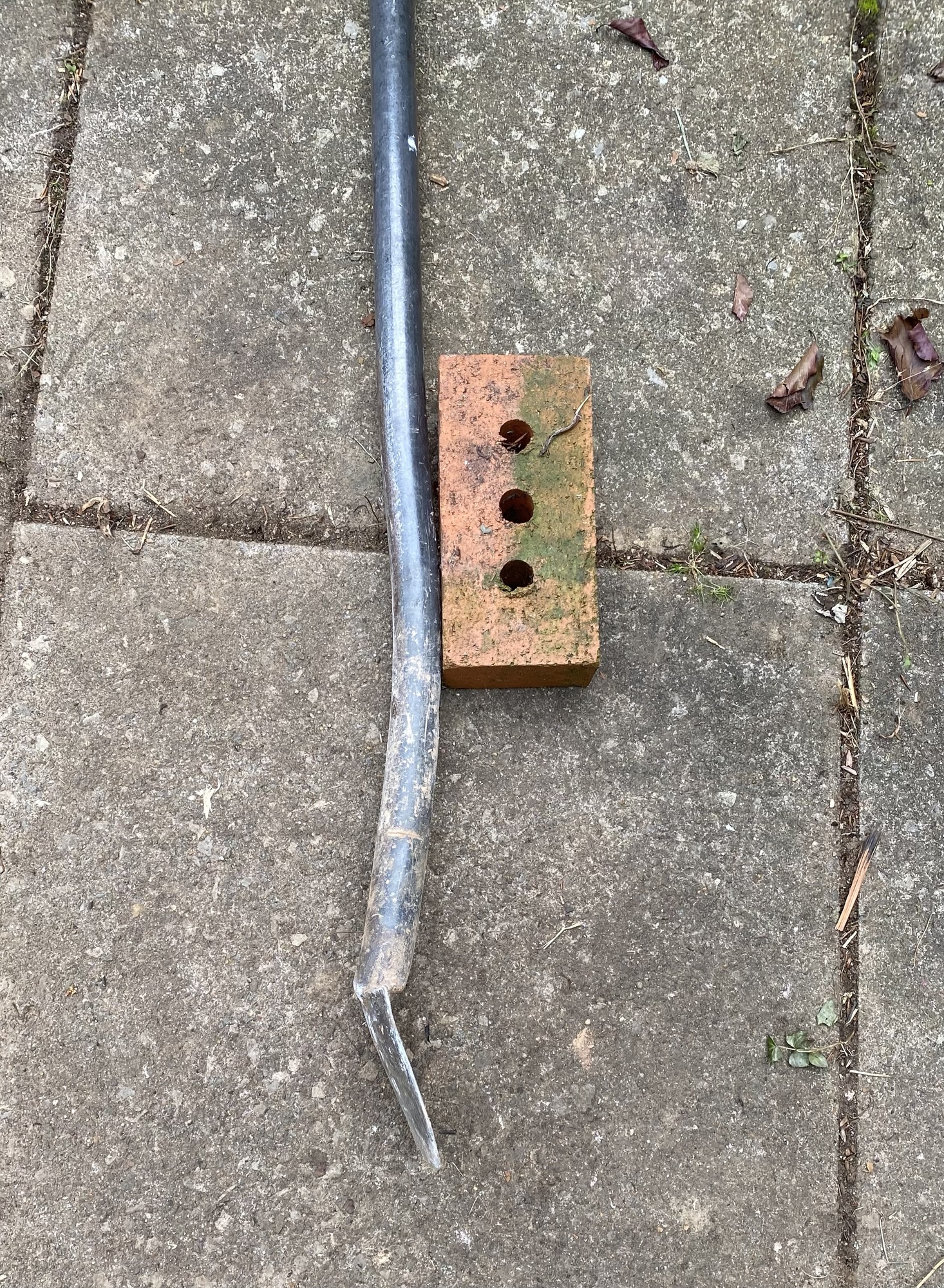
    Here’s some pictures of the beautiful little tool they had created for doing just the job it was required for, breaking through hard ground in tight spaces.

    Some things to enjoy:

    • A heavy steel pole as the shaft.
    • Not as heavy as a solid steel bar, but heavy enough to smash through hard ground.
    • A spade / cutting head about 90mm square welded on the bottom of the pole.
    • With just the suggestion of turned up sides and slight shovel tendencies (otherwise it would be a chisel).
    • And, a lovely bend in the pole.
    • Someone has thought about this, and built exactly what they needed.

    Enjoy these pictures.

    PS. I can’t imagine there’s anyone else in the world that finds this as interesting as me.

    If you do, I’ve been planning to write something about a shovel called a Forestry Commission Rutter I saw recently.

    Now that’s a sight to behold

  • The Butterfly Effect, Crane Flies and the Spin of a Cricket Ball.

    I got quite excited about a poem recently. Part of it was along the lines of, “Crane Flies change the spin of a cricket ball at Lords, and get burnt in their thousands”.

    Woah I think, is this the cricket equivalent of ‘The Butterfly Effect’.

    An insect weighing less than a feather changing the dynamics of an important sporting event. And get incinerated in their 1000’s as a result. I must find out more…

    A Crane Fly. Being escorted outdoors while everyone flaps around like it’s a Vampire Bat.

    The Butterfly Effect.

    I first heard of the Butterfly Effect from Dave Snowden. Dave was talking about how linear ‘cause and effect’ relationships don’t work in complex systems.

    He said something along the lines of; “if butterflies flapping their wings in the Amazon really do cause tornadoes in Texas, I know a few Texans who would burn the place down to get rid of them”.

    Edward Lorenz the American Meteorologist launched the concept of the Butterfly Effect in a talk titled: “Predictability: Does the Flap of a Butterfly’s Wings in Brazil Set Off a Tornado in Texas?”.

    The point was that small actions (the flap of butterfly wings) can theoretically lead to large outcomes (Tornados in Texas).

    And they could also lead to the total opposite, absolute calm.

    And many other things in between.

    The point of this and Lorenz’s earlier work is that it is not possible to carry out accurate long term predictions of the weather.

    It’s a complex system.

    The other point to note is that the concept of the Butterfly Effect has been massively misinterpreted in lots of popular culture and management theory teaching.

    Yes small actions can have big impacts, but it isn’t as predictable or as common or as certain as some people suggest.

    Straightforward linear, cause and effect relationships don’t play out in complex systems especially biological ones.

    Unless you are a Crane Fly…

    First a bit of Crane Fly biology.

    Many people will probably know Crane Flies as ‘Daddy Long Legs’. They enter the house on late summer evenings and cause mayhem.

    At the sight of a single Crane Fly, normally calm people will run around flapping their arms as if a dog size Vampire Bat has appeared.

    They aren’t dangerous, just look a bit scary with long legs, big wings and a small body.

    How on earth can these things change the spin of a cricket ball?…

    They don’t.

    A lawn bald patch

    Leatherjackets at Lords.

    More biology. This is where the ‘grub’ stage of the Crane Fly comes into play.

    Leatherjackets, are the grub stage of the lifecycle that live in the soil, for most of their life, munching on roots.

    In some places they exist in large numbers and are considered a pest.

    Back in May 1935 London had a major infestation of Leatherjackets in Parks, Tennis Courts, Golf Courses and Lords Cricket Ground.

    So many, that according to Cricket’s Strangest Matches radical action was required.

    “There were bald patches on the wicket, and spinners found it to their liking”.

    In non-Cricket language, leatherjackets had damaged the playing surface and changed the nature of the game.

    Terminate, with extreme prejudice

    The response was extreme.

    There were some nature based suggestions like, ‘get more Swallows’. Apparently Swallows can stuff themselves with so many Crane Flies that they struggle to get off the ground.

    I like that.

    There’s a Robin in the garden that follows me around when I’m digging. Occasionally it walks home to it’s nest rather than fly because it’s eaten too many earthworms.

    Eventually at Lords the Groundskeepers collected up Leatherjackets, put them in bags and ‘burned the lot’.

    Some days between, 1300 and 1400 ‘brace’ of Leatherjackets were incinerated.

    Quite the insect barbecue and termination with extreme prejudice.

    I’m not sure if there were any unintended consequences, but nobody seems to have mentioned a Lords Leatherjacket problem since 1935.

    The Butterfly Effect and Lords Leatherjackets.

    Unfortunately, there doesn’t seem to be an obvious link between the Butterfly Effect and the Lords Leatherjackets (a cool Indie Band name though).

    The Lords Leatherjackets were part of a system where the link between ‘cause’ (leatherjackets burrows) and ‘effect’ (damaged wicket) was clear and obvious. So was a solution.

    In the complex field of predicting the weather there are far too many variables and thousands of possibilities for what might happen.

    Many unknown, some unknowable and a few catastrophic.

    You can’t hang all that on a single Butterfly.

    So, What’s the PONT?

    1. Small actions can have big impacts. The Butterfly Effect is a useful metaphor.

    2. But recognise that in complex systems it is not possible to predict what that impact will be.

    3. Please don’t worry about Crane Flies and burn them (or anything else). The Swallows enjoy them.

  • Cooperatives Care… and why aren’t there any UK Cooperative University Business Schools?
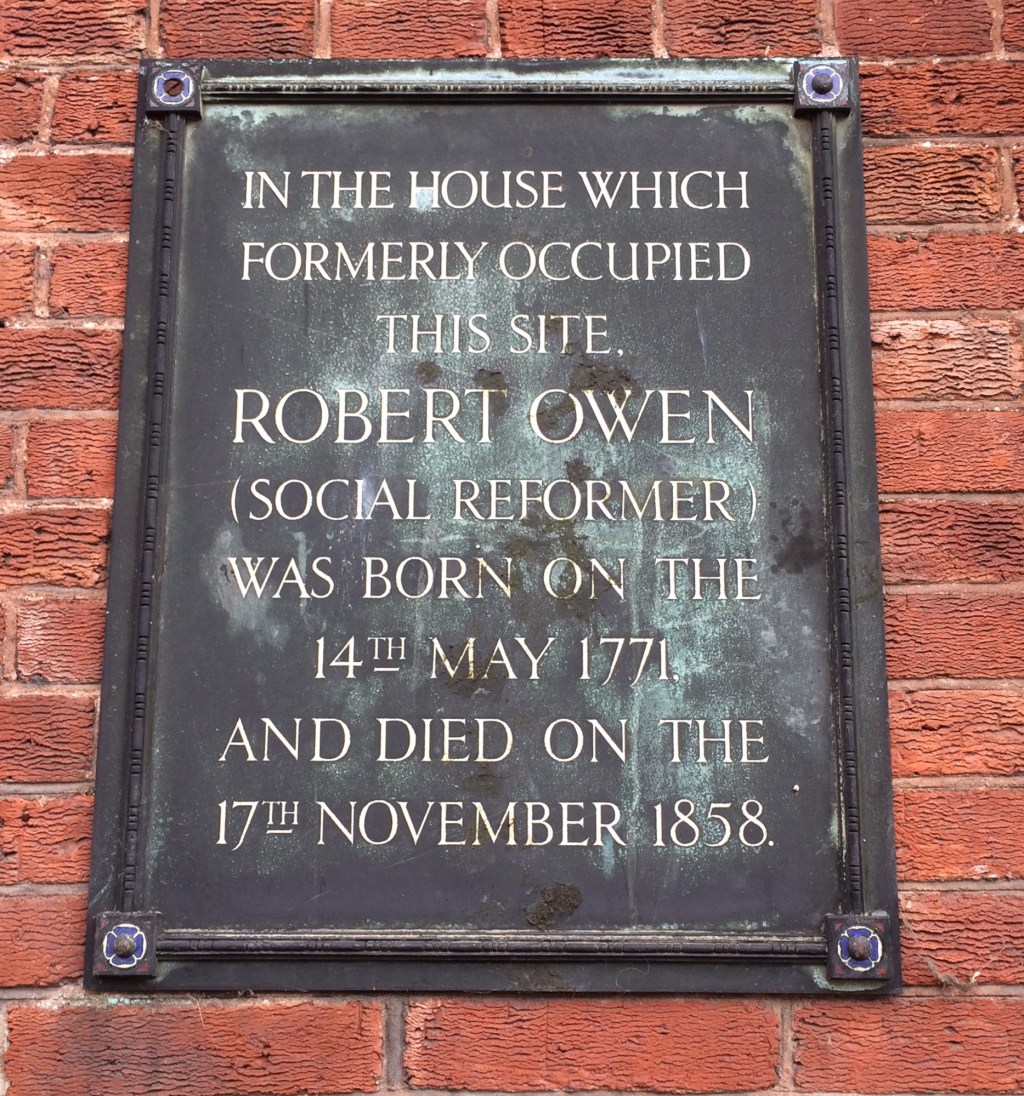
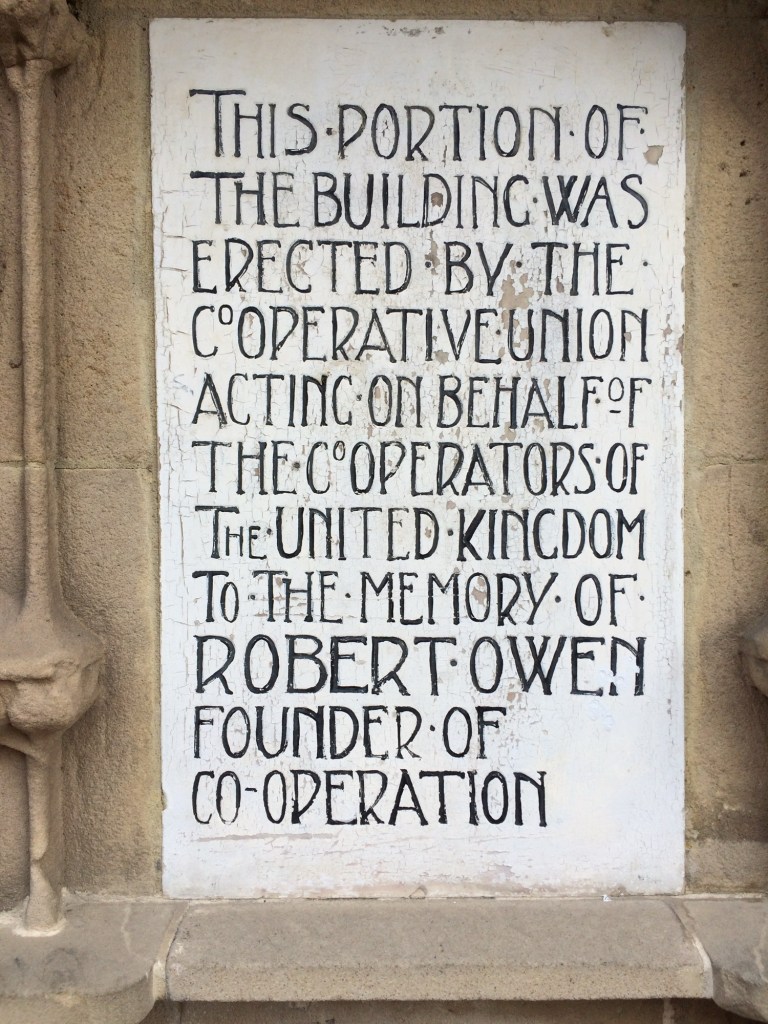
    Robert Owen is from Wales. How come there isn’t a University Robert Owen Business School?

    This is a quick, partial reflection on the Cooperatives Wales session I attended last Sunday. Public, Private or Cooperative, Rebalancing Society. What needs to be done?

    I’m still thinking about it a lot, but 2 big things have stuck with me.

    One, the connection of cooperative housing to ‘care’ and second, the role universities have in cooperative education.

    What does it mean ‘to care’?

    The session focused on the government prioritiy to double the number of cooperatives in the UK. I like that.

    A key part of that focus on the care sector. A prominent question emerging from this is, is it ethical to ‘profit’ from providing ‘care’ to another human being?

    Also, the question of cost. Current models of providing care through the public and private sector look unaffordable and unsustainable. Is there an alternative model, like cooperatives?

    I’d argue yes. Have a look at Grupo Servicos Sociales Integrados from Bilbao in the Basque Country.

    From the bit I know about Grupo SSI, they ‘emerged’ from the local council adult social services department about 35 years ago. During difficult economic times (sound familiar?) and they have been successfully operating as a cooperative ever since.

    It can be done.

    But ‘care’ goes wider…

    A gap in the ‘target’ list of doubling the cooperative numbers for me was social housing. If I missed it, it wasn’t obvious.

    There’s 3 things I’m thinking about here…

    • Some social housing organisations already provide a significant amount of ‘care’, in the homes they also provide. They also seem to suffer the same cost pressures as the public / private providers.
    • Why aren’t there more care cooperatives linked to social housing? It seems like an obvious connection?
    • It’s already happening. Some social housing providers already successfully operate a cooperative model. Have a look at the amazing Merthyr Valleys Homes. I should point out that I am biased in my views. I’m Chair of the Board, appointed by the Democratic Body.
    • Care as a verb. I do wonder if the definition ‘care’ around cooperatives is a bit too narrow? Is it more than just the traditional social care sector? I’m attracted to a broader definition. I like to think of ‘care’ as the verb, ‘to feel concern and attach importance to something…’
    • To quote the inspirational Allison Soroko, Company Secretary at Merthyr Valleys Homes, “we do this because we care!”.
    • If you are deeply concerned about what happens in our your community and you attach importance to it, you care, probably a lot. I think that’s a good starting point for any cooperative.

    What about Cooperative Universities?

    I was intrigued by a point made by Professor Colin Talbot that UK University Business schools are mostly silent on cooperatives.

    Plenty of MSc’s on the Private and Public Sector, but hardly anything on Cooperatives.

    Interesting from two angles.

    One, how can they have missed out on an entire alternative economic model?

    Second, given the current perilous state of many UK Universities, it might be an economic model that would help?

    In the spirit of Cooperative Education… here’s a few bits and bobs on Universities and Cooperatives I bumped into on my Churchill Fellowship. They might be useful, or spark a conversation.

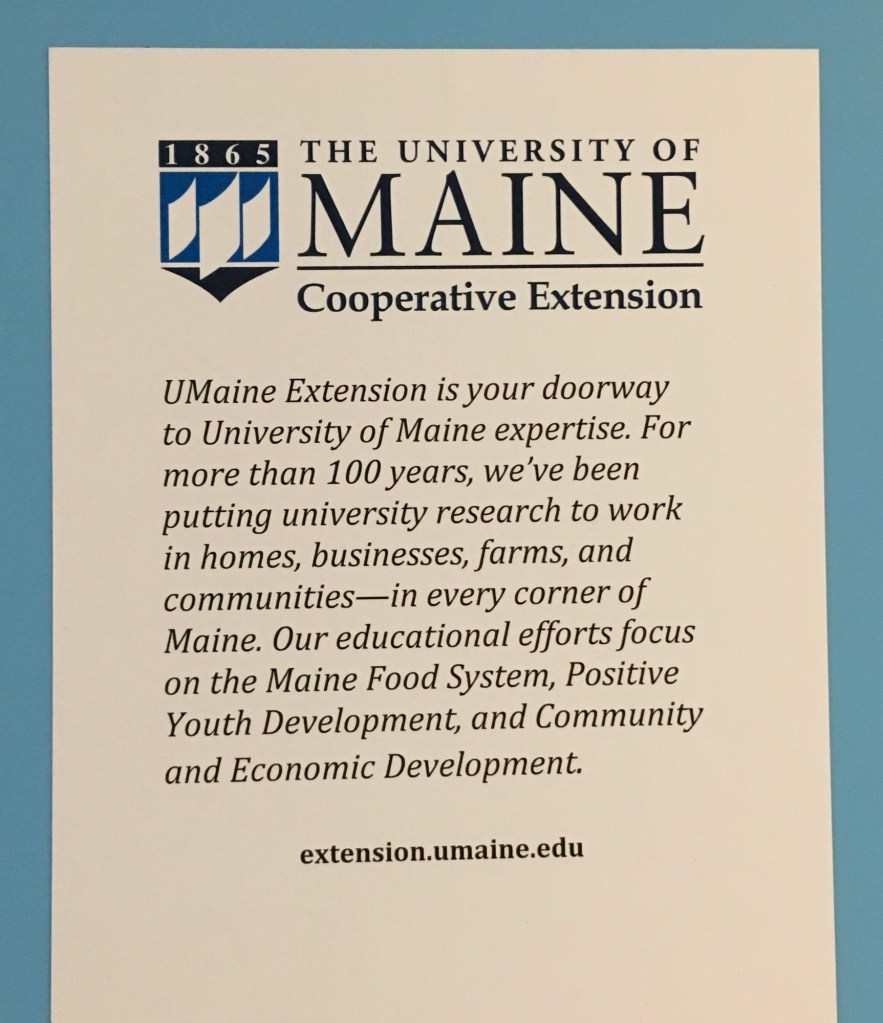
    University of Maine Cooperative Extension.

    My picture. Taken in the UM Cooperative Extension lobby.

    There’s a statement here I love. ‘For more than 100 years, we’ve been putting university research to work, in homes, businesses, farms and communities – in every corner of Maine’.

    Perhaps if Welsh Universities had been thinking along the same lines they wouldn’t have seen a decline in local student numbers over recent years?

    I’m trying to dig out what I learnt on a visit to Maine University Cooperative Extension back in 2018. In the meanwhile, here’s something on the sustainable lobster fishery where they have some involvement.

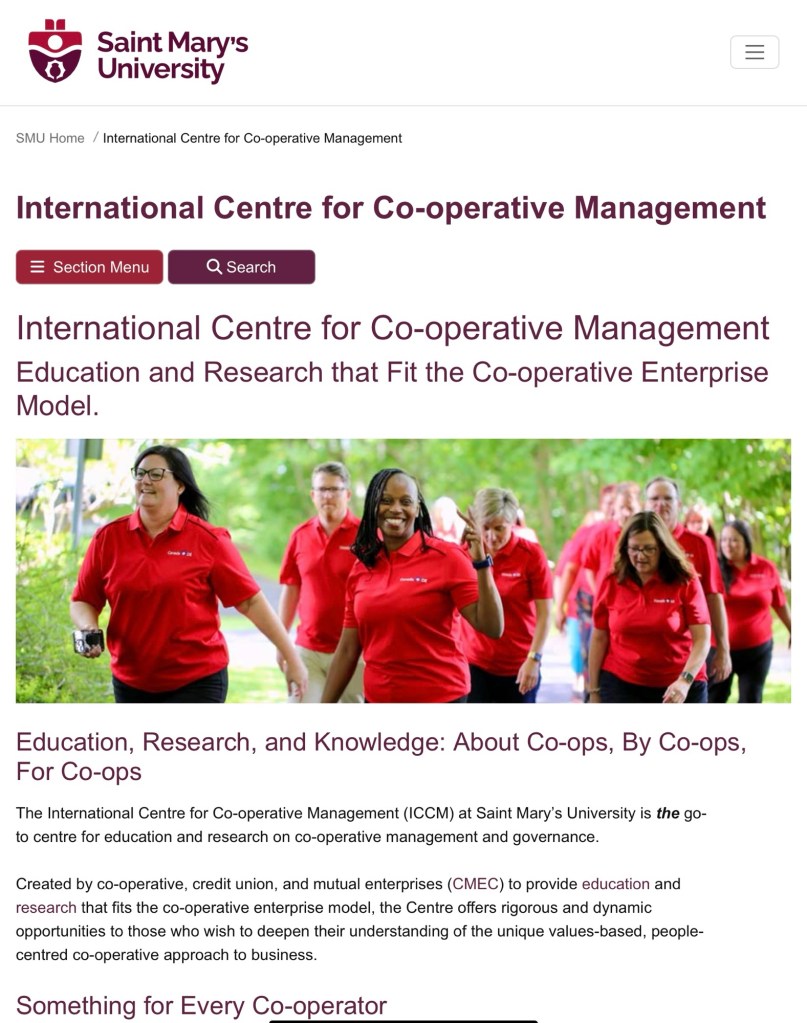
    Screenshot from website of St Mary’s University Sobey Business School

    St Mary’s University Sobey Business School International Centre for Cooperative Management is based in Halifax, Nova Scotia.

    The picture above is pretty self explanatory. Some Universities are already committed to Cooperative education. I was lucky enough to visit in 2018, thanks to Ray MacNeil.

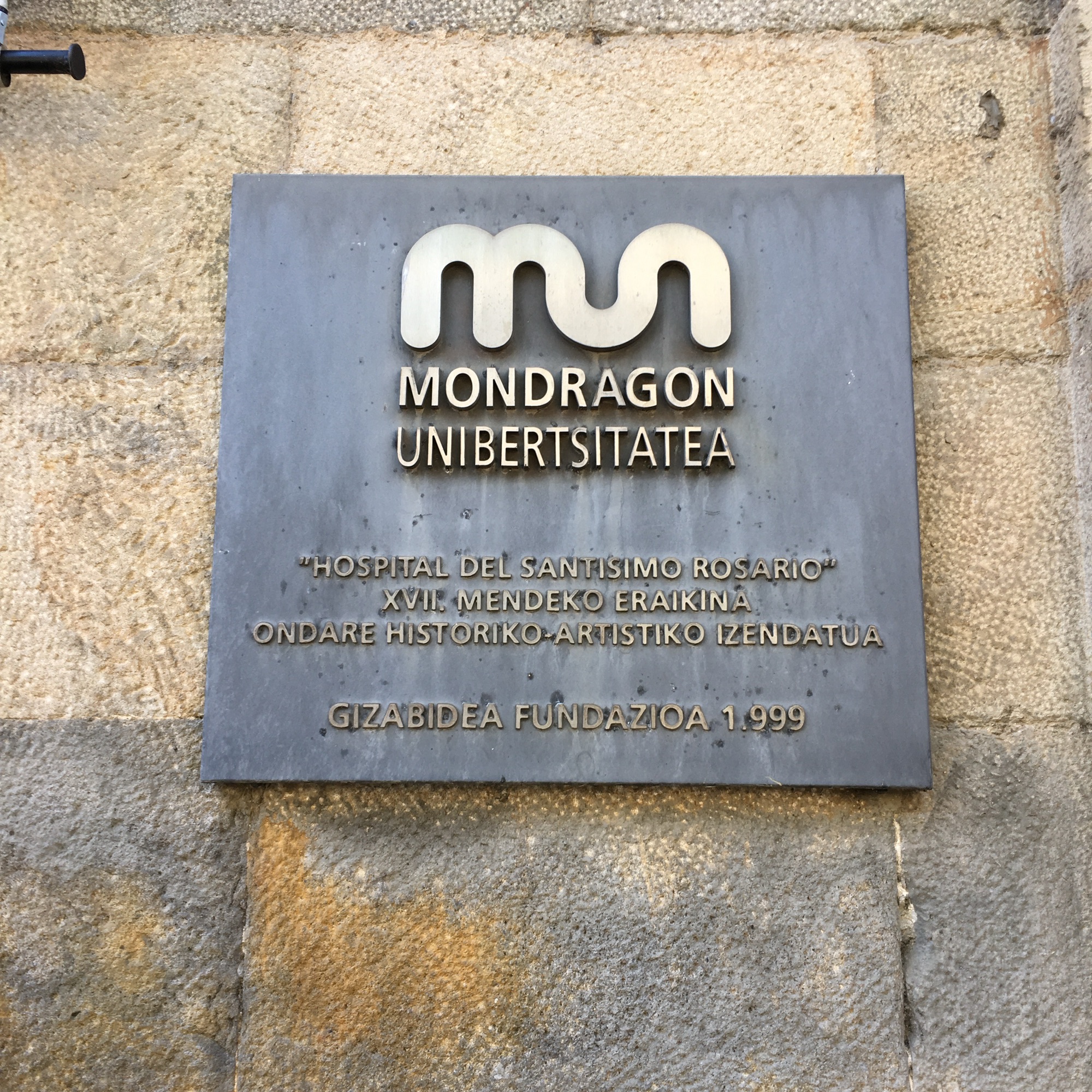
    Finally the Mothership. Mondragon University Business School.

    It doesn’t get more ‘Cooperative Education’ than a Business School based in a Cooperative University which is part of the Mondragon Cooperative.

    That’s my picture from when I visited in 2018. Stood outside in awe like some tourist visiting one of the 7 Wonders of the World.

    Also, here’s a link to a post summarising what happened when Mondragon University visited Wales at the end of 2018. Cardiff University played a big part in making that happen.

    There are plenty of Universities involved in Cooperative Education, maybe not so many in the UK, yet.

    So, What’s the PONT?

    • Doubling the number of Cooperatives in the UK is something I can get behind.
    • Yes, focus on the ‘care’ sector but also remember that people who are deeply concerned about what happens in their communities and attach importance to it also ‘care’. Like Housing Associations. That might also be a good place to start.
    • Cooperatives (teaching about / becoming one) might be an interesting proposition for Universities in these turbulent times.
  • Silly Rules, Improvementitis and a Bonfire of the Regulators.

    Lets start with some definitions, official and unofficial.

    Silly Rules. “outdated or unhelpful rules, policies, and procedures within healthcare settings that hinder efficient and effective care”.

    Official: The Institute of Healthcare Improvement (IHI).

    Originally called, Breaking the Rules to Improve Care and Increase Joy in Work and Well-Being (link here). Basically an IHI initiative to tackle some of the everyday irritations of working life by asking staff and service users to identify ‘Silly Rules’ and fix them.

    But it does leave me asking, “how did we get here in the first place?”

    Which leads to the next definition…

    Bonfire of the Regulators. “a periodic purge of arms length government bodies that had been set up to implement recommendations from a review. However they are no longer doing what was intended or have passed their ‘sell by’ date.”

    Semi – Official. I partly made this up. It’s based on this BBC article ‘Hundreds of NHS agencies to be scrapped’.

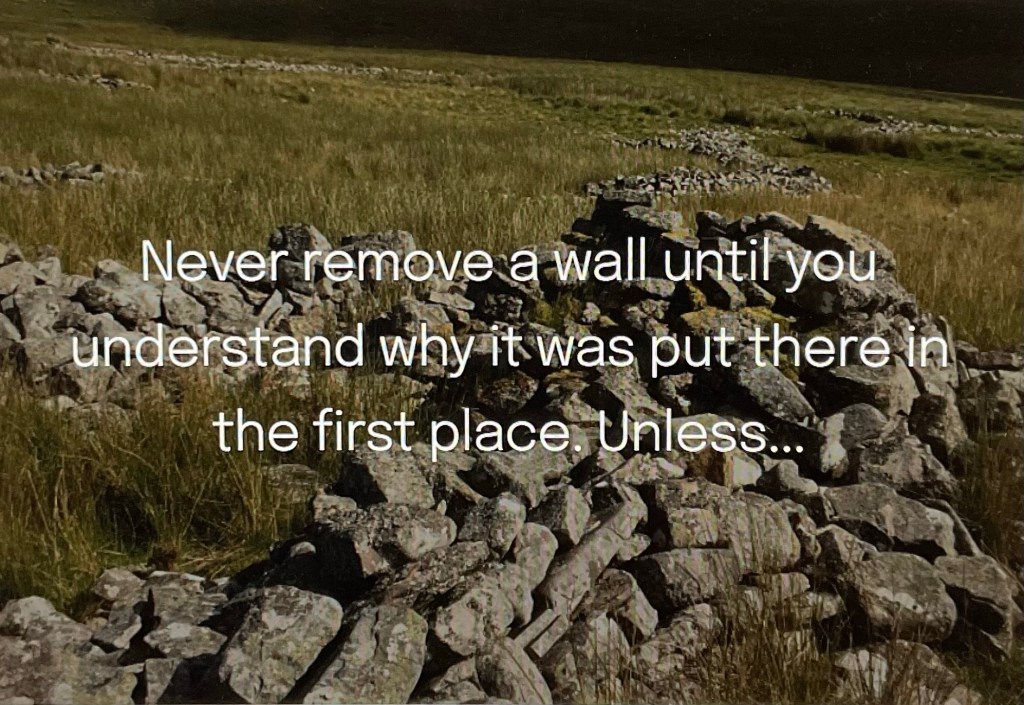
    A note of caution here. Have a look at Chesterton’s Fence, ‘never take down a fence until you understand why it was put there in the first place.’

    The BBC article reports, ‘Ministers said there were more than 150 bodies responsible for regulating or assessing healthcare services in England, and they risked overwhelming staff with “uncoordinated” guidance.’

    If 150 is accurate, that’s a huge bonfire, but Iets wait to see what happens.

    If this sort of thing interests you, look at the Institute of Government article ‘Not another Bonfire of the Quangos…’.

    Bonfires seem to come around like boomerangs. Ironically, here in Wales some people are calling for the re-instatement of quangos, like the Welsh Development Agency, ‘burnt’ on the last bonfire,

    You know that quote from Sun Tzu in the Art of War…. “If you sit by the river long enough, you will see the bodies of your enemies float by”? Just putting it here for reference purposes…

    But, but, this post is not just about top down stuff. We do create local challenges for ourselves.

    Improvementitis. “a feeling of helplessness created by the overwhelming number of rules, guidance and procedures required to your job. These will have been landed on you, often by people who have never done your job”

    Totally Unofficial. I made-up this one.

    All I’m going to say is try some mystery shopping. Whenever I go to an NHS building or any public body facility I try to look at the notice board.

    Paul Taylor who prompted this post talks about his own hospital mystery shopping in, What I Got Wrong About Innovation and Design.

    Paul points out that during the Covid pandemic, “unfreezing” of bureaucracy allowed for more agile and experimental approaches to service delivery.

    If you’ve read this far, I hope you’ve picked up the link to the role of regulators.

    Lots of my own mystery shopping has been overwhelming. Notice boards with literal forests of fluttering initiatives, screaming for attention and the NEXT BIG IMPROVEMENT!

    I have seen examples of the ‘latest thing’ pinned on top of what was the last ‘flavour of the month’.

    Behind the forest of initiatives are the unfortunate overwhelmed staff who are just trying to do their jobs (which they generally know quite well).

    And to bring things right back to the start, we wonder why the Silly Rules initiative started…

    Silly Rules in Wales. Our Silly Rules initiative kicked off late 2024. I’m waiting for details of what happens next.

    Meanwhile you can look at what is a well intentioned, sensible, evidence based, carefully planned initiative:

    Finally, The Georgia Guidestones. Principle 7, Avoid petty laws and useless officials, which I wrote about in 2011.

    Apologies, I’ve not gone Tin Foil Hat conspiracy theorist, but there is something relevant in the Georgia Guidestones statement.

    I’m wondering is if there is a case for periodic review of all sorts of regulators, quangos and even ‘initiatives’.

    Because, the reasons they were put in place do change, society moves onwards and things pass their ‘sell by date’.

    Just ask the question, ‘are we still fit for purpose?’

    Something like the ‘going concern’ assessment that happens as part of the annual accounts process.

    Something more ‘purpose led’ and regular, rather than ‘bonfires’ based on government cycles (and cost reduction pressures).

    So, What’s the PONT?

    1. Rules, regulations are part of any system and help it to function. There are the boundaries we should not cross, and things we must we do.
    2. The reasons and the purpose of the rules can change over time. It is helpful to ask the question, ‘are we still fit for purpose?’
    3. Before you remove anything, ask the Chesterton’s Fence question.

  • All Hail Caesar (Salad)

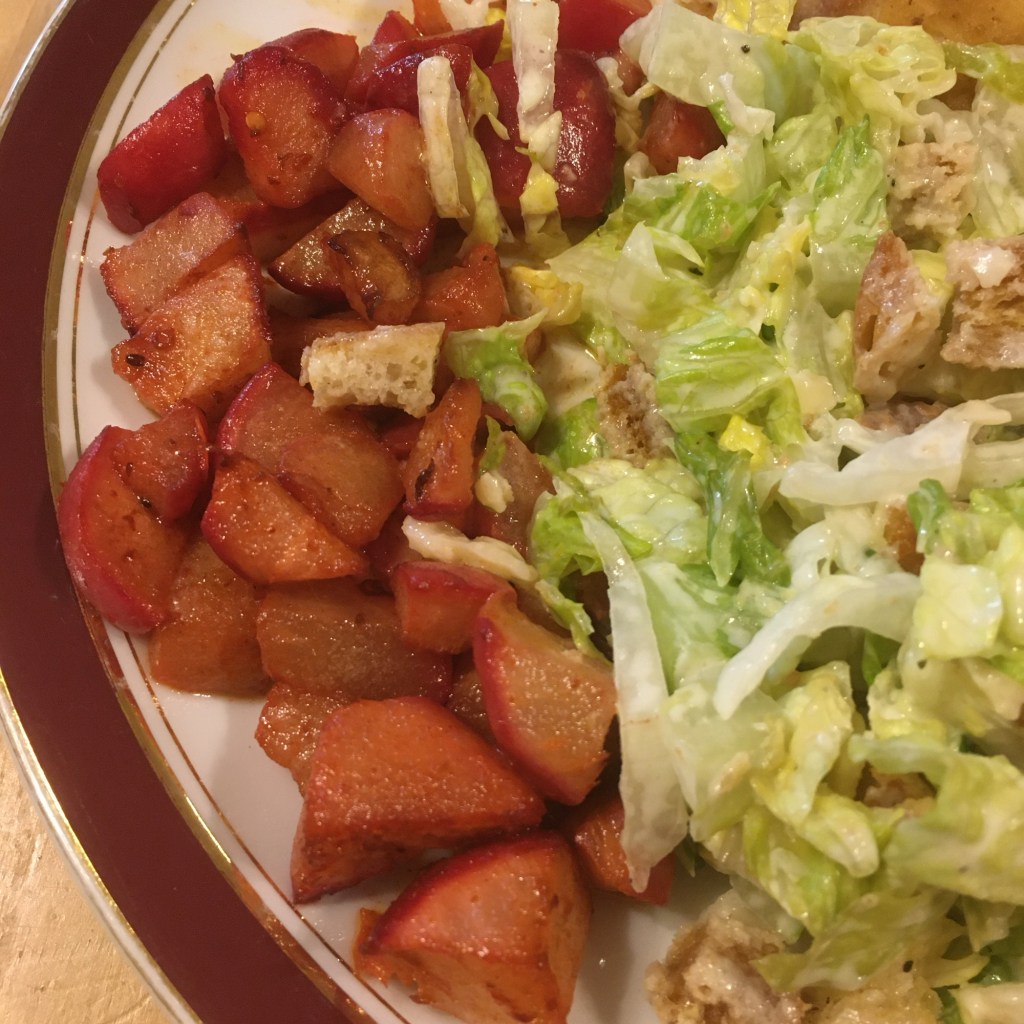
    I’ve just made tea. A fairly tidy Caesar Salad with Anchovies. Delicious.

    Unfortunately there’s no picture, because it’s all gone. I’ll update it next time. In the meantime here’s the best I could find in my photos.

    Caesar salad and some sort of potatoes.

    A burst of nostalgia. This got me thinking about the first blog post I wrote. It was about Caesar Salad.

    A sort of food review of the Caesar Salad options around Cardiff, way back in August 2011.

    I didn’t have a blog back then and the very generous Nicki from the Cardiffbites blog allowed me to be a guest blogger.

    It was a huge deal for me, and I’m grateful to Nicki for that opportunity. In 2011 publishing anything was a massive step up for me.

    Anyway, here’s the original post from 14 years ago.

    https://cardiffbites.blogspot.com/2011/08/5th-birthday-guest-post-hail-caesar.html

    A guest post by twitterer and dad, Chris Bolton. Chris works in the Pontcanna area and enjoys the area’s easy access to lots of interesting lunchtime eateries. However, getting a bite to eat isn’t always that easy, as Chris explains, “My tastes are driven by having 3 teenage sons who consume food like a plauge of locusts. To get a meal I have to choose things they don’t like. This means lots of things that involve olives, vegetables or raw suff. Not too bad if you add in one of their main dislikes, smoked salmon.”

    This week I have been mostly eating ….. Caesar Salad

    I’m not much of a foodie, so here’s a link to the description of how Caesar Salad was invented in 1924. “A Caesar salad is a salad of romaine lettuce and croutons dressed with parmesan cheese, lemon juice, olive oil, egg, Worcestershire sauce, and black pepper”.

    My need for Caesar Salad usual happens in response to an inner “healthy eating” alarm. Some people do smoothies and juice drinks, I do Caesar Salad. Lettuce leaves and dog biscuits (croutons), it must be healthy. 

    So this is how my mostly eating week turned out. 

    Tuesday. Bella Italia, St Mary Street.

    I like my lettuce to be good and crunchy. Mine was all chopped up, like they didn’t think I could cope with big leaves. The croutons were the same as the bread used for the bread and olives, also chopped up. The chicken was chicken beast from something else on the menu, sliced up this time. The Caesar dressing was ok, but just a bit too much of it. One final thing, the Parmesan was too thick, like it had been chopped, not shaved. Overall it was ok, I ate it, but it felt a bit mass produced.

    Wednesday. Blue Anchor Inn, West Aberthaw.

    Caesar salad isn’t always on the menu here. You have to check out the specials. I know it’s outside Cardiff, it might not be available, but it’s worth the effort. This was Caesar salad with anchovies, perfect. Now, you’ve got to be careful with anchovies. Too many horrible experiences with the salty little blighters on pizza has made me nervous. No need to worry here though. They were very mild anchovies, nicely oily, not too fishy and just the right amount hiding amongst the proper large romaine lettuce leaves. The leaves were suitably large and crunchy and the dressing had a nice lemon tang. Best if all was the Parmesan savings. Nice big pieces that had just been shaved off a block. This was great. 

    Friday. Cafe Brava, Pontcanna.

    This looked fantastic. A large bowl (bowl size is important to me) packed with crispy lettuce leaves, nice big shavings of parmesan, a few croutons visible and then the chicken on top. 

    The chicken was grilled to perfection, brown stripes from the grill with a peppery covering. Best of all it was still warm. There’s something about eating warm chicken and crunchy lettuce in the same mouthful that takes some beating. The croutons were random sizes and looked and tasted a bit like fried bread (much better than the dog biscuit ones that come out of a packet). Proper shaved parmesan again and just the right amount of dressing to leave a bit in the bowl to mop up with the side order of chips (I never said I was sophisticated). 

    Next week I’ll be mostly eating French onion soup

    A few observations here.

    1. How on earth did I manage to eat out 3 lunchtimes in a week? I’m sure I couldn’t afford to do that now, let alone 15 years ago.

    2. I’ve not eaten meat in 10 years, so the Chicken Caesar Salad is off the menu.

    3. I think I’d rather eat the homemade version nowadays. With Anchovies. All that research taught me the basics and now I’d rather do it myself. Thanks Nicki.

  • Desire Paths, Caminitos de Deseo or, Paths of Necessity.

    When does a Desire Path become a path of necessity? Not just something you choose for convenience.

    This is a thinly disguised attempt to share the fact that I’ve been walking along a bit of the Camino de Santiago.

    I’ve been told I’ve become the opposite of one of the characters in the film Fight Club.

    ‘What’s the first rule of Fight Club? You don’t talk about Fight Club!’

    For me the first rule of Camino Club is, ‘I don’t shut up about the Camino’.

    That’s according to my wife, and she was there every step of the way with me.

    A return to Desire Paths. I went through a spell of having a lot to say about Desire Paths.

    I even used to photograph examples and share them with like minded individuals on Reddit.

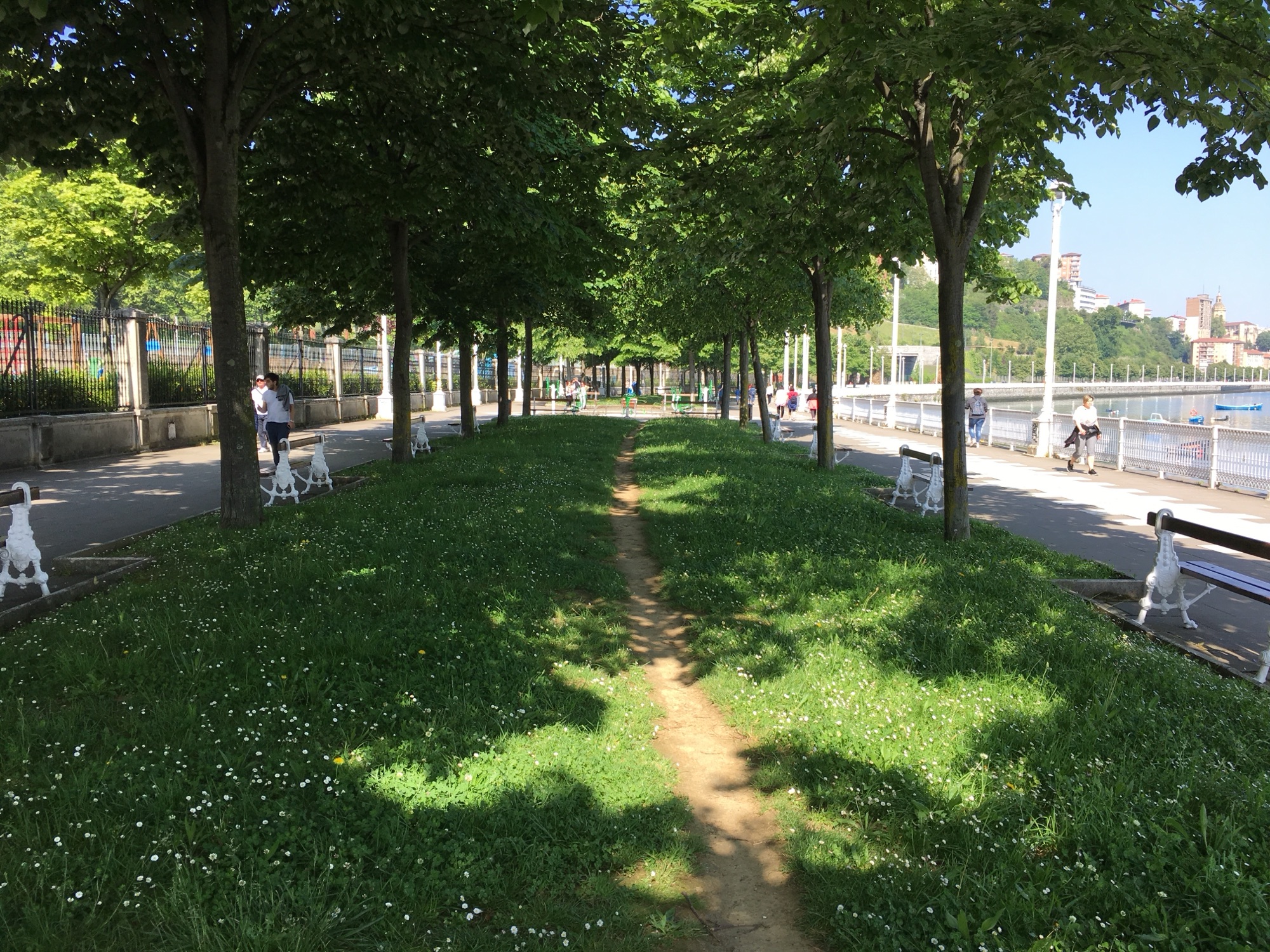
    A Desire Path is basically an informal or unofficial footpath that people have created and use in favour of the official, planned and engineered footpath that someone else created for them.

    It’s all about convenience, ease and the actual route people choose to take between A to B.

    I wrote about them in this post where my focus was on user centred design in Public Services.

    I’m not sure how the ‘desire path’ name came into being but other variations have been used to describe the same concept.

    Sneckdowns is a lovely example that describes what happens to traffic movement in snow.

    Vehicles leave tracks that show where people actually choose to drive rather than where the painted lines, signs and kerbs force them to.

    There are some examples of Sneckdowns from Halifax, Nova Scotia in this post where I suggest they are the ultimate combination of user centred design and desire paths.

    Convenience over Engineering. At the heart of my earlier posts was a question. Are things being designed with the needs of actual users in mind?

    Is this way people would actually choose to do something?

    In many respects a desire path is a perfect example of a design failure.

    No, people did not choose to use your path, they made their own.

    Necessity Paths on the Camino de Santiago. Have I mentioned I’ve been walking on the Camino de Santiago?

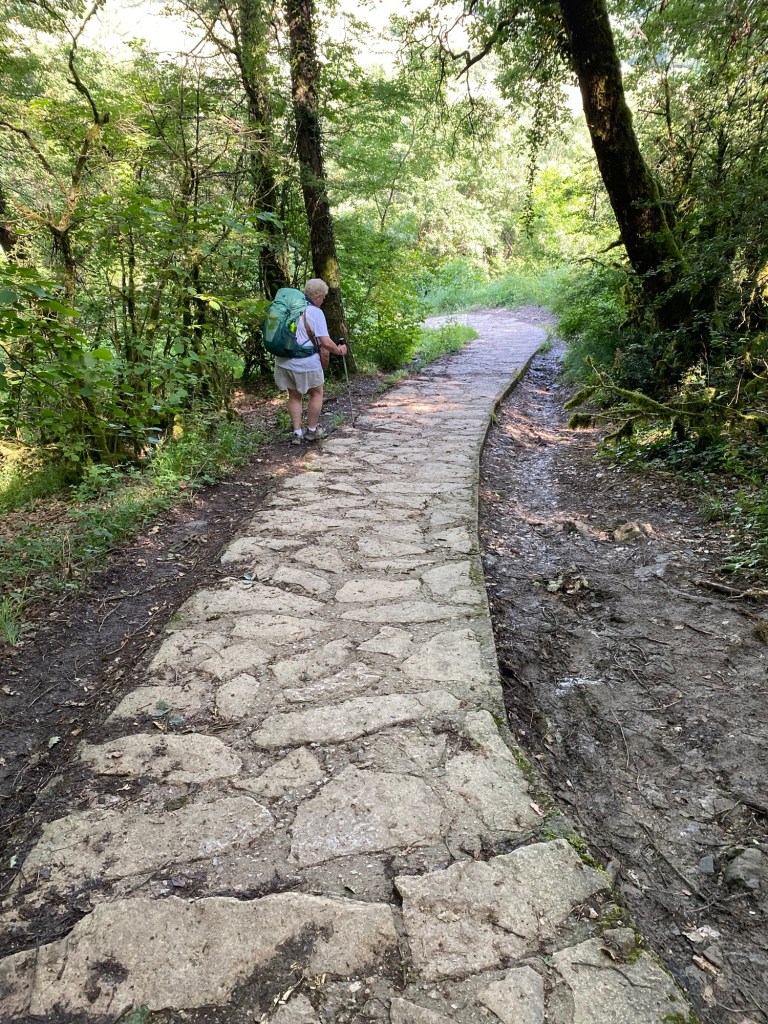
    Anyway, here’s a picture of a path that’s not so much of a desire path, more of a necessity path.

    Walkers avoid the paved path and risk the mud.

    What this picture doesn’t quite convey is that this was a steepish descent and the surface of those stones was wet and slippery.

    The Peregrino (because that’s what we call ourselves nowadays) in the photograph is taking their chances in the mud rather than risk the constructed path.

    It was a safety choice rather than a convenience choice.

    Less desire, more necessity.

    To be fair, some cyclists did come past, brakes locked and cornering at the foot of the slope on a wing and a prayer.

    Maybe it has actually been designed for adrenaline seeking cyclists?

    That’s all I’m going to say on this.

    Apart from, if the path had been designed by the people who actually walk along it, it might not have looked like it does today.

    In the unlikely event that someone wants to upgrade it, don’t bother.

    Spend your money on the descent to Zubiri.

    We can live with this one.

    The Zubiri descent is an ankle snapper and a morale killer.

    Caminitos de Deseo. I’ve gone back to look at some of the things that used to interest me about Desire Paths.

    Back in 2014 I found this excellent Spanish video. I encourage you to immerse yourself.

    Since 2014 there’s a lot more You Tube material on Caminotis de Deso, with quite a bit of singing.

    It’s got me wondering if ‘Desire Path’ did originate in Spain?

    Walking long distance paths like the Camino de Santiago is a culturally embedded thing.

    In some ways it’s like the meta path all others spring from.

    I’ll stop now.

    So, What’s the PONT?

    1. What people actually want and designers actually design are often different. Desire Paths show that clearly.

    2. Literally walking in someone else’s footsteps will give a designer a good understanding of what is required.

    3. If anyone is thinking of upgrading that steep slippery paved path between Zubiri and Pamplona, don’t. Spend your money on the descent into Zubiri.

  • Camino Curiosities

    Camino Curiosities

    Here’s a few things that appear along the Camino that made me pause.

    Nothing particularly deep and meaningful here. Mostly just weird stuff that appeals to my sense of curiosity.

    Be Quiet! Listen.

    A small chalk board fixed about 3m up in a tree. Somewhere in the Beechwood’s around Fontaine de Roland (I think).

    It does make a good point.

    The woods have plenty of wildlife it is worth listening to.

    We did stop to eat lunch around here, and for many groups of walkers you could hear them talking before you see them.

    Viva las croquetes!

    There’s so much going on here.

    Fairly typical of most signposts you see on the Camino. This was somewhere between Roncesvalles and Zubiri I think.

    Of course I’m going to spend time trying to find out what Viva las croquettes! is all about.

    A cursory search did lead me to cookery recipes for croquettes, with music.

    There must be a deeper meaning?

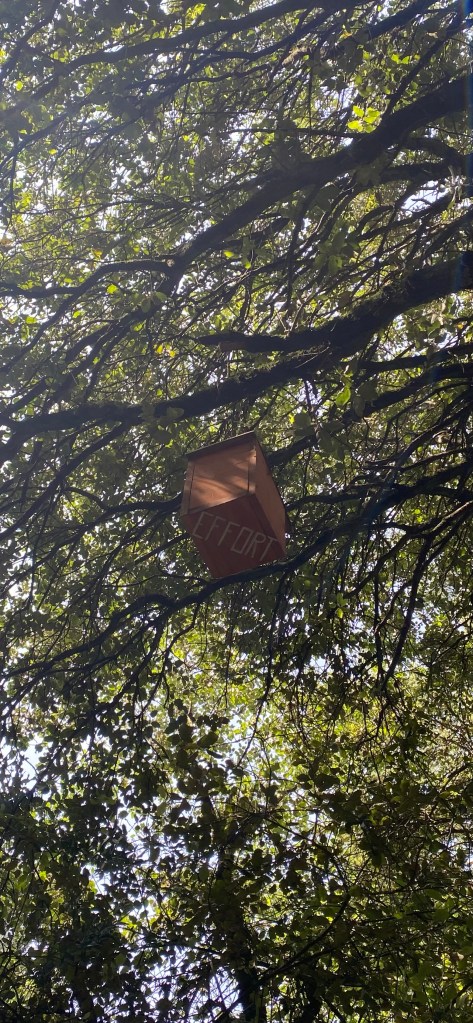
    EFFORT

    A birdhouse thing hanging precariously from some branches about 5m up.

    Can’t see anything but squirrels with a strong resistance to sea sickness nesting here.

    But why write EFFORT on the bottom?

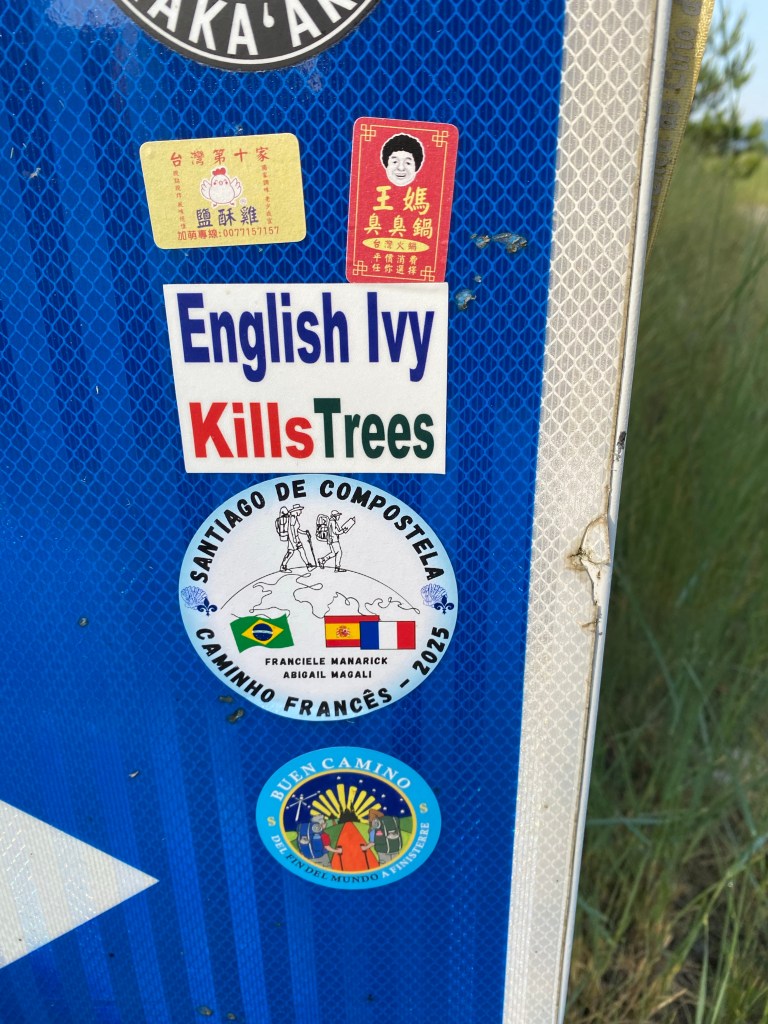
    English Ivy Kills Trees

    Apparently, English Ivy doesn’t actually kill trees, it just makes them a bit unwell.

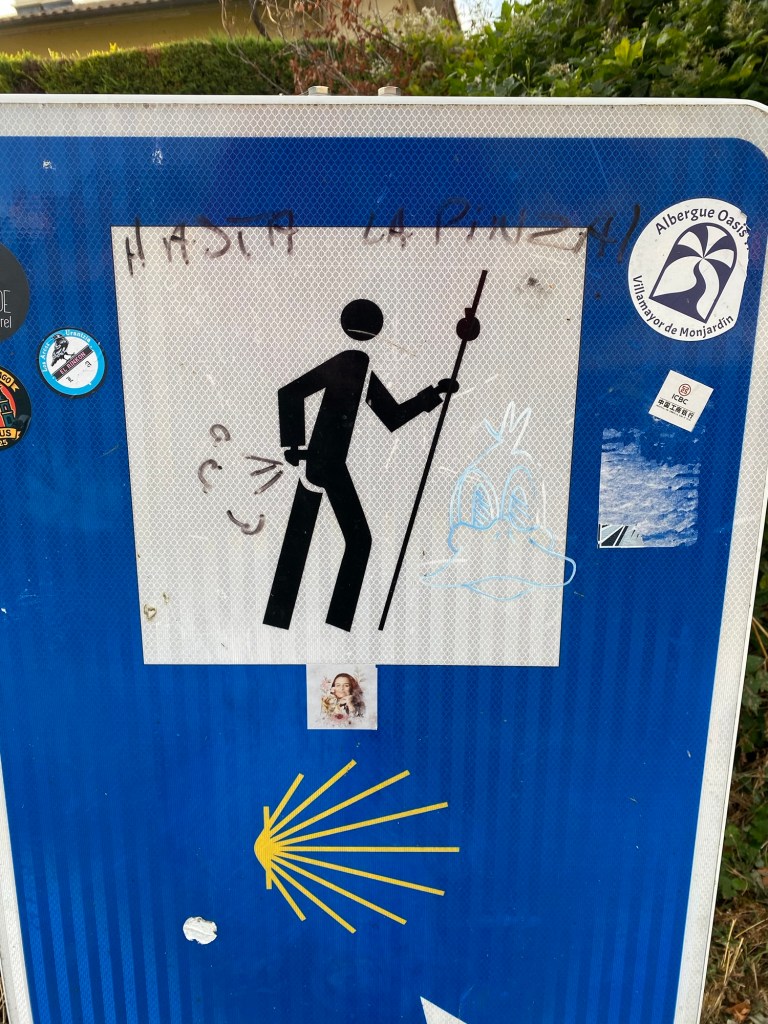
    Someone does however hold a different view, which they need to express strongly through the medium of stickers on road signs.

    Or maybe I’m missing the true meaning?

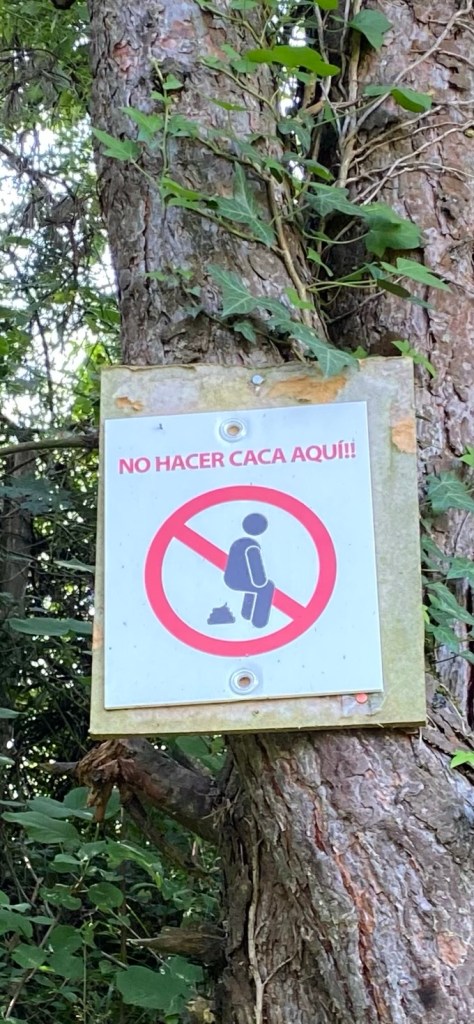
    Don’t Poo Here!

    Little explanation of this one required.

    Quite a famous Camino Curiosity, if you look online in the wrong sort of places.

    It’s also a fairly common problem on some popular UK hiking trails.

    I’m quite impressed by the quality of the sign though.

    Very professional. There must be a shop that sells them.

    Where there is a demand, the market will meet it huh…

    Will be back in October with a few more.