
I’m a bit of a sucker for metaphors. Which one of these descriptions works best for you?
Option A. “To make this project something that will be a success for many years we need to put up the right sort of ‘scaffold’ to help it develop…”
Option B. “To ensure the successful delivery of the project you need to put in place a time limited arrangement of; people, processes, tasks and KPI’s, all aligned with outcome objectives…”
Personally, I’m more attracted to Option A. I like the idea of a scaffold. It’s a good metaphor for all of those ‘supporting’ things you need on any project.
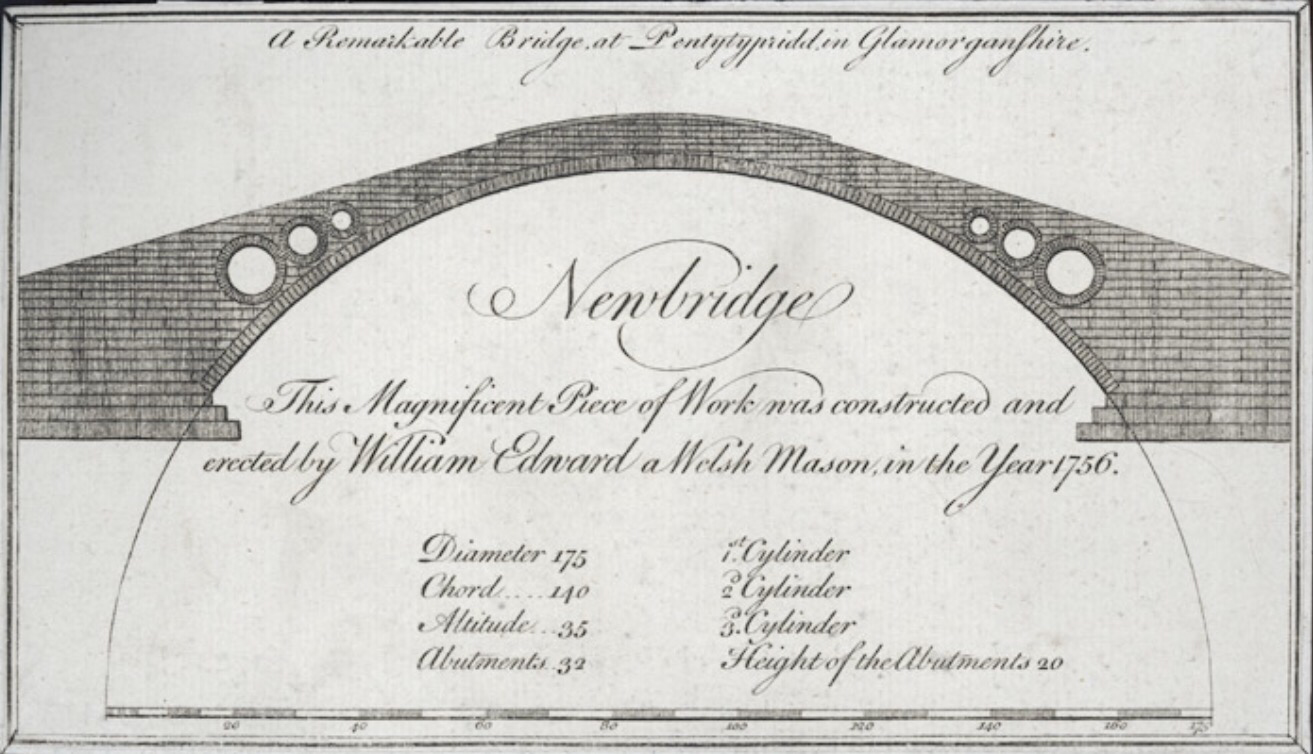
I know enough about scaffold(ing) to recognise that it provides the support (literally) needed to do a job. I also know it is temporary and gets taken away after the job has been successfully completed. The house, bridge, ancient monument or whatever you’ve been working on can now successful stand on it’s own – no need for support. Extending the metaphor, the scaffolding would probably have been too flimsy anyway to provide total support – it’s just assisting the ‘building/repair’ process. I told you I was a sucker for metaphors…
Iain, Sam and Aristotle. I’ve recently been talking with Iain Phillips and Sam Williams about scaffolding, with the idea of us contributing to the Cynefin Scaffolding wiki (link). I was surprised to see that a blog I wrote after the 2018 Cynefin Snowdonia retreat (summarising my learning in 5 Tweets) had already been posted there. There’s also some more detailed thinking, outlining ideas around different types of scaffolding, posted which is well worth reading.
The conversation with Iain and Sam has got me moving again – and hopefully there will be more added to the wiki. Some of that might relate to scaffolding for supporting how we work in the future. For example, how does a team develop when everyone is working remotely? What ‘scaffold’ would help to build the relationships and trust necessary to be an effective team? But I’ll leave those things to Iain and Sam – I want to talk a bit more about metaphors. The idea of metaphors has been around for absolutely ages.
Aristotle (382-322 BC) once said… “The greatest thing by far is to have a command of metaphor… for to make good metaphors implies and eye for resemblances”.
There’s a lot written about why we use metaphors, and the value they add. This article is from Psychology Today, ‘Why Metaphors Are Important’ is a useful summary. If you fancy a mental stretch have a look at this, ‘Representation – Got Forth’ from Matt at Complex Wales. I’m slightly worried that Matt is going to point out that I don’t know the difference between a metaphor and an analogy. To be honest, I’m not sure I do. But it all seems blurry enough for me to get away with it for the purpose of a blog post.
I did read some of the papers cited in the Psychology Today article. Work by Thibodeau and Boroditsky in 2011 grabbed my attention. Their research looked at how people responded to a description of a city where there was a crime issue. For one group they used an animal metaphor to describe criminal gangs (beasts preying on citizens), and for the other, a disease metaphor (a plague on the town).
When readers were asked to think of solutions to solve the crime problem, they came up with different things, depending on the metaphors used. The animal metaphors generated punishment and control approaches whilst those who had experienced the disease metaphors went for diagnosis and treatment approaches.
Interestingly, the earlier research cited in that paper talked about analogies rather than metaphors – so, if smarter people than me are mixing up the metaphor and analogy I’m not going to stress about it. The thing I’d rather focus on is their impact and value. In summary, this is what I’ve learnt about metaphors:
- We get used to words used everyday, to the point that they no longer have much meaning. Think about Options A & B above. A metaphor brings it back to life.
- Metaphors go beyond the literal meaning of things. By doing that it can help people better comprehend ideas that are difficult to understand. Think about how a picture or drawing can sometimes help people understand and ‘get it’. A metaphor works in the same sort of way.
- Metaphors influence how we think on an unconscious level (Thibodeau and Broditsky). This seems to fit well with lots of what we all know about marketing and the power of metaphors to ‘sell’ us something. Which brings me back to scaffolding…

Scaffold is / should always be temporary. This goes right back to where the metaphor of scaffolding landed with me at the Cynefin Retreat in 2018. I’ve always had concerns that for some projects the ‘scaffold’ becomes the ‘thing’. The thing you are helping to build or develop becomes less important that the ‘scaffolders working on maintaining the scaffold’. When the time comes to take away the scaffold, ‘the building collapses’, metaphorically…
Lots of people like Cormac Russell and Paul Taylor have spoken about this happening in community development work, including this post from Paul, Communities Need A Different Model – And That Might Not Include Us.
Just to extend that and provide a ‘hook’ for some further conversation I think the same thing can happen in organisations. People try to build things, and when they walk away it quickly collapses. Don’t get me wrong, I’m sure there are cases where these things work, but I’ve seen many examples where the ‘scaffolders are busily maintaining the scaffold’ and not building the actual thing. I did say I was a sucker for metaphors…
If that hook hasn’t caught anything, the sort of things I’m talking about are Teams or Consultants that have any of the following as a prefix; Quality, Customer Focus, Employee Engagement, Innovation, Change and Transformation. Hopefully that will generate enough conversation for a follow up post…
So, What’s the PONT?
- Metaphors engage people when everyday language no longer has any meaning. Management speak or metaphor? Give me a metaphor any day.
- A good metaphor will help to understand complex and complicated issues. It allows people to develop their own mental models that work for them.
- Scaffolding is a good utilitarian metaphor. Chiefly because it emphasises the point that it is temporary. If more projects recognised this, and stopped ‘maintaining the scaffold’, we might build more things that can stand up on their own.
 What's the PONT
Leave a reply to John Wade Cancel reply