


Article 5, the famous promise. Until recently I knew a bit about NATO Article 5, but had never heard of Article 3. Thanks to Dave Snowden I now know more. And it’s important because Article 3 might be the bit that needs us (local communities) the most.
Civil Preparedness and National Resilience. Article 5 is the famous promise: an attack on one is an attack on all.
Article 3 is quieter. It says NATO members must maintain and develop, individually and collectively, their capacity to resist armed attack. In plain language: don’t just rely on others turning up when things go wrong. Build the strength to cope, adapt and keep going (a possible definition of resilience I’ve mentioned before).
That sounds like defence policy. But it is also about communities. However, throughout most of my adult life the decline in local community cohesion and resilience is one of the phrases I’ve heard repeatedly. A worry.
Things did not go to plan. When Russia invaded Ukraine in 2022 there was widespread expectation (outside of Ukraine) that everything would be over in a few days, and the Russian flag would be flying over Kiev. But it didn’t happen as planned.
The story was not just about tanks, jets, missiles and soldiers. This paper ‘Vernacular security and Ukrainian civil society in wartime’ by Bohdana Kurylo at the London School of Economics provides an excellent analysis. It also introduced me to the concept of Defence as Emancipation. Which I want to come back to.
Defence was about railway staff keeping trains moving under fire. Volunteers transporting families, food, medicines and pets. Local people filling sandbags, repairing damage, sharing information and checking on neighbours.
Farmers towing away abandoned tanks with tractors became a symbol (see picture above). But the bigger lesson was more significant: resistance was not just something done by an army in front of civilians. It was something a society did as a whole.
Ukraine changed the doctrine. This matters because NATO now describes resilience as the capacity to prepare for, resist, respond to and recover from shocks, including infrastructure failure, hybrid attack and armed conflict. Civil preparedness is not an optional extra. It supports continuity of government, essential services and military operations. The unglamorous stuff – energy, transport, communications, food, water, health and public trust turns out to be part of deterrence.
This is where the community resilience conversation becomes much more than a local government workshop with sticky notes. If a country falls apart when the lights go out, the supply chain stutters, or people stop believing public information, then expensive military kit only gets you so far. The country behind the front line has to keep functioning.
Whole of society preparedness doesn’t happen overnight. That capacity does not appear by magic in a crisis. It is built beforehand in community groups, local businesses, voluntary networks, public servants who know their patch. Trusted communications, practical skills and relationships that cross organisational boundaries. It lives in the neighbour who checks during a storm, the food bank volunteer, the local mechanic, the council officer who knows who to phone, and the community WhatsApp group that is useful rather than terrifying.
None of this means turning civilians into soldiers.
It means taking seriously the idea that peace is protected not only by armed forces but by societies that are harder to frighten, fracture or disable.
A resilient community is less easy to manipulate. A trusted local network can move faster than a distant institution. People who know each other are better able to spot problems, share accurate information and keep essential life going. Vernacular security.
What if there was a financial commitment? So here is the question I keep coming back to. If resilience is now part of defence doctrine, should some defence resilience investment go directly into community capacity?
Not as a token consultation exercise, but as a serious part of national preparedness: funding the local institutions, relationships and practical skills that make societies harder to break.
Oh, and just to spice up the conversation, 1.5% of UK GPD allocated to Article 3 spending (as outlined here) would be about £48 Billion (by my rough estimation). Now that would go a log way on building resilient communities…
What’s the PONT?
- NATO Article 3 is not new, but Ukraine has made its meaning visible: resilience is a practical defence capability.
- Community resilience is not soft, fluffy or separate from national security. It is part of how a society resists shocks and keeps functioning.
- If we want peace, we should invest before crisis hits: in trust, local networks, civic infrastructure and the people who know how to get things done.
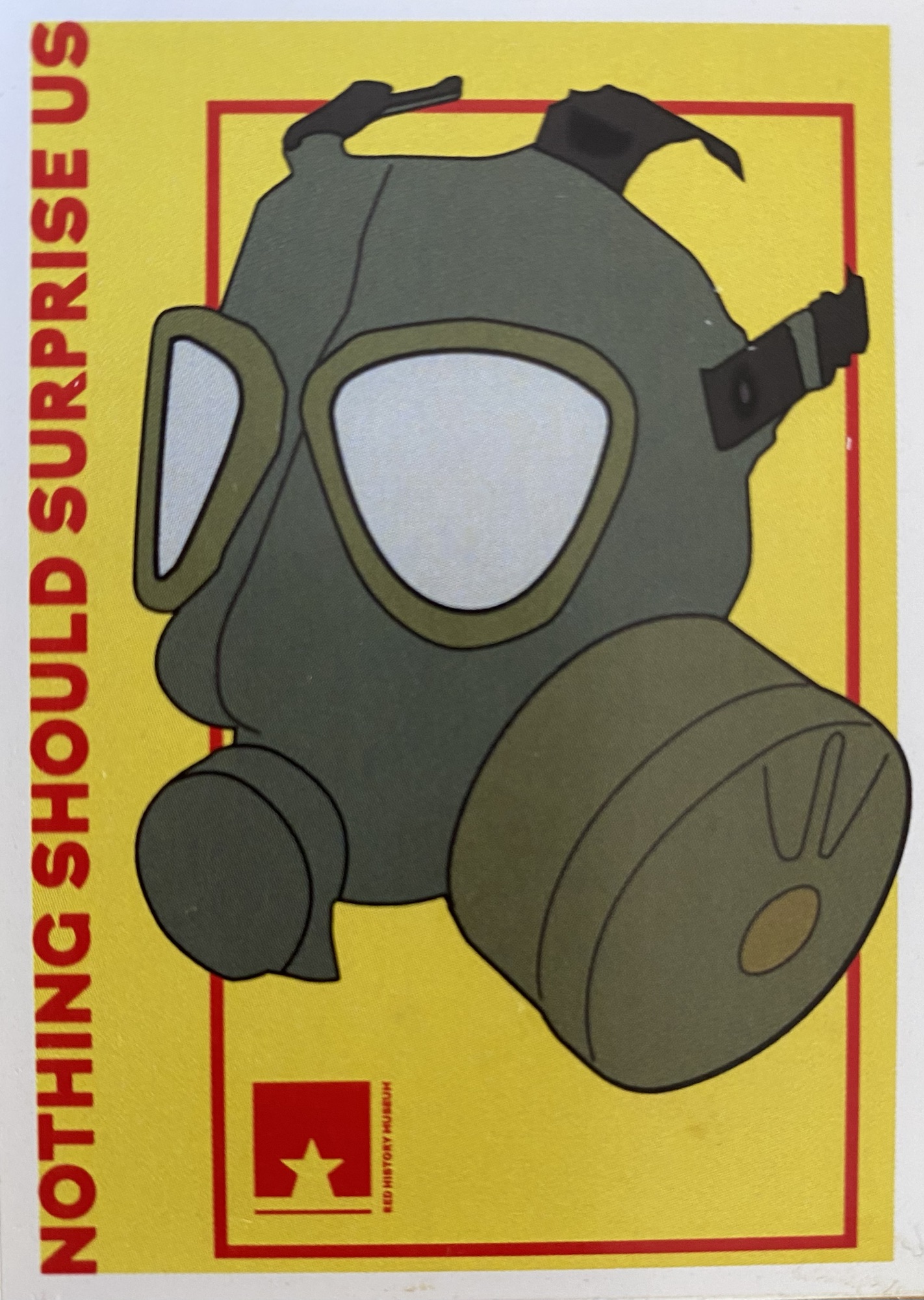
My images: Ukraine Armed Forces Agricultural Division sticker given to to me and ‘Nothing Shall Surprise’ fridge magnet from a museum of Yugoslavian history.


Leave a Reply