 Do email read receipts make your spirits soar…….? Not mine.
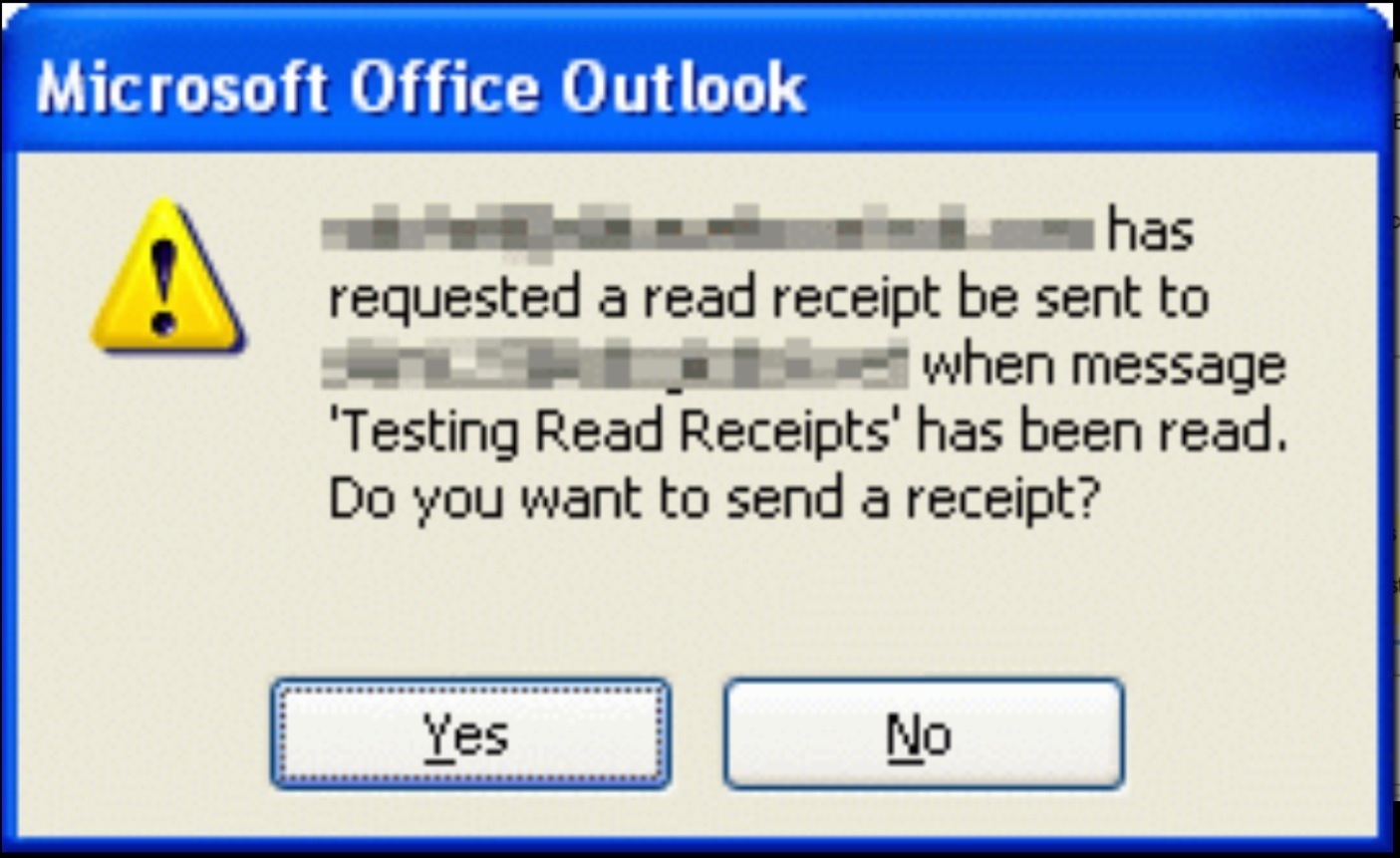
Why do people send them? Many people I’ve spoken to have, like me, been on the receiving end of read receipt misuse. Pointless, irritating and questionable behaviour.
I must admit that when I get one, particularly from repeat offenders, I’m sorely tempted to just delete the email without even reading it. Not quite the user experience (UX) emotion or response I’d imagine programmers, developers or the email sender were looking for.
There are many reasons why people need to send email read receipts. These range from the well-intentioned and legitimate, right through to something more sinister like, a lack of trust between colleagues. Unfortunately the virtually effortless act of sending a read receipt request can lead to misuse and undermine trust (I’ve explained my logic on this previously). Here are some thoughts on why people send them, particularly in relation to colleague to colleague communication.
Legitimate and Well Intentioned. This does what it says on the tin. This is a really important email you need to read. Possibly something that affects your terms of employment, has legal implications or involves money. It’s a bit like the ‘registered post’ package you have to sign for at the front door. A hassle to carry out, but necessary for your protection, and the person sending you the package. These situations are generally few and far between in colleague to colleague communication.
Unconscious Ignorance. I’m being generous here. Some of the ‘read receipt’ emails I’ve seen relate to very innocuous interactions. Why on earth would someone require a read receipt for an invite to an optional lunchtime presentation? I can only assume that it’s because the sender has some email feature set to automatic and isn’t aware of the impact (or how to turn it off). At least they get to feel the pain of the response emails flooding back in their own, undoubtedly, massively overloaded inbox.
Something More Sinister…… I Don’t Trust You! Unless the document falls into the same category as ‘registered post’ I really don’t see the need for the read receipt. The only other conclusion I can draw is that “you don’t trust me to read and act upon your email, so you want evidence in case you need to use it against me”. It’s a bit like sending a ‘cc’ to the boss of a colleague, a sneaky action that undermines trust between colleagues.
The read receipt is undoubtedly a useful feature that has great value, in the right circumstances. However I’m not sure that the potential for misuse by people was fully appreciated. Unfortunately the misuse that is enabled by virtually zero effort (cognitive and physical) turns something useful into a problem. For those on the receiving end the impact can range from mild irritation to something much less desirable, the undermining of trust between colleagues.
Interestingly the technical community can also feel the pain of their creation. Here’s an interesting story about an email migration project on exchangeserverpro.com. The project encountered 24,368 unread ‘read receipts’ held by a single person (the mind boggles at the state of that inbox!) This is a technical account but worth reading, particularly for the first comment……, “Read receipts have to be the most inane and narcissistic feature of email. They’re the first thing I disable when being setup under a new email system.” Nicely put….! Perhaps we should all get our IT departments to follow this advice, for the sake of trust between colleagues.
I’ve not got much to add to that other than what I’ve said before, ’emails don’t send emails, people do’. Same for the ‘read receipts’, it’s all about how we choose to behave.
So, what’s the PONT?
- There are legitimate and well-intentioned reasons for sending ‘read receipts’. Think ‘registered post’, otherwise don’t use it.
- The impact of a ‘read receipt’ is two-way. Think about what your request means for your recipient? Also, do you really want 24,000 confirmation emails back in your inbox?
- It’s all about behaviours. We have choices about whether to send ‘read receipt’ or not; ‘read receipts’ don’t send themselves, people do.
Photo source: Check out the Paul Cunningham post on exchangeserverpro.com
http://exchangeserverpro.com/real-world-case-read-receipts
Good News.
There is something practical you can do to switch off the annoying read receipts.
Here is an excellent link from @Darrenruddick, thanks Darren.
http://blah.winsmarts.com/2010-7-Outlook_2010_-and-ndash;_Disable_the_read_receipt_annoyance.aspx
 What's the PONT
Leave a comment