• Youth rugby isn’t what it used to be in my day. We lived up to stereotypes. Not so nowadays, must be the Sam Warburton influence. Saturday was all about learning………… social skills for under 16’s rugby players…..unlikely I know.

    My sons under 16’s team are going on tour and the fund-raising is as much a part of the ritual as the ‘shaving off the left eyebrow’ antics on the tour itself. Now there are a couple of options available for the fund-raising:

    • Easy. I cough up our share of the cash quietly and we go away on tour no stress, no trouble.
    • Moderate.  Wife and I attend a few fund-raising events at the rugby club (quiz nite, band nite, casino nite, horse racing nite, bingo nite etc etc). Have a few drinks and hand over the cash via a less direct route. It works and we have a bit of fun. Oh, and don’t forget the raffle tickets, of which I usually buy 95% of our allocation.
    • Hard. Involve teenage son in the fund-raising. A massive challenge to amuse them usually involving some sort of physical activity.  Once again I hand over the cash, usually through ‘sponsorship’ this time.
    • Very Hard. Get the boys to actually do something that involves contact with civilians. Something where they deliver a service for which real people will actually hand over cash. Nightmare. Over the years I’ve experienced the difficulties of charity car washes, and the insurance claims for damage to the vehicles.
      Thankfully now banned. Unfortunately it has been replaced by something even worse, SUPERMARKET BAG PACKING.

    This was the scenario on Saturday. Me, rushing up and down the checkouts of the local supermarket like some deranged motivational coach crossed with a cheer leader.
    A bunch of 15-16 year old rugby players struggling with the emotional torture of engaging with complete strangers, and sometimes actually talking to them. By the end of it I was drained by constantly repeating; “maintain eye contact, smile, be polite and don’t put the tins on top of the cream cakes” (yes it does happen).

    In the end it was a massive success. A few quid raised for the tour kit fund, happy shoppers and the boys pleased they had got through it.

    One thing will stick in my mind though. Lots of people were great, talking to the boys, asking about the tour and wishing them well.  A few were really horrible though, quite aggressive in their refusal of the offer to pack their bags. Worse still were those who completely ignored the boys. This wasn’t without its benefits thought.

    On the journey home it prompted some reflections from teenage son about why people behave the way they do, and that being polite and friendly doesn’t cost you anything.   A lesson in social skills indeed.  I did suggest that I should speak to the school and get them to put bag packing on the syllabus for Personal & Social Education (PSE) lessons.  Unfortunately that’s step too far and apparently a very stupid idea. Well I tried.

    So what’s the PONT?

    • Getting face to face with customers and trying to provide a service is really hard
      emotional work.
    • Good eye contact, smiling and being polite gets you a long way in bag packing, and probably many other activities.
    • Getting out of your comfort zone can be beneficial, if under 16’s rugby players can deal with it, anyone can.

    Just for my wife here’s the link to her favourite supermarket bag packing related You Tube video, Johnny the Bagger.  Watch if you fancy a cry.

    Photo source: http://mostlyrandomphotoseh.blogspot.com/2010/07/vintage-rugby-detail.html

  • Facilitation toolkit essential?
    Facilitation toolkit essential?

    This week I have been mostly facilitating. Doing it for real Monday, and learning how to get better at it the rest of the week. Check out Plas Menai near Caernarvon, North Wales if you want a great venue.

    The main learning point to take away …….. shut up! (me that is).

    My default facilitation approach is to keep things busy, maintain the energy in the room and have lots of people downloading their content.  Silence is bad….. and I’ll always step in to fill the gap, in that nature abhors a vacuum style.

    Well, that was the old me. From now on I’ll be keeping quiet and using the silence or
    the ‘power of the pause’. Perhaps asking the ‘what do you think that means?’ question or just saying nothing.  It doesn’t come easy for me, but it has a few interesting effects:

    •  Useful and unexpected things emerge. The obvious stuff surfaces quickly and then ‘floats off downstream’. Then by waiting in silence other things bubble up from the depths;
    • It does take more time, but even the most talkative person will eventually go silent, allowing others to contribute;
    • Silence is uncomfortable, you’ll get fidgeting and lots of people really don’t like it (me included);
    • Controlling my body language, including eye contact was really difficult. But it does avoid that subtle influencing of the proceedings; and
    • Groups seem to learn the process reasonably quickly. The superficial ‘gap filling’ comment and diversionary chatter drops off and you get down into the deeper content that has greater meaning and significance.

    It’s a tough one to pull off. I found that out for myself, but the outputs felt so much better than ones achieved previously using a much ‘busier’ style. Being busy,rescuing people from the silence and helping them find the answers (I subconsciously wanted them to find) is not as effective as letting them dig up the answers for themselves. Even if it is a bit uncomfortable.

    At this point I must also apologize for being a bit of a plonker, not getting it, and disrupting things early on. Sorry Daniel, and thanks.

    So what’s the PONT

    1. Silence is really powerful and can be used very effectively.
    2. The discomfort it creates can help to surface what people really think, or what really matters to them.
    3. It’s hard as a facilitator not to jump in and rescue people from the silence, but well worth it (use the duct tape on yourself).

    Picture source: http://www.itst-shirttime.com/shop/1922-silence-is-golden-duct-tape-is-silver-funny-t-shirt.htm

  • Dr Stephen R Covey
    Dr Stephen R Covey

    “low trust cultures have lower productivity, more defective products, more rework and more toxic politics”  Stephen Covey

    You just know this makes sense. If you’re not convinced, have a look at this video of Dr Covey explaining what he means. Better still just close your eyes and listen to him speak, his voice is incredibly reassuring.

    We know it’s true, but still do nothing. Despairingly I meet people who know this is true, but just don’t want do anything about it.

    You might get halfway to accepting that trusting people might be a good idea, but then they say…. “ah, there’s always the bad apples, so I’m afraid these rules must apply to you all….”( arrghhh!). It’s amazing how often you see this logic being used as justification for preventing the use of social media in the workplace.

    So, just to help some of the ‘legislators’ and ‘enforcers’ understand, I’m going to try to express things in the lowest common denominator – MONEY!

    Hopefully that will grab their attention and help them with the justification to change their minds (or maybe not?). Here are my Top 4 Higher Cost Attention Grabbers:

    1. Transactions cost you more.
    2. Knowledge isn’t shared.
    3. Innovation does’t happen.
    4. Toxic office politics cost a fortune.

    1. Transactions cost more. Every transaction costs money, your time and the time of the person you transact with. For example;

    • drafting a letter,
    • checking that letter before signing,
    • amending the letter,
    • send it back for corrections,
    • repeat several times… (optional extra), and
    • checking it again before signing.

    This activity probably doubles your costs. Think about how much additional costs you add by checking every letter, report, memo, business case etc, several times before it finally gets out of the door? Surely it’s better to trust people to do the right thing in the first instance.

    2. Knowledge isn’t shared. “Knowledge can only be volunteered; it can’t be conscripted.” This is one of basic principles of knowledge exchange explained by Dave Snowden.

    Trusting someone with the knowledge you hold is a key decision you make when deciding if you are going to share it with them.

    If there is low trust people are less likely to share knowledge. The extra cost associated with this relate to duplication of effort and cost avoidance where you are ‘reinventing the wheel’. I think this ‘resistance’ to sharing knowledge is more common than we realise.

    3. Innovation doesn’t happen. A key feature of innovation is trying, failing, learning the lessons and moving on.

    Low trust environments and a fear of failure tend to go hand in hand. If you cannot trust the people around you, it will be difficult to be open about the failures and lessons learn as part of innovation. In cost terms, the organisation fails to find and implement the innovation that will make it more effective.

    4. Toxic office politics cost a fortune. At the lowest level emails copied to third parties (particularly the recipient’s boss) are an example of low trust. The time spent reading them, or even just deleting them has a cost.

    In extreme cases toxic politics can manifest themselves as: bullying and harassment cases; grievances or even industrial tribunals. The legal costs in these situations can be phenomenal. Analysis of the real cost of toxic politics in many organisations would be a real eye opener.

    Its all about the money… Here’s another video linked to Stephen Covey, talking about the costs of low trust. The numbers are massive: Employee Disengagment $250 Billion, Office Politics $100 Billion, Unproductive Meetings $37 Billion (I personally would have put unproductive meetings much higher). The source of the data isn’t mentioned but I’m sure you get the gist, and it’s an interesting video to share amongst colleagues and even board members.

    Trust is just as important a business indicator as productivity or efficiency – it really does affect the bottom line. So, it’s worth paying attention to.

    Finally. Just in case I haven’t made the case for trust, here are a few quotes that might help:

    Henry L. Stimson “the only way to make a man trustworthy is to trust him”

    Robert C. Solomon “trust opens up new and unimagined possibilities” and “trust is a skill learned over time, like a well trained athlete, one makes the right moves, usually without much reflection”

    Cardinal de Retz  “a man who doesn’t trust himself can never really trust anyone else”

    So, what’s the PONT?

    1. Trust between people has an impact on how organisations operate. It is just as important as productivity and efficiency.
    2. Low trust does cost your organisation money.
    3. Building trust is personal. In large part down to each and every one of us. Like Gandhi says “Be the change you want to see in the world.”

    Picture Source: https://www.stephencovey.com/about/about.php

  • Vulnerable?
    How Vulnerable is a Great Big Grizzly Bear?

    A while back I was sat in a busy railway station with my then 17-year-old son. While I was daydreaming he was approached by a stranger who engaged him in conversation.

    Almost immediately my son had taken out his wallet and had handed over a pound coin. The stranger continued talking and my son who then handed over the rest of the change in his pockets, all 47p of it. At this point I intervened and the stranger quickly left, counting the money.

    There was nothing particularly threatening about the stranger, he was reasonably well dressed and spoke in a calm albeit slightly urgent tone. The exchange happened very quickly, probably less than a minute. However it all seemed like slow motion as I tried to make sense of the situation and tried to work out how I was going to intervene in a way that didn’t look heavy handed.

    My son and I pieced things together later and we established that the stranger had said he needed money to catch a train home, as he was about £2 short of the fare. There was a fairly embarrassed silence between us for a moment whilst we both though about what had happened.

    For me there was a deep sense of worry about vulnerability.  Had my son been the victim of a rip off merchant? Had the stranger played a vulnerable individual with a well rehearsed script “I need £2 for the train home”, that worked on dozens of people every day?

    If it was this easy, how was my son going to cope with situations like this throughout the rest of life? On the other hand, was he doing the right thing, being the Good Samaritan, helping a fellow traveller in distress?

    I’ve mentioned this incident to a few friends with teenage children and we end up pondering the same questions?  How do kids learn to deal with these sorts of challenges?  How do they strike the right balance between compassion and indifference? Is the best way to learn from failure? Can we actually teach them anything or do they need to work it out for themselves?

    My sense of anxiety around this has been heightened by my wife’s response, “oh my god, he could be in university halls this time next year, what will happen to him……..?” Calm down, he’ll work it out, has been my response (he has to… that’s life).

    As it turned out my son and I had a very sensible and measured conversation about the incident later on. Drawing on experiences of my own and the experience of others we started to piece together an approach / strategy /coping mechanism (call it what you like), for how he might deal with people trying to take advantage of him (in whatever circumstances).

    Hopefully this gives him some protection and doesn’t smother the generous and giving side of his nature, which some might think is a bit naive, but I think is one of his more endearing features (by the way he’s 6 foot 3 and built like a Grizzly Bear).

    So what’s the PONT?

    1. That could be the best £1.47 you’ll ever spend Son. Learn the lessons.
    2. Offer people practical help (food or buy the ticket) rather than handing over cash.
    3. Don’t ever become cynical and indifferent towards people who you could help.

    Picture Source: http://en.wikipedia.org/wiki/File:Male_kodiak_bear_face.JPG

  • Last week was about the difficulties of creating a movement, the mission impossible community of practice. Here is some hope in the form of Malcolm Gadwell’s book The Tipping Point. This has lots of useful information that could help our movement flourish.

    Malcolm Gladwell
    Malcolm Gladwell

    To get an idea of what I’m talking about have a look at Malcolm Gladwell explaining it in this TED Talk.

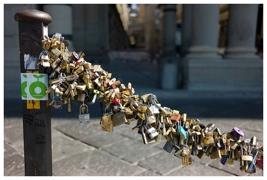
    The Tipping Point is about why some ideas, behaviours, messages or products become incredibly popular very quickly.  They become viral and behave just like outbreaks of an infectious disease. Gladwell describes them as social epidemics. The love padlocks of an earlier post might be considered an example. Spreading around cities like Florence and Paris, through social interactions, despite attempts by the authorities to stop it.

    The Tipping Point book uses a number of case studies from different settings to illustrate the idea of a ‘Tipping Point’. The point beyond which ‘everything’ changes and you don’t go back to the old situation.

    According to Gladwell there are concepts which are critical to getting to a Tipping Point: the Law of the Few, the Stickiness Factor, and the Power of Context. I’ll try and explain them in the context of our proposed movement:

    The Law of the Few. Before we achieve widespread acceptance we need the support of a few key people from different groups. People who will champion the idea. If individuals representing all three of the groups endorse and advocate the idea, it is much more likely that it will tip into exponential success.

    For me, the important thing here is that you only need a FEW of these people. It’s not a mass marketing or huge persuasion job involving 100’s presentations to 1000’s of people. These ‘few’ people do the job for you. Gladwell describes these key types of people as:

    • Connectors, people who operate in different environments, the boundary spanners;
    • Mavens, people who have a strong compulsion to help other consumers by helping them make informed decisions; and
    • Salesmen, the people who are good at influencing the opinion of others to ‘buy’ a product or idea.

    The Stickiness Factor.  This is a tricky one. It’s described as a unique quality that compels the phenomenon to “stick” in the minds of the public and influence their future behavior. Even trickier is the notion that this stickiness it is often counterintuitive, or
    contradictory to the prevailing conventional wisdom. This could make things difficult if we try to deploy conventional business models and techniques. Conventional wisdom is a difficult thing to work around (let alone against).

    The Power of Context.   Not an easy one to explain. It’s a bit of “right time and right place” as far as I can work out. The book has a number of examples which explain it far better than I could. What I think is relevant for us is that it will be difficult to engineer the context using (I hate to say this again) traditional business models and techniques. I think we could use things like the current economic climate to help create ‘drivers’, but other context factors are far more subtle and will require some probing and sensing to
    understand them.

    This is all sounding a bit difficult, but I think there is some hope. When asked what he hopes people will get from the book Malcolm Gladwell says:

    “One of the things I’d like to do is to show people how to start “positive” epidemics of their own. The virtue of an epidemic, after all, is that just a little input is enough to get it started, and it can spread very, very quickly. That makes it something of obvious and enormous interest to everyone from educators trying to reach students, to businesses trying to spread the word about their product, or for that matter to anyone who’s trying
    to create a change with limited resources.”

    We need to stick at it with our movement, I’m off to read the book again (and watch the videos).

    So, what’s the PONT?

    1. Conventional wisdom isn’t going to ‘feed our movement’.
    2. Treating it like an epidemic might be a useful alternative approach.
    3. I’m heading back to ‘The Tipping Point’ for some inspiration.

    Picture Source: http://www.gladwell.com/bio.html

  • A friend has been given mission impossible, “you are required to”………:

    • Bring together a large group people from diverse and often
      competing sectors;
    • Across a wide geographical area and un-specified
      timescale;
    • Get them to share skills, knowledge and resources;
    • All for the greater good, there’s no money in it;
    • There aren’t any obvious or immediate benefits from participation;
    • You must make this happen with no real resources;
    • You need to call this a Community of Practice; and
    • There is no option to refuse the mission……

    You’re doomed friend!

    Actually I think the core proposal is good, so I’m sticking with it and I’ll try and  help. (By the way, it’s not Big Society or anything; I don’t have those sort of friends).

    In talking this through we identified some of the likely problems, particularly if  it’s treated as an extension of doing traditional business. Hierarchical, command  and control structures won’t be effective in what looks like a complex adaptive system. To meet expectations we’d need something less formal and more unstructured. Light touch governance arrangements, safe to fail pilots and Trojan Mice. Certainly not PRINCE2 project initiation documents, milestones and a risk register.

    What we want is something more like a “movement”……………. Oh dear!

    An alarm bell went off at this point….I could hear the questioning voice…….  “a
    movement you say?…….. That’s all a bit 1960’s….”

    Actually a movement or social movement is very modern  and just what we need:  “large informal groupings of individuals and/or organisations focused on specific political or social issues, in other words, on carrying out a social change.”

    To help my friend in their task here are two movements that show what can be achieved. One is a hugely successful global movement and the other Cardiff based (which I think is going places): TED and Cardiff Blogs.

    TED: Ideas worth spreading, describes itself as “a small nonprofit devoted to Ideas Worth Spreading — through TED.com, our annual conferences, the annual TED Prize and local TEDx events.”

    This is a very modest description for something that since 1984 and has attracted speakers that include US Presidents, UK Prime Ministers, numerous Nobel Prize Winners and just about anyone important and influential on a global level you can think of.

    The best bit is that their ‘ideas worth spreading’ really are ‘spread’.  Videos of the talks are freely available via the TED.com website. In September 2011 there
    were over 1000 talks available that had been viewed over 500 million times.
    This is incredible and I would recommend looking at what’s on offer (it will pull
    you away from watching TV).

    The other expansion of the movement has been into the TEDx events that take place
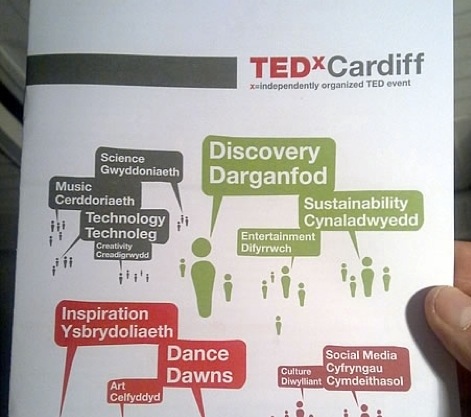
    in over 60 cities globally.  There have been about 750 of these free events that follow a format defined by TED and are hugely popular. I was lucky enough to attend the TEDx Cardiff  2011 event, which nicely links me to a local Cardiff movement, Cardiff Blogs.

    At the last Cardiff blogs gathering ‘doing it for love not money’ was the topic of discussion.  I think this really gets to the heart of a movement and why do a bunch of diverse people get together to share knowledge, skills and experiences for no obvious benefit to themselves?  The short answer is I don’t know. There is no compelling campaign or cause to fight against or support here. It’s about like-minded people who happen to be bloggers, in the Cardiff area linking up to share ideas.

    In conversation with my good friend Mrs Motivator we’ve compared what is happening to the intellectual flowering of the ‘enlightenment’ that took place in the London Coffee Houses in the 1650’s.  A fluid network of varied people coming together to discuss interesting things.

    Where it will end up is anyone’s guess but it does feel a  privilege to be part of it. This TED talk from Steven Johnson on “where good ideas come” from gives a description of the important role of fluid networks in creating innovation and change. It’s why I think things like Cardiff Blogs are important to the future of Cardiff and Wales (no pressure on the Admin Team).

    Back to my friend with mission impossible.  I think there is a globally successful movement in TED we could learn some lessons. More locally there is something flowering in Cardiff Blogs you could look at for inspiration and perhaps become part of? Go on start your blog.

    So what’s the PONT?

    1. Applying traditional business approaches to Communities of Practice
      can inhibit them, and disengage some of the people you want to attract.
    2. Fluid networks are more likely to enable the growth of a movement.
    3. Have a look at what TED and Cardiff Blogs do for inspiration.

    Picture Sources:

    Cardiff Blogs http://itvwalesblog.com/2011/08/23/guest-blog-cardiff-blogs-for-love-not-money/

    TEDx Cardiff http://huwdavid.wordpress.com/2011/04/20/hdd-makes-a-creative-mark-at-tedxcardiff/

    Mission Impossible http://www.soundtrackcollector.com/title/36422/Mission%3A+Impossible

  • Avoid Petty Laws and Useless Officials. Pause and have think about this for a minute. Try breathing in and then out, slowly… what an interesting idea.

    Following on from last week’s post about Vogon Planners and a local council, I’ve had my very own encounter with petty laws and useless officials (an unjustified parking ticket) so this feels very relevant.

    “Avoid petty laws and useless officials” is the seventh of ten principles  which are inscribed on the Georgia Guidestones which are located in Elbert County, about 90 miles from Atlanta.

    The Guidestones have been described as the American Stonehenge, obviously by someone who’s never been to the real Stonehenge or Avebury or seen any of the Neolithic structures we have ‘just hanging around in fields’ in Wales (see later).

    The Guidestones are a fairly controversial structure, here’s few highlights to whet your appetite:

    • They were erected in 1980 just outside Elbert, Georgia;
    • They are exactly 18 feet tall made of Georgia granite;
    • There are six slabs weighing more than 14 tons. One slab stands in the center, with four arranged around it, and are topped with a capstone;
    • A message consisting of a set of ten guidelines or principles is engraved on the Guidestones;
    • The principles are engraved in eight different languages, one language on each face of the four large upright stones;
    • Moving clockwise around the structure from due north, these languages are: English, Spanish, Swahili, Hindi, Hebrew, Arabic, Chinese, Russian; and
    • The stones are astronomically aligned… uh ho… there’s something going on here… tin foil hat alert!!!!

    I did say they were controversial. If you are into conspiracy theories, there are plenty linked the Georgia Guidestones. The ‘theories’ are as much to do with the ‘principles’ the Guidestones promote as the ‘why?’ and ‘how?’ they arrived in Elbert.

    I’m not going to list the ten principles, have a look at the illuminating Georgia Guidestones entry on Wikipedia. The interesting stuff is who built them?  Nobody really knows. If you fancy digging a bit deeper into a conspiracy theory around them; have a read of Brian Dunning’s skeptoid blog.

    Avoid petty laws and Useless Officials. On the surface this is really attractive idea. But as usual it’s far easier said than done. A massive challenge a local level (*wave* to the Parking Enforcement Officer who ticketed me – you know who you are!) let alone worldwide.

    Interestingly I’ve recently observed discussions around rules and principles for the use of social media in organisations. There is a strong tendency to develop rules based on risk avoidance and to ‘over regulate’. This seems to be at the cost of focusing on how the organisation could use social media to make things better. Petty rules enforced by useless officials?

    Discussions have ended on the point that, if lots of (pointless) rules were imposed, the best the organisation could expect to get was compliance with the rules. On top of this they probably wouldn’t even get compliance as people always find ways around rules they think are pointless.

    This article from the New York Times shows how students have thwarted the bans on Facebook in schools. I blogged about this topic a while back in stop the social media arms race in schools.

    However (in my dreams), if organisations trusted people a little bit more, this would help to create an environment where people are engaged. This might even get a bit more commitment to the organisations aims. Surely an organisation where people are engaged and committed has got to be better than one where they are forced to be compliant with rules the think are pointless?

    So, what’s the PONT?

    1. We could all do with fewer, petty laws and useless officials.
    2. Trusting people to do the right is fundamental to achieving this situation.
    3. Trying this with the use of social media in organisations could be a good test and a way of building up trust.

    If anyone is interested… Here’s a lovely image from one of the Neolithic structures we have ‘hanging around’ in Wales. This is Bryn Cader Faner (The Hill of the Throne with the Flag). Pretty impressive after 2000 plus years of sitting on a hillside. It would have been even more impressive if it hadn’t been used for target practice during WW2… (sigh!)

    Image Source: Mark Simmonds via Google Maps https://www.google.com/maps/place/Bryn+Cader+Faner/@52.8982125,-4.0113643,3a,75y,90t/data=!3m8!1e2!3m6!1sAF1QipNjJbDVMrnL6Xuam_xT3G0G96W08hadBMIbQ7zr!2e10!3e12!6shttps:%2F%2Flh5.googleusercontent.com%2Fp%2FAF1QipNjJbDVMrnL6Xuam_xT3G0G96W08hadBMIbQ7zr%3Dw152-h86-k-no!7i5312!8i2988!4m5!3m4!1s0x4865741b5c52f8cd:0xed0ca9f5a720216d!8m2!3d52.8982125!4d-4.0113643#

    Georgia Guidestones image source: Wikipedia. Dina Eric – https://www.flickr.com/photos/viryakala/15396415432/in/album-72157647773659459/

  • If you’ve never experienced Vogons all will be explained in a minute.

    I’ve just had a visit from a neighbour in a mild state of distress, “have you seen the letter from the planning department about next door?”…….. The planned development isn’t a big deal, it was the rules on how you can view the application that distressed my neighbour.

    If you are prepared to travel 15 miles, find a pay parking space, between the hours of 9am and 5pm, Monday to Friday, within the next two weeks, you can view the application without an appointment. Hurrah! Unfortunately standard public service ‘office hours’ aren’t convenient for my neighbour (or lots of other people with jobs).

    Conveniently the planners gave instructions on alternative options for viewing the
    application, that must made, by prior appointment (underlined in bold!). Here goes:

    • Mondays 5-6pm at the ‘call in centre 15 miles away’. Appointments must be made by 5pm on Thursdays before by contacting a Customer Services Advisor (number provided).
    • Thursdays, between 9am and 5pm at the ‘call in centre 30 miles away’, or between 1pm an 5pm at an obscure library 16 miles away.
    • Final instruction. An appointment to view plans at either of these offices should be made at least 48 hours in advance by contacting the above named officer.

    I know more about planning applications in Brighton than next door
    I know more about planning applications in Brighton than next door

    I promise,none of the above is made up. I’m really confused now: offices, libraries, contact centers, call in centers, named officers, times to make appointments, times to visit, different locations ………… arrrgggh! My head hurts!
    No wonder the neighbour was distressed and by now had formed the opinion, “What are they hiding? All I want to do is to see where the barn will be and how big it is?”.

    This transported me back 33 years to 1978 and the Douglas Adams creation, The Hitchhikers Guide to the Galaxy  HHGTTG.  Lots is made of the Vogon planning consultation but what this really reminded of was the conversation Arthur Dent had with the Council Official, Mister Prosser, who wanted to demolish his house for a bypass:

    MISTER PROSSER: But Mister Dent the plans have been available in the planning office for the last nine months!

    ARTHUR DENT: Yes! I went round to find them yesterday afternoon. You’d hadn’t
    exactly gone out of your way to pull much attention to them have you? I mean, like actually telling anybody or anything.

    MISTER PROSSER: The plans were on display.

    ARTHUR DENT: Ah! And how many members of the public are in the habit of casually dropping around the local planning office of an evening?

    MISTER PROSSER: Er – ah!

    ARTHUR DENT: It’s not exactly a noted social venue is it? And even if you had popped in on the off chance that some raving bureaucrat wanted to knock your house down, the plans weren’t immediately obvious to the eye were they?

    MISTER PROSSER: That depends where you were looking.

    ARTHUR DENT: I eventually had to go down to the cellar!

    MISTER PROSSER: That’s the display department.

    ARTHUR DENT: With a torch!

    MISTER PROSSER: The lights, had… probably gone.

    ARTHUR DENT: So had the stairs!

    MISTER PROSSER: Well you found the notice didn’t you?

    ARTHUR DENT: Yes. It was on display in the bottom of a locked filing cabinet, stuck in a disused lavatory with a sign on the door saying “Beware of the Leopard”. Ever thought of going into advertising?

    I’m not convinced we’ve moved on much in the past 30 years. Then again there are
    organisations like Brighton and Hove Council who have site plans accessible on their website, so it’s not technically impossible then…..

    Perhaps the local planning department should come clean and admit that they have been infiltrated by the Vogons.  Douglas Adams describes them beautifully……. “Not actually evil, but bad-tempered, bureaucratic, officious and callous. They wouldn’t even lift a finger to save their own grandmothers from the Ravenous Bugblatter Beast of Traal without orders signed in triplicate, sent in, sent back, queried, lost, found,  subjected to public inquiry, lost again, and finally buried in soft peat for three months and recycled as firelighters.”  Sound like anyone you know?

    So what’s the PONT?

    1. In the digital age, surely we can scan these applications so that people can view them online?
    2. Public service ‘opening hours’ aren’t convenient for my neighbour,or most people with jobs. (Traveling to a remote location at inconvenient times doesn’t work either.)
    3. Why are the planning services more accessible and customer focused in some areas than others?

    Hitchhikers Guide to the Galaxy quotes: http://www.clivebanks.co.uk/THHGTTG/THHGTTGradio1.htm.

  • Guess where I went on holidays?
    Guess where I went on holidays?

    I’m not entirely sure what this sign means. It just seemed like a suitable image for last week when I was on holidays in Madeira (a volcanic island, way out in the Atlantic off North Africa coast).

    I spent a fair bit of the week engaged in asymmetric warfare with a bunch of mosquitoes.  The asymmetric warfare definition talks about ‘belligerents’ (that was me after two nights) who’s “power, strategy and tactics differ significantly”.

    On my side, several wmd’s (weapons of mosquito destruction):

    • Physical – squashing them if they landed on me;
    • Mechanical – as above but assisted with a rolled up copy of Hello! Magazine (not mine, and about all it’s good for);
    • Fire – candles, cooking stove etc;
    • Toxic Chemicals – some sort of repellent spray supplied by my Mother (probably banned);
    • Really Toxic Chemicals –various things purchased from the local grocery store (definitely banned), that gave me coughing fits; and finally………….
    • More Physical Barriers – hiding under the bed sheets (defeated) until they had gone away.

    Mosquito tactics and special weapons:  

    • Numbers – there was definitely more than one of them;
    • Fearless – a sudden violent end meant nothing to them;
    • Persistence – they never gave up; and
    • Sonic Weapons – that buzzing in your ear at about 1am is incredibly disturbing.

    There was no easy way out of this. Their tactics and weapons won in the end.  I woke up in the mornings with my bald head covered in bites; I couldn’t keep it under the sheets all night – had to breathe sometime. With the bites and the bleary bloodshot eyes and I bore an uncanny resemblance to that Pinhead bloke from the Hellraiser films (nice!)

    It was all too late when I discovered their breeding ground, an abandoned irrigation water tank behind the house. Although I wanted vengeance I was prevented from using the kerosene and matches on them (probably a good idea on reflection).

    So did anything useful come out of this?

    Well, while I was lying awake under the sheets that phrase often used by visiting
    consultants and motivational speakers came to mind…………. “you are never too small and insignificant to make a difference. Just think about the impact a mosquito will have when you are in the same room together”.

    This rather irritating phrase is now lodged firmly in my still very itchy head. I’m not
    sure I’ll get around to using it anywhere, but it’s got to be worth looking out for an opportunity.

    So what’s the PONT?

    1. Small (and annoying) things can have a big impact.
    2. Unconventional tactics are the way to get ahead in asymmetric conflicts.
    3. Expect to get splatted from time to time, so a plan B is worth having.
  • Ritual Dissent is one of my favourite facilitation techniques. It gets good results quickly and is great for dealing with the saboteurs (see spotting field sabotage post). I was taught it by Dave Snowden of Cognitive Edge who also provides a method statement.

    It’s a very structured approach that minimises the opportunities for the saboteurs to do bad things. Essentially you develop a proposal, idea or whatever and then have it subjected to ‘ritual dissent’ by another group. The process generates really robust proposals and ideas that will live in the real world. I find it’s a great improvement on the more nebulous ideas you often get through the round the table, consensus developing approaches.

    The ‘ritual dissent’ bit really is ritualised and a bit of a trial. Once the person presenting the proposal to the second group has finished speaking, they physically turn their back on the group and just actively listen.

    This does three things that I’ve seen:

    1. It focuses the dissent on the idea itself and not the person presenting……. ‘what is wrong with this idea’………..not a snipe at the presenter.
    2. It removes any body language from the discussion. A potentially powerful tool for both sides.
    3. It makes the person with their back turned listen. It’s not been called an ‘forced listening technique‘ for nothing.

    Once the person has ‘listened’, they return to their group and improve the proposal based upon what they have heard.  You can repeat the ritual dissent cycle a couple of times, and even throw in an ‘assent’ phase where the group can only suggest helpful improvements.

    One of my best experiences using Ritual Dissent was facilitating the development of a medium term plan with a Strategic Leadership Team. After sitting with their back turned on their colleagues, listening, the Director calmly announced; “that’s the first time I’ve actually listened in years ……if I had been receiving that face to face I would have been eyeballing you lot…..  In fact I wouldn’t have kept my mouth shut”. If you ask me, that outcome had to be a good  thing.

    So what does it mean for the saboteurs, well they hate it.  A tight structure with clear tasks reduces the opportunity for mischief.  When it comes to the dissent part, it’s surprising how quiet they can be, even in a group. They don’t like the sunlight very much. Just as importantly to produces robustly tested proposals and ideas that will stand up to scrutiny in the real world.

    So, what’s the PONT?

    1. Ritual Dissent is a great facilitation method. It gets robust results quickly and makes people actively listen.
    2. Structure and tasks are a good way of involving everyone and minimising the opportunities for saboteurs
    3. If you intend to use the technique, make sure you download the method statement, it really helped me.

    An extreme reponse to ritual dissent
    An extreme response to ritual dissent

    Having your back turned really forces you to listen, and not eyeball the dissenters, unless you pull a stunt like this. Nice one!

    Photo source: http://www.flickr.com/photos/joe469/3708318542/

  • This weekend the Welsh papers had a fair bit of coverage on the Westminster Government’s introduction of e-petitions. It was good to see they gave lots of positive coverage to Wales under headings like Welsh way shows how to do e-petitions and pointed the way to the detailed petitions guidance.

    What was interesting was the picture that accompanied the articles, usually a hangman’s noose. Provocative stuff!
    This image has accompanied a few of the reports I’ve seen, reflecting the fact that about 6,000 people signed the e-petition to reintroduce the death penalty. They then go on to report that over 11,000 people have also signed an e-petition to retain the ban on the death penalty. Ultimately any single petition would need over 100,000 signatures before it got considered seriously by Parliament. Will the opposing campaigns cancel each other out or is it ‘first past the post’ to 100,000?

    In the grand scheme of things these didn’t seem like huge numbers to me. There was a bit of talk in the papers about the ‘lunatic fringe’ getting a voice. But at the end of the day are these sorts of numbers just ‘fringe’? Part of the background noise?  I remember a while back I heard I comedian talking about how the release of the 10,000 strong British National Party membership list had sent us into unnecessary panic. He said something along the lines of “there are more scouts registered in Cheshire than the whole BNP membership”.  I had a look there are apparently, over 11,000 Scouts in Cheshire and growing, they must have an Olympic standard membership secretary.

    If you want some really big numbers in the e-petitions world have a look at 38 Degrees.  They managed to get over 500,000 signatures in the campaign to successfully prevent the selloff of forests in England. They also had over 100, 000 people emailing or calling their MP’s. Strong evidence that there is a well organised  e-petition movement already in existence. The new world of government e-petitions isn’t really that new, or the clamour for the re-introduction of the death penalty if you read the more balanced articles.

    So, what’s the PONT?

    1. e-petitions have been around in Wales for a while, link here
    2. e-petitions (in the form of campaigns) have also been around in England for a while. Check out 38 Degrees
    3. Numbers wise, the ‘bring back hanging’ crowd (and a few of the others) are relatively small and will probably get cancelled out by the counter argument. DON’T (create) PANIC!

    Picture Source: “Don’t Panic! Don’t Panic!” favourite phrase of Corporal Jones from BBC TV Series “Dads Army”.

    http://en.wikipedia.org/wiki/Lance-Corporal_Jack_Jones

  • Twitter to the rescue?
    Twitter to the rescue?

    Last week I got stuck on Leeds Railway Station for a few hours.  It gave me the opportunity to have a conversation with a chilled out and extremely well-informed individual, who seemed to know everything that was going on. They weren’t a train company employee, just someone who had harnessed the power of Twitter. Through Twitter feeds from the Train companies and ‘listening’ to other tweets they knew exactly what was happening and were organising themselves accordingly (no stress).

    In the conversation they mentioned how good they thought London Midland Railways were at using Twitter, so I decided to take a look. Out of curiosity I also had a quick browse at the Twitter presence of my local train company, Arriva Trains Wales.  My first impressions were that London Midland (LMR) seemed have taken full advantage of Twitter and are using it effectively to manage some of their customer relations.  Arriva Trains Wales (ATW) weren’t using Twitter to engage with their customers to the same level. This might have explained the people expressing their views via unofficial #arrivatrains tweets, where they were using lots of rude words.

    This grabbed my attention. No way I was going to leave this alone without a bit of deeper digging.  Here are some of my observations on how the two organisations use Twitter. At the end there is also a comment on how some of this might be relevant to public service organisations which are also using Twitter.

    Volume and Frequency. LMR tweet a lot! There were over 20,000 on their profile and I counted about 160 tweets on a last Saturday (30th June).  This huge volume and frequency may be a consequence of them running about 1300 services a day and dealing with 50 million passengers a year.  Along with this huge volume of tweets, what amazed me was that most tweets seemed to be direct responses to questions or conversations with the customers.  Tweets were being sent directly to individuals. Whatever way you look at it, that’s an absolutely huge database of information and interactions with customers, what they think and feel about the service provided. What a valuable resource.

    By comparison ATW had sent out 1300 tweets. OK they are smaller than LMR with 65,000 passenger journeys a day (approx 23 Million per year) but they had managed to attract 2,800 followers compared to LMR’s 7,200. So customers are interested in what they have to say on Twitter. I couldn’t get a number of tweets for last Saturday (30th July) there were none. On the previous Friday there were 2 and the Thursday 8.  In comparison the LMR tweeters seem to operate well beyond ‘office hours’ and really get stuck into the conversation. Passive they are not.

    Routine customer service.  “I’ve had a problem and want it sorted”………I can help……. “Here is the link to where you can claim a refund”.  Very straightforward.

    Tone and Interaction. I won’t try and explain much here, just insert an example of the things I’ve seen. The LMR tone is quite informal, but overall really helpful. The ATW tweets are factual and informative, but there’s no interaction with the customers. It’s all ‘push outwards’ tweeting and little responding to incoming traffic. I think they might be missing a trick here as there are lots of people tweeting back to LMR and thanking them for the help.  Have a look for yourself:

    This was part of a longer conversation where the customer was unable to get the service. The LMR tweeters had provided information and then followed up with a question asking if it had worked. The end result is a happier / less unhappy customer.

    I could go on for ages on this, but probably best not to. It’s getting a bit obsessive and I might have invented a new age addition to train spotting, Rail Company Twitter watching. I’m stopping for my own good.

    One final thing, I don’t know if the use of Twitter had anything to do with it, but LMR had good results for their 2010 customer satisfaction.

    So, what’s the PONT?

    1. Some Train Companies have huge experience of using Twitter (20, 000 tweets). Perhaps other organisations can learn from their experience?
    2. Interactions with customers over Twitter provide a huge database of information that can be used to improve services.
    3. Amongst the complaints, lots of people seem to give the organisations positive feedback on Twitter. Particularly if they respond and tried to help.

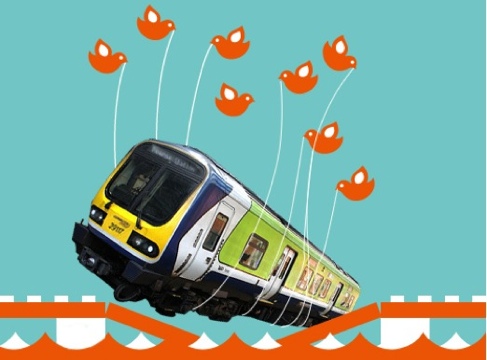
    Picture source: http://blog.piersdillonscott.com/2009/08/rail-fail/

  • What’s eating the Trojan Mice?
    Cute, but potential mice killers.

    Last week I posted about setting free Trojan Mice and argued that when faced with complex situations we need to carry out multiple ‘safe to fail’ pilots (rather than large single option solutions) .  

    All very fine, but once you’ve set the Trojan Mice free, how do you give them the best chance of success?

    Learning from failure is all well and good, but a box full of deceased Trojan Mice isn’t going to help anyone. They need an environment where they can at least ‘run free’, and if they fail it’s due to them alone and not the ‘environmental factors’ (organisational culture and behaviours) that get in the way.

    To get the best out of safe to fail pilots you need to implement a number of them. The more pilots you have running, the more likely you are to come up with many right answers – a bit like buying lots of raffle tickets.  In a complex adaptive system diversity and a range of options can only help you. Like Euan Semple says “Unleash Trojan Mice. Don’t do big things or spend loads of money. Set small, nimble things running and see where they head.”

    I’d suggest that helping the Trojan Mice is all about creating this right environment. Working out the technology, corporate policy and procedures should be dealt with by the people running the safe to fail pilots. If they need to comply with rules or fill in some forms (or not), leave it up to them. It might be better that they beg forgiveness later rather than wait around for permission.

    These are my views on the 7 most important things that will let the mice run free, and avoid them getting eaten:

    1. Accept Uncertainty. You cannot predict the future in complex situations.
    2. Believe.  Solutions will emerge from safe to fail pilots.
    3. Trust People. They have knowledge and will do their best.
    4. Give Protection. Give cover from organisation or factors that will cause harm.
    5. Tolerate Failure. Accept that not everything will work.
    6. Be Patient.  Just because things are pilots, they aren’t instant.
    7. Evaluate, Learn & Move On (All at once). Learn and scale up where successful and stop where not.

    So, what’s the PONT?

    1. Trojan Mice / safe to fail pilots are vulnerable. They need some protection.
    2. Try to initiate as many pilots as reasonably possible.
    3. Leadership that creates the right environment is probably the most important factor in determining the success of the Trojan Mice. It stops them getting eaten by the metaphorical (organisational) cat.
    Greebo (as cat) from Discworld. Avoid this bad boy!

    Beware of this bad boy Greebo the Cat, he will eat Trojan Mice without a second thought (a bit like some organisational cultures).

    He needs a Nanny Ogg  to keep him under control.

    Picture source: http://www.terrypratchett.co.uk/forum/viewtopic.php?t=1372&sid=07edba36b93fff88ad830547924d7052

  • Trojan Mice - back a winner!
    Trojan Mice – back a winner!

    Trojan Mice is a great phrase Euan Semple used in his blog about ten ways to create knowledge ecology .  “Unleash Trojan Mice. Don’t do big things or spend loads of money. Set small, nimble things running and see where they head.”

    I haven’t found the phrase on Wikipedia (yet), but a search on Trojan Mice will take you to an organisation of the same name.  They describe: “Trojan Mice….. are small, well focused changes, …..introduced in an inconspicuous way. They are small enough to be  understood and owned by all concerned…”  They also talk about complexity theory and complex adaptive systems.

    It was in this context where I first heard the concept explained by Dave Snowden who spoke about “safe to fail” pilots or experiments by as part of the Cynefin Framework. For complex situations Dave talks about: “the relationship between cause and effect can only be perceived in retrospect, but not in advance, the approach is to Probe – Sense – Respond”.  There is an excellent video from Dave which explains it beautifully. For me, the Trojan Mice are effectively the ‘probes’.

    I wanted to write about some of my experiences of Trojan Mice, and why I think we need lots more of them. Over the years I’ve seen many complex problems treated
    as if there it is a ‘simple’ cause and effect relationship in place. Large scale, ‘single right answer’ solutions are introduced which ultimately don’t end up solving the problem (aka FAIL). I’m sure I am not alone in having seen this approach. If you are lucky, everyone learns and moves on, if not, well……. you end up with lots of ‘flogging the dead Trojan Horse’, or worse still looking for a culprit.  You are better off setting loose the Trojan Mice, and backing the winners.

    The big advantage of carrying out “safe to fail pilots” is that they can be scaled up if successful or abandoned if not. The important thing is to carry out a number of pilots and learn from failure (and success).

    Linking this to the use of social media in public services is almost a textbook complex problem within in a complex adaptive system. You cannot possibly predict how people are going to use any element of social media in a situation which is:

    • Complex:  a huge number of variables like accessibility, organisational policy, confidence to participate, IT competence etc.
    • Adaptive: the very act of people using the media will change the nature of that media (they are adding content) and the way in which others subsequently use it will also be changed. Just think about how the comments people put on a post will influence the following comments.

    This has to be: “probe – sense – respond” / “safe to fail pilot” / “Trojan Mice”
    territory

    Here are some examples of Trojan Mice which I’ve seen and have learnt a lot from.  All of them have been low(ish) cost and high impact, and in Wales!:

    1.  Monmouthshire Foster Carers Group. An online community of practice (OCoP)
      supporting a network of foster carers.  Established using limited resources and a free IT platform. Self moderating and sustaining through the group. Details here.
    2. Public Sector Social Media Yammer Group. Another very successful online OCoP established for zero cost. Over 100 people contributing.  Details here.
    3. Bernie the Sheep Pilot. Social marketing campaign using social media to tackle the deliberate setting of grass fires in South Wales.  Resulted in a 40% reduction in predicted fires and saved £120K. Now being scaled up. Details here.
    4. goodpracticewales.com. Website developed to search good practice / learning
      materials posted on public service websites in Wales. Developed at low-cost, currently in beta, please leave them a comment.

    So, what’s the PONT?

    1. The introduction of social media into organisations is complex territory.
    2. Prediction of what will happen as the result of an action is very difficult. Better to use a Probe-Sense-Respond approach and set up multiple ‘safe to fail  experiments’.
    3. These ‘Trojan Mice’ will eventually deliver rewards; you may just not get what you were expecting. That’s fine,embrace a bit of uncertainty.

    Picture source: http://bit.ly/r02xuQ genuine mouse racing….

  • Julian Assange - former pupil of.....?
    Julian Assange – former pupil of…..?

    This week I have mostly been a field ethnographer.  Basically I have been talking to my kids and finding out what they do with social media in school.

    This came about from Mondays post about the use of mobile phones in schools. I also read a post by William Stites about why we need social media in schools on edSocialMedia .  What prompted my field ethnography was the phrase,‘arms race’  …….”by blocking these sites and not embracing what they have to offer we are only creating an arms race with our students and missing out on using these tools to connect with and provide new learning opportunities for our students.” 

    Preliminary report on my field ethnography week as follows:

    Observation 1: Banning mobile devices is unenforceable.
    This was a simple test.  I sent a few texts to one of my kids. I got responses very rapidly. I’m not sure if these coincided with break times, but it was a quicker way to get hold of him than via school reception. This isn’t the first time I’ve done this. In urgent
    situations I always use this channel first.

    I did ask a few questions on the mobile phone ban.  It seems that the approach to enforcement is extremely variable, to quote…..”some of the old fossils go mad about phones, but most teachers are  OK”

    Observation 2: The kids will win the social media arms race.
    My questioning was directed at Minecraft Boy. He knows a bit about the internet, and how to reskin minecraft , whatever that involves. Key findings:

    • Computers are very common in school (thank you Tesco School Computer vouchers).
    • Pupils  pretty much have free access for ‘school related’ things they need to do.
    • Any social media platform you can think about is blocked. Not just Facebook, Bebo, MySpace etc, this also includes anything that looks remotely like a blog or a forum.
    • BBC  i Player and all of YouTube are blocked yet they watch videos in class……….?
    • Twitter is also blocked, yet the school and individual departments tweet.  Errr……. who are they tweeting to?
    • Internet searches are banned for unknown reasons, including random pages on Wikipedia.
    • The kids have found multiple ways around the system. At a basic level this involves ‘tricking’ the filters to continue your search. For a history project on the Titanic all searches were being blocked (first three letters of the name apparently), so they used RMS Titanic. I have heard of other schools where kids routinely hack around the firewalls.
    • Despite the blocks, everyone participates in some sort of discussion forum or plays games on-line. Once the authorities have found the latest area of activity and blocked it, the crowd just moves on to a new one. The whole cycle just moves on, an ‘arms race’ or what!?
       

    William Stites makes the point in this post that “technology is ahead of the laws and ethics… the world of technology is changing quicker than we can keep up…… Content filters, policies and guideline aren’t the final answer. If we are to have our students become true citizens we need to it though teaching.”

    One final comment from Minecraft Boy. “They would be better off allowing us to
    use this stuff and learning about it. There are 100’s of us working on this stuff every day. A few geeks in the Council IT department will never stop it. One of us might be the next Julian Assange or some
    mega hacker……..”

    So, what’s the PONT.

    1. Mobile phone bans in schools are unenforceable.
    2. Banning access to social media is an arms race that is unwinnable.
    3. We would be better off engaging pupils with social media and mobile technology, exploiting the learning opportunities and teaching Digital Citizenship .

    Image source:

    http://images.mirror.co.uk/upl/m4/jan2011/6/3/julian-assange-pic-pa-96346945.jpg

  • Pretty clear - but helpful?
    Pretty clear – but helpful?

    At the beginning of the academic year I had to sign up to my kid’s school (anti) mobile phone policy. Effectively it banned the use of mobile devices during school hours. The reason was to combat things like cyber bullying and other types of misuse. Worthwhile objectives, but I’m not sure how enforceable it is. I remember the failure of the smoking and gambling bans imposed at my schools years ago. Also, there’s plenty of time and opportunity to misuse mobile phones outside of school hours.

    This got me thinking about, is this a lost learning opportunity? The kids are sitting in the classroom with a high-tech communications device sat in their pockets – but I’ve signed a piece of paper that makes sure it’s switched off or not available. Doh!

    Searching around on the topic I came across this  video by Zenna Atkins former Chair of Ofsted and an advisor with learningwithoutfrontiers.com. Amongst some really good things she spoke about was the use of mobile phones in schools. Yes, most schools banned them for logical and noble objectives, however one school in England insisted that the kids brought them to school, and used them.

    Although this was a relatively deprived area, 99% of kids had a phone. The the school and kids used them in a number of ways; for example to alert the kids to changes in the school timetable, “science yr 2a moved from B12 to gym “.  A handy method for sending out homework reminders (boo!), or a global notice that the school is closed because of the snow (hurrah!). In addition the school apparently could ‘see’ who was on the premises, or bunking off from the Bluetooth signature…… interesting?

    This got me looking at the wider learning opportunities and there are a few interesting examples out there (unfortunately none I could find from Wales, open to offers though)

    There are a few more examples out there, see this blog by George Engel on Learning with Mobile Technology. Unfortunately though it doesn’t seem to be common practice. Strange really. In other aspect of their life my kids are totally dependent on their mobile phones and DLC (downloadable content), learning all sorts of useful things (apparently).  Yet, they are sitting in school with a sophisticated communications device in their pockets (which I pay for), and I’ve signed a piece of paper insisting they switch off. Doh!, again.  A lost opportunity for engaging them in more targeted and effective learning?

    So, what’s the PONT?

    1. There are huge learning opportunities that could be opened up using the mobile devices that 99% of kids seem to carry.
    2. Completely banning mobile devices in school isn’t the answer and it’s probably unenforceable anyway.
    3. Mobile devices are an under used direct route to the target audience for learning (pupils). Why not use it, and not just during school hours?

    Picture Source: http://blogs.cellularlearning.org/?p=186. This is from the informative blog by George Engel on Learning with Mobile Technology. Lots of useful links.

    Also check out http://www.learningwithoutfrontiers.com/

  • Bernie the Sheep.
    Bernie the Sheep.

    Here’s an example of how social marketing and social media are being used innovatively to deliver better public services in Wales.  I really would have liked to have found something other than a sheep story (they tend to reinforce stereotypes). But with about 9 million sheep, we are the most important sheep rearing area in Europe, it was almost inevitable.

    Deliberately started grass fires are a big deal in the South Wales Valleys; causing widespread damage, threatening people,property, livestock and costing at least £7million annually. Not huge when compared with the situation in Arizona and New Mexico, but still a major problem.

    Bernie the Sheep is a collaboration between a number of organisations including South Wales Fire and Rescue Service and BRASS at Cardiff University. Full project details are available on the BRASS website.

    Briefly what happened was; the partners worked out that the deliberate setting of grass fires peaked in the Easter School holidays. They established this was essentially a social problem, “everyone’s doing it”, “my dad and grandpa did it, and it’s a bit of a laugh”. They developed a social marketing approach to tackle a social problem and try
    and encourage behaviour change. This was an innovative approach that was more common in the heath sector in areas such as healthy eating and anti smoking campaigns.  The evaluation of the 2010 pilots has indicated it was a success with a 46% reduction in the occurrence of predicted grass fires and an estimated cost saving of £120K (a 2:1 return on the investment). On this basis a much wider implementation was planned for the 2011 grass fire season.  Check the Bernie Newsletter for more information.

    Two things stand out in this project for me; the ‘go to where the people are’ element and some interesting behaviours I observed around the use of social media.

    For ‘go to where the people are’, this relates to how the partners chose to use Facebook as the method for communicating with the kids of Tonypandy. It seems so obvious but they did some research on what social media platforms are being used and then asked the target market (the kids) what they would prefer to use, which was Facebook. The partners set up a Bernie website and Facebook profile, and it does the job (Bernie has over 1000 Facebook friends).This is as far as I could see is a typical market research approach that could be usefully be applied in some areas where knowledge sharing solutions are currently being developed on a ‘build it and they will come’ basis.

    The interesting behaviour I observed was from people who were aware of the project and advised me  ……. “don’t do an internet image search on Bernie the Sheep in work, it’s not safe!” Well I’ve done extensive searches and can’t find anything that would remotely offend my Maiden Aunt or the Vicar. This seems to be some sort of low-level urban myth around that, Bernie the Sheep + Internet = Danger which is both ridiculous and unfounded.

    Interestingly a number of the people peddling the ‘myth’  were a bit sceptical about Bernie. Unfortunately I couldn’t get to the bottom of whether it was about the use of social marketing and social media or the fact it was a new and innovative approach, a change with tradition. Whatever the reason, the urban myth did create a bit of a sense of uncertainty and a slight whiff of fear. This might put people off looking at the opportunities that Bernie the Sheep project might offer them, which is a real shame.

    So, what’s the PONT?

    1. The market research, ‘go to where the people are’ approach for choosing the most appropriate method of communication with the target market was very effective.
    2. Social media does have a place in public service delivery, particularly when you are tackling social problems.
    3. Urban myths and negative stories can have a significant impact on the success of an initiative. They need to be avoided.
  • Last week I had a blog post reviewed and got some good honest feedback. You know, the kind only a close friend or relatives can give you. This was absolutely necessary, but it’s a bit like the change curve thing of: shock and denial; progressing to uncertainty and ending up at acceptance and moving on (eventually….I hope). The bottom line is I needed to improve my content.

    In my quest to improve, I did my usual things, looked around for ideas to ‘borrow’ and tried to find out what ‘good’ content looked like.  While looking for ‘borrows’ I searched on, ‘how to write good blog posts’. Not bad, 400 million results in 0.15 seconds…….  but where I do I start?  Pick a highly respected name? YEEES!….. a post from  Seth Godin, with fantastic advice. It was only 8 lines long and 63 words, and I completely got what he was saying, brilliant. But I do crave a bit more detail, and if you are like me, I’d recommend Neil Patel at Quick Sprout. One of the things Neil says is the importance of including detail, ‘the nitty gritty’, because readers like it. But I find it’s a tricky balance between the amount detail and holding people’s attention. Other places to look for really good advice are problogger and copyblogger.

    So, onwards to my ‘what does good look like’ quest. Thanks to WordPress.com I’ve been reading huge numbers of blogs.  Principal lesson….. there doesn’t seem to be a magic formula for success. I’m sure someone could find a statistical relationship between the number of views, comments, tweets, subscribers and how blog is put together, but it eluded me.  What attracts people to some blogs, and drives others away is complex territory. I guess you need to know your readers are and what they like.

    After the research I did my next favourite thing and wrote a list.

    My checklist for good blog content:

    1. It must flow. I use the Engage, Inform and Call to Action format which I heard Russell Amerasekera speak about.
    2. Keep it short. Think about what fits on a screen (optimum 500 words, max 800).
    3. Break it up. Use headings, paragraphs, lists and tables. It helps people to scan.
    4. Include Detail. Give people some ‘nitty grity’ detail they can use.
    5. Use Images. If they help explain the message or liven up the text.
    6. Spelling & Grammar. Obviously.

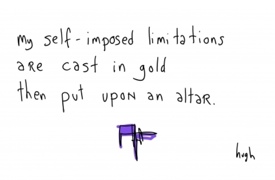
    Taking ‘be critical’ bit far?..... link to gapingvoid below
    Taking ‘be critical’ bit far?….. link to gapingvoid below

    All good so far, but in the end this all brought me back to this post by Mrs Motivator, “Be Critical: the 1 Essential Skill for Content”. This was missing from my list. The advice was absolutely spot on and exactly what I’d missed and should have been doing. I need to add #7 Critical Self Review, “is what I’ve done any good?” To be honest I‘d rather put myself through the change curve stages alone, and if I can, avoid some of the pain from external feedback.

    So, what’s the PONT?

    1. If I want to improve my content along with using my checklist I need to continuously carry out critical self review.
    2. Like Neil Patel at Quick Sprout says there is no perfect blog. You just need to keep trying and learning.
    3. All this advice is great, but do what works for you. It’s not a competitive sport.

    Link to image source from gapingvoid: http://www.gapingvoidgallery.com/gallerycubegrenades-limitations-p-1904.html?utm_source=Gapingvoid+Daily+Cartoon&utm_campaign=2c0d32a83b-%23354+%27Limitations%27+June+29th%2C+2011&utm_medium=email

    Just my luck!
    Just my luck!

    Last week the Wales Blog Awards issued guidance on what makes a good blog. Just my luck!

  • This not just a bit of whimsy, although a number of people I’ve mentioned this to have
    completely bypassed the really interesting viral element and gone straight to “aah.. isn’t that romantic”……….. I suppose it is, but not the point here.

    On a recent trip to Florence (Firenze) my travelling companion and I were pondering how things go viral on the Internet (in between doing cultural things, obviously). About this time we started to notice ‘the padlocks’.  Hundreds of them, attached to various railings, bridges, artwork and other bits of street furniture. They were all around Florence and once you’ve seen one, you can’t stop, they are everywhere.

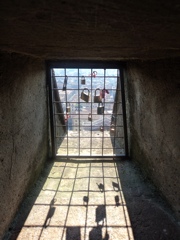
    A bit of a squeeze.
    A bit of a squeeze.

    Some of the padlocks were in really ambitious places. The ones in the picture are about 1m deep inside a ventilation / light shaft close to the top of the Cathedral Dome.
    Impressive as I reckon it was a two person job. You’d need to climb and crawl in, and then get extracted by a companion. There were also some attached to lightning conductors in dangerous places high up on the Dome.

    It turns out that Love Padlocks is a ritual where sweethearts put a padlock on a public fixture and throw away the key to symbolise their everlasting love. It’s thought to have originated in China in the early 2000’s and is now happening in almost 30 countries globally. Maybe this is an example of something going viral in the physical world?

    Not everyone sees it as a positive and loving gesture though.  In 2006 the Florence authorities tried to stamp out the practice, but the locks were being added faster than the workers could remove them. Judging by what I saw in the Florence authorities have well and truly lost the battle.

    So, what’s the PONT?

    1. Love Padlocks are a good example of illustrating something going viral in the physical world. It’s not all You Tube videos and swine flu.
    2. City Authorities and their bolt cutters aren’t really a match for a bunch of disorganised sweethearts and their love padlocks.
    3. Some of the padlocks I saw were the keyless combination kind.  Are these for the people not prepared to fully commit to a relationship? (I’d be asking questions!)

    A light dusting of padlocks appeared overnight
    A light dusting of padlocks appeared overnight

  • This follows the previous post about why social media and online communities of practice (OCoP) (with some notable exceptions) aren’t used more widely in public services. I thought it was worth having a look to see if I could get hold of some statistics to back this up.

    The short answer to the question is, I still don’t know.  It’s not through a lack of trying to find out, believe me, I spent 2 hours trawling the internet on a Saturday morning.  I’ve learnt lots of new things, but I still couldn’t find with much confidence any data telling me how many public servants use OCoPs, particularly in Wales. If anyone has any data I’d be very interested to see it.

    The best I could manage was some information from the Social by Social website reporting on activity within the Improvement and Development Agency (IDeA) Communities of Practice.  As far as I could work out these are 2009 figures and: over 800 communities had been created; there were around 20,000 registered users; they estimated that 16% of users are ‘active’ (didn’t say what ‘active’ means); 65,000 documents are downloaded annually and the pages have over 30,000 visits a month.

    With over 2 million people working in local government this gives an overall participation rate of about 1%. The 16% ‘active’ rate looks good. The generally held view is that for most online communities the lurkers (non active people, those who don’t contribute) account for about 90%. This graphic from the Rapid E-Learning blog puts the active
    participation figure at about 5%.

    What is interesting though is when you compare the IDeA OCoP participation rate with
    the ‘outside world’ participation in online communities.  This article in the Telegraph reports over 30 million Facebook users in the UK, over 50% of the population. These people are from a wide demographic, it’s not just kids, and apparently women between 40 and 50 are huge users. When you take into account all of the other online communities like LinkedIn, Twitter, MySpace etc, there is massive participation in online communities by the general population and it’s predicted to increase.

    The question that’s still troubling me is, for public servants why is participation
    within the work context relatively so low, particularly when you compare it to what happens outside of work?

    So,wht’s the PONT?

    1. Participation in workplace OCoPs by public servants is very low compared to general population participation. Not just my opinion, I’ve got some (limited) numbers.
    2. Ability to work the technology shouldn’t be a barrier (in my view). If you can handle Facebook, other OCoP platforms should be within your grasp (or is there something I’m missing here?).
    3. Why are the numbers on workplace participation in OCoPs so difficult to get hold of? (would love hear from you if you have got access to this information).

    Picture source: http://www.articulate.com/rapid-elearning/heres-where-the-e-learning-community-provides-practical-value/