• Tulip Fields - popular with tourists
    Tulip Fields – popular with tourists

    “Decisions made by crowds aren’t uniformly good” a quote from Dave Snowden that doesn’t quite fit with some views of crowdsourcing.  The prevalent idea is that if you ask large crowds of people to solve a problem, provide a view or give an answer (usually via the internet), they will do a better job than any individual or small group of experts.

    This however isn’t universally the case. This article by Dave, ‘bad titles and the need for theory to inform practice’ gives a helpful explanation of the theory behind the wisdom of crowds.  I’ll come back to the wisdom of crowds later, but first, who’s heard of Dutch Tulip Bulb Mania?
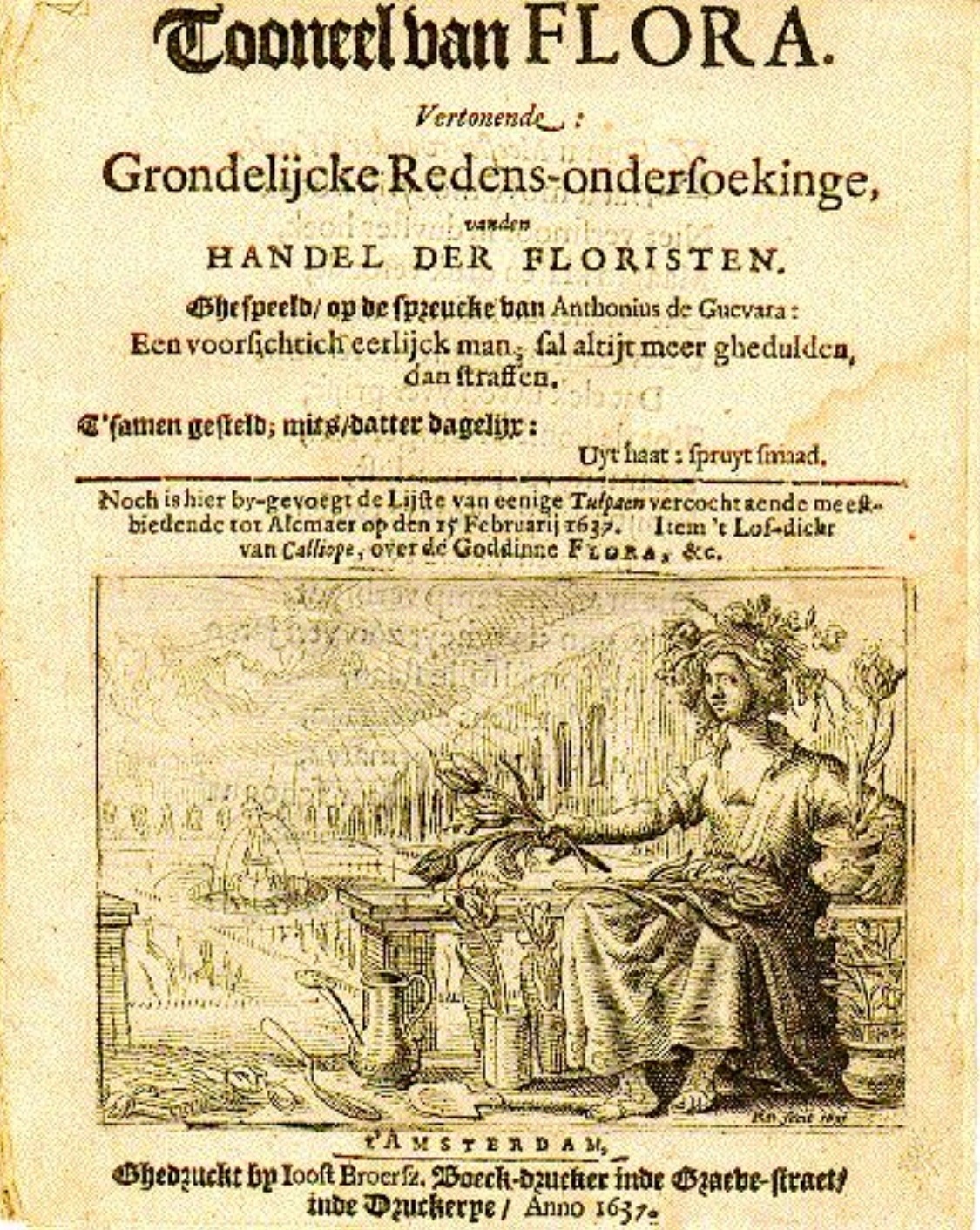
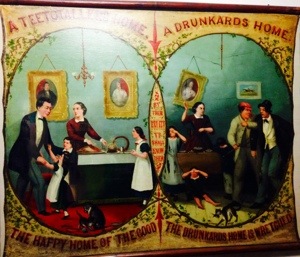
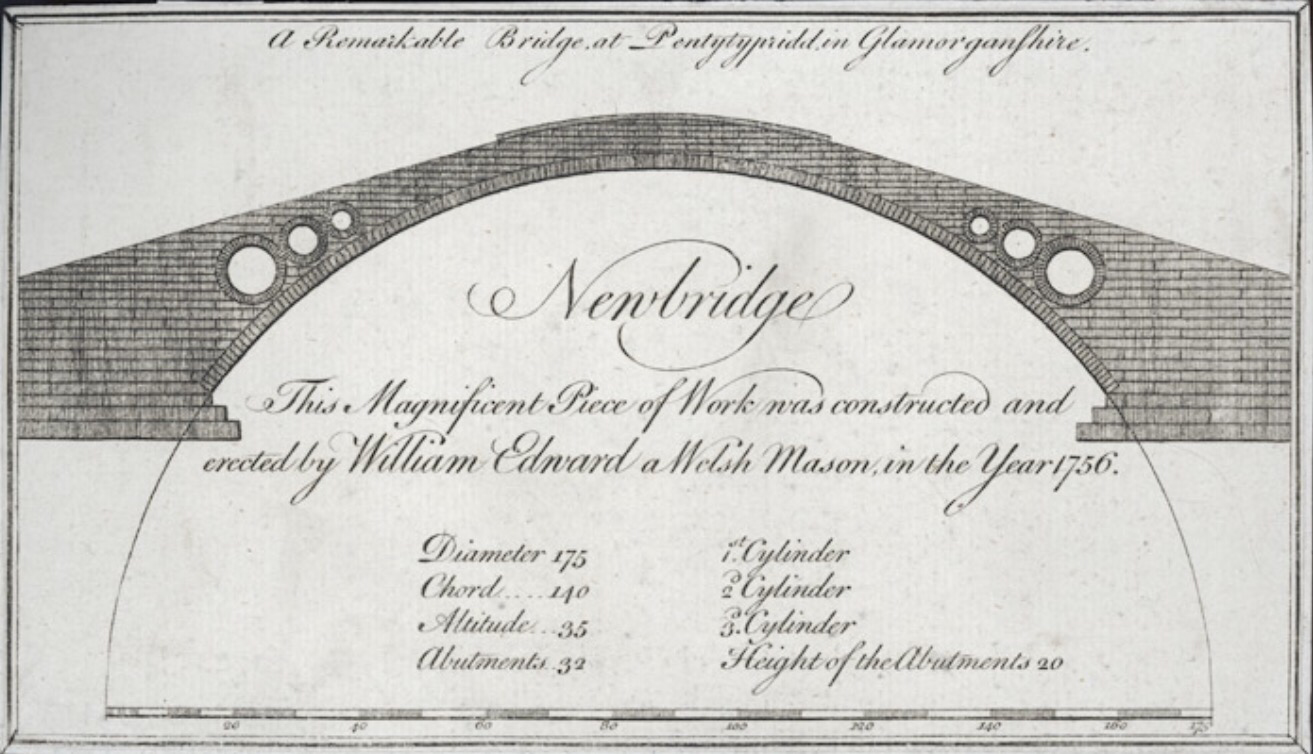
    1637 Tulipmania Pamphlet
    1637 Tulipmania Pamphlet

    Tulip Bulb Mania and Flappy Birds.  Tulip Bulb Mania occurred in the 1630’s and has been cited as one of the first examples of an economic bubble. Tulips had been introduced to Europe years earlier and became so popular that people would trade the bulbs during the winter time. Speculation on the future price of tulips and bulbs became extreme, with many individuals became involved in the ‘mania’, planning to get rich quickly. It was reported that at one point the price of single bulb reached 10 times the annual earnings of a skilled worker (sounds familiar?).

    The bursting of the Tulip Mania economic bubble was detailed by Charles Mackay in his 1841 book ‘Extraordinary Popular Delusions and The Madness of Crowds’. The book explained a number of examples of the ‘delusions and madness of crowds’ which included: Witch Hunts, Alchemy, The Crusades and other economic bubbles like the 1840’s Railway Mania. The book remains in print and has been referenced in writing about the 2008 economic crisis. This BBC article about economist Hyman Minsky gives a good explanation of how financial institutions and investors continued to deal in sub-prime mortgages with the belief that property prices would continue to increase. An example of ‘popular delusion and the madness of crowds’?

    It was just another Mario Brothers wannabe to me….
    It was just another Mario Brothers wannabe to me….

    Flappy Birds. Bringing things right up to date (and demonstrating that I am totally down with the kids), you could easily apply a bit of ‘madness of crowds’ behaviour to the recent Flappy Birds episode.

    Flappy Birds (a game for your phone) became incredibly popular. You can make your own mind up on how good people’s judgement was in engaging with a highly addictive low tech  video game it in the first place…. but that’s not the story.

    The game developer decides to withdraw the game due to pressures of the fame it brought him. The ‘crowd’ goes a bit manic at the the prospect of a Flappy Birds ‘scarcity’. Indivdual crowd members start doing almost anything to get a copy of Flappy Birds on their phone. The result is stories of second hand phones with Flappy Birds on them selling for over £2000…… in Swansea of all places!

    Now then, who still believes that crowds are wise all of the time?

    The ‘real’ Wisdom of Crowds. The 2005 book, The Wisdom of Crowds by James Surowiecki has several examples of where ‘crowdsourced’ solutions have provided a better result than what could be done by an individual. These include farmers estimating the weight of cattle at a county fair and guess the number Jelly Beans in the Jar exercises.

    What seems to get quite often ignored when crowdsourcing is mentioned, is that Surowiecki clearly stated that specifc criteria are required to form a wise crowd (rather than an irrational one). Here are the (slightly modified) criteria:

    1. Expertise/Diversity – individuals are able to draw upon local knowledge or their personal expertise. People with diverse relevant views need to contribute as well as deep experts.
    2. Independence of others – the contribution of each person is made independently of others. If you have knowledge of what others have said or done; it will influence your contribution.
    3. Decentralised decision making -decisions are not made within the group of people contributing to the ‘crowd’. Someone else, looking at the ‘big picture’ makes the decisions.

    These criteria are important if you want the crowd to be wise. If they aren’t in place, there is a risk of the crowd behaving irrationally and making bad decisions.

    Crowdsourcing to Measure Services. An area where I think this is important relates to how crowd sourced opinions are used to decide how well a public service is performing. The ‘Trip Advisor’ for the Public Services approach is good at getting hold of the lived experience of public service users, no argument there. However, how do you make sense of what is uploaded? How do you make sure that vociferous individuals aren’t trying to shift opinion in one direction or the other? Also, who makes decisions as a result of gathering the evidence, the crowd or some carefully chosen individuals?

    So what’s the PONT?

    1. Crowds can do wise things, they can also do irrational things.
    2. Understanding the nature of your crowd and what you want it to do is essential.
    3. Before you mobilise your crowd, make sure you have a few checks and balances in place to make sure you don’t end up with an irrational crowd, the tyranny of the herd or even worse an angry mob.

    Finally a bit more research. An article from The Atlantic online, the stupidity of the crowd, which reports on Ant colonies, who apparently make worse decisions as a crowd than individually.
  • Paul Taylor - favourite in Vulpine communities
    Paul Taylor – favourite in Vulpine communities

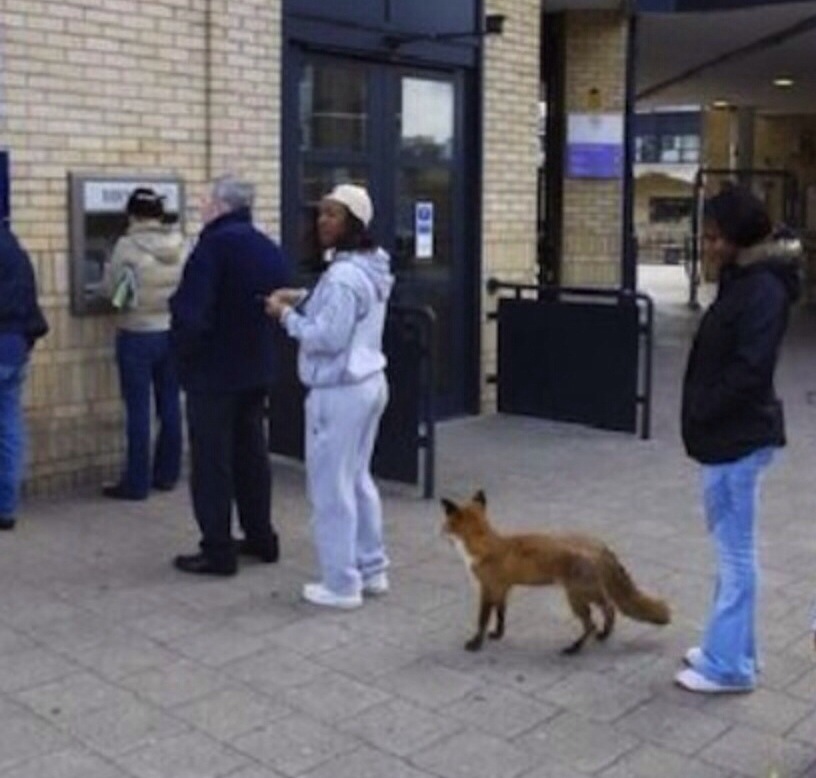
    Picture this. Friday night and I’m queuing at the village cashpoint (ATM). An unrecognised voice behind me pipes up with… “that bloke from Bromford was good last week, I liked what he said about launching an imperfect service” The ‘bloke’ in question was Paul Taylor.

    It turns out that my fellow cashpoint user and I had both been at an event in Cardiff eight days previously. The purpose of the event was to share experiences of supporting users of public services to become more self sufficient, more capable and less dependent upon services delivered ‘to’ them. The broad theme was prevention. Rather than public services dealing with symptoms and consequences; focus efforts on helping people develop their own capability. A summary of the excellent presentation about the Bromford Deal, can be found on Paul’s blog Making a Deal: Unlocking Potential in Communities, and below:


    Conversations at the cashpoint. The conversation at the cashpoint came around to three things that had left a big impression on both of us:

    1. Launching an imperfect service. Paul made the point that when Bromford launched the Deal it was imperfect. They acknowledged that things were not going to be perfect, some things might not work, but they got on and did it. This kind of openness and honesty isn’t something you see every day. Its quite different to lots of projects which ‘plan and plan’ for perfection, delay starting, and things still go wrong.
    2. Do small things, fail and learn fast. This is one of the ideas I really like and have written about before in posts like, ‘release trojan mice and win small’. Paul made the point that you need to try lots of small things, fail at some of them, but learn the lessons and move on quickly. One significant quote which summarises the approach relates to implementing IT solutions; “its bad loosing £20K on a pilot, but loosing £200K is awful”.  This links in very neatly with the idea of launching an imperfect service, learning and making things better.
    3. Communities and Individuals have abilities. For me this is the key to prevention. It is all about asking the question, “what can you do or offer?” rather than “what’s wrong with you?”. Every individual and community has assets, talents, skills and abilities. Better to focus on helping to developing and release these, rather than treating people as a series of ‘problems’ that need to be solved.

    This was the ultimate ‘Person in the Pub’ Conversation. For ages I’ve been part of an environment where we have been trying to develop a style of communication that is summed up as ‘what would be the messages you would give the person in the pub?The idea is that you can develop a message that could be easily delivered to someone, in a pub, so that they understand the key point and could repeat them to someone else.

    Well, I think Paul may have cracked that challenge. The conversation in the cashpoint queue wasn’t quite the pub (it was only 90 seconds away), but something similar was achieved. Two relative strangers had been at Paul’s presentation and managed, 8 days later, to hold a detailed conversation about what had impressed them.  At 6pm on a Friday night we could have talked about anything; the weather, beer, rugby, television, politics or beer; but we chose The Bromford Deal. Now that’s a pretty good example of getting your message across I think.

    So, what’s the PONT?

    1. Check out Paul’s slides. They aren’t your average slide deck.
    2. An open and honest communication style, admitting to imperfections, goes a long way in connecting with your audience.
    3. Individuals and communities have abilities. Better to focus on what people can do, rather than their problems.

    Picture source: The fox a the ATM/Cashpoint. I think the source is from boingboing.net 2012 http://boingboing.net/2012/02/14/fox-queues-for-atm.html. It is a bit difficult to find the exact source as it was all over Twitter and Reddit.

    We don’t get many foxes at the cashpoints in South Wales, it is more of a big city thing apparently. I have seen a horse the train though (then again it might have been a big dog).

  • A Facebook 'like' would be so much easier
    A Facebook ‘like’ would be so much easier

    Now here’s an idea.  Organise your Tax Inspectors along the lines of a 150 strong monkey colony. If they spend 42% of their time ‘social grooming’ don’t worry, that’s what’s needed to maintain community cohesion and a stable workforce.

    This is not as strange as it seems. It’s all about the size of our brains, how many ‘faces’ we can remember, the number of people in your colony and Dunbar’s Number.

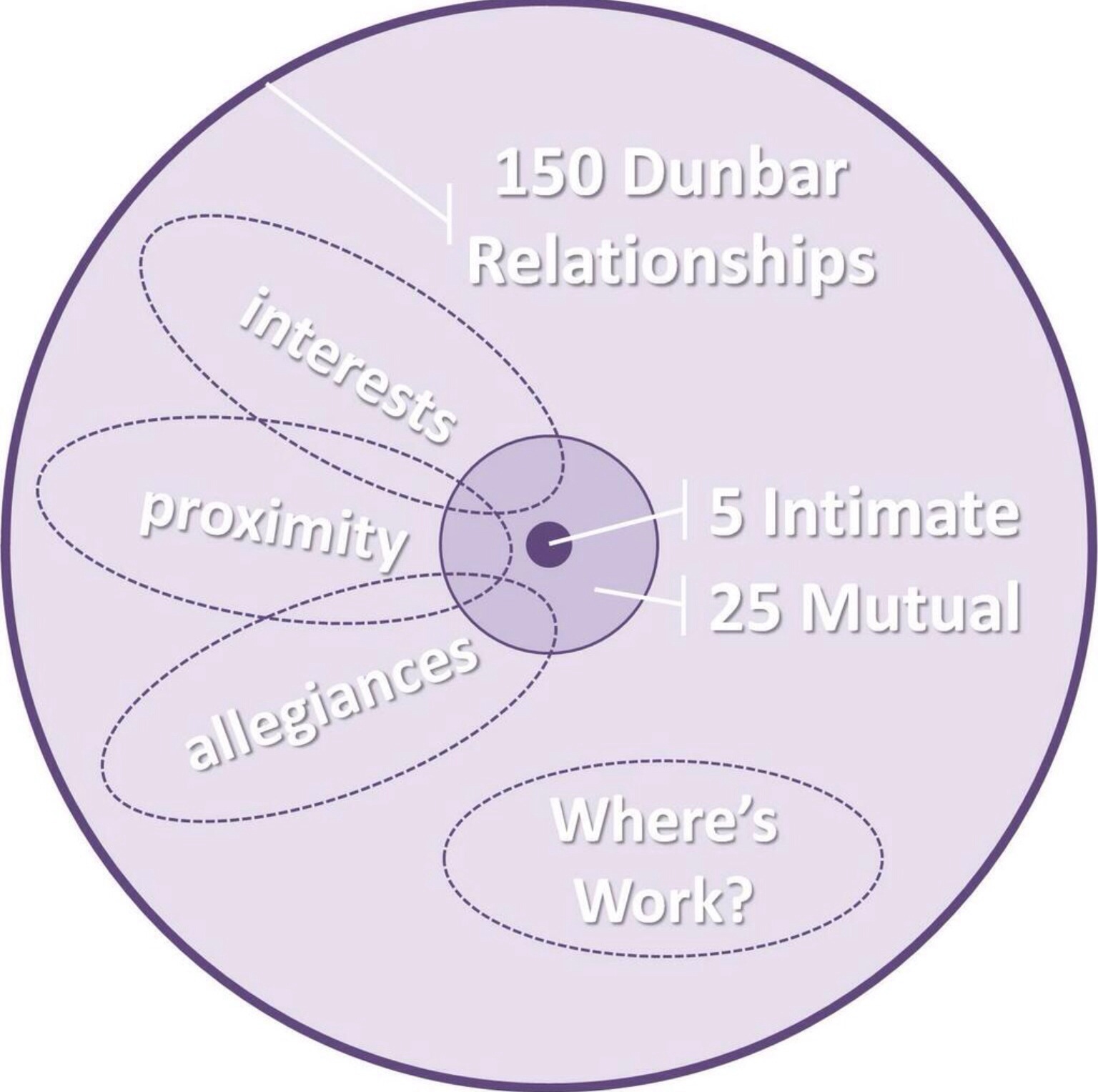
    Dunbar’s Number of 150.  Dunbar’s Number is the idea that 150 individuals is the maximum number of people that can form a stable social group. Research by Professor Robin Dunbar looked at the size of primate brains and the size of the communities they lived in. In essence, the idea is that brain size influences the size of the social group. The bigger the brain the better the memory. This translated to bigger brain equals more ‘faces’  remembered, which leads a bigger group you can live in. When this theory was extended to humans, the figure of approximately 150 was proposed.

    Further work by Dunbar looked at the size of at various human communities over the millenia. These included; hunter gather tribes, medieval villages, church congregations, military companies, Christmas card lists and Facebook friends. Guess what, the size of these communities was roughly 150.

    The ideas around community stability are linked to the ability of our brains to recognise people and have meaningful relationships with them. With more than 150 ‘faces’, individuals become difficult to remember and relationships and trust are weakened. As a result the community becomes less stable. Maintaining the stability of the community takes an effort. In some primate communities up to 42% of time is spent on ‘social grooming’ (picking fleas out of each others fur). For human communities, things like language support community cohesion more efficiently than hours spent picking fleas. Nowadays you could think of Facebook ‘likes’ and Twitter ‘favourites’ as the ‘social grooming’ equivalent of flea picking (there’s a lovely thought).

    Where does the Monkeysphere fit in? The term ‘Monkeysphere’ was proposed by David Wong of cracked.com to describe the idea that people outside of the 150 you have a meaningful relationship with, don’t feature as ‘real people’ and in some ways ‘don’t really matter’.

    This has interesting implications. What if you apply the monkeysphere concept to the workplace.  What about those thousands of people who work in other massive departments. What if those people are going through a ‘downsizing programme’, how much do we really care?

    How does that translate if those ‘outside my community of 150’ are people who are service users, citizens or customers? Is there a deeply seated bit of behaviour in us that means we only care for those in the community of 150 people we recognise and know? That could add up to a huge challenge for anyone involved in a customer facing roll. The cracked.com Monkeysphere article is controversial, but worth a look.

    Everyone loves a Tax Inspector - in Sweden
    Everyone loves a Tax Inspector – in Sweden

    Back to the Swedish Tax Inspectors.  A 2007 article from Sweden’s News in English reported that the tax offices were due be reorganised into units of 150 people, referencing Dunbar’s number, and apes. Unfortunately I can’t establish if it ever happened. But, what I do know is that the Swedish Tax Agency is the second most liked public institution in Sweden, next to the Consumer Protection Agency. Apparently 83% of Swedes have confidence in the Agency. If anyone knows if this has anything to do with how they are organised I would love to find out.

    The Swedish Tax Inspectors aren’t alone in their enthusiasm for the magic number of 150. A while back I wrote about how GoreTex has 150 people as the maximum number for their work units. The 150 was arrived at through trial and error rather than a pre-meditated decision. In an interview, the late Bill Gore, founder of the company, talked about this and said, “We found again and again that things get clumsy at a hundred and fifty”. 

    In each factory they limit the number of employees to 150 so that “everyone knows everyone”.  There is a sense of connection between people that reduces the need for a hierarchy and increases individual commitment to the group’s goals. The result is that GoreTex is a hugely successful global company and regularly features in the Fortune 100 Best Companies to work for.

    Maybe there is something in having work groups of less than 150?  Being able to remember everyone’s face leads to greater trust throughout the group, greater stability and better outcomes?

    So, what’s the PONT? 

    1. A stable social group is influenced by the relationships within it. The people you know, recognise and trust.
    2. Dunbar’s Number suggests that we are unlikely to be able to form meaningful relationships with more than 150 people.
    3. In the workplace, examples from organisations like GoreTex suggest that 150 is the upper limit for stable (and effective) groups of workers.

    Picture Source: http://en.wikipedia.org/wiki/File:Grooming_monkeys_PLW_edit.jpg  An adult monkey, the Olive Baboon (Papio anubis), grooms a kid at the Ngorongoro conservation Area in Tanzania.

    Please have a look at the comments on this post. There is is very helpful information from Matt at Complex Care Wales, @ComplexWales.

    20140308-101401.jpgThis graphic from Matt sums up things very nicley.


  • 20140303-203525.jpg

    A while ago I was Guest Editor for Comms2Point0. Thank you to Dan Slee and Darren Caveney for the invite.  Here’s the post I wrote:

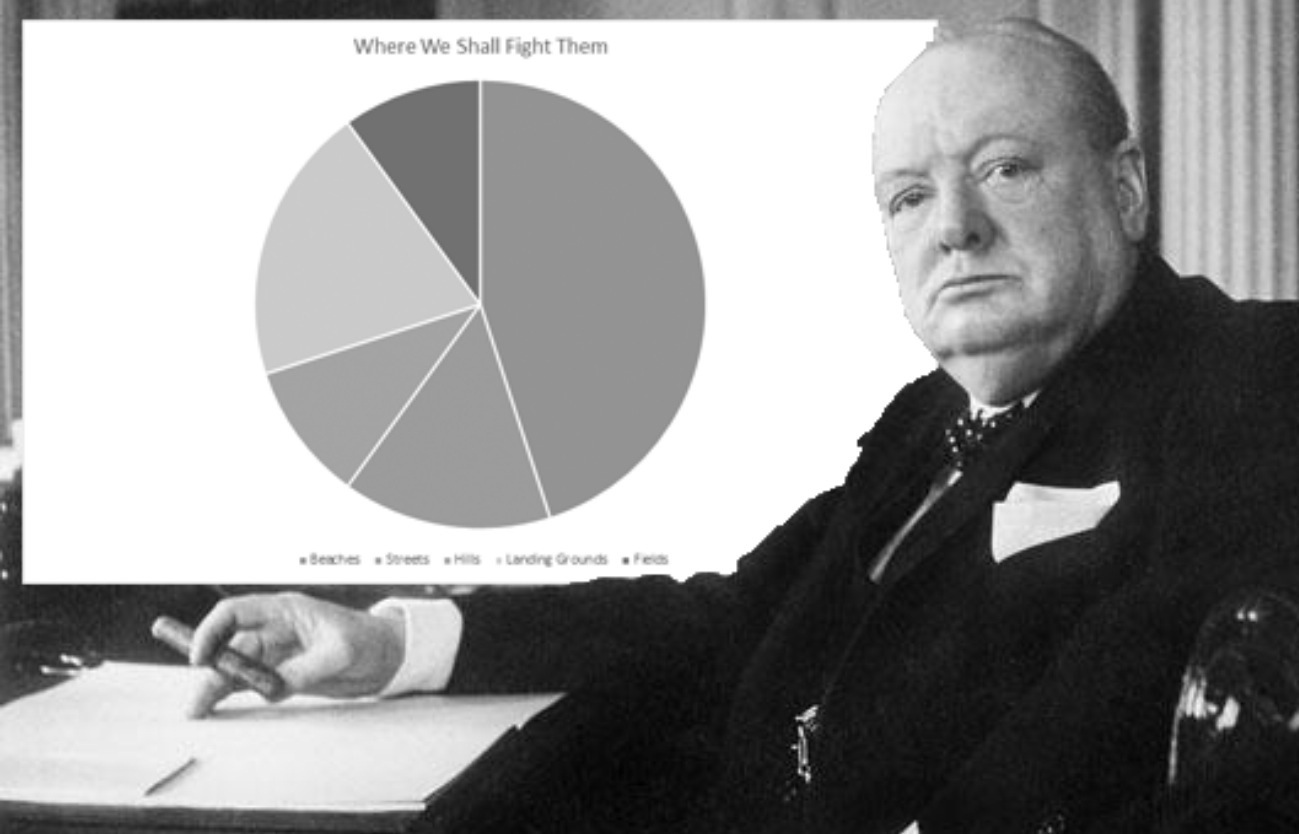
    Excellent News! Through extensive research* I’ve located a picture of Winston Churchill from June 1940, practicing his Powerpoint presentation of the ‘fight them on the beaches’ speech.

    If you squint carefully (it is an old picture) you can just make out the Pie Chart percentages of where the fighting will take place:

    • Beaches 45%,
    • Landing Grounds 20%,
    • Fields 10% etc.

    Apparently Churchill was ready to deliver the carefully crafted presentation when, a bombing raid on London shattered the House of Commons projector bulb. The result was the impromptu, unsupported speech to Parliament, and the rest is history (*see below).

    The speech might be almost 75 years old, but I bet you could ask 10 people, “can you do the ‘we shall fight them on the beaches’ Winston Churchill speech?”, and over half of them would be able to do a reasonable job. Have a listen here, it’s stirring stuff.

    What’s this got to do with Powerpoint?

    This post isn’t a knock at Powerpoint. I like Powerpoint, it’s been a good friend to me over the years, helping me deliver many a difficult presentation. It also suits people with different learning styles. If you have a lot of complicated data to present, sometimes a Powerpoint slide can be the best way.

    What I’m getting at is the need to tailor the approach. If you’ve got a very straightforward message, a clear and direct email is probably appropriate. If it’s a big complicated messages, something where people need reassurance or inspiration, I think the spoken word, preferably face to face is best. Imagine if Churchill’s speech had been issued as a ‘Send to All’ corporate email, with pie charts; I shudder to think. I might even be writing this in a different language…

    Face to face communication and the spoken word help to make a message stick and give it so much more impact. Have a listen to the Churchill speech and see if you pick up on the passion and emotion. When I think about the hundreds of presentations I’ve listened to over the years, I remember very few of them. The ones that I do remember have always left a mark and usually ended up with me doing (or not doing) something. They all had a few things in common:

    • The person delivering the presentation really cared.
    • They really knew what they were talking about.
    • They weren’t afraid to show it.

    This might not work on every occasion. Putting some passion and emotion into material like ‘the audit of the document storage arrangements’ might be a little difficult. However, there are some big things happening in public services at the moment like changes to services and changes to peoples’ jobs. I think there is a huge need with these sorts of changes for communication with some passion and emotion.

    Going back to the point I made earlier, imagine if Churchill had delivered that content using a slide presentation or a corporate email. If he had, I’m pretty sure the aim of reassuring and inspiring a Nation during it’s darkest hour would have been far less effective.

    Back in the modern world, if there is something big and difficult to say, whether its to staff or service users, I’m suggesting it gets done face to face, with passion and emotion. Absolutely avoid the corporate email and only use a slide presentation if it is necessary and adds something of value. People are more likely to respond if they ‘feel your pain’, see it in your eyes and hear it in your voice.

    If your organisation is too big and spread out around the country, try Skype or film your-self and post the video on You-Tube (or Vimeo if you are posh). In the Web2.0 world there really aren’t any excuses for not talking directly to your people.

    Finally. If you like the idea of Churchill’s Speech on Powerpoint, you can view it here, along with ‘other famous speeches ruined by Powerpoint’. 

    Disclaimer: extensive research* = a photoshopped picture of Churchill (by my son) and a few fibs for the sake of the story.

    Here’s how you find Comms2Point0:  http://www.comms2point0.co.uk/comms2point0/2014/3/2/winston-churchill-and-the-art-of-knowing-when-to-powerpoint.html

    20140303-203558.jpg

  • Eames Chair - Perfect for watching the 6 Nations
    Eames Chair – Perfect for watching the 6 Nations

    Before giving you the answer I want to introduce the Armchair Critic.

    According to Cambridge Dictionaries online an armchair critic is; a person who knows, or says they know, a lot about a subject without having any direct experience of it. Recognise anyone you know?

    So… what is the difference between co-producton and the 6 Nations Rugby Championship?

    Well, one of them involves:

    • a limited number of people who are at the heart of the action,
    • these are the people who make the difference (the star performers),
    • they practice their skills, learn new ones and hone them to perfection, and
    • they work towards achieving success, together, as a team.

    Surrounding the people involved in the action, you have an army of armchair critics. These are the people who talk about what is happening, and produce huge amounts of commentary and views on how things ‘should be done’.

    So, that’s co-production. You can read about the 6 Nations Rugby Championship here.

    Apologies if that comparison seems a bit odd. All week I’ve had to listen to one of my teenage sons (the one that plays rugby) getting very irritated by 6 Nations Rugby Armchair Critics. It did however remind me of the situation with co-production that I’ve been observing lately. It seemed to me that more people were talking about co-production than those actually doing it, a regular army of armchair critics.

    20140222-204247.jpgHowever, good news. This week I went to an event organised by a group of co-production practitioners in North Wales, Working With Not To  (WWNT). It restored my confidence that we are capable of doing things, rather than just talking about them.

    This was an opportunity to spend some time with people who are at the heart of co-production action in Anglesey and Gwynedd. It was great to see people share knowledge, learn from each other, and do it in a co-productive way. The group is organised by Pam Luckock and Fran O’Hara, and I would recommend looking at the WWNT website for details of what they have been doing and future events.

    It was good to experience what co-production means, close up, with the people who are making it happen. For any armchair critics that might be reading this, here are three things I took from the event:

    1. Consultation is not co-production. Just asking someone for feedback, or what they think about your clever idea is not co-production. Co-production involves treating people as equals, and expecting that they will be making a contribution to whatever you develop together.
    2. Service user experience is priceless (so you probably need to pay). This might be controversial but,….. if you ask someone to share their valuable experience, insight and wisdom, you generally expect to pay for it. Why should that be different just because they happen to be a user of the service they are helping to co-produce? The ‘professionals’ will be being paid, so why not the people with the ‘lived experience’?
    3. If you talk the talk, walk the walk. If you are going to discuss and comment on co-production, you really should apply the principles of co-production to what you are doing. Develop your strategy/guidance/method statements in a co-productive way. This might even require ‘service users’ being involved in some super-duper high level strategy meetings… now that would be interesting, and quite terrifying for some people I’d imagine.

    So, if any of the armchair critics fancy getting close to the action, keep an eye on the WWNT website or Twitter, @WorkingWithNot2. Look out for one of their events and get down onto the pitch with the players (or at least into the stadium).

    So, what’s the PONT?

    1. Theory, guidance and commentary are necessary, but it is practical action that makes the real difference.
    2. If you are going to talk the talk, walk the walk. Follow co-productive principles in how you develop the guidance and commentary.
    3. Beware of armchair critics. I will always listen to someone who has some ‘skin in the game’, before an armchair critic (no matter how much TV they’ve watched).
    Pam and Fran
    Pam and Fran

    Here’s a picture of Pam and Fran, so that you can recognise them when you go to the next WWNT event.

    Picture Source: WWNT website.

    Finally, just to prove I’m not totally armchair based, I did speak a bit at the event. It was all about the lessons learnt from trying to develop    Good Practice Wales, co-productively.

    20140223-112802.jpgHere is snippet from the relevant section of the graphic minutes that Fran records, the full set will be on the WWNT website.

  • Kevin & Perry. Co-production candidates
    Kevin & Perry. Co-production candidates

    This weekend I completed my 9th university ‘prospective entrant’ open day in two years.

    Obviously it’s not me that is the planning to go to University, although I have been tempted. That happened for me 30 years ago, when there were 100% grants and ‘free love’ (I lie about the free love).

    These were excursions with two of my sons, who didn’t seem to enjoy the experience as much as I have. Strange that. The University hosts say “please ask as many questions as you like”, so I do.

    Apparently that makes me ‘weird and embarrassing’. (Secret Tip: with teenage kids you get even in any way you can)

    Beware of the ‘Welcome Speech’ 

    Before I get onto co-production I just want to reflect upon some things I’ve seen at 7 separate universities. They are all slightly obsessed. It seems to me that you cannot go to a university open day without being overloaded with; where they sit in the rankings, how students rate the experience and being asked for your feedback.

    1. We do well in the rankings. There’s not a single Vice Chancellor ‘welcome speech’ that hasn’t majored on how brilliantly the University has done in the assessment tables. Every statistic presented is usually in the 90% region and to be honest, I find it difficult to differentiate in the 90%+ zone. Oddly though, nobody mentions the ‘could do better’ statistics.
    2. The student experience here is outstanding. A bit like above, all the figures seem improbably brilliant. Just a bit of a moan here…. it wasn’t like this in my day. Undergraduates were a ‘damn nuisance’, that got in the way of the lecturers persuing more interesting intellectual challenges.
    3. Feedback, feedback, feedback. They all go on about how important feedback is to them, and to emphasise the point, thrust feedback forms into your hands at every opportunity.

    It’s not just me that’s noticed this, so has Son number 2. He now refuses to go to any more ‘rubbish marketing speeches’. That’s fine with me, as it gives us more time to get down to real business…… the trip to the Department and the chat with the real people.

    Casual conversations can tell you how things really work.

    Just about every open day has offered up some real students to talk with. These are the real gems that tell you about what life is really like in the university.

    I would encourage anyone who is going to an open day to seek out these students and ask them what they think about the course. I’ve not been disappointed. In my experience the most open and forthcoming are the final year students. The other place to get a feel for the place is the canteen, which I wrote about here (think of it as field ethnography).

    What has this got to do with Universities and Co-production? 

    A couple of observations here.

    1. Throughout my visits I heard many lecturers taking about how they spoke with students to  help shape the courses they delivered.  This covered all of the things you might expect; the style of teaching, the method of assessment (course work or examination), contact time with the lecturers, balance between theory and practice etc. That sounded good, courses being designed with direct input from those participating.
    2. When I spoke with a few of the students they backed up what I was hearing. In particular, one 3rd year who had been working in industry as part of their work experience was very clear about the situation; “we are out there getting the work experience which means we know what the employers want. When we come back in we tell the course lecturers, and they change the course to deliver what is needed”.
    3. One further thing, from lecturers and students (and the university literature) I picked up, was the importance of responding to the needs of industry. It was absolutely full of references to working with industry and helping to develop young people to work with them.

    So, is this an example of co-production?

    If you have a look at the wikipedia definition of co-production, I would suggest yes.

    • Co-production means delivering public services in an equal and reciprocal relationship between professionals, people using services, their families and their neighbours” (new economics foundation)

    I’m not sure you could tick all the boxes on this definition, but it’s a fair attempt:

    • Professionals – Yes, the University are involved
    • Service Users – Yes, the students are involved
    • Families – Yes, I have an input (the Head of School foolishly gave me his card)
    • Neighbours – Yes, I would put future employers in this category

    What’s not to like?

    You could question elements of this like the degree of being ‘equal and reciprocal’ mentioned in the definition. However, it does feel a lot different to many public services I’ve experienced over the years, and a lot more co-porductive than my own university experience.

    Maybe there are lessons from the world of Higher Education that other public services might want to look at, particularly those just coming to terms with co-production?

    If you want to find out for yourself, just tag along at a university open days and ask lots questions……sulky teenage offspring optional.

    So, what’s the PONT?

    1. A casual conversation can tell you a lot about what is going on in an institution.
    2. Just seeking feedback isn’t co-production; it’s more than that. Professionals, service users and others need to be involved on an equal footing.
    3. Universities are practicing something that looks like co-production. Others could learn from this.

    If you want to read more about co-production, here is a 2012 paper from Ruth Dineen; Co-production: all in this together, presented at the University of Brighton.

    Ruth was previously the Head of the Creative Writing Department at Cardiff School of Art and Design. The paper gives a good insight of co-production from the University Professional’s perspective. It was interesting to link this with my experience as the parent of a service user.

    Ruth currently runs Co-production Wales / All in this Together which is doing a lot, along with Working With Not To, to help the voluntary and public sector in Wales develop co-production.

  • 7 thoughts on communications for 2014

    Ross's avatara day without OJ – A comms, digital & PR blog by Ross Wigham

    20140213-070122 pm.jpg

    The turn of the year when you’re meant to look forward and make resolutions is well behind us.

    Even that bit at the start when everyone dries out and acts miserable is over, so a few state of the nation observations are probably now (over)due.

    View original post 634 more words

  • Buzz Aldrin on the Moon. Image source NASA Public Domain

    If you have ever taken part in a ‘Vision and Values Workshop’ or any sort of ‘Corporate Morale Booster’, you may have heard the President Kennedy, the Janitor and the Man on the Moon story?

    No? Let me enlighten you…….

    “I’m helping to put a man on the Moon”. Much loved by Leadership & Management Consultants, this story is usually delivered with the assured confidence of it being an unquestionable truth.

    It goes along the lines of:…. during a visit to Cape Canaveral in the mid 1960’s, President Kennedy was touring the facility when he met a man in overalls. He asked the man “What do you do here?”, to which the man replied, “Earning a living”. Later on President Kennedy met another man in overalls and asked him what he did, the reply this time “I’m clearing away the garbage”.

    Finally the President met another man in overalls enthusiastically sweeping the floor and asked him what he did. With a big smile on his face the man replied, “I’m helping to put a man on the Moon Mr President”

    The Leadership and Management Consultant will follow this story with some explanation about how you can motivate your staff by having a clear vision of where the organisation is going. A clearly articulated vision will (to quote) move people from ‘just turning up for the pay check’, to highly motivated ‘brand ambassadors’ . That’s all great, and I get the sentiment, but….. I really don’t buy the President Kennedy and the Janitor story. Here’s why:

    1. This was a government facility. If it gets cleaned at all, it’s usually done after hours,
    2. For a Presidential visit, the place will have been spotless for weeks. It’s the same thinking that’s behind why The Queen thinks the world smells of fresh paint, and
    3. If you’ve ever watched American TV drama or films (like the epic 24 series) you will know that a janitor hanging around in the middle of a Presidential visit, is definitely an assassin. The Secret Service would have ‘taken him out’ long before any contact with the President.

    The snopes.com discussion on the origins of the story is worth a look.

    St Paul’s Cathedral Dome, London

    Now then, how do you fancy a British version of the story, from about 300 years earlier?

    You can use the, Sir Christopher Wren, the Stone Mason and St Paul’s Cathedral, story to impress any Leadership & Management Consultant that rattles out the Man on the Moon version. Here goes…….

    “I’m building a Cathedral” It’s basically the same story……..

    Following the Great Fire of 1666 Sir Christopher Wren supervises the rebuilding of numerous London Churches and the big one, St Paul’s Cathedral. One day in 1671, during an unannounced visit, he speaks with some of the stone masons and receives a variety of responses to the question, “what is your job here?”. The most impressive response he gets, from the most productive stone mason (with the gleam in his eye) is; “I’m building a Cathedral to The Almighty”. Now that’s a huge vision and mission statement!

    Obviously its a bit of a challenge to prove the authenticity of a 300 year old verbal exchange on a London building site, but I really want to believe it. I also like the idea that the President Kennedy and the Janitor story has been ‘borrowed’ from the ancient British version.

    There are a couple of versions of the story, some talk about bricklayers and others stone masons. This article cites a book by Bruce Barton (‘What can a Man Believe’) published in 1927 as inspiration for the story, which is about as far back as I’ve been to trace it.

    Urban Myths or Inspirational Stories? There is a risk of me looking a bit sceptical by questioning the authenticity of theses stories. I do very much like the idea that a very clear and well communicated vision will inspire people to great things. If you are freezing cold, sitting it a puddle of rainwater, cutting a lump of stone, the vision of ‘building a cathedral to The Almighty’ (or ‘putting a man on the Moon’) can be a great source of inspiration and motivation. Nothing wrong in that if it works for you.

    I do however think that any vision needs to be connected to the here and now. I’m far more inclined to believe in a vision that has ambition and passion, but also a bit of humility. I don’t really want it wrapped up in someone else’s romanticised ideas, particularly if it is based on urban myths trotted out by Leadership & Management Consultants. Or maybe I’ve been around too long and I’ve just become sceptical?

    So, what’s the PONT?

    1. A clear vision of the direction an organisation is headed in, and what it hopes to achieve is essential. Lots of people do like to know where they are going.
    2. The easier that vision is to understand and share (communicate), the more likely people are to accept it.
    3. Inspirational stories are great way of getting the message across, but you might what to check the source of the material.
  • Easy – nice and clear. But is it full or empty?

    Maintaing progress and sustaining improvement (continuous or otherwise) can be difficult. Here’s a tale of how the reality dawned upon me while I was sitting in a hospital bed (a few years ago).

    A while back I was involved in training about continuous improvement methods. One of the main methods we looked at was visual management. We were provided with a lovely blend of theory and practical case studies, one of which was from an organisation right on my doorstep.

    Visual Management Theory:  Visual management/control is a commonly used continuous improvement technique, explained here. In essence it is about communicating information clearly and efficiently. You use signs, pictures and symbols instead of text or other written instructions. There is a big emphasis on the design of the visual material used so that information being communicated can be quickly recognised.

    The term visual management is interpreted broadly and can include things like ‘Team Status Boards’, which provide an ‘at glance position statement’ for complicated activities or production areas. The visual management on the ‘Team Board’, is often achieved using things like ‘Red, Amber Green’ (RAG) Status.

    Another area of visual management involves the use of single graphics or pictures – for example the danger of electrocution signs commonly seen.

    The visual management area is improving continually, and a wide range of materials are being developed, many with significant amount of design input and clever thinking behind them.

    Visual Management Case Studies:  Back to my training….. The case study we considered was a perfect example of kaizen; small improvement steps, led by the workers in their own Gemba (workplace). An example of employee engagement if you like. The situation was as follows:

    • A hospital was trying to reduce the levels of hospital acquired infections,
    • One method was to place hand sanitiser dispenser pumps at specific locations,
    • Staff moving between patients in different locations, could sanitise their hands with gel from these pumps,
    • This meant that germs would not be transferred between different locations,
    • Brightly coloured notices told people what to do, ‘Sanitise Your Hands Here!’,
    • A great visual management solution to the problem,
    • Then someone noticed that the gel in the pump was transparent, and so was the container. Working out when it was empty and needed refilling wasn’t obvious,
    • The result was occasions when the pump sat empty for some time,
    • Then, someone from the staff proposed a solution of placing a sheet of coloured card behind the pump so that the level of gel was easily seen,
    • Bingo! A ‘continuously improved’ visual management technique that worked perfectly,
    • No more empty gel pumps, staff sanitised their hands regularly as they moved around the ward and hospital acquired infection rates lowered,
    • I understand that the approach was transferred across all other wards in the Hospital,
    • An excellent example of the horizontal deployment of some visual management good practice.

    Theory, case studies and the real world.

    Imagine my excitement about 12 months later when I contracted pneumonia and ended up on one of the hospital wards using these visual management techniques. This was a chance to see what I’d been taught being used in everyday practice.

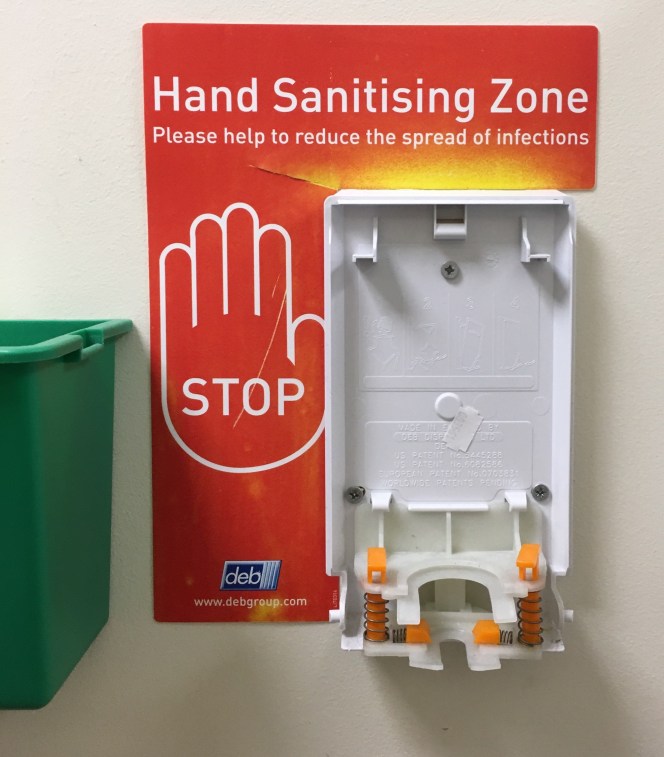
    Unfortunately my excitement was premature. I did get to see the hand sanitiser dispenser, but it was redundant. The brightly coloured card was stuck to the wall, a ‘sanitise your hands’ poster above, but no container of germ killing gel underneath. What had gone wrong?

    I was there for a week and did ask a few questions about the hand sanitiser. Eventually I found someone who knew what had happened. The hand sanitiser had been used, the visual management of the sign and the brightly coloured card behind the gel container had worked; then the suppliers were changed. A new brand of hand sanitiser had been procured, which came with its own proprietary dispensing system (different holder). These were mounted on the walls, close to the original hand sanitisers. The thinking behind visual management and what it was trying to achieve had become a bit of a vague concept to the person I spoke to. It had been a good idea, but just got lost in the business of doing the job, day-to-day.

    I did keep an eye on who was using the hand sanitiser during the early part of my stay. This wasn’t a scientific evaluation (I did sleep and read on occasions), but it certainly wasn’t a 100% compliance situation. From what I observed, not everyone used the hand sanitiser, and for those that did, they certainly didn’t use it all of the time.

    Obviously not working – but for how long? Not the direct example I’m taking about, but same hospital. On a wall full of holes where a number of dispensers had been fixed over the years.

    Things I learnt from the Hand Sanitiser experience.

    The theory and case study example I had learnt about had sounded perfect. A problem arose and the staff involved came up with a solution to fix it. Great text-book material that I couldn’t wait to observe in practice. Unfortunately an unforeseen event occurred, the new dispenser arrived and upset the system. The learning and thinking behind the old system seemed to disappear.

    I do wonder if this happens quite frequently? There is an initiative to improve something, everyone gets exited, does what is required for a while, and then the initiative dies out as things return back to situation normal?

    So, what’s the PONT?

    1. Visual Management techniques have been successfully used in many situations, in many organisations.
    2. Theory and case studies are a great way of learning, but you can go further.
    3. Nothing beats going to the Gemba. In my case this was spending a week in a hospital bed, but I did learn plenty about the reality of sustaining improvement.

    Picture source. Buy your Hand Sanitiser stickers here: http://evaq8.co.uk/USE-HAND-SANITISER-SIGN-Self-Adhesive-Vinyl-20cm-x-30cm.html

  • 20140202-202517.jpg

    Today is Groundhog Day. I’m not joking the 2nd February really is Groundhog Day.

    Groundhog day is a much loved North American tradition, but according to the Oxford Dictionaries, it also stands for something else; “a series of unwelcome or tedious events that keep recurring in exactly the same way”. In other words, a continuous loop of the same old awful stuff.

    By coincidence, I’ve had a bit of a ‘Groundhog Week’ with something tedious and unwelcome; the ‘tyranny of best practice Cybermen.

    You know, the crowd who constantly repeat the mantra “services can only be improved by the identification of best practice and its widespread application. It will be enforced through a process of target setting and performance management. There will be no deviation, it will be adopt or justify” (with possible re-programming if you fail to comply).

    This simple, ‘one size fits all’ solution to every problem, no matter how complex the situation, is a bit frustrating.  For my own peace of mind I thought I’d rehearse the arguments once again.

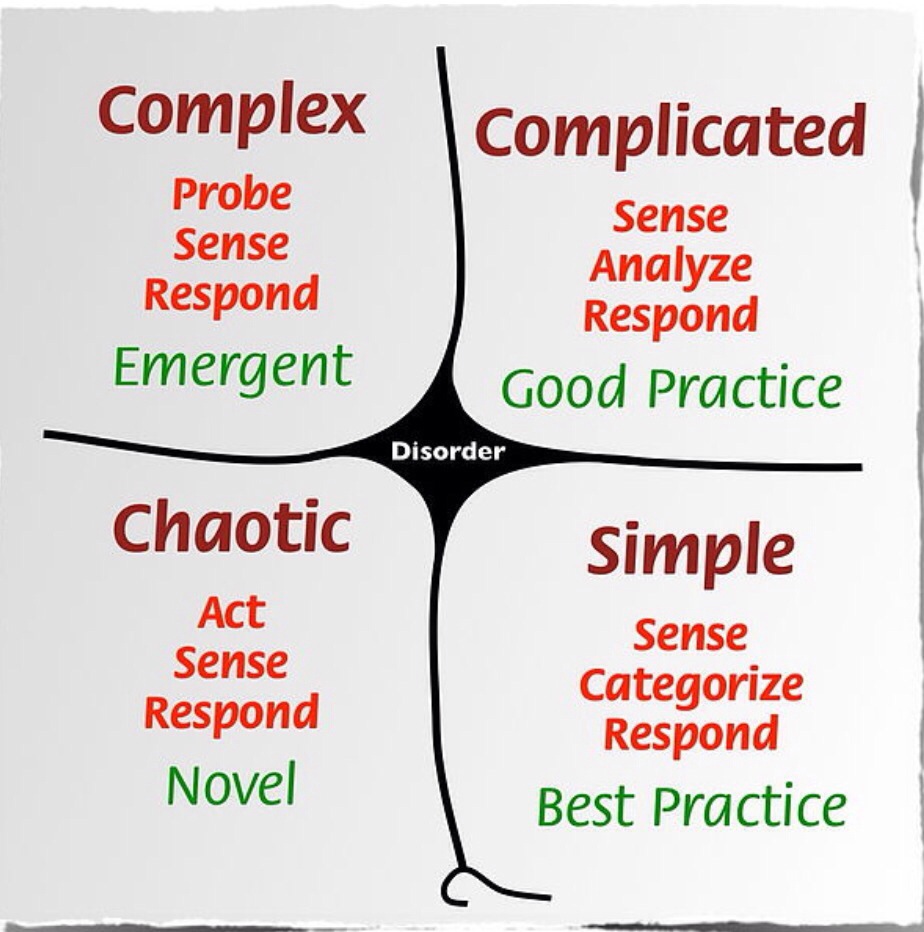
    Best practice is not good practice, and neither of them are are the new practice that emerges in complex situations. The practice you adopt is hugely dependent upon the situation and trying to force people to use best practice that doesn’t match their situation can be huge waste of time and potentially damaging. I’ll explain a bit more:

    Best Practice. The idea of best practice is something that has very much developed from industrial activities. Essentially you have a highly predictable, straightforward context. If you perform Task ‘A’, you will always end up with Outcome ‘B’. The process is the same wherever you do it.

    The types of activities this might involve include; paying invoices, running the heating system in a building or maintaining the engines in the delivery vans. There is always the ‘best’ ways of doing something. Deviation from this method is not as good as the ‘best’.

    Good Practice. For very many areas of activity there are multiple ways of achieving a good outcome. Situations are much less predictable and Task ‘A’ might not be the right thing to do to achieve Outcome ‘B’. You might need to try something different and people will adopt different methods, influenced by their knowledge, skills and experience.

    This is a complicated world where you need to trust the judgement of experts to read the situation and get it right. Good practice from one situation may not be transferable to another situation. You can however adapt what is good elsewhere and apply it in the situation, its all about adaptation not rigid adoption.

    When I think back to my school days this is exactly what some of the teachers did. They adapted ‘good practice’ to fit the situation and achieve a good outcome.

    New Practice. When you think about the complex challenges currently facing public services, with increasing demand and declining resources, this is entirely where we sit. The ‘right’ answers, and methods by which you get there are not known. You have to look out for something new that emerges. It is not possible to predict exactly what is going to happen in response to any activities carried out.

    Large scale challenges like tackling obesity, helping people with complex needs live independently or dealing with organised crime need to be worked out through a process of ‘safe to fail’ experiments. The chances of someone else’s best practice working  in your complex environment (particularly if it is forced onto you) seems unlikely.

    20131013-200442.jpgUnderstanding the Context is important. I cannot stress this enough:

    • Best Practice, great for straightforward, highly predictable, situations. There is one ‘best’ answer.
    • Good Practice, applicable in complicated situations where there is more than one right answer. Need to rely upon experts to ‘read’ less predictable situations and apply the method that works.
    • New Practice, the answers are unknown and the situation is complex. Outcomes are unpredictable and you need to experiment with ‘safe to fail’ pilots to see what works.

    This isn’t a world of one size fits all, and any ‘adopt best practice or justify why not’ Cyberman approach is only relevant in very specific simple situations.

    I feel better for that. If you want read something more detailed on this I’d recommend:

    • Dave Snowden’s, Harvard Business Review paper, ‘A Leaders Framework for Decision Making’ and the Cynefin Framework, (see picture above) where simple, complicated, complex and chaotic situations are explained in detail.
    • Complex Care Wales, (@complexcarewales). Have a chat with Matt, it’s like the intellectual equivalent of a work out with a Mixed Martial Arts Coach. You’ll be stretched to your limits, but know it’s good for you.

    So, what’s the PONT? 

    1. Best, Good and New Practice are not the same. The situations where they apply are different.
    2. There is a place for Best Practice, but it is highly specific.
    3. An ‘adopt best practice or justify why not’, is not a silver bullet and may actually cause more harm than good.

    Finally, when I first posted this in 2014 I said……I do hope I’m not going to have another ‘Best Practice Tyranny’ Groundhog Day on the 2nd February 2015. If I do, I’ll re-blog this post…… looks like not a lot has changed. Happy Groundhog Day and have a look at this video of Groundhog Day Explained, it’s good fun.

    Picture source. Groundhog Day http://acplkid.wordpress.com/2012/02/02/happy-groundhog-day/

  • Here’s another live post from the NHS Hackday in Cardiff.  More detail on what the hackday is about can be found in this post.  Other material from the day can be found through Twitter under the hashtag #nhshd.

    20140126-125529.jpg

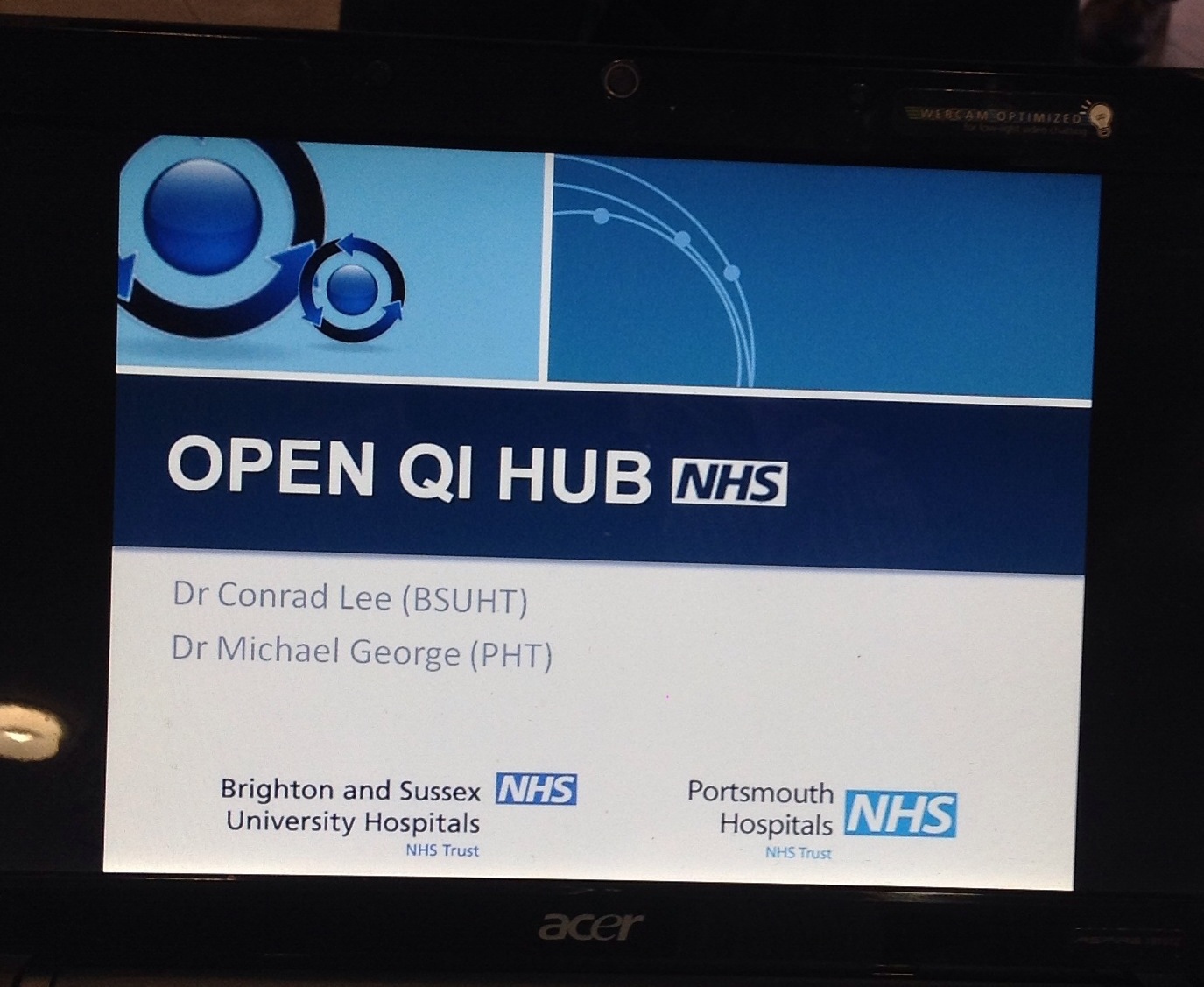
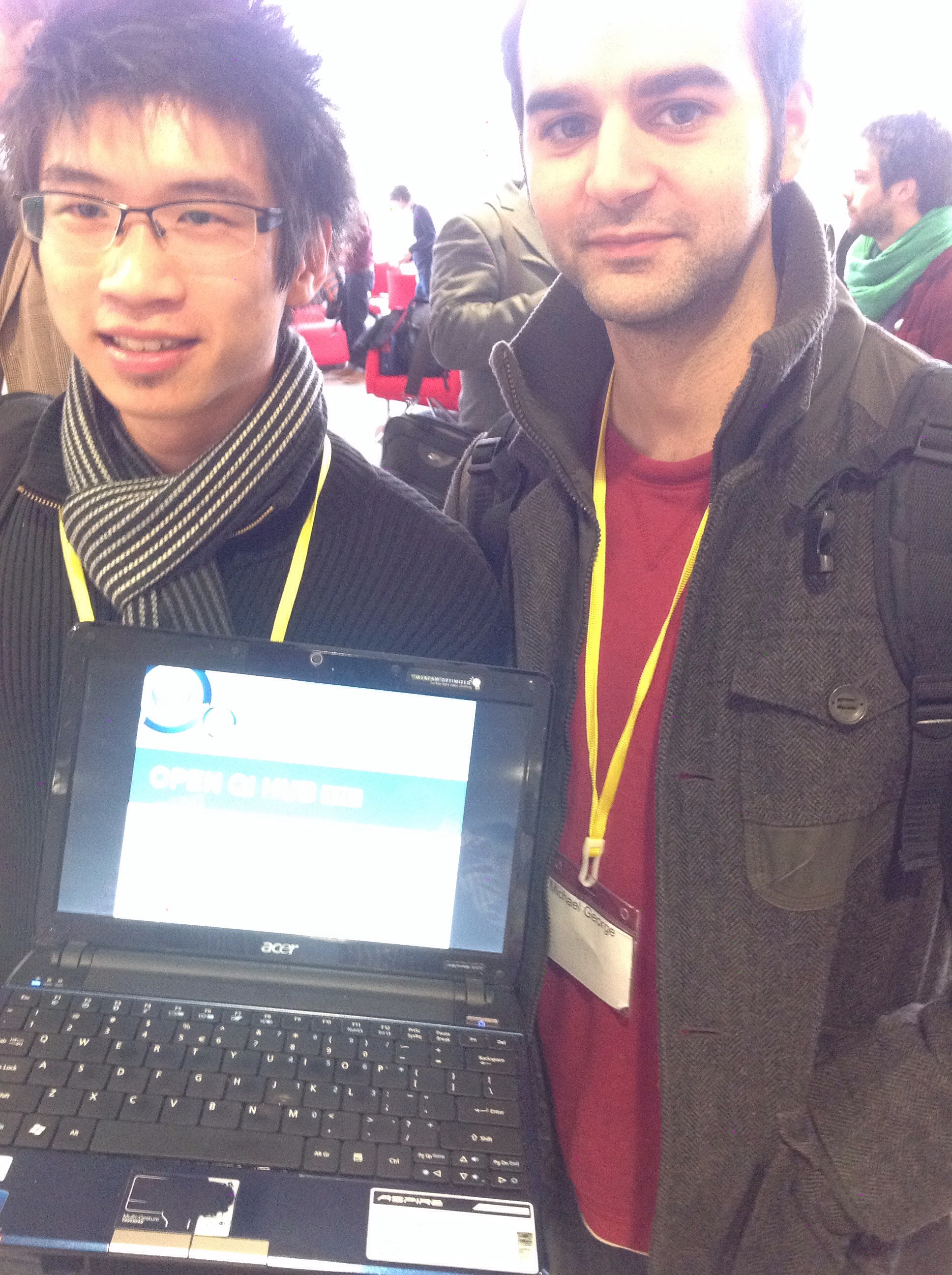
    This is an idea from Doctors Conrad Lee (@ckwl1) and Michael George (@drmgeorge87) around how you could make better use of the learning from Quality Improvement Audits that Doctors take part in during their training.

    Here’s the situation: 

    • Doctors (and others) carry out Quality Improvement Audits as part of their continued professional development,
    • There are situations where these audits are not completed, written up and shared,
    • There are many good reasons for this like; people move on to new departments (rotation), or new hospitals,
    • Valuable learning is lost. The figure of only 15% of audits ever being completed was mentioned a few times.

    Here’s a possible solution: Conrad, Micheal and a team are working on developing a ‘QI Hub. This will  be an online platform where people can share the details of the quality improvement audits they have been working on. This has huge potential to:

    • Act as a resource for sharing the learning from those audits that have been completed;
    • Be a library for audits not completed, so that new people can build upon the work that someone has already started (there must be a good reason why someone thought it was worth looking at in the first place);
    • Developing as a tool to support project management and tracking was suggested and
    • Opening it up so that NHS Patients can view QI Hub was mentioned. (I wonder if this might look a bit like Dell IdeaStorm or My StarbucksIdea?)

    And it could be scalable: There is a lot of potential here to improve the sharing of knowledge from an activity that lots of people are involved in. Last year I went to a Quality and Improvement Day at Abertawe Bro Morgannwg University Health Board. I was very impressed by the amount of knowledge that I saw shared through the poster displays and presentations they used.

    One question did occur to me though, “how does this incredible learning find its way across the Health Board, and beyond?”. Maybe Conrad and Michael have something that might help?

    You can follow the progress of the QI Hub on Twitter at #openqi

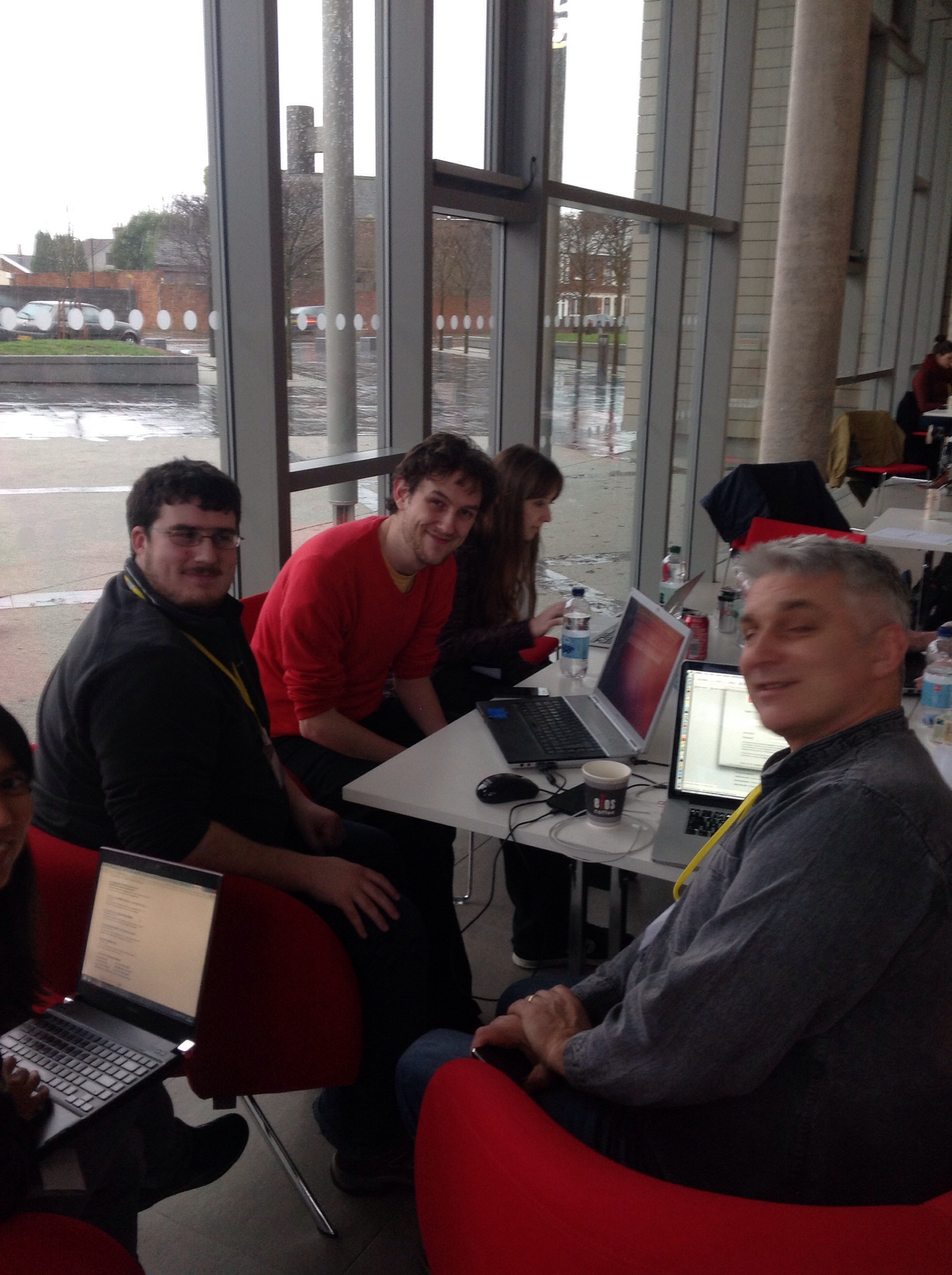
    The people helping Conrad and Michael are: Jo Carter (@Jo_Carter64); Craig Thomas (@tinybigideas); Sebastian Yuan (@S3baster); Nick Theodorou (@NickTheodorou).


    Conrad and Michael
    Conrad and Michael with the sharing platform

  • Jon Hilton, Keiran Evans and other NHS Hackers hard at it
    Jon Hilton, Keiran Evans and other NHS Hackers hard at it

    Here’s another live(ish) post from the Cardiff NHS Hackday. 

    This sounds like a very neat solution for dealing with a mountain of paperwork, saving some processing time and valuable NHS resources.

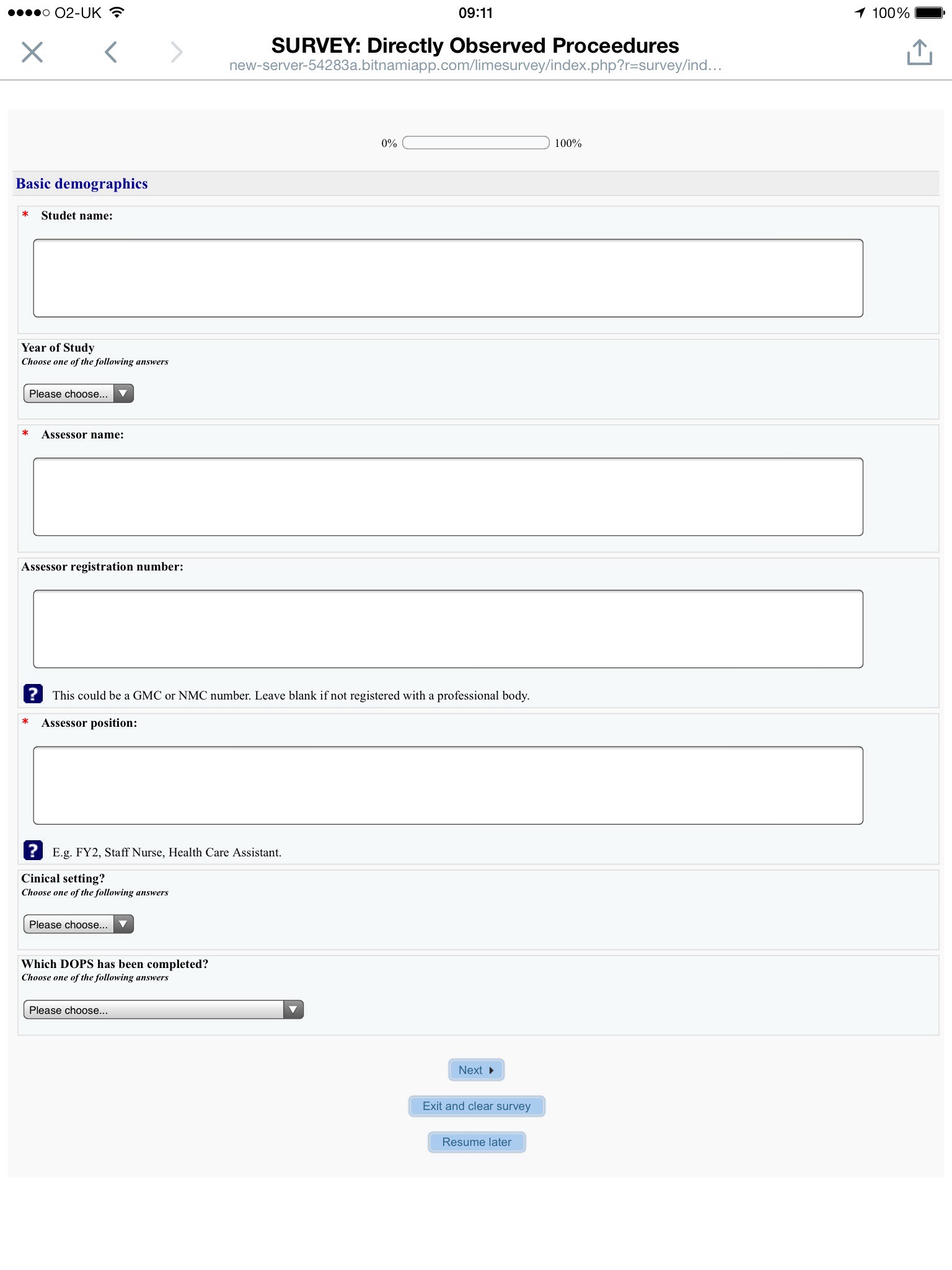
    I’ve been sitting with Jon Hilton (@jonjhilton) who’s a medical student at St Georges’s University Hospital in London. As part of Jon’s training (like other medical students) there’s a requirement to keep a record of what he’s done. For his 5 clinical placements during a year, each one will generate between 6 and 15 records of ‘proof’. Basically, evidence that the student has completed work based training to the required standard.

    Jon described how these are paper documents completed by a student and supervisor, which are then transcribed into a database. Information in the database is used by the individual students to manage their own progress and the University to take an overview.

    When you multiply this across the University, for 300 students in each year you could be dealing with mountain of paperwork (45,000 -110,000 documents), and quite a few staff to process it all.

    It doesn’t take a genius to work out that with this much paper flying around, the risk of transcription errors, and bits of paper getting lost is quite high.

    Jon has been working at the hackday with Kieran Evans, who works at Cardiff University and also helped start (and is backend architect) tech startup ViaVM.com,  to develop a solution.

    The idea is to develop a digital form for each of the activities the students and supervisors compete. These data forms can them be uploaded automatically onto a central management system, avoiding the need for paper. The end result would be a digital system the students can access to manage their own progress, and a system that the University can use to manage the progress of each cohort.

    This feels like real progress, and what a hackday is all about. People from different disciplines working together to solve a problem, quickly, efficiently and without anyone telling them to do it.

    I’m looking forward to seeing the prototype tomorrow.

    During Day 1, this site was released for people to use and enter test data, please have a go, it’s very easy to use. Link 

    http://new-server-54283a.bitnamiapp.com/limesurvey/index.php?r=survey/index/sid/151376/lang/en

    20140126-091201.jpg

    20140126-091152.jpg

  • 20140125-130518.jpgThis weekend is the NHS Hackday in Cardiff that I’ve mentioned previously.  We are about half way through Day 1 (having a very nice lunch). 

    There is huge amount of material that’s being created over the weekend. Part of what we are doing is trying to share it as widely as possible, and here is a guest post from Tanwen (who I work with) that gives a flavour of what is happening. 

    Over to Tanwen…..

    I feel I’ve witnessed quite an achievement here today, at the NHS Hackday.

    A whole bunch of volunteers from the very different worlds of the NHS and software development have gathered in Cardiff University.

    They’ve pitched lots of disruptive solutions for problems in health – and charged ahead with making these ideas a reality by the end of the weekend.

    Not all of these ideas will become reality and only one can get a prize at the end of the weekend. But I’m impressed with all the ideas that have been pitched so far and wanted to show you some examples of what volunteers can create in a single weekend – and not through a long, drawn out process.

    One strand of ideas developed around better ways of communicating and presenting complex medical information – great from my point of view. How about a simple, user-friendly multimedia platform to educate patients on their drug treatments? Or a visual tool to check the vision of people who can’t read charts, without needing anaesthetic? Or even single screen graphic presentations for integrated care teams in A&E?

    I also picked up on some ideas to support health in the community. One useful idea was a program for handheld devices, to allow health staff to cut down on admin while out in the community – like sending prescriptions straight to the local pharmacy. And how about a QR code on the side of cycling helmets, presenting basic medical and location information to rescuers?

    Considering the wealth of knowledge and data within the NHS, many ideas obviously focused on gathering and sharing this knowledge. One example was an app to bring together local knowledge and guidance on palliative care for staff working in the area. Another was a web-based program to gather all the knowledge and lessons learnt that come from quality improvement projects, that are often lost at the moment. 

    And of course, for someone from the Wales Audit Office, this selection wouldn’t be complete without the ideas to improve monitoring. But, this includes an interface to monitor complex drug interactions while treating drug-resistant forms of tuberculosis. Or a platform with lots of modules to allow patients to monitor their own conditions and make sure they are improving or staying on track. Or even a simple platform for students to keep track of all their workplace based assessments. 

    If you fancy taking a look at today’s pitches, here’s a link: http://bit.ly/nhshdcdf 

    As I write, I am surrounded by NHS specialists and developers busily working in teams to finish some of these great projects. Tomorrow, I’ll get to see who has managed to produce their product and who wins first prize – keep an eye out for the next blog and follow #nhshd on Twitter. See what practical benefits two days, dozens of volunteers and some teamwork can bring to the world of healthcare.

    Tanwen

  • 20140118-212211.jpgIn 160 posts over almost three years of blogging I’ve never explicitly mentioned where I work or what I do. It is partly deliberate. Saying you work for an audit organisation prompts interesting reactions.

    I was recently introduced at a conference using the 19th Century Sir Charles Lyell quote: “An auditor is a man who watches the battle from the safety of the hills and then comes down to bayonet the wounded”. That did actually work in my favour. With an introduction like that people have pretty low expectations.

    So, what’s prompted me to break cover and say I work for the Wales Audit Office? Well, this might not sound very cool, but I’ve just come away from our staff conference and I really enjoyed it. Let me explain why.

    Over the years I’ve attended dozens of staff days. I’ve experienced loads of ‘team building’   activities where you participate in some abstract task. Diverse activities covering everything from Samba Drumming to building the Eiffel Tower out of cardboard and pipe cleaners. All good stuff, but how to you link it back to the day job?

    Well how about this; get people involved in a practical activity that uses their skills, helps other organisations and has a very tangible result at the end of it. The idea of us trying something like this has been around for a while. A lot of the thinking behind the idea is based upon the Daniel Pink TED lecture, “The surprising truth about what motivates people” 

    The idea is that motivation is linked to three things: being allowed to get on with your job (autonomy), the desire to be a good at something you like (mastery) and doing something for the greater good (making a contribution). The video is well worth watching.

    This is how it worked at the staff conference:

    • Ask the Wales Council for Voluntary Action to nominate 15 organisations that would find it helpful to work with Wales Audit Office staff.
    • Invite representatives from these organisations to come along and share what they do with groups of up 14 people from the WAO.
    • Make sure the groups are completely mixed and everyone is involved, including the Board Members.
    • Set the WAO staff a task; “You have 3 hours to look at what the organisation does and come up with ideas on how they can increase participation, income and impact”.
    • Also get staff to develop a presentation (being as creative as they like) to convince the rest of the WAO that the organisation you are working with should the the staff charity of choice for the next 12 months.
    • Leave people to stew overnight…..this is where you get a bit of magic happening.
    • Next morning, gather in groups of 3 and present your ideas to your colleagues. The ‘best’ pitches are chosen for a grand final in the main hall.
    • The 5 finalists teams then present to the whole organisation and everyone votes for which organisation should be the staff charity of choice. Brilliant!

    You need to know here that the organisation chosen was Changing Faces, a UK charity that gives support and information to people with disfigurements to the face, hands or body, and their families. It’s going to be an exciting year.

    Does this motivate people? The honest answer; yes. The group I was involved in were incredibly motivated. All the things that Daniel Pink talks about were evident:

    Autonomy. Nobody was telling people what to do, they just got on with it, and went the extra mile.

    Mastery. People were doing things they were really good at. Asking questions, researching, analysing plans, looking at financial projections and a whole range of other things.

    Making a Contribution. It’s difficult to convey just how obvious this was. The was a sense of passion and commitment to making a difference and doing some good. One of the people I was woking with said “I’m not letting go of this now, I’m getting involved”, and they meant it.

    So where does this leave us?

    At the start of the conference there was lots said about how as an organisation we have a role to helping public service organisations in Wales to improve. It’s not just about finding fault and providing assurance, the days of just ‘bayonetting the wounded’ are ancient history. My colleagues are not just auditors, they clearly have the skills to help with improvement, and they showed that with enthusiasm and passion.

    I do wonder if there is something more symbolic in the link between Changing Faces and Changing Audit?

    So, what’s the PONT?

    1. The desire to ‘make a contribution’ is a huge motivator for lots of people.
    2. Even auditors can be creative, passionate and highly committed when you give them the space and freedom.
    3. It’s taken me 160 blog posts to say this, but I do work with some great people, and they all made me proud this week. Thank you.
  • 20140111-214318.jpgYou must have heard the quotes that get rattled out in public services to encourage different ways of thinking? Often misquoted, they get attributed to to Albert Einstein (to add some credibility) and are generally along the lines of:

    • “We cannot solve our problems with the same thinking we used to create them”
    • “Insanity: doing the same thing over and over again and expecting different results”

    All well intentioned stuff, but that’s usually as far as it goes. People are encouraged to think differently….. and then dive straight into the tried and tested brainstorming session (with the usual suspects) to come up with some innovative ideas.

    There is a bit of a self fulfilling prophecy at work here…… if you repeat the same process (brainstorming etc)….. you are probably going to get the same results. It needs a bit more than asking people just to think differently. You need something to clear the blockage.

    Hackdays, the antidote to old style thinking? In a few weeks I’m going to an NHS Hackday in Cardiff organised by Anne Marie Cunningham and James Morgan. Everything you need to know about the weekend (including the fact it’s 2 days not 1) is covered in this ‘Wishful thinking in Medical Education’ post by Anne Marie.

    Based on my experience of other hackdays, and what I know about this one, I think they have the potential to unblock established thinking, and create something different. Briefly the hackday in Cardiff will involve:

    • A pre-hackday ‘pitch planning’ session; Wednesday 22nd January, Canton Library, Cardiff.
    • Diverse groups of people gathering on Saturday 25th January. Hopefully this will include people with experience of using the NHS as patients and carers; people who work within the NHS and people with digital skills who can help develop solutions.
    • Pitches. People describe a problem they would like to fix or an idea they would like others to work on with them.
    • Work on the pitches. How most of the time is spent. Service users, developers and NHS experts working together to develop an elegant digital solution.
    • Review and recognition. At the end of the second day (Sunday 26th), what has been achieved is demonstrated to a panel of judges and recognised.
    • What next. This will depend largely on what is created during the hackday(s).

    So how is this different to established thinking? There are a number of things going on in a hackday which fit into the idea of disrupting the established processes and thinking. Anyone interested in service improvement should be able to find something that fits in with their view of ‘how things should be done’ under any of these headings.

    • Co-production. Getting service users and people who deliver the service in a room together with people who can provide a digital solution has to be co-productice.
    • Crowdsourcing. There’s definitely an element of this involved. The request to get involved and pitch your idea has been spread far and wide.
    • Rapid Prototyping. Attempting to build a solution in a single weekend is very rapid in comparison with most public service approaches.
    • Safe to Fail Pilots / Trojan Mice. There will be lots of things happening in parallel. If they fail, no problem, learn the lessons and move on.
    • Disruption. There is no doubt just the very thought of a hackday is disruptive. I’ve heard “that’s going to get the IT people rattled” mentioned several times this week.
    • Open Innovation. Bringing people together who actually work for the NHS (patients and developers) certainly fits in with the idea of open innovation.
    • Knowledge Sharing. The conversation about the hackday has being happening on social media for a number of weeks. I expect that conversations and the sharing of information and knowledge will continue during the weekend and for a long time after.

    What is there not to like?

    Nothing as far as I can see….. apart from the fact it’s on a weekend and you are giving up your time for free.

    Well, I could have added this to the list about under the heading of ‘Work with People who are Passionate’.  Anne Marie uses the term ‘geeks who love the NHS’ in her blog post. That rings true for me. Just imagine what can be achieved by people who love what they do; working intensively with diverse thinkers over a single weekend. If you have any interest in improvement and public services, turn up, participate, take ideas back to where you work. It might be just the antidote you need to unclog the system.

    So, what’s the PONT?

    1. Hackdays can help to disrupt established ways of thinking in public services.
    2. The effect of having a hackday can be as important as what you create during the day. They disrupt at many levels.
    3. They can unite people with different ideas on how improvement should be delivered.

    Links: Anne Marie Cunningham Post. All the details on signing up are in here. http://wishfulthinkinginmedicaleducation.blogspot.co.uk/2014/01/im-proud-to-be-hacking-nhs-come-and.html

  • Have you ever been to an engagement /consultation/staff development day and been asked to write down your ideas on ‘post it notes’ and then stick them on flip charts?

    Someone then dutifully collects the forest of paper and promises to type them up and share the results.

    Months later you get sent a document full of random bullet points that mean very little to you. Somewhere amongst the mess your brilliant idea is buried…..lost, forever.

    There are similarities here with Crowdsourcing and the idea that ‘you have to move a lot of muck to find the golden nugget’. Asking a number of people to contribute ideas, even as part of an ‘engagement’ day, is a type of crowdsourcing. I reckon there are things that could be learnt from successful examples of crowdsourcing and applied here. Before that, it’s worth a look at how some brilliant ideas were originally rejected (even the Apple personal computer!).

    Brilliant ideas that were originally rejected.

    A quick internet search of ‘brilliant ideas that were originally rejected’ generates an impressive list of everyday products and services that were originally rejected. This list on greekchat.com might whet your appetite if you want to research some of the astonishing examples. A few of my favourites:

    • “This ‘telephone’ has too many shortcomings to be seriously considered as a means of communication. The device is inherently of no value to us.” Western Union internal memo, 1876
    • “Louis Pasteur’s theory of germs is ridiculous fiction”. Pierre Pachet, Professor of Physiology at Toulouse, 1872.
    • “So we went to Atari and said, ‘Hey, we’ve got this amazing thing, even built with some of your parts, and what do you think about funding us? Or we’ll give it to you. We just want to do it. Pay our salary, we’ll come work for you.’ And they said, ‘No.’ So then we went to Hewlett-Packard, and they said, ‘Hey we don’t need you. You haven’t got through college yet.” Apple Computer Inc. founder Steve Jobs on attempts to get Atari and HP interested in his and Steve Wozniak’s personal computer.

    So what has this got to do with Crowdsourcing?

    In the recent post about crowdsourcing I used examples from Dell IdeaStorm and the Gulf of Mexico Oil Spill. One of the points I made was, that for Dell, there is a ratio of roughly 1:37 of ideas implemented to ideas submitted. In the case of the Gulf Oil Spill this was 1:1433. A bit like the ‘lost’ post it note in the engagement day, what are the chances of a brilliant idea being buried in the 1432 rejected? (In fact over 42,000 ideas were rejected).

    This is a tricky situation to handle. How do you make sure the brilliant ideas don’t slip through the crowdsourcing net? There is no easy answer, but here are some thoughts based upon what I’ve learnt.

    1. Don’t throw anything away. Based upon the idea that there is ‘no such thing as a bad idea’, keep hold of everything. Treat them like precious gems and store them carefully.
    2. Let people see the collection. This serves many purposes one of which is to reassure people that their idea has been acknowledged. The ideas collection can provide inspiration for new ideas and learning from previous attempts. There is a lot that can be learnt from recovering ‘lost corporate memory’ and having the equivalent of a ‘museum of failed products and ideas’ to browse.
    3. Let people interact with the collection. Allow people to comment on ideas. If lots of people have a similar idea, allow them to work together to turn it into reality. The voting and commenting approaches seen in Dell IdeaStorm are a great way of testing ideas amongst a a community of experts and peers. Before the organisation tries to do something with the idea, it has had some robust evaluation and feasibility testing. Making this activity open and visible to all is essentail.
    4. Keep looking at the ideas. Remember that context is important. Circumstances change. Technology develops, materials become cheaper, attitudes change. A completely wrong idea from a few years ago might be brilliant today.
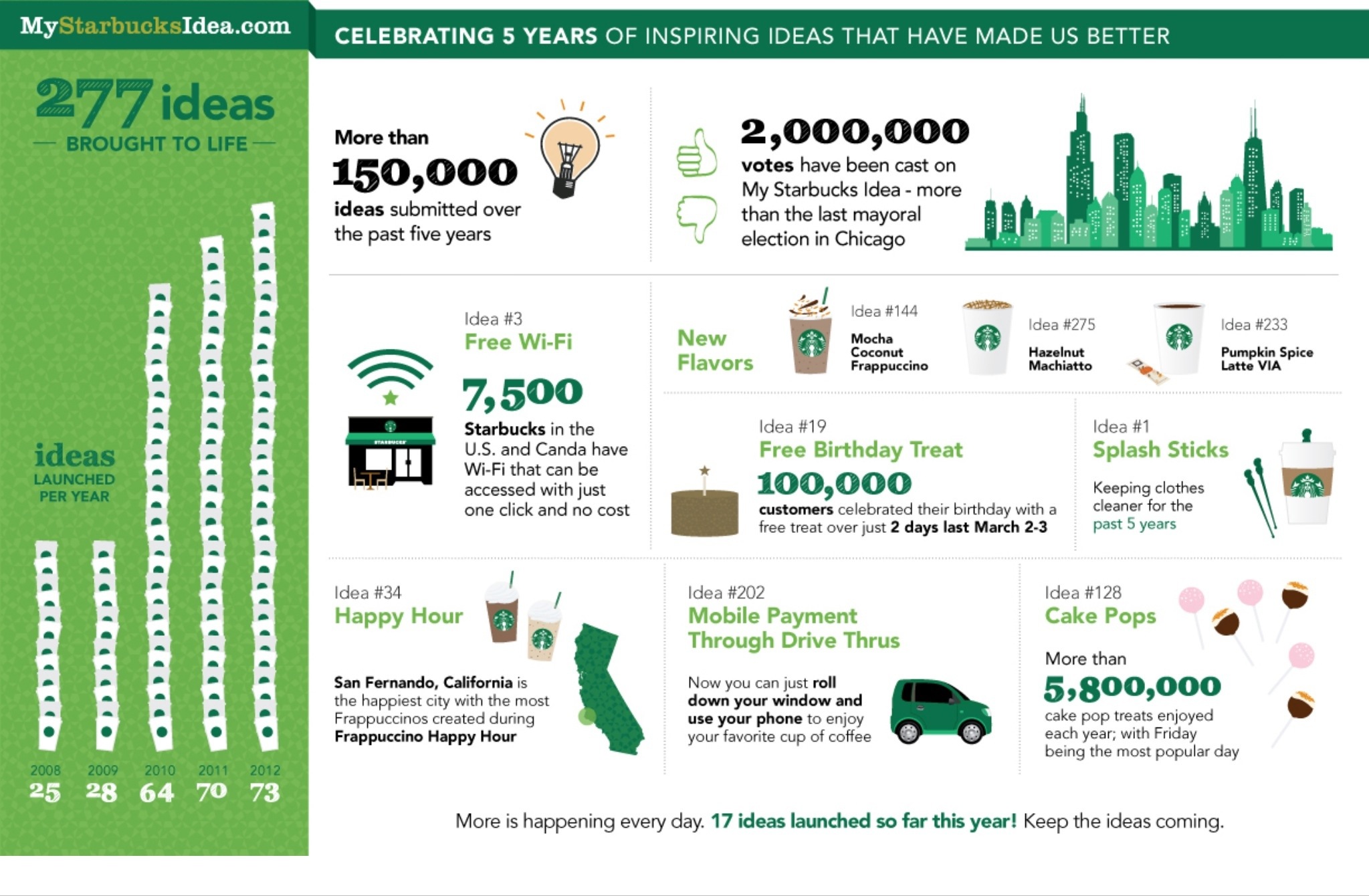
    5. Implement some ideas, and tell people. This sounds obvious, but it is good to see progress. Have a look at the MyStarBucks graphic which summarises the first 5 years of the scheme. This must help with keeping people motivated and involved, the ideas submitted to MyStarbucksIdea have certainly increased year on year.

    20131229-164623.jpg

    Is there no such thing as a bad idea?

    I have to say, “you don’t know until it’s been looked at … properly… which might involve trying it out”.

    From the point of view of crowdsourcing, this means keeping hold of EVERY idea, and letting the crowd look at what is there. The benefit of the crowd extends beyond just coming up with the ideas, they can help to manage, refine and implement the ideas. Just as relevant to the ‘massive online social media driven commercial product’ as it is to the ‘post it’ notes from the staff development day.

    So, whats the PONT?

    1. Ideas are like precious gems, you need to look after them, put them on show and polish occasionally.

    2. In addition to generating ideas, crowds can help to manage and implement them.
    3. There is no such thing as a bad idea, until you’ve had a good look at it….. this could take long time.

    Picture Source:

    MyStarbucksIdea: Graphic.http://www.businesswire.com/news/home/20130328006372/en/Starbucks-Celebrates-Five-Year-Anniversary-Starbucks-Idea#.Usk5QqWwird

  • 20131229-133234.jpg

    “everyone remembers the Goldcorp Challenge?”… apparently not

    Crowdsourcing is being promoted in some areas as a potential ‘silver bullet’ to solve the problems of pubic services. At first glance, what’s not to like?

    • It’s co-productive. It can involve citizens and service users in solving problems and designing the services they use;
    • It’s cost effective. Many people can work on a solution at relatively low cost. In some cases this can involve people giving time and ideas for free;
    • It develops new ideas. By involving people with a very wide range of experience, skills and perspectives on a topic, there is opportunity for them to come up with new and innovative approaches; and
    • It involves people in what is happening (oooh, did I mention it is co-productive).

    However, I’m not sure everyone does remember the Goldcorp Challenge, it did after all happen way back in 2000.

    Before diving into crowdsourcing as your ‘silver bullet solution to problems’, it is worth a closer look at what has been happening at Goldcorp, Dell IdeaStorm, My Starbucks Idea and the Deepwater Horizon Gulf of Mexico oil spill. Context is hugely important when transferring learning, and crowdsourcing is no different.

    The Goldcorp Challenge.

    This is like the ‘mother lode’ crowdsourcing stories. The are numerous articles in things like Bloomberg Businessweek which describe what happened. I first read about it in Wikinomics by Don Tapscott and Anthony Williams back in 2008, and got very excited by the idea of ‘mass collaboration changing everything’.

    Briefly the story is as follows. The CEO of a struggling gold mining company does the unthinkable and takes all of their highly treasured geological information and posts it on the internet in the Goldcorp Challenge. A $575,000 prize fund is offered to anyone who can come up with ideas on where they should dig for gold.

    There was a very snazzy website pictured above (it was 2000) with guidance on how to submit ideas along with an explanation on how they would be judged and rewarded.

    The result was a diverse range of suggestions from unexpected sources (like the other side of the world), which ended up with recovering huge quantities of gold. The rest is gold mining and crowdsourcing history. Have a read of this Fast Company article for more detail on the particular circumstances of this successful iconic example of crowdsourcing.

    Dell IdeaStorm, My Starbucks Idea and The Deepwater Horizon Oil Spill.

    These are all very worthy of individual case studies as examples of crowdsourcing. Very briefly here is what they involve.

    Dell IdeaStorm has been around since 2007. It is a site where people with an interest in Dell products and services can submit ideas for improving them. The ideas are then voted and commented upon by the community members. Dell take the most ‘popular’ ideas and try to implement them.

    My Starbucks Idea.  A bit like the Dell IdeaStorm, a site for people with an interest in Starbucks Coffee. It’s a place where they can post their ideas, vote and comment on what others think. Its been around since 2008 and has been widely featured in case studies like this example from Imperial College London Business School. This article on businesswire.com gives a good summary of the last 5 years of My Starbucks Idea.

    Deepwater Horizon Gulf of Mexico Oil Spill. This one is a bit different. In response to the Gulf of Mexico disaster the company (BP) put out a request for ideas on how to deal with the spill. There is still a site available to submit ideas, run by Gulf Spill Restoration NOAA. I’ve seen different figures on how many ideas were submitted, ranging from 43,000 to 120,000. This Guardian article, BP’s oil spill crowdsourcing exercise: ‘a lot of effort for little result’, explains some the the challenges of crowdsourcing which brings me around to my point that crowdsourcing can be like looking for a needle in a haystack (or digging for a gold nugget).

    You’ve got to move a lot of muck to find the golden nugget (or silver bullet)

    Here are some figures for the ratio of ideas submitted to ideas implemented for each of these crowdsourcing activities. The difference between 1:37 and 1:1433 is huge. There will be many reasons for this which is something for future posts.

    20131229-184939.jpg

    For those in public services planning some exploration of crowdsourcing it is worth thinking about where you want to be? Crowdsourcing isn’t as straightforward as putting out a request for ‘brilliant ideas’. There’s a lot more to it, and some big organisations have tried (and failed).

    Before you start digging, just ask the question, are we in Dell IdeaStorm or Gulf Oil Spill territory?

    So, what’s the PONT?

    1. Crowdsourcing has the potential to link your problems with the uniquely qualified minds able to solve them.
    2. The circumstances of each crowdsourcing situation will have different levels of participation, quality of ideas generated and implementation rates.
    3. Not every idea will be a brilliant one. You will need to move a lot of muck to find the golden nugget (apologies for the mining metaphors).

    Linked Post: Crowdsourcing & Staff Idea Schemes

    http://whatsthepont.com/2012/01/23/crowdsourcing-could-this-be-the-groovy-new-name-for-staff-ideas-schemes/

    This post was prompted by a conversation about crowdsourcing with Shirely Ayres at the Connected Care Camp, and it turns out that not everyone does…

    The gist of conversation was around the proliferation of people talking about crowdsourcing as a method of developing new and better approaches to delivering public services – looking for silver bullets and golden nuggets.

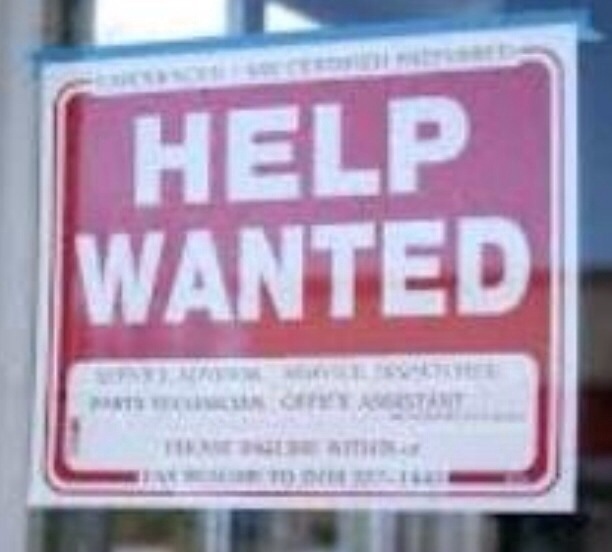
  • 20131221-163221.jpgHave you ever noticed job adverts in local shops? I do occasionally, it was how I got my first job delivering morning newspapers.

    Shop window adverts are a bit like ‘word of mouth’ and ‘friend of a friend’ recommendations, they can appear a bit outdated in the modern digital world. They are however very much part of the reality of everyday life, particularly outside of the mainstream corporate world of the private and public sector.

    They can be informal, unstructured and sometimes a bit quirky, which I think is fine. The local high street needs to offer something different from the out-of-town generic ‘Anytown’ shopping experience (staff included).

    One question though, how do you increase the chances of the ‘right person getting the right job’, particularly if all you rely on is a chance encounter with a handwritten advert in the street? Well, here is a fantastic example of someone improving the ‘right person, right job’ chances, with some imaginative use of Twitter.

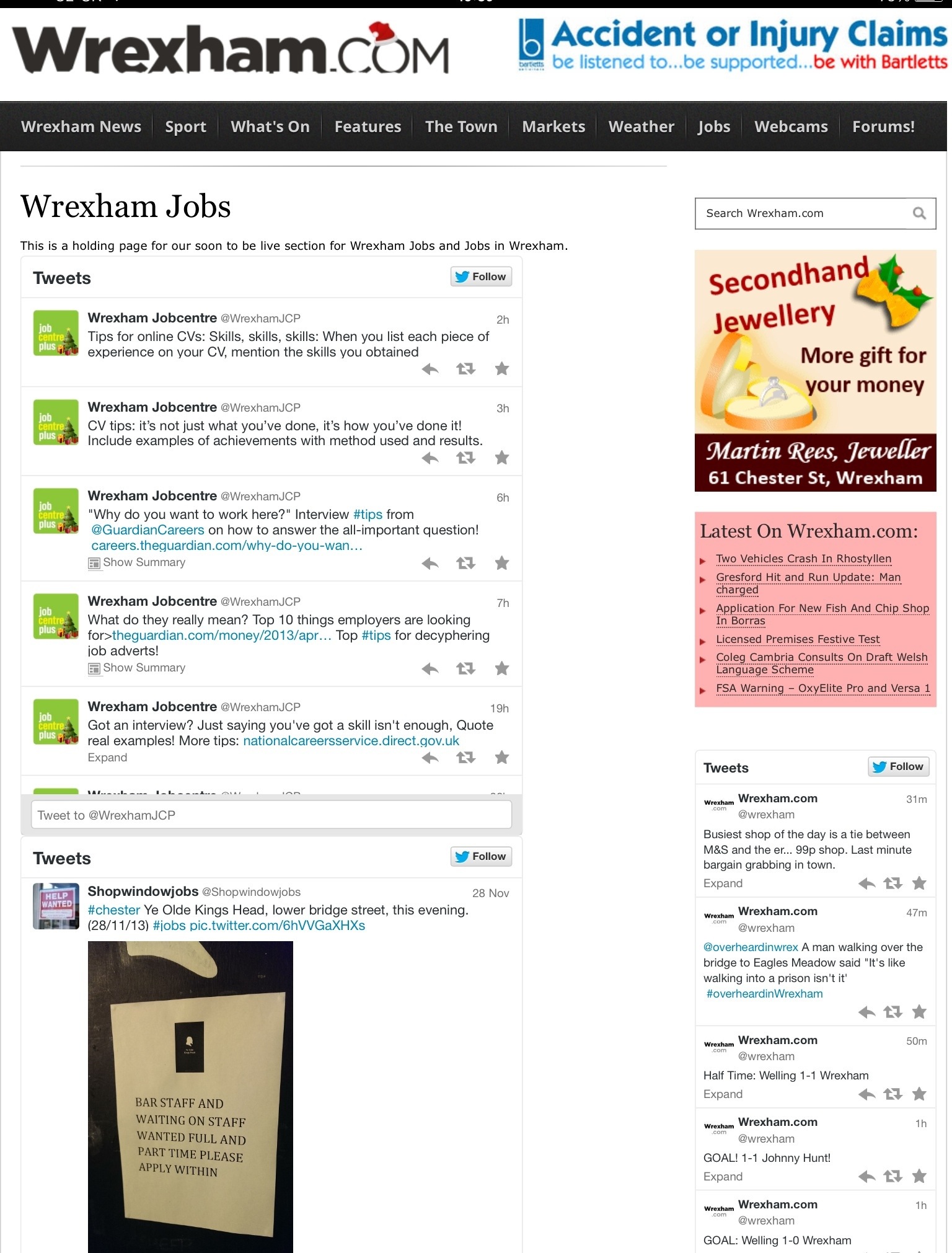
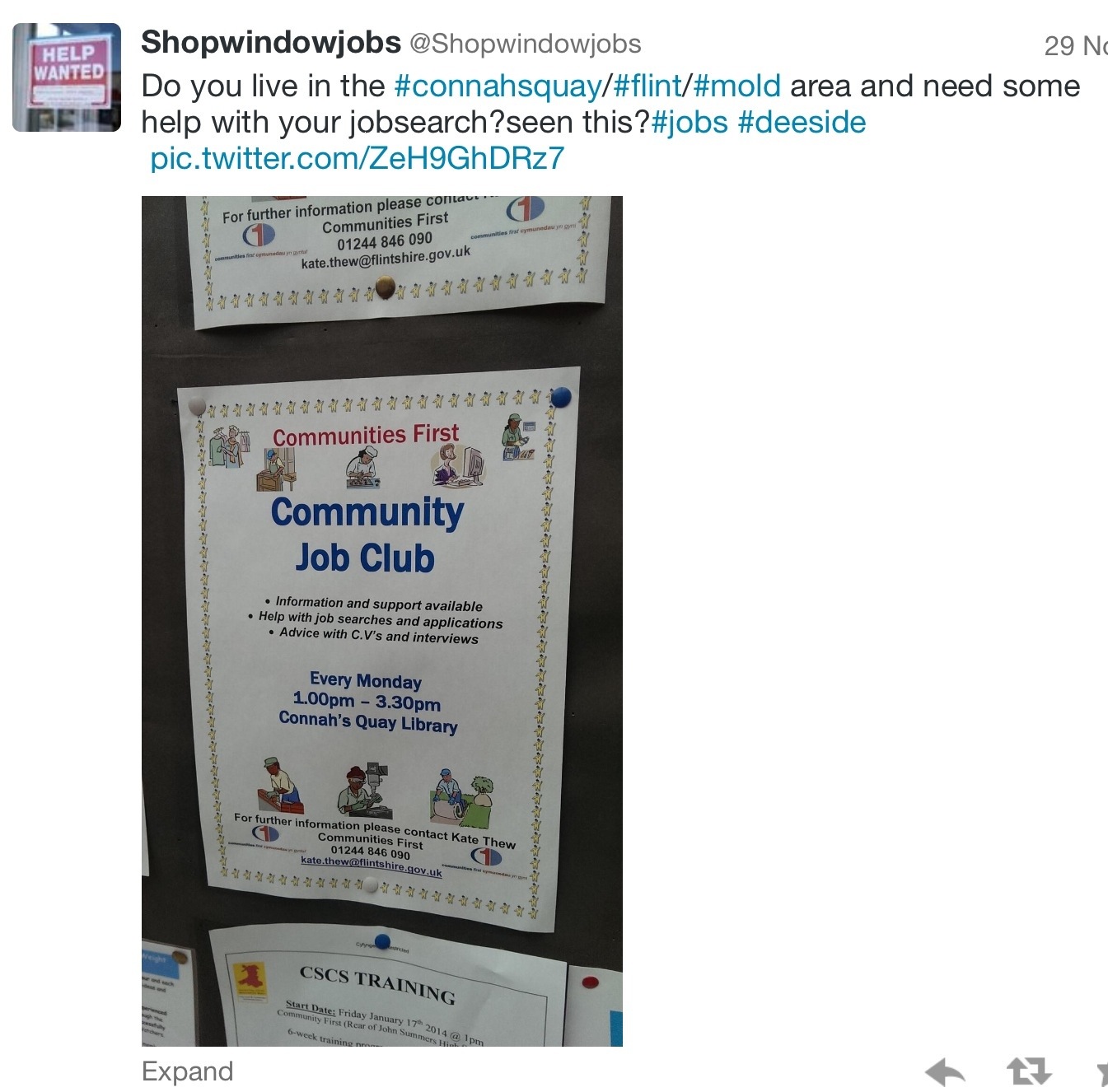
    @shopwindowjobs.  Handwritten job adverts, Twitter and Tom.

    This is an astonishingly straightforward tale. “Promoting jobs directly from shopwindows and jobfairs across North Wales and beyond”.

    • Take one enterprising individual (Tom), with an interest in the community and ’employment’,
    • During his lunchtime and other trips locally, Tom looks out for job adverts in shop windows,
    • Tom photographs these adverts and posts them on the Twitter account he has created @shopwindowjobs,
    • Let Twitter share these images of job adverts far and wide, so that the right person can find the right job.
    • Brilliant!

    This is where it gets even better.

    The clever people at the local online news site, wrexham.com pick up Tom’s @shopwindowjobs Twitter stream and put it on their jobs section.

    Now, wrexham.com gets well over half a million views every month, mostly from people in the Wrexham and North Wales area. Not all of them will be visits to the jobs page, but there is a much higher chance that those photographs taken by Tom will be seen by the right person for the job.

    Result! A very low-cost method of spreading information across a huge number of people. From handwritten adverts, to digital photographs, to Twitter and probably a bit of conversation at the end when a friend or relative tells someone else, “Tidy la’, have you seen this job” (in a Wrexham accent).

    @shopwindowjobs on the wrexham.com jobs page
    @shopwindowjobs on the wrexham.com jobs page

    What is there not to like? 

    Imagine if there was a network of people voluntarily posting shop window jobs on twitter for towns, villages and cities across the UK?

    That’s got to be a helpful way of getting people into employment, helping business, allowing people to do their bit to support the local community, and best of all, it costs virtually nothing.

    Well done to Tom, I really hope @shopwindowjobs gets people into jobs they enjoy. I also hope he gets some recognition for his imagination and enterprise.

    Finally. I suspect my friends from the Communications Professionals world would call this ‘multi channel communication’ (doing lots of different things for the rest of us). There are lessons to be learnt that extend beyond this jobs and recruitment example. If you have a specific piece of information, how best can you get this to the people who need to see it, who might be located anywhere in the local area? Could you do it using easily available digital tools and an enthusiastic individual? How might this work if for example, the information was about promoting better health or providing care? Plenty to learn from Tom I think.

    So, what’s the PONT?

    1. Many people have very interesting and useful ideas about the jobs they do.
    2. Creating an environment where these ideas can be developed and tested is necessary to encourage more ideas.
    3. @shopwindowjobs is a great example of what can be achieved, at virtually no cost (with some help from wrexham.com).

    And it’s not just jobs, here is a link to a Community Job Club in Connah’s Quay.

    20131221-163158.jpg

  • 20131215-211142.jpgPlease excuse me while I have an ‘Emperor’s New Clothes’ moment.

    Complex, or ‘wicked problems’ cannot be solved by the simple process of picking up ‘best practice’ from one area and ‘ruthlessly’ enforcing it the next. Simple approaches to complex situations just don’t work (It’s worth a look at the definition of wicked problems for some context on this).

    Likewise, expecting to take a pilot and scaling it to ‘mainstream’ is just as challenging. There, I’ve said it…. The Emperor of “Pilot Projects and Scale Up the Good Ones” ….. has no clothes on.

    Pilots are rarely run as experiments under controlled laboratory conditions.

    Just to explain some of my logic; achieving the same results in two different places is possible, if you are running an experiment under laboratory conditions.

    The sort of things you are looking for are: completely similar staring conditions, variables controlled or kept to a minimum during the experiment, high levels of predictability and changes that can be explained. Same starting conditions = Same outcomes (hopefully).

    Well, as far as I’m aware, most of the wicked problems in public services don’t have that sort of controlled ‘laboratory experiment’ feel to them. Things get more complicated when you throw in some ‘pesky people’, who don’t behave in a predictable ordered manner (and that’s just your staff).

    So what has this got to do with History* and  Scaling up Pilots?

    As far as I can understand, the process of scaling up successful pilot projects (experiments) is just the same as applying ‘best practice’ as an improvement method. There are very many challenges and pitfalls, which aren’t ‘simple’ to deal with. There is a lot to learn from the experiences of trying to scale up pilots.

    Recently I followed a twitter stream (#intergrationpoineers) and slideshare presentation from Helen Bevan who was speaking at a gathering of NHS Integration Pioneers. The Pioneers were trying to build a learning community to tackle some of the complex challenges around the integration of Health and Social Care.

    Helen’s slides very helpfully pointed out  that there was a long history of pilots/pioneer activities that hadn’t quite managed to ‘scale up’ or go mainstream in the NHS and Social Care. I counted about 24 examples on slide 17. I think it is good to be reminded about what has happened in the past.

    We are all prone to a bit of ‘loosing the corporate memory’ of things that didn’t quite work. The whole area of learning from failure is something I have written about previously. The learning from Helen’s research into ten years of “pioneer programmes” is beautifully summarised in this slide (this is the *History bit I was referring to).

    20131215-211124.jpg

    Three key points stand out for me in this slide:

    1. Change is highly context specific;
    2. Emotional connection is necessary for people to accept something new; and
    3. Pioneers don’t tend to look beyond what they are doing in their own pilot.

    Where are the solutions?

    I will be following the progress of the Integration Pioneers with great interest over the next few months. Helen offered a series of approaches to help the Pioneers build a learning community in the rest of the presentation. These focussed upon a principles of ‘Open Innovation’ and Co-creation, link to the slides here.

    The principles of the approach feel right, and by coincidence came up in discussion at the Connected Care Camp (#psicare) organised by Shirley Ayres the following weekend.

    For me, the key points from both events are:

    • Invest in knowledge transfer. Lots of pilots are funded to do the core work, but not funded for learning and the sharing of knowledge. It is a cost that needs to be recognised;
    • Teach people how think and to solve problems, not apply a ‘text book solution’ that has been developed elsewhere;
    • Accept that some pilots will fail. Learn the lessons and share them; and
    • Involve diverse people, particularly those who are concerned with sharing knowledge. In a recent post Paul Taylor referred to them as ‘SuperConnectors’.

    So, what’s the PONT?

    1. Applying ‘best practice’ only works where situations are exactly the same (this doesn’t happen often in complex public services).
    2. There is a lot to be learnt from previous attempts to ‘scale up pilots to mainstream’. Recovering some of the ‘lost corporate memory’ would be helpful.
    3. Never underestimate the importance of emotional connections if you want people to accept a new idea.

    Picture Source: Helen Bevan slideshare. Link above

  • 20131208-211037.jpgImagine this is a low rent version of the television quiz show QI.

    In 5 seconds tell me ‘which is the odd one out?’ (there’s a picture to help you)

    • Open Data.
    • Age UK Cheshire.
    • Cheshire Fire and Rescue Service.
    • A Dementia Advisor.

    The answer is… None.

    None of these four things is the odd one out (its a trick question).

    What connects them is the fact that they have all combined beautifully to provide an excellent example of what Shirley Ayres calls connected care.

    The ‘surprising’ Age UK Cheshire. I learnt about what was happening in Cheshire at the Connected Care Camp (#psicare) organised by Shirley Ayres, last weekend in London. Very briefly this is what is happening:

    • The NHS in the Cheshire area share certain patient information with some carefully chosen partners.
    • One of these is Age UK Cheshire, a charity committed to making later life a fulfilling and enjoyable experience for all older people in Cheshire.
    • Age UK Cheshire take the NHS data and combine it with other open data sources. This allows them to identify the older people in Cheshire who might benefit from the valuable services they offer.
    • They then direct their scarce resources towards the people where they can do most good, with things like; falls prevention, health and wellbeing support and dementia advice.
    • Evidence from other intervention activities similar to this shows that it is a highly effective way of helping people remain active and independent in their own homes, rather than languishing in hospital wards. Prevention is much better than treating symptoms.

    Bring on the Cheshire Fire and Rescue Service. This is where it gets even better.

    Way back in 2008 I heard someone from Cheshire Fire and Rescue Service talk about the work they were doing with the NHS and Local Government to share data and work together to support local communities. He mentioned things like ‘Flu and Fire’ events where the NHS were using local fire stations to hold flu immunisation clinics.

    Another of their initiatives was around home fire prevention visits where the Fire Personnel were providing health and welling advice to older people in addition to the ‘where to put the smoke alarm’ advice.

    It turned out that older people (probably a lot more if you ask me) were far more willing to let someone from the Fire Service into their house. They also appeared to be far more willing to listen to what Fire Officers had to say, than someone from the local ‘care’ sector. Fire Officers (in my experience) are hugely respected, trusted and in many cases cherished by people and local communities. Why not use this privileged position to help older people in those same communities?

    Have a read about the work of  SPRINGBOARD (link here) which details the interesting work Cheshire Fire and Rescue Service have been doing with Age UK Cheshire. Springboard must also win a prize for one of the most elaborate acronyms I’ve ever seen: Starting a Proactive Response, Introducing New Gains, Benefitting Olderpeople And Reducing Dependency. Genius!

    Who wouldn'welcome this lot into their home? Who wouldn’t let this lot into their home?

    What about the Dementia Advisor? If you what a bit more evidence of incredible joint working, have a look at this job advert. It is for a Dementia Advisor employed jointly between the Cheshire Fire and Rescue Service and Age UK Cheshire.

    There’s definitely no ‘odd one out’ amongst this partnership. However, if you had asked me to think of how organisations might work together around dementia I would have struggled to have come up with this combination. Imaginative solutions very often come from the people who are close to the situation and deeply understand the context.

    Back to the Future. Things have come a very long way from some of the attempts to improve data sharing I was aware of back in 2008. Open data wasn’t a phrase you heard much of in public services back then, and there’s still a long way to go.

    There’s plenty more happening in Cheshire that I’d like to learn about, hopefully there will be more to share about this over the next few months. This is just an early post to help maintain the momentum following the Connected Care Camp. It is well worth looking at Shirley Ayres blog and #psicare on Twitter to see what others have been writing.

    Thank you to Ken Clemens the CEO of the ‘surprising’ Age UK Cheshire for talking to me about this.

    So, what’s the PONT?

    1. Prevention is a much better way of delivering public services that treating the symptoms.
    2. Some public services are highly trusted and cherished by the community. Why not build upon this trust to provide even more help?
    3. Sharing data can have incredible unforeseen consequences. Imagine what fully Open Data could do?

    Picture Source:  Cheshire Fire and Rescue Service and Age UK Cheshire websites

    Open Data: http://en.wikipedia.org/wiki/File:Open_Data_stickers.jpg

    Fire Personnel. Fireman Sam of course. http://www.bbc.co.uk/wales/arts/sites/children/images/fireman-sam_01_446.jpg