• 20130221-115930.jpgI wish I’d thought of that.

    It was actually said by Jon Beech (@_jonb) on twitter and sparked a conversation about how senior officials could test the ‘lived experience’ of service users by trying to access their organisation’s website using a mobile phone. It’s been rattling around inside my head for a while and found its way out in the surroundings of a WordPress Users Wales meeting this week on responsive design.

    I knew this was an important point when I first read it, and this is how it makes sense to me after the meeting. A few factual statements first:

    • People use websites to find out what services are delivered by organisations;
    • For large parts of society the Internet is the primary route they use;
    • Many people are using mobile devices (mobile phones, tablets etc) to access the Internet;
    • The percentage of people using mobile devices to do this is continuing to increase;
    • Many websites have historically been designed to be viewed from a desktop or laptop computer; and
    • Viewing a website designed for a large desktop screen, on a much smaller mobile phone screen can be a real hassle (go and try it out for yourself).

    This is was why I was listening to James Cryer talk about responsive design at the WordPress meeting. In essence, responsive web design is about how websites are ‘responsive’ to the device on which they are viewed. The way that content is displayed will change to ensure that the reader has the best possible viewing experience for the size of screen they are using. This isn’t just about getting smaller (desktop to mobile), James pointed out that getting bigger (desktop to large screen TV) also offers challenges.

    Using responsive design is helpful if you want your service users to understand what your organisation does. The easier it is to find and read the content on your website, using whatever device people choose (increasingly likely to be a mobile phone), the better it is for everyone.

    So, why should this matter to your average CEO?

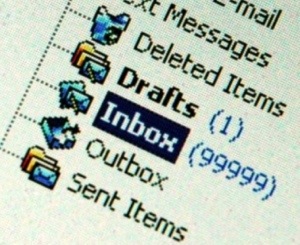
    In the busy life of a CEO it is going to be difficult to ‘go back to the floor”, visit every department or take part in a ‘mystery shopper’ exercise. However, trying to access one of your services using a mobile phone is something you could do in a spare 5 minutes waiting for a train, sitting in a taxi or quietly in a senior management team meeting. This straight forward exercise would put you directly in the shoes of service users, a sort of virtual mystery shopper exercise. If your website isn’t responsive, I wonder how it will feel? It is a relatively low effort and possibly high impact activity, why not have a go?

    Back to the WordPress responsive design ‘live demo’ session. Someone suggested it would be interesting to see if there were any good examples of responsive public sector websites in Wales……….. errrr….right.

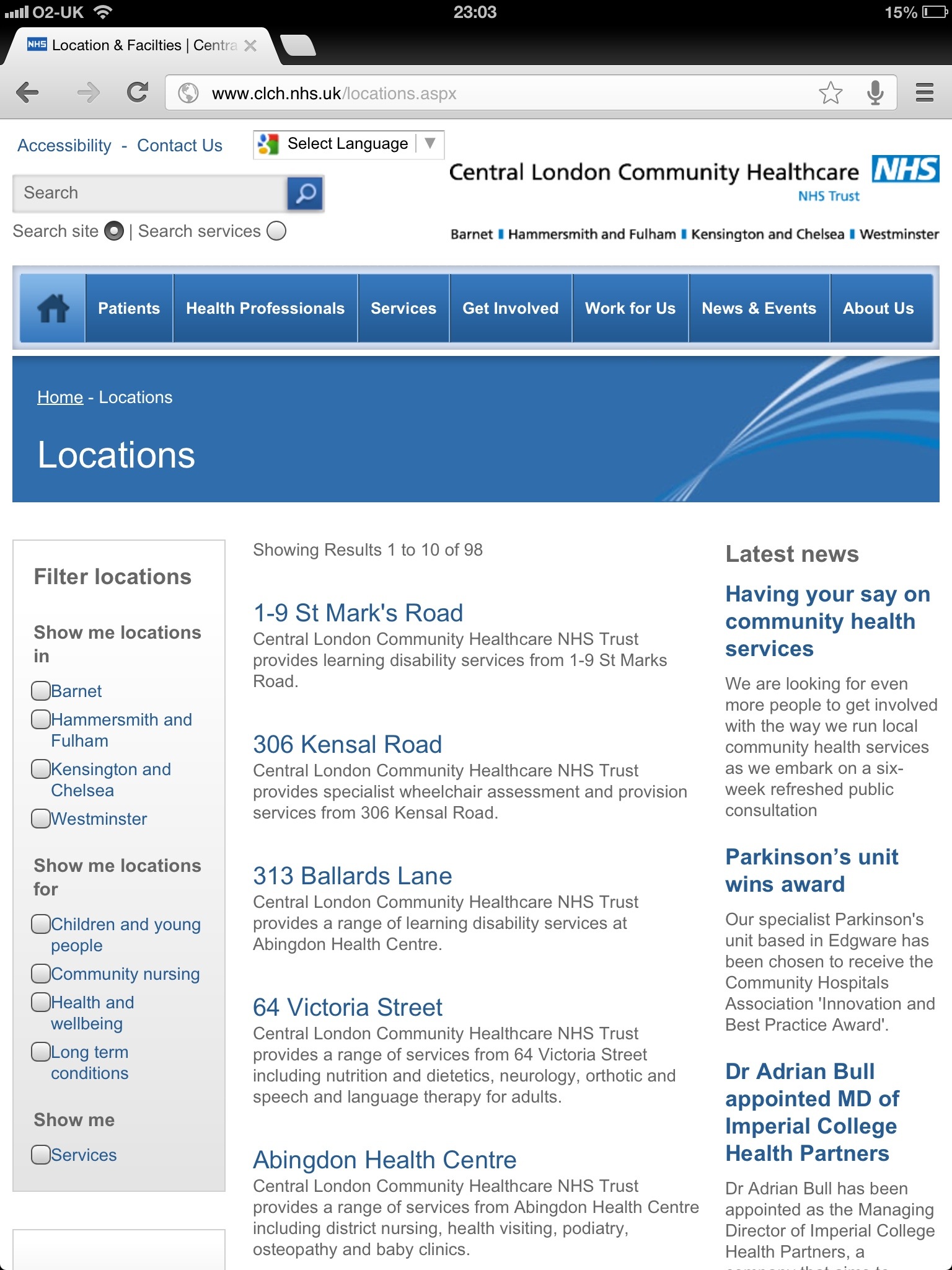
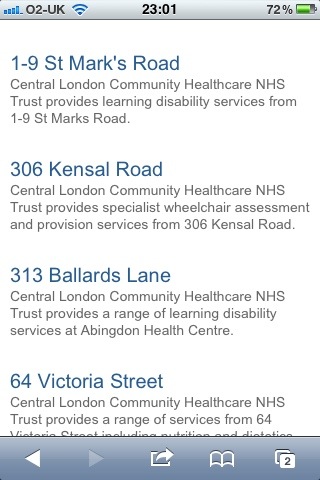
    Anyway, have a look at one we found for the Central London Community Healthcare NHS Trust. I’ve included a few screen shots of the site on a tablet and a phone. The point to note here is the location of clinics and other facilities is responsive and works brilliantly on the small screens. Just what you need if you are using a mobile phone and need to find the location of a facility. Interestingly the responsive elements of this site were developed involving someone who that was at the WordPress meeting and works in Wales, Craig Cartwright at precedent.co.uk. Nice one!

    So, what’s the PONT?

    1. The move towards greater use of mobile devices means that websites need to be designed with this in mind.
    2. Responsive design is a way of changing web content to fit different devices and make it easier to read the content.
    3. Checking services using only a mobile phone would be a cheap and effective method for CEO’s to do some virtual mystery shopping, and see things from the perspective of a service user.

    Thanks very much to James Cryer for an excellent presentation at the WordPress Users Wales meeting. You can pick up James’ presentation here. http://www.slideshare.net/jamescryer/rwd-wordpress

    Picture Source: This looks interesting. North Staffordshire Combined Healthcare NHS Trust Mystery Shopper Programme. http://www.combined.nhs.uk/ourservices/Pages/shopper.aspx

    Explanatory leaflet available here: http://www.combined.nhs.uk/dc/Documents/Mystery%20Shopper%20faqs.pdf

    Central London Community Healthcare ‘locations’ viewed on a tablet, followed by the same information on a mobile phone, try it out yourself.
    20130221-115924.jpg

    20130221-115916.jpg

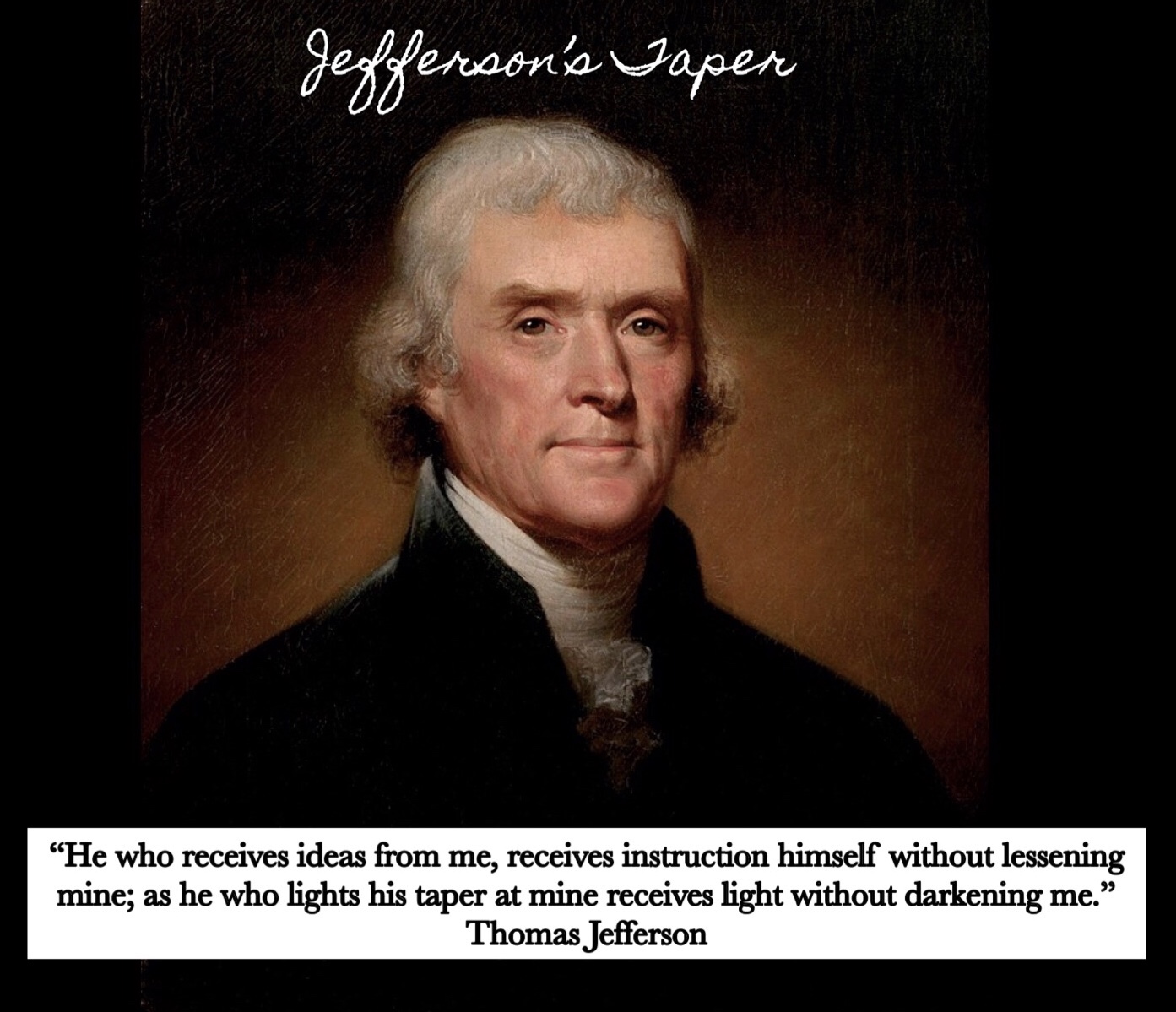
  • This is a real gem from 200 years ago that has a great deal of relevance today.

    Thomas Jefferson made the following reference to the ‘taper’ (a candle) in a letter to Isaac McPherson, August 1813.

    “He who receives ideas from me, receives instruction himself without lessening mine; as he who lights his taper at mine receives light without darkening me. That ideas should freely spread from one to another over the globe, for the moral and mutual instruction of man, and improvement of his condition, seems to have been peculiarly and benevolently designed by nature, when she made them, like fire, expansible over all space, without lessening their density in any point, and like the air in which we breathe, move, and have our physical being, incapable of confinement or exclusive appropriation”

    The full letter (available here) discusses the merits of the patent system and was part of a debate around how innovation was being restricted by perceived controls over the exchange of ideas and knowledge.

    Two centuries on you could almost argue that we have reached a pinnacle in knowledge exchange with the development of technology that allows:

    • Instant global connectivity and collaboration;
    • Very low information storage costs;
    • The ability to quickly and easily reproduce exact copies of information;
    • Virtually zero transmission costs; and
    • Things Jefferson couldn’t have imagined such as webinars, videos, Skype etc.

    200 years on and Jefferson’s Taper description stands up as a reasonable explanation of what the Internet provides. Did Thomas Jefferson write the first specification for the internet?

    “…..ideas should freely spread….over the globe…, like fire, expansible over all space, without lessening their density in any point, and like the air in which we breathe …..incapable of confinement…..”

    One final thought, as important as the taper is, without the flame it serves no purpose. A single unlit candle produces as much light as a million unlit candles. I suppose the same is true of the Internet. Without data, information and ideas it’s just a jumble of wires and hardware.

    So, what’s the PONT?

    1. Many good ideas concerning knowledge exchange have been around a very long time.
    2. A taper without a flame is of little use. The flame is necessary to the taper as are ideas to the exchange of knowledge.
    3. Without data, information and ideas, Jefferson’s Taper and the Internet are just hardware.

    Previous Jefferson Post: https://whatsthepont.wordpress.com/2013/02/09/busmans-holiday-the-jefferson-memorial-wastewater-treatment-and-root-cause-analysis/

    Picture Sources: Jefferson Memorial, Washington DC, public domain

    Thomas Jefferson. Adapted and cropped from Official Presidential portrait of Thomas Jefferson (by Rembrandt Peale, 1800. Public domain, via Wikipedia.

    Interesting Links: Jefferson’s Taper Letter: http://press-pubs.uchicago.edu/founders/documents/a1_8_8s12.html

    Cardiff University Lecture on Jefferson’s Taper: http://www.cardiff.ac.uk/share/newsandevents/events/history/distinguished-lecture-jefferson-taper-and-the-future-of-books.html

    20130217-215526.jpg

  • 20130209-094238.jpgTo avoid any confusion with my friends I need to put something on the record:

    1. I did not take my wife on a visit to a wastewater treatment plant (sewage works) on our honeymoon.
    2. We had a lovely time camping in a second-hand tent at St Cast, Brittany, NW France.
    3. I did visit the Barbados Wastewater Treatment Plant – alone – whilst we were on holidays in the Caribbean a few years later (it was fantastic).
    4. I did visit several other wastewater treatment plants whilst overseas on holidays during the following years (they were also very interesting).
    5. Yes, this activity was associated with my job at the time so it could be labelled as a Busman’s Holiday, but my wife never came on any of the visits, she’s far too sensible (bet you are now thinking I’m a real catch……).

    Fast forward almost 20 years…….. Washington DC Hotel, family holiday with the kids.

    Me: “Come on kids, get ready, we are off to see the Jefferson Memorial”

    Oldest Son: “Ah yes, Thomas Jefferson, Third President of the United States, principal author of the Declaration of Independence, born 1734,  etc etc etc…… ” (He’s still talking)

    Wife: “Yes, it’s where Howland Blackiston from the Juran Institute filmed that classic video on root cause analysis, The 5 Whys.”

    Me: “Yeah, I really want to go and see if there are any spider webs left”.

    Younger kids: “Please can we stay here and watch Sponge Bob on TV?”

    Two points to note here:

    1. The 5 Whys video is a great one to watch if you are interested in root cause analysis and the 5 Whys technique. I’m not going to explain it and spoil things; I suggest you watch the 60 second video. By the way I did see plenty of spider’s webs at the Jefferson Memorial.
    2. This was a sublime moment when my wife and I were completely in tune and thinking about the same thing (that wasn’t kids related). We had both been exposed to the 5 Whys video during separate work activities and were genuinely excited about going to see the real place (well I was). A joint busman’s holiday, lovely.

    Fast forward to summer holidays 2013 (Back to the Future)

    It turns out we are going on holiday somewhere that doesn’t excite me very much. I’m not really a posh hotel sort of person. I’m not one to complain either, which is probably why I enjoy the hardships of cycling with my friend Geof. But I am someone who sees opportunity in even the direst of situations.

    Good news! The place we are going has some interesting industrial facilities nearby AND some wastewater treatment operations. Even better they are really good at continuous improvement and staff engagement. I know a few people in the country who may be able to arrange a visit for me (and eldest son, he can tell them all about Jefferson). I am truly excited about the prospect of this latest busman’s holiday; hopefully I can share my learning experiences in some future posts.

    It really is a bit like back to the future. My wife plans to go swimming with dolphins while I’m off at the industrial complex. I thought she did that in the Caribbean?….. whatever, roll on summer!

    So, what’s the PONT?

    1. There is opportunity for learning even in the most unlikely of circumstances.
    2. If you enjoy something it doesn’t feel like work, or a busman’s holiday.
    3. Having a few different interests to your partner isn’t such a bad thing.

    Busman’s holiday: Definition from http://en.wiktionary.org/wiki/busman%27s_holiday

    Etymology:  First recorded in 1893 in the UK. The idea is that a bus driver going off on a holiday, would take an excursion by bus, thereby engaging in a similar activity to work.

    Noun: busman’s holiday.  A holiday or vacation during which one does something similar to what one does as work

    Interesting links:

    5 Whys and Root Cause Analysis a the Jefferson Memorial http://www.oahhs.org/quality/lean-transformation/jefferson-memorial-root-cause-analysis.doc

    Why you need to ask Why? http://www.ideachampions.com/weblogs/archives/2011/05/some_years_ago.shtml

    Howland Blackiston Juran Institute video. The 5 Whys. http://youtu.be/IETtnK7gzlE

    Picture Source: Lego Bus http://www.google.co.uk/search?q=lego+london+bus&hl=en&tbo=d&source=lnms&tbm=isch&sa=X&ei=4QsWUYmcFufY0QXnsYDQCw&ved=0CAkQ_AUoAQ&biw=768&bih=929#biv=i%7C12;d%7C_0gRqkBD9u9ZTM:

  • 20130203-214349.jpgHere is something you may have encountered.

    Situation: A major problem with a service not meeting the needs of customers. If you don’t innovate you will be deeper in trouble or out of business.

    Answer:  Assemble a team of subject matter experts to promote innovation.

    Result: A deep focus upon improving what already exists but nothing very innovative.

    Why this happens is all perfectly reasonable and logical. You have a difficult, high risk situation and who do you ask to drive the innovation? Experts who have worked in this area before or someone with no experience in the field? Obviously you choose the experts, a trusted pair of hands. This is where problems can arise, people trying to develop a novel solution based upon what they already know. Would it be better to try something completely different?

    Here are two reasons why you might want to avoid total reliance on subject matter experts when you are trying to encourage innovation.

    Experts have patterns of how to do things. This comes from the process of how we become experts. I’ve mentioned this before in connection with London Cab Drivers and ‘The Knowledge’. Experts go through an extended process of learning, doing and understanding which fixes patterns in the brain and a certain way of doing things. When it comes to dealing with a new problem, experts will try to impose the best fit pattern based on what they already know. Breaking the influence of these patterns takes a huge conscious effort, almost like ‘un-learning’ what you already know.

    Knowledge is power. This might be a bit more controversial but not every expert is open to new ideas or happy to be questioned. You do see the occasional subject matter expert that will kill off all new ideas in case they undermine their status and power base. I mentioned this in my post about Idea Antibodies.

    So what can you do about it? It’s easy to say “be aware of your behaviours”, but how many of us actually do that, particularly if there are strong subconscious factors at work. Here are three suggestions I picked up from Dave Snowden at this seminar last week.

    Get Belbin Resource Investigators to run the Innovation Team. Have a look at the Belbin website on Team styles for a full explanation, but essentially Resource Investigators think that ‘someone else has the answer’. As a result they are prepared to listen to people, continually look around and borrow ideas from elsewhere. A bit of a Curious George and a desirable member of any innovation team.

    Introduce Naive Experts. This is an expert from another field that can ask the naive questions, the neurobiologists who asks the question of the astrophysicist etc. This is one of the concepts associated with the coworking movement where conversations between unconnected individuals have created serendipitous outcomes.

    Send Experts ‘Back to the Floor’ (or better still a different floor). This is quite a radical suggestion and I suspect a few experts would hate this. The benefits of experiencing things from a different point of view might help disrupt a few of the existing brain patterns and help with accepting new ideas.

    There is a huge need for subject matter experts; I’m not saying we can do without them, quite the opposite. It is the balance of experts I am questioning. If there are too many of the same type of experts, all with deep knowledge and well-developed patterns of thinking about a specific area of activity it can be a problem. This can work against the introduction of new ideas, subconsciously or consciously.  If you don’t believe me have a look at this video about the discovery of Longitude. Introducing something different into the innovation team and allowing new ideas to flourish has to be a good thing.

    So, what’s the PONT?

    1. Experts are absolutely essential; it is the balance in innovation teams I am questioning.
    2. As with any other team the range of styles used by people needs to be considered.
    3. Naive experts and others need to be involved in innovation teams to ensure you get a diverse range of ideas.

    Picture Source: Curious George, the perfect member for your innovation team.

    http://coolspotters.com/movies/curious-george/wallpapers/43012

  • 20130127-152835.jpgRecently I’ve had a few interesting conversations around this exchange: Question, “What did Florence Nightingale do? ”

    Typical response, “She was a Nurse……(of course!)“. But….. “did you know she was also a mathematician? In the 1850’s produced a remarkable graphic showing the causes of death of hospitalised soldiers during the Crimean war. The graphic convinced Parliament to improve sanitary conditions in Hospitals. This lead to a huge decline in mortality in many areas. She was probably the mother of modern Infographics, and a life saver…”

    Graphical Presentation of Data (Infographics). Many years ago I was involved in a project to develop better ways of communicating numerical information, which we called, ‘graphical presentation of data’. We aspired to be like Florence Nightingale. I don’t think the word Infographic had been invented back then, so it’s nice to have something cool and hipster to describe what we were up to.

    An associate at the time was very concerned about the potential for the manipulation of data and its misrepresentation using graphics to “tell the story you want“. We never really made much progress and I think that some of the concerns that troubled us then are still evident. Some infographics I’ve seen are; biased, inaccurate, unethical or just badly put together.  If you want a useful (and entertaining) description of good and bad infographics have a look at halfblog.net and the campaign against crap infographics (more links at the end of the post).

    20130127-152849.jpgBack to Florence Nightingale. In the 1850’s she developed this graphic which was a circular histogram that she called a ‘Coxcomb’. The purpose was to illustrate the number and, more importantly, the different causes of deaths soldiers suffered during the Crimean War. The graphic illustrates difference between;

    • Red – deaths caused by wounds,
    • Black – deaths from other causes, and
    • Blue – deaths caused by diseases.

    It’s clear from the Coxcomb graphic that far more soldiers died from (preventable) diseases than from their battle wounds.  It’s not the enemy bullets that kill you, it’s the infection you get in hospital afterwards…

    The result was action to improve sanitary conditions which led to greatly reduced numbers of deaths.  This article by Understanding Uncertainty provides a detailed explanation and helpful animation of the graphic.

    The significance for me is that Florence Nightingale was able to communicate a very important issue through the graphical presentation of hard evidence; the data.

    It has been suggested that this approach enabled Politicians and Civil Servants to understand the issue and take action. They would have apparently struggled to understand if the data had been presented in the format of tables or other statistical reports used at the time.

    Clear presentation which enabled understanding was the key to the success of Florence Nightingales’ Coxcomb. It is worth remembering that this was created over 160 years ago, and today the 1857 Coxcomb still sets a standard that many modern infographics could aspire to. Florence Nightingale could in my view claim to be the mother of modern infographics.

    One last observation. Writing this post was partly prompted by reading this blog post  from Ayrshire Health, and a very brief twitter conversation with Derek Barron (@dtbarron) about nursing research.  The gist was around how some research is presented in a very academic way that can obscure understanding. That got me thinking about Florence Nightingale again, thanks Derek.

    I’m not aware of how much the mathematical research and data presentation capabilities of Florence Nightingale feature in modern nurse research and communication training. In my view you’ve got a very helpful role model.

    So, what’s the PONT?

    1. The graphical presentation of data (aka infographics) has been around for long time.
    2. It is an effective and quick method of clearly communicating complicated information, and can have a huge impact.
    3. Like any method of communicating there are good, bad and terrible examples of infographics and how to use them. Be careful how you use a powerful tool.

    Photo Sources:Florence Nightingale picture: http://en.wikipedia.org/wiki/File:Florence_Nightingale_CDV_by_H_Lenthall.jpg

    Coxcomb Graphic: http://en.wikipedia.org/wiki/File:Nightingale-mortality.jpg

    Useful Links: mostly from halfbog.net

    Good Examples.http://halfblog.net/2013/01/22/infographics-of-xkcd/

    Not so good. http://halfblog.net/tag/crap-infographics/

    I had to end this with a link to an Infographic. Here is the latest from Mashable showing the rise in Infographics: http://mashable.com/2013/01/26/infographics-marketing/

  • 20130120-115054.jpgIt’s funny how things turn out. Six weeks ago I wouldn’t have predicted I was about to embark upon writing a series of blog posts about email behaviours. Well I’ve done it, had a few surprises and learnt a lot. Now it’s time to pause and reflect.

    It all started with a post about how to deal with the email backlog on the 2nd January. The main message here was just delete everything; the important stuff will find its way back to you. Quite a radical suggestion, apparently, which attracted a few comments, included one which led me into the next post. The email ‘cc’ option is undermining the very fabric of society, in a dystopian 1984 manner, was also quite a radical thing to say. My logic was based upon the misuse of the email ‘cc’ option and its impact upon trust between colleagues.  A fair few people seemed to agree so I went for the treble with a mauling of the misuse of email read receipts .

    Reflecting on what has been my busiest and most viewed blogging period here are a few of the things I’ve learnt:

    • People are very generous in their support. This was in terms of the re-tweets/ shares and comments on the posts;
    • People are very balanced, thoughtful and positive in their comments. One of my anxieties when I started blogging was negative comments, thankfully I experienced none;
    • People are willing to share knowledge. Where I’ve missed something or posed a question, someone will offer the answer. At the end of the posts or in the comments you will see things where someone has pointed me in the right direction;
    • Technology is great, but if misused it can cause a few unexpected problems (like cc’s and read receipts), our behaviours are key. Final learning point;
    • You can never go wrong with a cat picture in your blog post. Obviously it needs to be relevant and tasteful. Gratuitous cat pictures are no good, which is why you need a top-notch cat picture consultant.

    That’s it for this stage of this stage of my campaign for better email behaviour but there are four things I would recommend you look at:

    1. The Email Charter, 10 Rules to Reverse the Email Spiral. Good behavioural advice, remember; “emails don’t send emails, people do…..”, we all need to do our bit.
    2. Should I send this email?  A fantastic Infographic on how to manage email overload. The cat picture email question is addresses here, along with some startling statistics on the impact of un-necessary emails on business.
    3. A prediction that emails will be dead by 2018 .  This post, by David Christopher at Stop!ThinkSocial explains the thinking behind the prediction that was made in 2008. Keep an eye on progress.
    4. Practical Action. Predictions are fine, but what we all want is some practical down to earth experience. It doesn’t get more down to earth than a social housing provider in the North West of England, Halton Housing Trust. Their Chief Executive Nick Atkin (@nickatkin_hht) is on a campaign to ban internal staff emails which you can read about in this Guardian article. I’ll be eagerly following progress.

    So, what’s the PONT?

    1. Inappropriately used technology can cause as many problems as it solves.
    2. Our behaviour is key, “emails don’t send emails (or do the other annoying stuff) people do”.
    3. People have been very generous, kind and helpful in response to my blogging and tweeting on this topic. Thank you.

    20130120-115101.jpgSecondary cat picture. Need to check which is most appropriate with consultant.

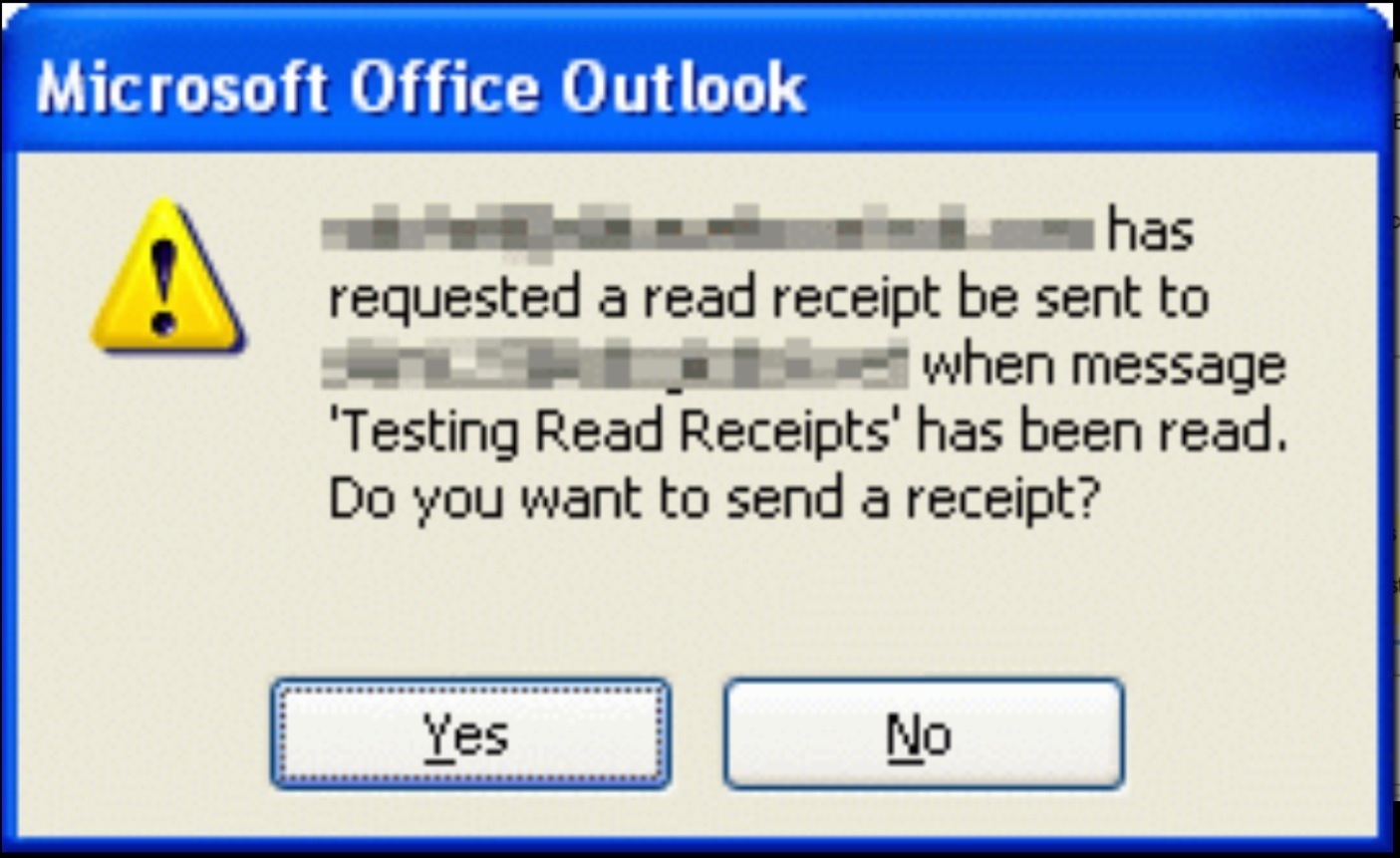
  • 20130113-111352.jpgDo email read receipts make your spirits soar…….? Not mine.

    Why do people send them? Many people I’ve spoken to have, like me, been on the receiving end of read receipt misuse. Pointless, irritating and questionable behaviour.

    I must admit that when I get one, particularly from repeat offenders, I’m sorely tempted to just delete the email without even reading it. Not quite the user experience (UX) emotion or response I’d imagine programmers, developers or the email sender were looking for.

    There are many reasons why people need to send email read receipts. These range from the well-intentioned and legitimate, right through to something more sinister like, a lack of trust between colleagues. Unfortunately the virtually effortless act of sending a read receipt request can lead to misuse and undermine trust (I’ve explained my logic on this previously). Here are some thoughts on why people send them, particularly in relation to colleague to colleague communication.

    Legitimate and Well Intentioned. This does what it says on the tin. This is a really important email you need to read. Possibly something that affects your terms of employment, has legal implications or involves money. It’s a bit like the ‘registered post’ package you have to sign for at the front door. A hassle to carry out, but necessary for your protection, and the person sending you the package. These situations are generally few and far between in colleague to colleague communication.

    Unconscious Ignorance. I’m being generous here. Some of the ‘read receipt’ emails I’ve seen relate to very innocuous interactions. Why on earth would someone require a read receipt for an invite to an optional lunchtime presentation? I can only assume that it’s because the sender has some email feature set to automatic and isn’t aware of the impact (or how to turn it off). At least they get to feel the pain of the response emails flooding back in their own, undoubtedly, massively overloaded inbox.

    Something More Sinister…… I Don’t Trust You! Unless the document falls into the same category as ‘registered post’ I really don’t see the need for the read receipt. The only other conclusion I can draw is that “you don’t trust me to read and act upon your email, so you want evidence in case you need to use it against me”. It’s a bit like sending a ‘cc’ to the boss of a colleague, a sneaky action that undermines trust between colleagues.

    The read receipt is undoubtedly a useful feature that has great value, in the right circumstances. However I’m not sure that the potential for misuse by people was fully appreciated. Unfortunately the misuse that is enabled by virtually zero effort (cognitive and physical) turns something useful into a problem. For those on the receiving end the impact can range from mild irritation to something much less desirable, the undermining of trust between colleagues.

    Interestingly the technical community can also feel the pain of their creation. Here’s an interesting story about an email migration project on exchangeserverpro.com. The project encountered 24,368 unread ‘read receipts’ held by a single person (the mind boggles at the state of that inbox!) This is a technical account but worth reading, particularly for the first comment……, “Read receipts have to be the most inane and narcissistic feature of email. They’re the first thing I disable when being setup under a new email system.” Nicely put….! Perhaps we should all get our IT departments to follow this advice, for the sake of trust between colleagues.

    I’ve not got much to add to that other than what I’ve said before, ’emails don’t send emails, people do’. Same for the ‘read receipts’, it’s all about how we choose to behave.

    So, what’s the PONT?

    • There are legitimate and well-intentioned reasons for sending ‘read receipts’. Think ‘registered post’, otherwise don’t use it.
    • The impact of a ‘read receipt’ is two-way. Think about what your request means for your recipient? Also, do you really want 24,000 confirmation emails back in your inbox?
    • It’s all about behaviours. We have choices about whether to send ‘read receipt’ or not; ‘read receipts’ don’t send themselves, people do.

    Photo source: Check out the Paul Cunningham post on exchangeserverpro.com

    http://exchangeserverpro.com/real-world-case-read-receipts

    Good News.
    There is something practical you can do to switch off the annoying read receipts.
    Here is an excellent link from @Darrenruddick, thanks Darren.
    http://blah.winsmarts.com/2010-7-Outlook_2010_-and-ndash;_Disable_the_read_receipt_annoyance.aspx

  • 20130103-075702.jpg

    Email uses 19th Century technology and 20th Century management practices to undermine trust. I’m not mincing my words here and you’ll need to follow my logic.

    Trust is one of the strands that hold people, communities and society together. People need to be able to trust each other, at an individual and group level to coexist and get things done. The alternative is some sort of oppressive dystopian society where everyone spends most of their time; seeking proof, scrutinising and watching what everyone else is doing. All a bit like George Orwell’s 1984…

    If you do something to diminish trust you undermine one of the strands that hold society together. My dislike of the email ‘cc’ option comes from this viewpoint.

    Before explaining, here’s a bit of the history. The abbreviation ‘cc’ stands for carbon copy (of course you already knew that). It comes from a process developed about 1806 aimed at assisting blind people to write. You can find out more in this article, The Exciting History of Carbon Paper! The expression ‘carbon copy’ came about as ‘carbon paper’ was used to produce duplicate copies.

    The widespread use of carbon copies appears to have taken off from the 1870’s. This was linked to the use of typewriters and the desire to have duplicates of important documents such as; receipts, invoices, money orders, financial records or legal documents. The significant point here is that these were ‘important documents’. It took effort to produce these exact copies that were used for very specific purposes.

    The introduction of other methods of copying documents from the 1950s (photocopiers etc) led to the inevitable decline of ‘carbon paper’ methods, so why does the term and practice still exist? Here is an interesting suggestion from this Mental Floss article that, “perhaps in deference to a technology they replaced, most e-mail programs allow the author to send a carbon copy, or cc, to a secondary recipient.”

    This raises an interesting question. The process of sending an email ‘cc’ is instant and virtually effortless. There is little of the thinking process, physical activity or time delay that would have been required to produce a typewritten carbon copy. Is the email ‘cc’ option an example of technology solving one problem while creating another, the undermining of trust?

    Let me try and explain in terms the bad email ‘cc’ behaviours I think undermine trust. I mentioned in this previous post about email overload. Please note that these observations focus upon world of internal, colleague to colleague emails which seem to burden most large organisations (check out this Infographic for details).

    Bad ‘cc’ Behaviours that Undermine Trust:

    • Look how busy I am. Someone who copies everyone into low value or pointless emails, usually outside of office hours, or while on holidays.
    • Look how clever I am. This involves pointing out flaws or problems, and letting everyone know via ‘cc’. These can range from spelling or grammar errors or something more significant.
    • I’m Just Covering My Back. By using the ‘cc’ option, with as many recipients as possible, some people think they have reduced a risk. More like ‘reduced the risk to themselves’ by trying to spread responsibility.
    • Your Boss Needs to Know You Have Messed Up. A bit like ‘look at how clever I am’, with a sinister twist. The recipient might (hopefully) get punished as a result, or at the minimum look bad in front of their boss.
    • I Don’t Trust You To Do Your Job. I am going to ‘cc’ your superiors to make sure you do what I’m telling you. This is coercion and threats in any other language, but sadly seems to be almost acceptable through email.

    All of these behaviours amount to an attack upon trust between people. The ‘cc’ option is a very easy way of eroding trust at the touch of a button. It’s a vicious circle. Start by sending that ‘cc’ to show everyone how hard you are working over weekend and before long it will be ‘cc’s colleague’s superiors to intimidate them into doing what you want. Where does that leave trust between colleagues, teams, organisations and society itself?

    It’s not just me who doesn’t like misuse of the ‘cc’ option, are plenty of others. Have a look at this Greg Savage post which mentions ‘The cc King’ and ‘The cc Clown’.

    Finally……. Don’t even get me started on those automatic requests you get to confirm you have received an email…….

    So, what’s the PONT?

    1. Sometimes technology can create as many problems as it solves. Carbon Copies are a 19th Century idea that has become enabled by 21st Century technology.
    2. Behaviour is key. Emails cc’s don’t send themselves, people do.
    3. Think about what you want to achieve before you use the email ‘cc’. You don’t have to use the ‘cc’ option, so don’t.

    For good advice on general email behaviour check out the emailcharter.org

    20130103-075713.jpg

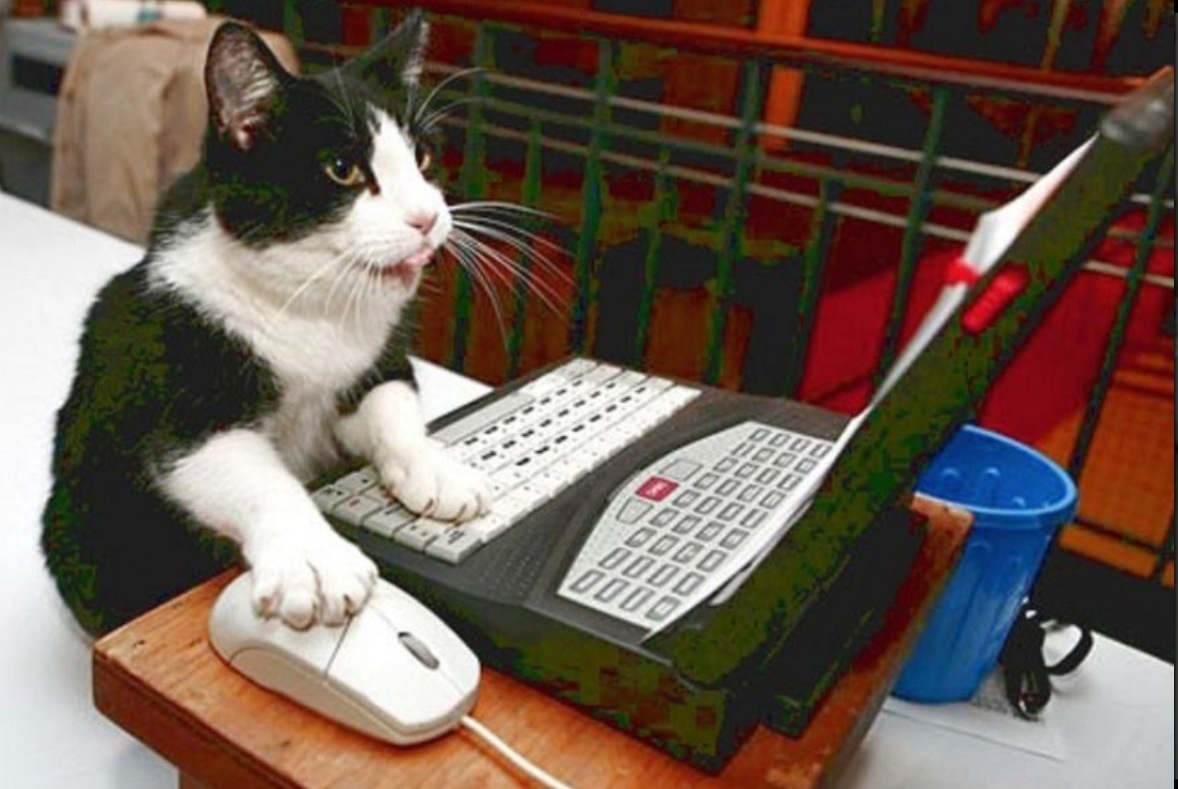
    Haven’t had a cat picture for a while. Here is one for Helen Reynolds who commented about cc’s in the earlier post and prompted this one. Thanks Helen.

    Photo caption via Andy Ball (@ball_localgovt)
    “damn these old fashioned typewriters….. Where’s the mouse?”

    Picture source: http://evandashevsky.com/2012/02/writing-update/

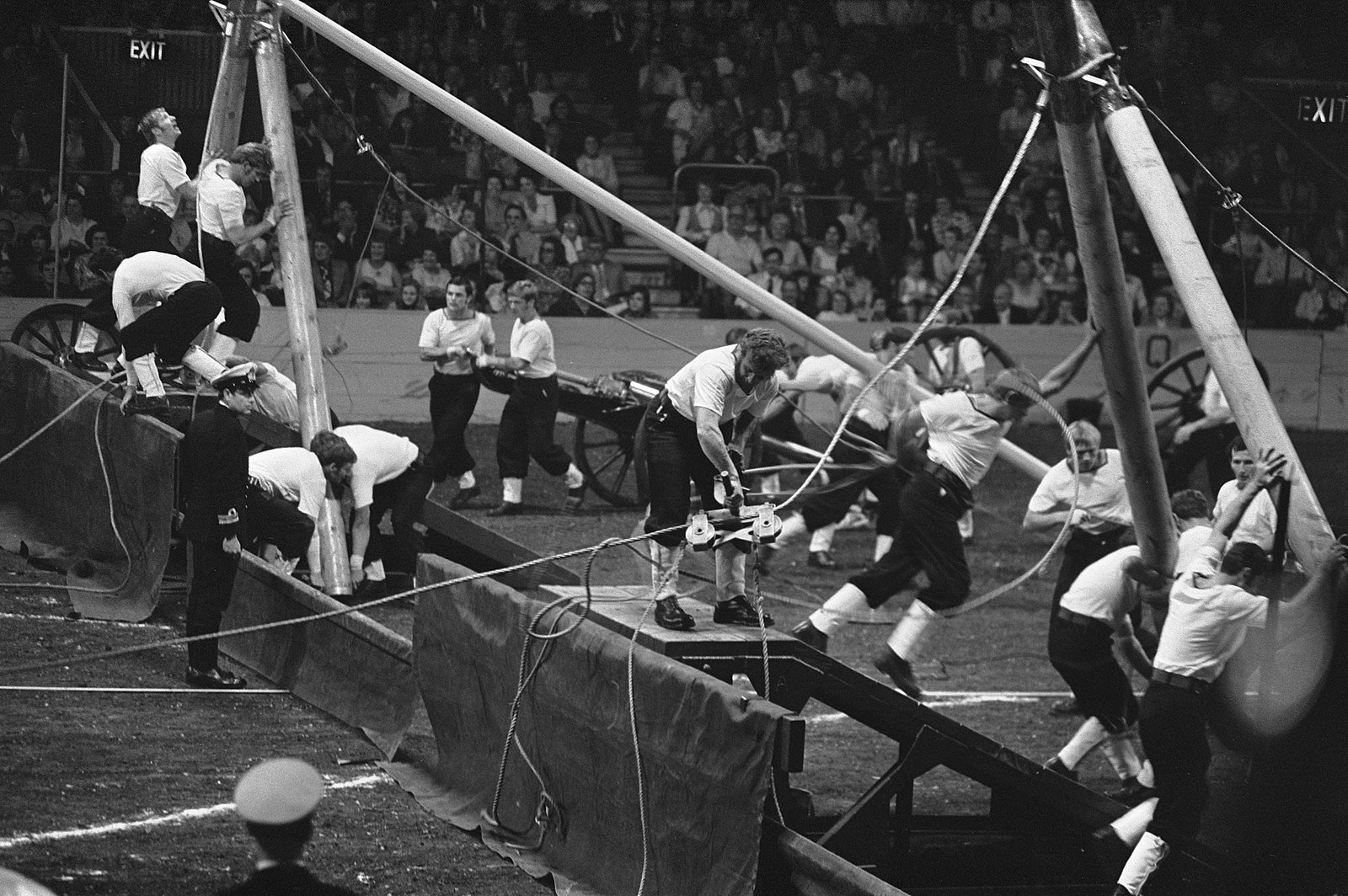
  • Royal Navy Field Gun. A lesson in incredible teamwork, motivation, commitment and missing fingers.

    Back in about 1989 I went to Portsmouth on a rugby tour to play against a Royal Navy Field Gun Team.

    Some of our team (Whitchurch Hospital Cardiff RFC) were on sabbatical from the Royal Navy, and gave the following stern advice the evening before the game, “watch out for the Field Gun players with missing fingers… they have no sense of fear, don’t feel pain and are absolutely committed to winning”. “Whatever you do, don’t pick a fight with them!”

    This was obviously expressed in slightly more colourful language at 10pm in the bar, and I’ll leave it up to your imagination as to what was actually said.

    Imagine my joy the next day to discover my opposite number had a missing finger on his right hand (and some missing teeth, but that’s pretty routine for the front row). He wasn’t the most technically effective Tighthead Prop I’ve ever played against, but probably the strongest and liveliest. I can’t actually remember who won the game, but we certainly lost the post match ‘entertainment’ by several nautical miles.

    I never managed to sum up the courage to ask my opposite number why he was missing a finger, but this is the story that was told by my Royal Navy teammates… Before you read on have a look at this video of the Field Gun event from the Royal Tournament in 1999.

    Field Gun has a remarkable history well worth reading about, going back to the siege of Ladysmith during the Boer War in 1900. The competition developed from this and involved two teams of 18 Royal Navy personnel transporting a field gun plus ammunition carriage around an obstacle course. That sounds reasonable until you actually see it in action.

    With 900 pound gun barrels and other chunks of metal flying through the air and crashing together it is terrifying. It is an incredible thing to watch in terms of the individual skills, commitment and how they all fit together perfectly as a team to deliver the end result.

    Back to the missing finger. The story goes that during one of the ‘runs’ of the assembled field gun it wasn’t unknown for a pin that secures the wheel on the axle to go missing. To avoid losing the race one of the highly committed team members would insert a finger into the pin hole, keep the wheel on the axle and get the team across the line to victory.

    The inevitable action of: metal + finger + metal + frantic movement = bye-bye finger.

    This of course could have been an urban myth. There was no YouTube in 1989 for me to check, though having recently  found this video of Field Gun training I’m quite glad I didn’t see what I was about to face. It’s fairly obvious that you could very easily lose a finger, or sustain any number of other dreadful injuries during just about any part of the exercise. The story did however make for excellent motivation and keep me on my toes throughout the rugby game.

    Field Gun doesn’t exist nowadays in the Royal Tournament format shown in the 1999 video. I’m not sure of the reasons why, but defence cuts have been suggested and I bet health and safety probably had something to do with it.

    As an example of astonishing levels of teamwork, motivation, commitment (and missing fingers) Field Gun is an incredible example. I’m not sure how you would replicate any of this in the current climate, or in non-military organisations, but it’s worth thinking about.

    One final thought. Imagine Field Gun as an Olympic sport?  An interesting alternative to beach volleyball…

    So, what’s the PONT?

    1. Fear can be a great motivator, it worked for me.
    2. The smallest action within a team activity can have a big impact on the overall result. A dropped axle pin could result in losing a wheel, the race and a finger.
    3. People will do astonishing things if they are highly motivated and committed to the team objectives.

    Links to picture and videos of Field Gun:

    Picture. Royal Tournament, Earls Court 1975, Source https://commons.wikimedia.org/wiki/File:Optreden_van_de_Royal_Navy_Field_Gun_Competition,_Bestanddeelnr_928-0527.jpg

    http://youtu.be/32s4qCCFnmk 1999 Royal Tournament Field Gun Competition. This is an astonishing spectacle. Amazing teamwork.

    http://youtu.be/-wmOv5TCE9U Portsmouth Action Field Gun Team Recruitment video 2010.

    http://youtu.be/eRY-wiAkpNE Field Gun Interviews. Described as the most dangerous team sport in the world. The training looks terrifying.

  • 20121227-154637.jpgSimple. Just select all messages sent since the 24th December and press DELETE. Any issues that are still important will magically reappear in your inbox around the 7th January. The rest will have disappeared in a puff of smoke to wherever they belong (it is Pantomime season after all).

    Apparently everything will be just fine. To reassure you I heard some ‘big time’ speakers tell these two stories about how important people deal with their email overload.

    CEO ‘stops being the fire hose’. CEO sits down on long haul flight and spends 2 hours processing emails. CEO closes the laptop (with a sigh) and turns to the next passenger and explains that they have just learnt a valuable lesson. Amongst the 400+ emails that had arrived in the two days the CEO was offline, were several strings concerning internal ‘issues’. The CEO said that normally they would have intervened at about exchange number 3, made a decision, and then dealt with the fallout. Without being involved people resolved the issues themselves and email exchange number 6 was all about confirming this. The moral of the story was that things tend to sort themselves out naturally. Getting involved and ‘being the fire hose’ (as described in this Forbes article)  just escalates the problem.

    CEO ‘extends the holiday spirit’.  Exactly like the main suggestion, the CEO returns from holiday, deletes all emails and nothing terrible happens. All the important things resurface and the irrelevant information goes away. The moral of this story is, if this can happen to the emails you get when you are holiday, why can’t it happen every day?

    Both stories were told by very serious, important Business School Professors so they must be true. If you need any further assurance, search the internet for ‘how to deal with email overload’ and close to the surface you get lots of similar examples. This article Stop Email Overload from the HBR Blog Network offers lots of useful advice, including an insight that a clogged inbox may not actually be about email….. “If your organisation has ambiguous decision-making processes and people don’t get what they need from their colleagues, they’ll flood the system with email and meeting requests.” That sounds a bit depressing.

    There are absolutely mountains of good advice on how to manage email overload available on the Internet, lots of it linked to courses you can pay to attend. Some are even online where you get email updates about managing your email overload…… errrr…..right.

    Inevitably lots of the advice focuses on technology and process solutions, how to deal with the symptoms of the problem. Helpfully there is also advice on addressing the causes (see the useful links below). At the end of the day, colleague to colleague emails don’t send themselves. I’m a firm believer that ‘behaviour begets behaviour’ and you get what you give. So you don’t have to read all that stuff, here are my top five tips for reducing email overload (A Festive Gift).

    1. Don’t join in. The more you send, the more you get back.
    2. Erase the ‘cc’ option. There is so much wrong with this I don’t know where to start.
    3. Do nothing. Referred to as an ’email sabbatical’ in the upmarket online guidance. It’s amazing how much ‘urgent’ stuff disappears using this approach.
    4. Don’t be too helpful. I know that sounds terrible, sorry, but it works. Probably best reserved for the people who just don’t know when to stop bothering you.
    5. Pick up the phone (or walk over to talk to people). Amazing how much email traffic this makes redundant.

    Just to stress the point, ’emails don’t send emails, people do!’ I’d urge you to have a look at the excellent emailcharter.org and try to adopt some of the principles as a New Year’s resolution.

    So, what’s the PONT?

    1. Emails don’t send emails, people do. Sender and recipient behaviours are key to managing the backlog.
    2. Think about what you want to achieve before sending emails, the email charter provides some useful advice, and the Infographic below.
    3. Happy New Year. Please don’t get upset if I don’t respond to you emails, I’m not ignoring you; I’m just having an ’email sabbatical’.

    Useful links: my final festive gift, these are well worth looking at.

    http://www.slideshare.net/jlyman/email-overload-13506201 a really helpful presentation on SlideShare called ‘We’ve broken email and it’ time to fix us’.

    http://ansonalex.com/infographics/how-to-manage-email-overload-infographic/ a cool Infographic, ‘Should I send this email’. This has some startling statistics on the impact on business of useless emails.

    Picture Source: Some more useful advice via GigaOm http://gigaom.com/2011/06/17/reduce-email-overload-by-telling-people-how-to-work-with-you/

  • 20121223-150016.jpg
    Graphic: Laura Sorlava http://www.auralab.co.uk/. from a session with Dave Snowden

    I’ve just met an old friend who told me they had moved jobs because the old organisation was ‘sucking the life out of them’. As an ‘ideas person’ they were fed up of constantly having their ideas; dismissed out of hand, ridiculed or worse, buried in bureaucracy. They were getting out before their spirit was crushed and they became one of the ‘sheep’. Sounds familiar?

    With innovation and improvement (all fuelled by good ideas) being so high on the agenda it’s disappointing to hear this. Shouldn’t the ideas people be cherished and encouraged, not crushed and ridiculed?

    Here are some ‘ideas’ about how ideas are killed off in organisations, suggesting that this might a very deeply seated behaviour. Could there be an evolutionary response that pushes people (and organisations) down the path of settling for ‘best practice’ and the status quo? Sub consciously are most of us are resisting new ideas as a type of autonomic response.

    Blocking new ideas is an evolutionary trait. I touched on this in the post is best practice the enemy of innovation where I referenced an article, Innovation is not Best Practice by Alf Rehn from Manchester University. The article talks about us still being hunter gathers that rely upon the evolutionary advantages of sticking to best practice. To survive we know the ‘best’ place to catch Bison, the ‘best’ way to gather roots and berries and this is transferred into modern-day thinking. The majority of the time we stick to what we know. Established practice is what got us to where we are now, so why would we want to try out ideas that are new and potentially dangerous?

    img_6380

    Mavericks and Accidents are a source of ideas. This is a point made by Dave Snowden in this video about the discovery of the method for measuring Longitude. Ideas generated by Mavericks are frequently ignored by the establishment for a long period of time, before they become accepted.

    The role that established experts play in suppressing new ideas is significant. New ideas can represent an attack upon the power base of the experts (their expertise and knowledge) and the organisation. Dave used the analogy of ‘autonomic response’ by organisational ‘white blood cells’ killing ideas when he spoke at this event. Mavericks (like my friend) have a tough time in many organisations.

    This quote by Frank Herbert from The Dune books (and films) might be from Science Fiction, but is does sum things up nicely, who want to appear inept?

    Don’t Panic! Turning to what you might do about the organisational ‘autonomic immune response’ to get ideas accepted, here a few suggestions:

    • Pretend you’re not a Maverick. If the autonomic response doesn’t recognise you or your ideas as a threat, you might get past the white blood cell defences. This is quite a difficult position to achieve. There is always the risk you will ‘go native’, ‘get the life sucked out of you’, and become one of the sheep.
    • Use Immunosuppressant Agents. In the context of an organisation this might be strong leadership saying ‘all new ideas are welcome’. There are many examples of this working, but it takes time and commitment from the top.
    • Just Wait. It’s funny how once upon a time radical ideas, (for example using open source software) appear mainstream once the rest of the world catches up or overtakes the organisation.
    • Find a Host that accepts you. There are places that love ideas. For example Ricoh in Telford and other organisations who are Members of IdeasUK, a body which focussed on helping organisations to involve their staff in generating ideas and getting them implemented. The percentage of ideas being implemented in Ricoh was in excess of 80%, a fantastic example of an organisation that nurtures ideas and the people who come up with them.

    So, what’s the PONT?

    • An autonomic response to killing ideas could be a deep-seated in some organisations. The causes could be evolutionary or expert driven.
    • Recognising the organisational level of ‘immunity to new ideas’ would be helpful before embarking upon any improvement programme that depends upon ideas.
    • Pick your tactics carefully to get around the immune response. Sometimes it might require finding a new ‘host’ organisation (like my friend).

    Just one final thought, Zombie Organisations. Are these the places where the people who like to crush ideas need to move on to, or are the idea killing organisations actually already on their way to becoming zombified?

    Disclaimer: I know this post might upset a few organisations that are good at nurturing ideas. Please let me know of your good work in the comments.

    Picture source:  Graphic by Laura Sorlava of http://www.auralab.co.uk/. Created at this event with the Wales Audit Office, http://www.wao.gov.uk/assets/englishdocuments/WAO_DaveSnowden_sketchnotes_Auralab.pdf

  • 20121216-140255.jpgMy father in law once told me about how managed the mountains of mail that landed on his desk as the Head of a large High School. One of his routines was to drop all of the newsletters neatly into a box with the intention of reading them at the end of term. Mostly they ended up on the bonfire, unread. This was pre recycling days but I don’t think much has changed.

    This week I encountered several people who enthusiastically described how they were going to ‘change the world’ by sending newsletters (I’m exaggerating a bit, not like me I know). The point is that their passion for the cause, energy and commitment were not in doubt. Sadly though I felt their enthusiasm it was a bit unrealistic and miss-directed. Haven’t we been down the well trodden ‘let’s send out a newsletter and change the world’ path many times before?  Just to illustrate here are a few learning points from the week.

    There are apps to automatically remove newsletters.  I know I shouldn’t be surprised by this, but there are. Unroll.me is an app that does this under the banner ‘End Email Overload’. Here is a description of how Sarah Kessler reduced 271 subscriptions to 17 and packaged had them into a single email using unroll.me

    The underlying motivation seems to be that most newsletter subscriptions are a nuisance that should be removed from your email inbox. Something newsletter editors might want to think about?

    Prevention is better than cure.  There are plenty of people advocating the ‘just say no’ approach. If you search online for information on how to deal with email overload it’s not long before you encounter advice telling you not to sign up for email newsletters in the first place and un-subscribe from any you currently receive.

    The emailcharter.org has got some very helpful advice on how to prevent email overload, focused upon individuals taking responsibility for their actions. When it comes to newsletters I particularly like their ‘Join Our Mailing List’ button. This has a note next to it saying “Don’t Click This! “  Go and click it and see what happens

    Newsletters seem to have acquired the status of ‘problem’. Something that clogs up your inbox which you’ll never ever read.

    Paper newsletters don’t get treated any better. Saturday morning at home is time to sort through the week’s post. This week generated six newsletters that went directly from package to recycling bin without passing through the brain. OK, there were some things like the ‘Greyhound Rescue Shelter News’, but you get the point.

    The carefully crafted design, eloquently written content and cost of printing don’t count for much if the newsletter closely follows the junk mail into the recycling bin (I think I might actually take more in if I were glancing at them before throwing them onto the bonfire…..?).

    Good News, there is another way…….Podcasts.  While I was engaged in my Saturday morning chores I had a podcast playing.  This was the disruptive social care podcast from Shirley Ayres and Stuart Arnott. Listening to Shirley, Stuart and their guests is one my most useful learning experiences (it’s like Radio 4, but better….).

    This podcast is in a completely different league to newsletters and as it happens the guest this week picked up on the point. Richard Humphries, Senior Research Fellow at The Kings Fund made a comment along the lines of….  ‘the social care sector produces lots of outputs, reports, papers etc which he struggles to keep up with. However, he always finds time to listen to the podcast which provides a fresh perspective’ I think that pretty much says it all.

    Do have a listen to the disruptive social care podcast for yourself, it’s a great example of how to share knowledge. Even if social care isn’t your main area of interest, it’s surprising what you can learn.

    So, what’s the PONT?

    • Knowledge exchange is a complicated area where multiple channels of communication are possible. Knowing what works for your target audience is essential.
    • The trusty old newsletters (paper or digital) do get treated a bit like spam or junk mail. Something editors need to recognise.
    • Podcasts offer a fresh perspective which is very engaging for many people. The time will come when they are the ‘standard approach’ that the newsletter used to be.
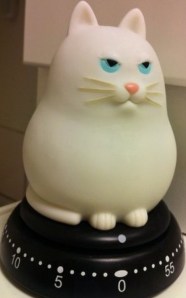
  • 20121207-072758.jpgI’m feeling very modern this week. I’ve upgraded one of the basics in my facilitation box, the cherished kitchen timer. Yes it was a clockwork cat, although it’s previously been a mouse and the inevitable chicken shaped egg timer. For me the timing device has been a very helpful facilitation tool, let me explain.

    Much of the facilitation I do involves lots of people presenting information or giving feedback. This requires a degree of organisation to make sure everyone has sufficient time to speak, nobody is excluded and we finish on time. Typically people are given a fixed time to make their presentation or give their feedback, and my job is keeping them to time.

    That may sound relatively straightforward but it can be fraught with difficulties. In the worst case scenario this is how it goes:

    • Participant “I cannot possibly give this presentation/feedback in 5 minutes. I need a least half a day“. Some people really don’t like boundaries and rules.
    • Others just stay quiet and ignore the rules anyway.
    • The longer time they have available the more they get sidetracked into irrelevant issues and repeat themselves.
    • The audience gets bored and fidgety.
    • As a general rule nobody ever, ever finishes early.
    • When you give the ‘times up’ signal, people ‘look daggers’ at you, even if they are just about to finish.
    • A fair number say, “I’ve just got a little bit more to finish off” and carry on regardless.
    • They then still ‘look daggers’ at you when they finish with extra time.
    • Some even go as far as complaining or make pointed comments about being harassed.

    The answer for me is the inanimate object. Something onto which people can transfer their angst and frustration, instead of me. The humble clockwork kitchen timer has made my facilitation days so much better. By following these steps I’ve seen some interesting effects:

    • Some people still complain about the lack of time upfront, they always do.
    • I place the timing device in clear sight of the presenter and move out of the way and watch what happens.
    • Most people will self manage their time by keeping an eye on the timer.
    • They tend to focus upon the important points and not get sidetracked too much.
    • The audience stay alert (after all it’s only 5 minutes).
    • They generally stop speaking when the ‘pinger’ sounds.
    • Most importantly, any angst or frustration they have is directed at the timer and not me. Hurray, result!

    That act of transference of frustration onto an inanimate object might have something to do with my modern upgrade to an app this week. Once again my clockwork timer had been accidentally damaged (sabotaged). I’ve been through dozens of them over the years.

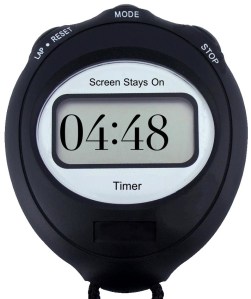
    This left me with one option; quickly download an app and display it in front of the presenters. I was worried this was a step too far. Would the inanimate stopwatch be a bit too inanimate? Does a clockwork cat have more appeal than an image of a stopwatch on a screen?

    The stopwatch image actually worked much better than the clockwork cats, chickens and mice ever did. The large screen, second by second countdown, instant reset and a nice loud ‘ping’ when time is up worked perfectly. I just hope that my tablet doesn’t end up on the receiving end of any presenter angst.

    So, what’s the PONT?

    • Structure and time boundaries are likely to remain a substantial part of facilitation in the world I occupy (the utopian dream of all-pervasive ‘open space unconferences’ is still a long way off ).
    • An inanimate object (countdown timer) is a good way of depersonalising a potentially difficult part of the facilitation process.
    • Apps are taking over the world. My cherished clockwork cat timer has gone forever.

    20121207-072748.jpgPicture: Jumbo Stopwatch app. http://appfinder.lisisoft.com/tag/jumbo-stopwatch.html

  • 20121202-193420.jpg

    This is actually about the game Battleships and not some sinister plot (probably by Cardiffians) to obliterate Newport in a naval bombardment.

    Last week I went to Newport to learn about agile project management from James Scrimshire of hurricanefour.com and got involved in a game of Battleships. It was at a Port80 event organised by all round good guy (and web strategy gun-slinger) Joel Hughes. The methodology for what we did can be found here on James’ site, and here is a link to James’ slides. This is what I took from a very illuminating exercise, thanks James and Joel.

    The idea behind the exercise is to demonstrate that when you are delivering a large complex project, small cycles where you repeatedly; plan act and review are far more effective than a single ‘big bang’ approach. I found the phrase ‘waterfall’ used to describe the project management approach of designing and specifying everything at the beginning of the project and then delivering it all together a useful analogy. This was a big contrast to the agile approach where there are repeated cycles of planning, taking action, reviewing and moving into the next phase of action based upon the feedback you have gathered. It’s similar to the Plan, Do, Check, Act cycle used in continuous improvement methods.

    If you’ve never played the original game of battleships read the instructions here. This is how the battleships exercise with James worked:

    • Both players placed their ships in secret as required.
    • Player A then launched all of their bombs in one go. There is no feedback between bombs.
    • Player B then launches their bombs. Following each bomb they are given feedback, “was it a hit or a miss?”
    • The game ends when Player B has sunk all of Player A’s ships or run out of bombs.
    • The result? Player B scores more than Player A, because they have more effectively targeted their bombs based on the multiple feedback cycles. It was certainly the case when the results were taken across the approximately 20 pairs of players in the room.

    Playing the battleships game it became obvious that the process of pausing, getting feedback and planning the next bomb position in response to the information was far more effective than the single ‘50 bombs in one go’ approach. Playing battleships this way is a very useful practical exercise to demonstrate the difference between the agile and waterfall approaches to project management.

    The big question that remains is do we actually recognise this in real life? I don’t think I would have to look very far to find a few complicated projects that are sticking to the ‘waterfall’ approach, tightly specifying everything up front and rigidly sticking to the plan. I have written about something similar previously where I mentioned safe to fail pilots and Trojan Mice. Recognising that the world is a complex and unpredictable was at the heart of what James spoke about, and the title of the presentation, ‘Welcome to Uncertainty’. Unfortunately in lots of cases simplistic and highly rigid project management approaches are applied inappropriately.

    James and I did speak about complexity and project management and the Cynefin Framework came up. By sheer coincidence I’d listened to Dave Snowden speak about Cynefin the day before at this seminar in Cardiff.. Dave mentioned that Cynefin has been highlighted by Gartners who said that “By 2016, the Cynefin framework will be used in 10% of IT operations organizations as a sensemaking methodology.” Good news and something to chat more about over a game of battleships.

    So, what’s the PONT?

    1. No battle plan survives the first engagement with the enemy. The same is true of project plans so why stick with a rigid out of date plan?
    2. Utilising rapid feedback loops to plan, act, sense and respond is an effective way of getting a better result.
    3. This version of battleships was very useful at illustrating the advantages of taking an agile approach to project management.
  • This is something a former boss of mine used to say. I realise it has the potential to upset a few people (particularly experts); please don’t get offended just yet.

    This post Is Best Practice the Enemy of Innovation generated a bit of discussion that got me digging deeper into the role of experts in innovation. Here are a few of the things I learned.

    It takes hard graft to become an expert. You study, develop your understanding, you practice a lot (an average of 34 months for London Cabbies to get The Knowledge), you learn from failure and keep on working to become more experienced and knowledgeable about what you do. Becoming an expert takes a lot of effort.

    Part of the development involves learning about how to identify a situation and then how to respond to it. It is a process of pattern entrainment in the brain which is described in this video by Dave Snowden. In the case of the London Cabbie, they will recognise the patterns of street signs and buildings that will allow them to identify where they are, and where they need to go (amongst 25,000 streets). The same could be said for the experts scanning the contents of suitcases at the airport check in. They know the patterns of what is ‘normal’ amongst the thousands of things people carry onto aeroplanes and can quickly pick up what’s abnormal or different.

    From sport I heard Matthew Syed (three times Commonwealth Table Tennis Champion) speak about the same pattern entrainment process in tennis. Expert players will recognise the body patterns of people serving to them. As a result they make predictions and position themselves to receive the ball as it arrives. Someone unable to recognise the ‘patterns’ of the server would take much longer to react, and loose the point.

    On an entirely parochial note, I do wonder if this happened in Welsh Rugby? The attacking patterns of our strike runners have been recognised and learnt. Opposing teams now know exactly how to react in defence (maybe it is time for another Shane Williams?)

    What happens to experts when things change? If an expert is out of their known problem solving environment, things could get challenging. There is a risk they might apply what they know and force a solution which could have negative consequences. Interestingly, I bet if you took a London Cabbie to Cardiff and asked them to navigate across the city they wouldn’t do it based upon what they know about London; they would seek some local information. I’m not sure that’s the case with all experts who find themselves tackling problems outside of their experience. They quite naturally apply what they know.

    So how do experts approach innovation? Given that innovation is about things that are new and different, beyond what you already know, things could be tough for experts. In this video about the discovery of longitude, Dave Snowden says “when the basic structure around you changes expertise can be an inhibiting factor”.

    Business Psychologist, Phillipa Davies commented on the previous post that, “‘experts’ defending their status against loss of face can cripple the new and the risky”.

    I’d imagine that if the power base you have developed through years of hard graft (your expertise) is under threat, it’s probably a natural response to fight against the new and unknown.

    The approach for experts (to avoid being kept in the box) probably needs to be around understanding and willingness. Understanding that being an expert (who are absolutely necessary), may be a barrier to innovation and the willingness to do something about it. Returning to my former boss where this started, he was an expert in several areas (some of them quite obscure). What he did have though was awareness of his limitations in areas outside of his expertise. Shortly after being put in charge of a sensitive, people focused department (definitely not his forte) he said “it’s like putting King Herod in charge of Mothercare, I need some help!”

    So, what’s the PONT?

    1. Experts are absolutely necessary. The hard graft they put in to achieve their expert position should be recognised and rewarded.
    2. Innovation is about new things that may be unknown to experts. It’s not about doing the old things better.
    3. Experts need to be aware of the potential risks and not force solutions based upon what they know already.

    Picture Source: http://4realleaders.com/2012/07/expert-syndrome/

    This is from an interesting post by Doug Blackie who talks about Expert Syndrome. Worth a read for anyone involved in participation, engagement and collaboration projects.

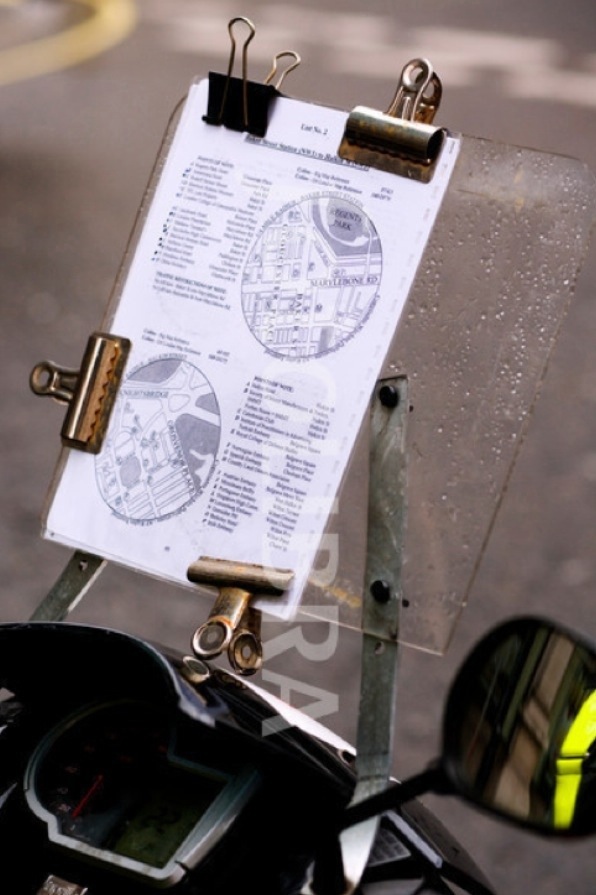
  • Have you ever noticed people riding mopeds around London with a clipboard on the front holding a route map? (apologies to Londoners for my provincial naivety).

    These are the Knowledge Boys and Girls undertaking the extremely challenging training necessary to become a licensed London Black Cab driver. The requirements are astonishingly difficult and include things like memorising 320 standard routes across London, the location of 25,000 streets and the sequence of theatres on Shaftesbury Avenue. It takes on average 34 months, a lot of London driving (plus a number other requirements) to acquire The Knowledge. It’s so mentally demanding that this BBC article  reports that the brain of a Knowledge Boy/Girl swells during training.

    That’s very interesting, but what’s it got to with documents and knowledge? The answer lies in this post by Dave Snowden where he illustrates the difference between information and knowledge with the example of using a map of a city to navigate (document containing information) compared to what a London taxi driver possesses (knowledge). In the context of London Cabs, information could consist of route plans, landmark descriptions, traffic reports, maps and other documents. Knowledge however is different. It has developed through experience, insight and a lot of hard graft. Quite appropriately, ‘The Knowledge’ is a phrase that has a great deal of kudos when associated with London Cab Drivers.

    Back to document management vs. knowledge management debate. The example of the London Black Cab Divers and The Knowledge has helped my understanding of the differences between the two. So that I don’t forget here are a few points to remind myself of why a document management system (a very necessary requirement for all sorts of reasons) will not provide what is needed for knowledge management.

    Most documents are not knowledge. Very few documents capture real knowledge. The insight and experience that accounts for knowledge rarely gets translated into written documents. What we write down is only a fraction of what we actually know.

    Knowledge can only be volunteered, not conscripted. Another Dave Snowden quote. I have written about this previously where I also suggested that some documents (even those in a document management system) would be at the best incomplete and possibly wrong. People tend to write versions of events that meet the requirement of organisational procedures and policies, rather than what actually happened. It’s not a great basis for a sound knowledge management system if your ‘building blocks’ are incomplete and possibly wrong.

    Document management systems don’t claim to be knowledge management systems. Well at least they don’t in the Wikipedia definition. I enjoyed reading this definition, it makes no reference to knowledge management…….”A document management system is a computer system used to track and store electronic documents. It is usually also capable of keeping track of the different versions modified by different users“. I find the rest of the article just as helpful and will be re-reading it regularly to avoid any confusion with knowledge management.

    Ultimately this leaves a big question ‘how do you approach knowledge management?’  Given the social nature of knowledge (it’s about what people know and think), there has to be huge scope for linking knowledge management with social media approaches, a subject for future posts.

    One final definition, information will tell you a tomato is a fruit, but knowledge tells you not to put them in the fruit salad.

    So, what’s the PONT?

    1. Document management is not knowledge management.
    2. Knowledge is something people hold in their heads which has been gained through experience, insight and effort. Sharing this knowledge is a deeply social process, not easily achieved through a document management system.
    3. If you had options for crossing London, at rush hour, who would you choose? Someone using a top end ‘sat nav’, radio traffic updates and a glossy map; or a London Cab Driver with The Knowledge?

    Linked posts: Why is good practice such a bad traveller? https://whatsthepont.wordpress.com/2012/08/19/why-is-good-practice-such-a-bad-traveller/

    Picture source:http://hurryupandwaitblog.blogspot.co.uk/2012/07/for-love-of-knowledge-knowledge.html

    http://www.taxitradepromotions.co.uk/keep-calm-ive-got-the-knowledge/keep-calm-ive-got-the-knowledge-print.html

  • The Cynefin Framework. I found this when I went looking for a ‘better/good’ explanation of the difference between Good and Best practice.

    The Cynefin Framework opened my eyes to clearly understanding the difference between best and good practice, plus the idea of emerging and novel practice.

    It’s also highlighted some of the nonsense phrases I hear, and the misuse of good and best I get tortured with at conferences. So, to help me cope I’m making a Buzzword Bingo Card.

    Conference Buzzword Bingo (Best Practice Edition). If you are a fan of buzzword bingo you might be in for a treat. I think I’ve stumbled upon a new subset of buzzwords for a bingo card on best practice phrases.

    In the post ‘Is Best Practice the Enemy of Innovation?’ I suggesting that we (particularly those with significant power or influence) should be careful about how the phrase ‘best practice’ is used. Fine advice, but where do you look for the right phrase for the right conversation or conference speech?

    In the spirit of sharing (and creating a new bingo card), here are my top eight ‘practice’ buzzwords. I am sure there are plenty more. If you’ve got any please let me know, we could have a huge new bingo card.

    Notable Practice. I haven’t heard this one for a while. I’ve seen it used where people wanted to draw attention to something as ‘notable’, but didn’t want to take any responsibility for making a judgment that might land them with any sort of liability. “Is it good practice or is it bad practice?”  “I can’t really say. It’s just……errr….notable”.

    Effective Practice. This one has a significant degree of judgment attached. The word effective suggests that the practice works and does what it was intended to do, effectively. Helpfully it leaves scope for things to get better.  The Youth Justice Boards use effective practice in connection with case studies, the definition is here.

    Emerging Practice. This is a bit of a specialist term I’ve heard used in connection with complex situations where a great deal is unknown. Practice will emerge from the complexity, which can then be evaluated and amplified or dampened as necessary.  The challenge is to identify the emerging practice and then evaluate it. Here is the Youth Justice Board definition.

    Innovative Practice. This is always a certainty for buzzword bingo, thrown around like confetti in conference speeches. Superficially it sounds very plausible and appealing, but what do people mean? I’d suggest a close look at the definition before using it. Things like is this ‘new’ and not ‘the same things done better’ need to be considered.

    Bad Practice. A much neglected area, high score for ‘rarity value’ on the bingo card. People don’t really like to talk about what went wrong. If we do it’s quite often in the in the negative language of ‘name and shame’ the guilty. Not really helpful in getting people to come forward and help others learn from mistakes and failure. It’s a phrase in need of an image makeover if we want to make the most of some valuable learning.

    Better Practice. I like the idea of this, but better than what? This would require a bit of context information to show why this practice is better than something else. Linking back to the bad practice example, I don’t suppose many people would be overjoyed at being associated with the practice that has just been ‘bettered’.

    Good Practice. A term that is in everyday use.People seem to be in general agreement about its meaning, but there is no dictionary definition I can find. It’s a bit like ‘baby bear’s porridge’ in the Goldilocks fairy tale. Not to hot or not too cold, just right. By that I mean this practice is not, ‘the best’ or ‘the single benchmark’ so it leaves room for improvement, and an opportunity to look at alternatives.

    Best Practice. This is well-defined in many places. “A method or technique that has consistently shown results superior to those achieved with other means, and that is used as a benchmark….. a standard way of doing things that multiple organizations can use”. A very specific definition, particularly if you compare it with some of the others mentioned.

    With the range of ‘practice’ definitions on offer it’s well worth thinking about how you describe what you do. It’s all context specific. There is a huge difference between emerging practice, best practice and effective practice. Unfortunately they tend to get lumped into a ‘one size fits all’ category far too often. Not helpful for the buzzword bingo enthusiast.

    So what’s the PONT?

    • There are a large number of ways to describe ‘practice’, it’s not ‘one size fits all’.
    • To avoid confusion understanding the context of the practice is required so that the practice can be accurately described.
    • If in doubt use something that leaves room for improvement. The ‘baby bear’s porridge’, Good Practice option isn’t bad.

    Don’t forget your suggestions for the bingo card.

  • Here’s a confession. Before I go to bed I like to watch an episode of How It’s Made.

    There is something very soothing about manufacturing processes. The logical sequence, efficient systems, robotic arms, complete repeatability, high levels of certainty and quality products are like a comfort blanket before I go to sleep.

    Unfortunately the world I wake up to isn’t quite like this, generally it’s all a bit more confusing.

    This mirrors some of the confusion around best practice and innovation. Frequently I hear; ‘organisations must be more innovative’ rapidly followed with ‘organisations must implement best practice’. But how do the two fit together, particularly if you’ve got other voices saying ‘best practice is the enemy of innovation’?

    Here’s the Wikipedia definition of best practice: ‘a method or technique that has consistently shown results superior to those achieved with other means, and that is used as a benchmark. ……..used to describe the process of developing and following a standard way of doing things that multiple organizations can use’.

    This, and many other definitions imply to me that ‘best practice’ is the single and ‘best’ way of doing something, it’s not ‘pick and mix’. If this is the case, how can an activity be improved if it’s already ‘the best ‘? Standardisation, making everything the same, is also an important feature of best practice. If this is the case, how do you innovate in an environment where everything is carefully fixed, controlled and repeatable?

    So, is it true, best practice really is the enemy of innovation?

    There are a few examples that support this argument. Possibly the most well-known is about the inventors of ‘Post it’ notes, 3M. There are many commentaries about the decline in their ability to innovate following the introduction of Six Sigma techniques. This case study from The Design Council talks about ‘over zealous management techniques stifling creative thinking’. The application of Six Sigma within the 3M R&D function was preventing innovation.

    This article from Business Week, talks about the tension between Six Sigma ‘control’ vs innovative ‘freedom’. They say that Six Sigma control is great for standard or routine processes in manufacturing and the scale-up of new products. However, Six Sigma was a disaster for innovative new products at 3M. Is this an example of best practice overkill?

    Innovation is not Best Practice is a thought provoking perspective from Professor Alf Rehn from the University of Manchester Business School. The section on ‘The Problem with Best Practice’ defines best practice as, “stuff that worked in the past“. He makes the link with work on human development and suggests that the drive to seek and stick with ‘best practice’ is ‘programmed’ into humans as a survival instinct.

    This idea that the human brain is programmed to look for and accept best practice (the quickest solution) is picked up by Stephen M. Shapiro in his book, ‘Best Practices are Stupid’. Check out this video Stephen talking about ‘expertise is the enemy of innovation’.

    Finally here’s a sporting example, Dick Fosbury. Prior to 1968 Olympics, high jump best practice was going over the bar sideways or face first. Dick Fosbury failed to comply with the prevailing best practice went over backwards, and the result is history. Since smashing the world record the ‘Fosbury Flop’ has been the accepted best practice for the high jump, and even inspired a commemorative Silver Dollar.

    Back to the confusion, where this started. I think there is a place for best practice. In the world of manufacturing and ‘How it’s Made’ it’s a key part of success. I am very happy that the engines of planes I fly in are built and maintained by Six Sigma enthusiasts. However, in other environments I’m not so sure. There are multiple ways to approach the complex issues faced by public services. It can be counter-productive to adopt a; ‘one size fits all’, ‘adopt or else’, best practice approach in these situations. At the very least it will probably be the enemy of innovation.

    So, what’s the PONT?

    1. The phase “best practice” is a widely misused and poorly understood. Before its used people should be clear about what they mean.
    2. There is evidence that the ‘over zealous’ application of ‘best practice’ type management thinking and techniques can stifle innovation.
    3. There is an important place for best practice, but it’s dependent upon the context, which needs to be understood.

    Picture source: US Olympic High Jump Silver Dollar. Best practice ignored!  http://www.usmint.gov/historianscorner/?action=coinDetail&id=29524

    Maybe cats had the high jump sorted out long before Dick Fosbury?

  • WhatsthePONT's avatarWhat's the PONT

    Gemba Mat is an improvement tool which combines the ideas behind Ohno Circles, the Gemba Walk and enhances them through employee engagement.  I think it is incredibly effective, not just as an improvement tool but also in how it engages and develops people. I saw Gemba Mat in use at Ricoh in Telford during an IdeasUK networking event.  Thanks to Chris Nicholls from Ricoh for allowing me to share this.

    The method is beautifully simple, low-cost and something I think could be used in just about any setting, not just manufacturing environments. This is how it works:

    • The whole process takes 60 minutes;
    • The observers find a good spot, and place the Gemba Mat on the ground;
    • The  observers then stand on the mat and observe what is happening in the process or activity in front of them;
    • To help with the observations there are some prompts on the…

    View original post 527 more words

  • Purpose, Meaning & Happiness on the Camino. Also, why is there a bullet hole in this road sign?

    At a recent conference (forgotten which one exactly) the speaker said something along the lines of; “having purpose and meaning are the main things that lead to long-term happiness in life”. They also added that “if you achieve this sort of happiness you can tolerate all sorts of hardships and frustrations”.

    These thoughts resurface during my cycle ride along part of the Camino de Santiago in North West Spain. Don’t worry, I’m not about to go all spiritual and ‘Zen’ on you. I just thought it was interesting to reflect upon this and some of what I observed on the Camino.

    Camino Pilgrims are extremely happy people. Obviously with the exception of my cycling companion Geof, who loves being grouchy. Pilgrims stride purposefully along the path with euphoric smiles and greet strangers with ‘Buen Camino’ (good road).

    You might expect this from people who are on a pilgrimage to a site of religious significance, but surely not everyone?

    I think the source of their happiness has something to do with purpose. Depending on where you start, the Camino de Santiago can be 1000’s km long; the French Camino route we were cycling is 780km. It’s a long distance and having a very clear ‘purpose’ to complete the walk is likely to feature greatly with people.  Perhaps this is why they are so happy?

    One other thing.  There is nothing like racing downhill at 45kmh on your bicycle, passing a pilgrim on foot. Not sure what that does for their happiness, but it certainly cheered up Geof, bellowing ‘BUEN CAMINO…….’ as he sped past.

    Camino Pilgrims put up with great hardships. After 30km of slogging it along the dusty road, carrying your belongings on your back, in all sorts of weather, scorching heat, torrential downpours, wind, snow and sleet……spending the night in feather bed luxury is just what you need.

    Sadly this isn’t the case for most pilgrims. The accommodation is usually an Alburgue or refuge. These are very basic places, what would you expect for a few Euros a night?

    Maybe this substantiates the idea that if you are deeply happy (fueled by purpose and meaning) you will tolerate all sorts of hardships.

    Obviously you don’t have to stay in Alburgue. You ‘gets what you pays for’ and there are plenty of decent hotels along the route. I should probably be ashamed of myself for saying this but, I did like the ones that gave complimentary use of the minibar for ‘pilgrims’ (just show your credentials).

    Camino Pilgrims look lost at the end of the road. I reckon this is a difficult thing for many pilgrims. On reaching Santiago de Compostela, and achieving your goal, what happens next? You no longer have a ‘purpose’ in life. This may bit melodramatic, but it was interesting to see people wandering around aimlessly after the initial euphoria of arriving in Santiago had worn off. One chap with a large beard (there are oh so many of them), was loudly and proudly proclaiming on Wednesday afternoon “I walked 1000km to get here…..” Thursday afternoon he looked completely lost, in every sense.

    I wonder if this is where some of those epic ‘walk around the world’, ‘I jogged home to Tonmawr from Tibet’ journeys come from? People found happiness with a purpose (walking somewhere) and just needed to keep on walking.

    Finally, why is there a bullet hole in the road sign? A couple of theories:

    • Basic law of the Universe. In rural areas where people have guns, the road signs get shot. Simple.
    • Some of the people who live alongside the Camino never actually get to walk it for any distance. As a result they lack purpose and meaning in their lives, are unhappy and engage in random acts of vandalism (shooting road signs).
    • Please suggest your own theories in the comments.

    So, what’s the PONT?

    1. Achieving long-term happiness may well have a lot to do with having a purpose and meaning to what you do.
    2. If you are happy, it probably is easier to tolerate hardships and frustrations.
    3. Beware of the void once your purpose has been achieved. The ‘what’s next’ can be a very challenging question.

    There are some great blogs about the Camino: http://www.caminosantiagodecompostela.com/pilgrims-credential-el-camino-de-santiago/