• img_6128I originally wrote this post as a Guest Editor on Comms2point0 . This is an updated version.

    As newsrooms shrink there has been concern over the poor standard of journalism to hold public institutions to account and inform the public. Under new plans from the BBC this may affect you.

    Public Service Journalism is Back. Realistically, Public Service Local Journalism has probably never been away, but the latest proposal from the BBC could give rise to a new, bigger and improved version 2.0, I hope.

    As part of proposals for the new Charter starting in 2017, the BBC plans to invest about £8 million a year to fund the activities of 150 journalists. If things go well, they may increase this to 200 journalists in 2019, and support other things like a Data Journalism centre. You can read about it in this article, ‘BBC and the News Media Association announce plans for ground-breaking partnership’

    What will 150 New Journalists be doing? The focus of the role seems to be around reporting what local councils and other public bodies are up to. To (selectively) quote from the people in the article:

    James Harding, Director BBC News and Current Affairs: “These plans…will enhance local journalism, ensure greater accountability of people in public life and enable… readers to get better coverage of what’s really happening in their communities… together, we will harness the potential of data journalism to improve reporting of public services and institutions across the country.”

    Ashley Highfield, National Media Association Chairman: “We believe this will strengthen and enhance local journalism, and the critical role it has in holding local authorities to account,…so important in local democracy. More coverage and content from councils…ensuring greater accountability and transparency in an ever more devolved Britain. Reaching 40 million people each week, local newspapers…provide an invaluable public service which underpins democracy at local level”.

    John Whittingdale MP, (former) Culture Secretary: “Local and regional media play a vital role in reporting issues that matter…and also help hold local decision makers to account.”

    Holding Public Services to Account. This might be just my biased reading, but the language here seems a bit adversarial and very focussed upon, ‘holding local decision makers to account’. I’ve nothing against that, but it might be worth thinking about how this will actually happen in practice.

    If this new journalism is an ‘all out attack’ to; ‘root out’ incompetence, ‘dodgy-dealings’ and poor decision making, it might cause a few unintended problems. Local councils are having a tough time at the moment, coping with complex problems and reducing budgets.

    Many are trying new or innovative approaches that don’t always work perfectly first time. If you’ve got an ‘over-zealous’ battalion of local reporters publicly humiliating councils for every minor mistake it’s not going to help.

    Triumphant ‘got ya!’ headlines are not going to support an environment of taking well-managed risks and seeking out new ways of doing things. People either won’t try things in the first place, or will go to great lengths to hide their (well-intentioned) mistakes from the journalists. Just something to ponder upon.
    The good old days
    The good old days

    Public Service Journalism Version 1.0 Over the years I’ve observed 100’s of committees in Councils and other public bodies (it was part of the job at the time). Being a professional observer, you do notice what goes on, and spotting when the local journalist enters the room was something I got used to. There were always some good clues:

    • Most people would become more guarded and cautious when they spoke,
    • Some would ‘grandstand’ for the benefit of the journalist,
    • The Chair might publicly ‘welcome’ the journalist, just so everyone knew they were there,
    • Committee Clerks would keep their heads down and avoid eye contact, and
    • The PR Manager, if they weren’t there already, would be urgently summoned to come and talk to the journalist (damage limitation/keep them at bay).

    I remember sitting at one council meeting on cold, wet and windswept November night when the local ‘cub-reporter’ arrived, just in time for a controversial issue. The impact wasn’t exactly like ‘death had entered the room’, but close; possibly a horribly contagious disease.

    I did speak with the reporter later, a reasonable and balanced person, new to the area, keen to do learn his craft as a journalist. That was going to be quite a challenge with the weight of past experiences. These had shaped the existing relationship between the Council and the local press. Past relationships will have an influence on the future, something else to ponder.

    So, what are my hopes for Public Service Journalism 2.0?

    1. Move Upstream. If the idea is really about getting communities engaged with what public services are doing, engage early. Personally I don’t think there’s a great deal to be gained from reporting the Council AGM and ‘holding people to account’ when something hasn’t quite worked. How about engaging at the start of the process, using the skills of a professionally trained journalist to engage the community in helping the council, and the community, solve their challenges together. That’s got to be more satisfying that replaying what a ‘grandstanding’ councillor has to say about their personal agenda at the AGM?
    2. Work with the Locals. There’s already some excellent work happening across the UK to report on what is happening in local councils and communities. In Wales we have a number of hyperlocal news sites who are doing a fine job of keeping their communities informed and involved. I’m sure they might have a view on how the BBC resources could be used effectively. The Cardiff University, Centre for Community Journalism maintains a list of the hyperlocal news sites active in Wales (https://www.communityjournalism.co.uk/find-a-hyperlocal/) along with many other resources. As a flavour, here are two of the hyperlocal news sites I’ve experienced:
      • Cwmbran Life. Run by Ben Black which in my view is everything a local news site should by about; ‘Cwmbran and nothing but Cwmbran’. http://www.cwmbranlife.co.uk
      • Wrexham.com. Based in Wrexham, North Wales and like the Premier League of hyperlocal news providers. Their website gets in excess of 1 million views every 30 days and has a very busy forum section with over 1500 topics discussed via 20,000 posts. Many of these issues are of direct relevance to public services (check out the Dog Poo & Litter thread) http://www.wrexham.com/forums/forum/wrexham-com-forums
      • Swansea Scrutiny Blog. Not exactly a hyperlocal news site, but a good example of where a council is trying to engage. It might be a good ‘space’ for a journalists, citizens and the council to all engage online? http://www.swanseascrutiny.co.uk
    3. Cast the net wide. Local councils aren’t the only organisations spending public money, delivering local services and in need of ‘being held to account’. There are may other types of organisation involved in the ‘delivery chain’ these days, and some of these don’t have the sophisticated (and effective) governance structures that exist in many councils.
    4. Be Part of The Solution. I’ve touched on this earlier. Public services are going through a tough time at the moment, trying to do things differently and not always getting it right first time. While there is a right and proper place for holding people to account, an overly adversarial approach isn’t going to build fruitful relationships – and probably won’t get you the most useful copy (there are also plenty of regulatory organisations in place to do just this sort of thing). A professional journalist who provides a link between the community and public services can be a huge force for good.

    I’m not sure if any of my hopes will materialise, it will take commitment from all sides; citizens, journalists and the public services. In my view, the least useful thing that could happen is an adversarial approach and the failure to create Public Service Journalism 2.0.

    Notes for editors:

    The Local Government Information Unit reports there are 217 Unitary and upper tier councils in the UK. 152, England, 32 Scotland, 22 Wales and 11 Northern Ireland.

    The £8 million from the BBC will be used to fund posts in ‘qualifying local news organisations’.

    Link here to the original Comms2point0 post

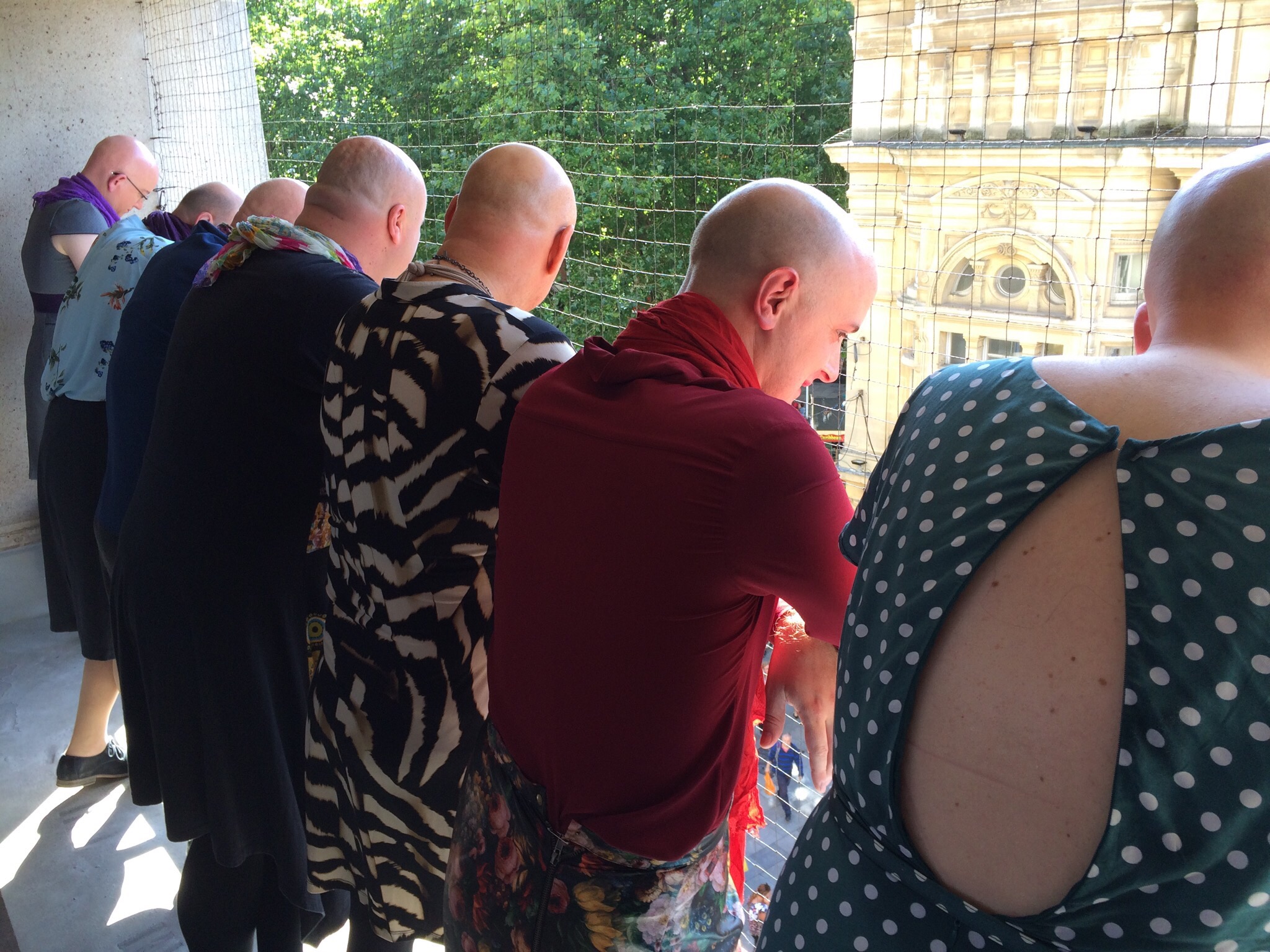
  • img_6039This is a curious story. At the beginning of August I responded to a request from the National Theatre of Wales, for ‘bald men’ to take part in a performance.

    Five weeks later I was on the streets of Cardiff. A member of the Abolish Children Party dressed as, ‘a witch trying to look like an ordinary woman’. Along with 14 other bald men, we were acting out a scene from Roald Dahl’s book The Witches. If you’ve read The Witches, it’s the bit from the Conference where the Grand High Witch turns a child into a mouse (scary).

    The need for bald men was because, ‘The Witches’ wear wigs to disguise their baldness. Us revealing the fact we were actually bald men; not just oddly dressed bald blokes trying to look like witches being ‘ordinary women’, was something unexpected.  It was all part of City of the Unexpected, that took place 17th /18th September, to celebrate the centenary of Dahl’s birth in Cardiff. Phew! Glad that’s clear and obvious to everyone.

    So what’s this got to do with the Cynefin Framework? The Cynefin Framework is something that helps people make decisions that are better suited to the situation they are experiencing. If you can make sense of, and better understand your situation (for example is it complicated or complex) you can use the most appropriate decision making method. This should get you a better result. There is a link to a video with Dave Snowdon, who created the Cynefin Framework, at the end of the post.

    You can scroll down to the sensible stuff if you want, but in the interim I really want to share my experiences of street performance (darling). I must also absolutely thank the brilliant Cler Stephens and Glyn Morgan from La La La Productions, who expertly directed 14 bald men on a journey through; the obvious, complicated, complex and a shallow dive into chaos.

    The Cynefin Framework via Dave Snowden
    The Cynefin Framework via Dave Snowden

    The Obvious Domain – Groundrules  When the world is obvious, things are well understood and we know what to expect. There is a clear link between doing X and always getting result Y.

    This is a world of clearly stated rules and best practice. The rules are there because they are necessary and they work. In our street performing there were some clear rules that allowed the performance to happen, kept us and the public safe (unlike a stage show there are no barriers between you and the crowd).

    So, the Groundrules: 

    1.  Stay together. A minimum of 2 people or more if you have to travel distances. It’s far easier to move through a crowd as a group (you have ‘presence’ – a new experience for me). Also, it would be pretty terrifying to find yourself alone on St Mart Street, dressed as a woman, when Cardiff City are playing at home.
    2. Avoid physical contact with the public. Excellent advice with so many kids in the audience, for obvious reasons. Greatly helped by the fact we wore heavy-duty purple washing up gloves (exceedingly hot and sweaty).
    3. Hydrate. It’s hot for a bald bloke wearing a nylon wig. ‘Drink plenty of water’ is an excellent sound advice on a hot September afternoon.

    The Complicated Domain – Rehearsals and Character Development. In a complicated world it is possible to work things out, but there might be more than one way of getting to the answer or end point. Doing X might get you Y, Z and Q, but all of them are right.

    Rehearsals really embraced this idea. It’s fair to say that every one of the Witch characters went though a process of testing (sense-analyse-respond) before they fixed upon what worked for that individual. Other aspects of the production also went through the same process;

    • How do you make a child actor disappear in front of 3,000 people with no special effects?
    • How does the 84-year-old mother of the Grand High Witch (Norman/Brenda) travel for several miles around Cardiff?
    • How do we draw attention to ourselves and our next political rally in a very crowded street? Solution, the ‘Down with Children’ chant which had a big impact on bystanders:
      • Down with Children,
      • Do them in,
      • Boil their bones and,
      • Fry their skin!

    The Complex Domain – Live at City Hall! In a complex world it is not possible to predict outcomes. You have to probe the situation, sense what is going on and respond in way that you think might work. A classic bit of improvisation if you like, ‘we have never been in this situation before, we have to try something different’.

    This happened at City Hall. The crowd was waiting expectantly and there was a technical delay. “Get out there and improvise” was the instruction, and that’s what we did. There were some brilliant things that came out of that like:

    • identifying bald men in the audience and asking if they were at last years conference in Bournemouth (a surprising number said yes…),
    • developing new soundbites to promote the Abolish Children Party like: “down with children and down with the causes of children”, and
    • seeking out people you knew, saying “hello X how are you” and completely confusing them, ha ha, brilliant.

    img_6042The Chaotic Domain – Lost in Queens Arcade. I do hope the irony of a bunch of men dressed as women, lost in Queens Arcade hasn’t been lost on you…

    I find Queens Arcade a nightmare to navigate even in the best conditions. On this occasion it was jam-packed, noisy, kids grabbing at the balloons, and we were stuck in the middle. The Grand High Witches’ Mother, her wheelchair and the Stage Manager had disappeared to find an elevator, and we had to be at the next venue in 10 minutes.

    Things were looking tense. In a chaotic situation where ‘what to do next’ is completely unknown, you just act, because its better than where you are now. In this case Glyn pointed us up the stairs, people at the front raised their balloons so that others could follow, and the ‘Down With Children’ chat started. It worked and by some miracle we appeared on Queen Street moments later. Trallah! Out of the chaos and back into a complicated world.

    The Chaos / Obvious Boundary. This is really important in the Cynefin Framework, but I’m not going to talk about it here. If you are interested I suggest you have a look at Dave Snowden explaining it in the video below.

    So, Whats the PONT?

    1. The Cynefin Framework helps you make better decisions by understanding the situation/context you are in and using a decision making method that is appropriate.
    2. There’s a lot more to street performance than meets the eye. It’s more complicated and complex than you might think and experts like Cler and Glyn know their business.
    3. I learnt a lot about decision making, team working and building a high performing team from taking part in The Witches. More than almost every training course I’ve ever been on. Maybe we should do more Street Performance on leadership and management development courses?
    My new friends, The Bald Men Witches
    My new friends, The Bald Men Witches


  • Mwah ha ha ha! ... I'm in charge suckers!
    Mwah ha ha ha! …
    I’m in charge suckers!
    Apparently confession is good for your soul. So here’s one of mine.

    In an earlier post I wrote, ‘Will playing Prison Architect make you a better sustainable decision maker?’

    On the surface that seems fine; Prison Architect is a computer simulation game. My proposition was to use simulation games to develop the skills and decision making behaviours that are required for the Wellbeing of Future Generations (WFG) Act in Wales.  A reasonable idea, and a few people seemed to like it. However, rather than stopping there, and thinking carefully about ‘what next’, I dived straight in. I charged on and suggested that Prison Architect was exactly the simulation game that we all needed to play.

    Wrong. In almost everything else I’m involved in, I try to propose a ‘test and experiment with multiple safe to fail pilots’ approach. This was hardly ‘practicing what I preach’. Diving into a single solution, without first seeking out alternatives is not what I should have been suggesting. Confession over.

    What alternatives are there? As it turns out there is plenty of action in the world of simulation games. They often get bundled under the heading of Serious Games, and there is even a Serious Games Institute at Coventry University (serious stuff).

    The Serious Game entry in Wikipedia has a useful summary of the history of simulation games and describes the ‘added pedagogical value of fun and competition’. Basically the process of teaching and learning works better if it is fun (and a bit competitive). The other thing to know is that the use of simulation games has really taken off since the early 2000’s with low-cost computing for the masses.

    The article also has an A to Z of what (in the view of Wikipedia editors) are the most noteworthy Serious Games. There are about 40 in the list ranging from:

    • A. Amnesty the Game – a game that supports Amnesty International efforts worldwide to abolish the death penalty.
    • X. X-Plane – a civil aviation flight simulator.

    Yes, there are a few about eradicating serious diseases.
    Yes, there are a few about eradicating serious diseases.
    You might be struggling with the concept of ‘fun’ here, but in between we have:

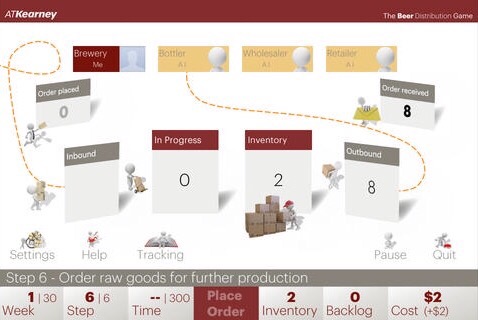
    B. Beer Distribution Game – a game developed by some MIT Professors to show the importance of supply change management (maybe the fun happens when the beer actually arrives?)

    and

    H. Houthoff Buruma The Game – a serious game for staff recruitment in a Dutch Law firm. I guess you have to be Dutch to see the potential for fun in that one…?

    Enough of the Hilarity – this is a serious post about a serious topic. Having skimmed through the A-Z List I’ve picked out 4 existing games that seem to have most relevance to sustainable decision making and the WFG Act.

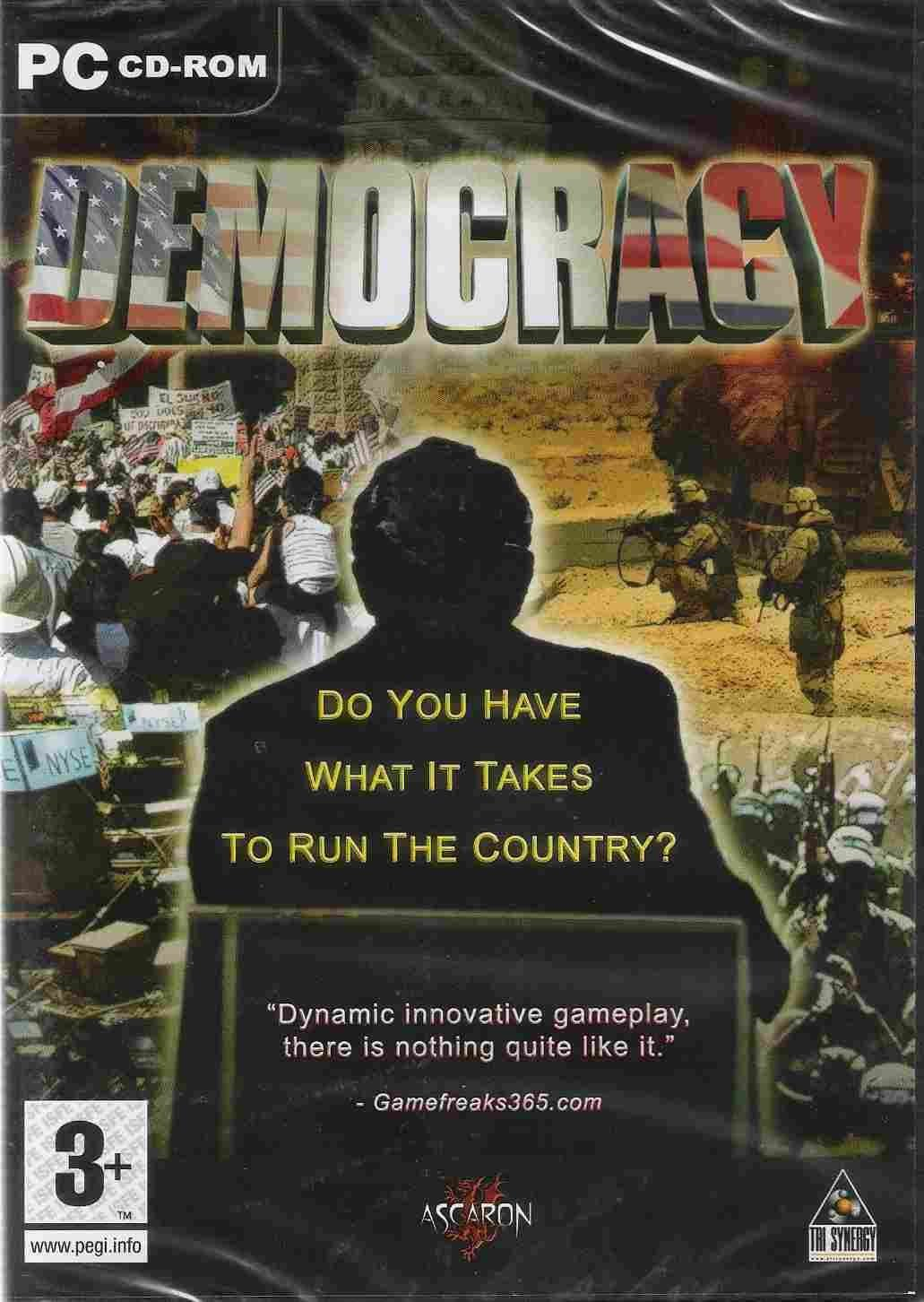
    1. Democracy – A political strategy game that simulates how the process of government works, where you get to play as the Prime Minister or President. Own up who’s got a secret copy of this? As El Supremo you have the power to alter the laws and policies for: tax, economy, welfare, foreign policy, transport, law and order and public services. It won the ‘Simulation Game of the Year’ in 2005 and has received some decent reviews. Apparently it is doing well in America, and is used widely in schools, but not so good in the UK, where it “met with indifference”. I wonder if things are any different with this demographic after the EU referendum?
    2. FloodSim – this does what the name suggests. Over a 3 year period your objective is to protect the people of the UK from floods that damage the economy and the lives of people. Released in 2008 (following the 2007 floods), I can’t find very much in the way of reviews or activity since 2009.
    3. Friday Night at the ER – this is actually a board game. The idea behind it is to teach people about how different parts of a system depend upon each other. Its been around since 1992, long enough for people to have worked out how it can be used for learning. There’s a long list of things that playing ‘Friday Night at the ER’ claims to help develop. It doesn’t explicitly say, ‘Sustainable Decision Making Behaviours in Support of the WFG Act’, but I think I can spot a few complementary benefits. As a thought… it might be useful to try some board games before fully immersing people in computer games?
    4. IBM CityOne – the promotional video on the official website suggest a 2005 vintage for this game. With the focus mainly on water, energy, banks and retail, and nothing much to do with people/social issues, this might not work for WFG in its current format.

    Go to the Experts. Unfortunately I don’t feel much better after my confessional and reading about Serious Games. Many of them don’t seem to be that much fun, which is apparently necessary for ‘pedagogical value’. Also, I’m not sure how much opportunity there is to push boundaries and fully learn from failure and experimentation? Maybe Prison Architect, which wasn’t built with ‘sustainable development’ in mind, still offers some potential?

    I know I mentioned the Serious Game Institute at Coventry University earlier.  I’m just wondering, if this idea is worth pursing, the SGI is probably worth taking a closer look at.

    So. What’s the PONT?

    1. Serious Games are a serious business. They’ve been around for ages and big corporations have taken an interest.
    2. They have been applied to almost everything from Beer Distribution through to how to cope in a World Without Oil.
    3. There is expertise in the field. It is worth talking to some of these people rather than ‘reinventing the wheel’.
    I've played a few beer based games in my time. This doesn't immediately look like fun.
    I’ve played a few beer based games in my time.
    This doesn’t immediately look like fun.
  • Will playing Prison Architect make you a better sustainable decision maker?
    img_5890

    Could playing a computer game which involves the design, building and running of an American Jail (Prison Architect) help public service ‘decision makers’ make better real life decisions? In particular would it help people to learn how to think differently? Would it help them behave in a way that aligns decision making with sustainable development principles in The (Wales) Wellbeing of Future Generations Act?

    This might require a bit of commitment from you to stick with my logic, but here goes: Part 1…

    Sub-Sonic Pan Wales Travel. Imagine you are about to step on board the latest high-speed transport link from Rhyl (North Wales) to Neath (South Wales). The ‘vehicle’ will transport you to your destination in safety and comfort, 170 miles in just under 20 minutes. (I know it sounds unlikely, but please play along).

    A couple of questions. Would you expect the decisions to build the transport link to have been based upon ‘tons’ of information, testing and evaluation? During this process would you expect the people involved to have tried and tested dozens of scenarios and situations? By working through these many situations they would have identified what does, and doesn’t work, and put things in place to make sure everything runs smoothly.

    I’m guessing that the answer is, “of course I would expect this”, you are about be propelled across Wales at about 600 miles an hour. Developing simulations and testing scenarios is an important part of getting things right before you trust them with your life.

    Simulations and Scenarios. Using simulations and scenarios to test ideas and develop skills isn’t a new idea. I used to work in environmental protection where we were frequently involved in exercises to test how we would respond if something unusual happened. These were multi agency, complex affairs, and a great opportunity to test how we would behave if something like an Oil Tanker running aground in an area of outstanding natural beauty happened. (Ironically that scenario did actually happen, about 2 months after the simulation exercise).

    Anyone involved in organisations linked to emergency planning, civil emergency planning or the blue light services might have experienced one of these events. I think they are a great way to test and learn about how you think, make decisions and act in non-routine, often complex situations. Unfortunately they don’t happen very frequently, and only relatively small numbers (the lucky few) tend to get involved. I suspect that this might be partly due to cost.

    New Legislation and a New Way of Thinking. This isn’t something you need to imagine. The Wellbeing of Future Generations (WFG) Act has already been introduced in Wales and places a requirement on public bodies to make decisions that are in line with the principles of sustainable development. It then goes on to specify 5 Ways of Working, which the public bodies will be required to demonstrate as part of  their decision making and delivery.

    The 5 Ways of Working
    The 5 Ways of Working

    Just for the record here are the 5 Ways of Working: (and you can read more about the WFG Act here)

    • Long Term – the ability to balance short-term needs with long-term needs
    • Prevention – acting to prevent problems occurring  to things getting worse
    • Integration – making sure the activities of different organisations don’t conflict
    • Collaboration – working with other people
    • Involvement – working with those affected by what you do

    This all sounds blindingly obvious when you read it. Why wouldn’t public bodies want to work in this way? Their primary purpose is to provide services to the citizens, and it’s not like they are in competition with each other…

    However if it was as blindingly obvious, and as easy as I suggest, I suspect we wouldn’t need legislation to make it happen. The point of the WFG Act is to make people behave differently (that’s what legislation does) In this case the behaviour change required is to make decisions that are more sustainable.

    This poses a significant question, how do you achieve behaviour change that gets people making decisions that fit with the principles of sustainable development and the WFG Act?  That’s a huge complex challenge so I’m just going to focus on the idea that you could develop some of the relevant ‘skills’ by playing a game like Prison Architect.

    img_5895

    At last, Prison Architect… In the absence of a computer simulation game called; ‘My Local Council Complying with the WFG Act’, I think there is a place for Prison Architect. Basically the game involves:

    • Designing, building and running a prison,
    • Throughout the game you have choices,
    • Choices are as basic as; do you have a wooden or tiled floor, through to the education and drug rehabilitation programmes offered prisoners,
    • Every choice has consequences,
    • Many unexpected and unplanned things also happen,
    • Ultimately your decision making influences what happens in the prison ‘community’,
    • Is it stable and sustainable or a burning hell? (literally).

    I fully appreciate that building and running a prison isn’t the same as running a local council. However, with a little bit of encouragement I’m sure people could relate to the challenges of building a sustainable prison community (or not; the burning hell option is available).

    I reckon that Prison Architect offers the opportunity for people to safely test and develop their decision making abilities off-line. If they make mistakes and things go terribly wrong, it’s not a problem. If they have some fun along the way, great. If they take some risks and push some boundaries, they might learn something that will help in real life decision making, brilliant. It’s got to be worth thinking about?

    I’m avoiding any in depth explanation of Prison Architect – for the moment. I just want to check with a few associates if anyone would bother to read it.

    So, What’s the PONT?

    1. Simulation exercises have been used for many years to help people and organisations learn how to do things and prepare for unusual events.
    2. Computer software potentially reduced the cost of these activities and increases the range of things they can be applied to.
    3. Linking the activity to a ‘game’ could have benefits of engaging people in some fun while they learn.
    img_5897

    I have to include this. As a taster, here’s the plan of a prison someone build in Prison Architect. Yes, it is the shape of the USS Enterprise from Star Trek. Not exactly a Panopticon, but how good is that.


  • IMG_5812-0

    Obviously the answer is…

    Rule 1. You do not talk about Organisational Trust Building Club. 

    And,

    Rule 2. You DO NOT talk about Organisational Trust Building Club.

    Anyone who remembers the 1999 film, Fight Club, will hopefully understand the reference. If you are wondering what on earth a secret club for bare-chested blokes (having bare knuckle fist fights), has to do with building organisational trust, I’ll try to explain. If you’ve never heard of Fight Club, have a look here.

    Why is Trust Important? It’s a bit like askIng why is oxygen important…

    Lots of organisations try to develop a working environment where there are high levels of trust. It’s good to trust each other for all sorts of reasons like the emotional wellbeing of the staff; all the way through to increasing sales to your customers.

    If you are the sort of person who believes; ‘people are well paid and should just turn up and do their jobs… and stop messing around with this “feelings” nonsense’, have a think about this for a moment. Trust has an impact on the bottom line (what it costs to run your organisation). I wrote about it here in, Low Trust Costs You Money.

    If you want some more evidence have a read of this report, ‘Where Has All The Trust Gone?’ by the CIPD (Chartered Institute of Personnel and Development). You could also look at this video by one of the authors, Professor Ros Searle, talking about the importance of trust.

    Organisational Trust Building Club (OTBC) 10 Point Plan. Many organisations will approach the ‘task’ of building organisational trust in the following way:

    1. Agonise over the concept, ‘do we have a trust issue?’ (option here to enter an infinity loop).
    2. Give some of the clever people at the top of the organisation the task of sorting it out.
    3. Optional extra – involve some people with actual experience or expert knowledge (not mandatory).
    4. Develop a strategy with milestones, targets, deliverables and success criteria.
    5. Write a few things down like, ‘these are our trust values’ (option to put the words on motivational posters around the building) (I’m joking).
    6. Have a communications strategy and ‘road map’.
    7. Engage with the staff (tell them what’s happening).
    8. Embark on the ‘journey to a high trust culture’.
    9. Monitor progress in 50 page monthly reports to the ‘Trust Committee’.
    10. Celebrate Success (optional extra, only necessary if anyone can remember why you started doing it in the first place).

    Note: You will see this sort of method applied to almost everything that is linked to ‘culture change’ in many organisations.

    I was (kind of) running these ideas past a trusted friend yesterday (@snowded), when he politely pointed out that the chances of success from this approach were zero, and in fact it would probably make things worse.

    Dave’s advice was very straightforward:

    “you build trust by being trustworthy yourself and trusting others to do things”.

    To put a bit of context around that.

    • Writing things down or making ‘pledges’ isn’t going to make people trustworthy – it’s how we actually behave that matters.
    • Communication plans and strategies frequently fail to impress the front line troops – have a look at the ‘Kill Spin’ section (pg 7) in the CIPD report.
    • “When mores are sufficient, laws are unnecessary; when mores are insufficient, laws are unenforceable”.  A lovely quote from Émile Durkheim, the French Philosopher and Professor of Sociology. Basically if you have to write down ‘mores’, the habits and customs expected from people (like trusting each other), they will be unenforceable – so a pointless exercise.
    • Making the ‘end goal’ explicit, will result in peculiar behaviours such as ‘gaming’ to meet targets like ‘being x% more trustworthy’. So it’s probably best not to talk about it… or Fight Club.

    What about the First (and Second) Rule of Fight Club? DO NOT talk about the ‘Organisational Trust Building Club’. There is definitely something in those rules.

    If you go to the source of everything cool on the Internet – Reddit/subreddits – (Wikipedia is just too mainstream) there’s a range of discussions about why Fight Club has the ‘DO NOT TALK’ rules. These cover the following spectrum:

    • Don’t talk because you don’t want others finding out about an illegal activity (the obvious answer).
    • Don’t talk because people really struggle to keep secrets and will find ways to talk about it. This is a kind of reverse psychology that creates a bit of kudos and momentum around the activity, which actually helps it to flourish. Clever!

    So, definitely engage on a quest to improve organisational trust. Do this by actually doing trustworthy things and trusting others, and not writing out strategies and plans. And remember two important rules, DO NOT talk about OTBC, (Organisational Trust Building Club).

    So, What’s the PONT?

    1. Trust is an important part of how an effective organisation works. Low trust also costs money and resources.
    2. Trust isn’t built through strategies and plans. Trust is built through actions.
    3. You DO NOT talk about OTBC.
    IMG_5814

    Reverse Fight Club and Cross-fit*  I do love this, it’s particularly relevant if you know an obsessively keen ‘cross-fitter’.

    The idea is that Cross-fit is like Reverse Fight Club. Instead of NOT talking about it, people just can’t shut up about Cross-fit (apologies if you love cross-fit).

    (*Cross-fit is a gym based exercise class)

  • Source: P.Grey, Psychology Today
    Source: P.Grey, Psychology Today(below)
    Stanford Prison Perpetual – would there be any purpose? Here’s an idea made possible by advances in computing and the willingness of people to freely spend hours and hours playing computer simulation games.

    There are two linked things here; one you might have heard of, the Stanford Prison Experiment and the other one sits at the edges of mainstream digital; GMod (Garry’s Mod) Jailbreak game.

    The Stanford Prison Experiment is one of those topics that often elicits a concerned grown up response. ..‘ah yes, they were awful, they had to get stopped because people did horrible things’…. It’s a reasonable viewpoint, some pretty nasty things happened, all in the name of psychology research.

    A Potted History of the Stanford Prison Experiment.

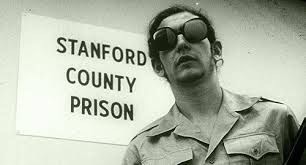
    • They were carried out in 1971 by Psychologist Philip Zimbardo in a specially constructed ‘prison’ at Stanford University.
    • The aim was to find out if reports of brutal behaviour by (some) prison guards in America was due to their personalities (dispositional) or (situational) the environment they worked in.
    • Zimbardo started with 75 male Stanford University students and carefully selected 24 participants that weren’t obviously psychopaths.
    • The final 21 participants were randomly assigned roles of prisoner and guard and were sent to prison.
    • To make things realistic ‘prisoners’ were subjected to things like; being stripped naked, deloused, dressed in prison uniform and given a number rather than a name.
    • ‘Guards’ had; uniforms, wooden clubs and mirrored sunglasses to prevent eye contact.
    • Within hours of starting the experiment some guards had begun to harass prisoners.
    • After 36 hours Prisoner #8612 had to be removed due to metal distress.
    • After 6 days the experiment was stopped (it was planned to run for 14 days).
    • Stopping the experiment was due to the unacceptable treatment (abuse) of the prisoners.
    • You can read about the details of the experiment in Simply Psychology, here.
    • Alternatively you can watch the TED Talk video of Professor Zimbardo (which links to his role as an expert witness in the Abu Ghraib prisoner abuse case) at the end of the post.

    Stanford Conclusions & Criticisms. The broad conclusion drawn from the experiment was that the brutal behaviour of the guards was situational. None had shown a tendency towards brutal behaviour before the experiment. By being placed in a harsh environment, given roles that had power over other people, reinforced with symbols of power (uniforms, clubs and sunglasses), and little control over how they behaved; they became brutal and abusive. This formed the basis of the idea that ‘bad systems turn good people bad’.

    You’ll see references to this idea in recent situations where there has been abuse and bad treatment in healthcare institutions. For example the Mid Staffordshire Hospital case, where there is a widely held view that ‘the system’ played a significant part in shaping the behaviour of ward staff.

    Referencing Zimbardo’s work is an attractive argument, but it’s not without its criticisms. Some of the criticism relates to simplistic over-generalisation of the findings which were based on a small group that were not representative of typical prison guards. You can read a full critique here in ‘Why Zimbardo’s Prison Experiment inst in My Textbook’ by Professor Peter Grey.

    One of the other major criticisms is that people went into an ‘experiment’ and played the roles that were expected of them. They took elements of the Hawthorn Effect (people behave differently when the are being observed) to the extreme. This led me to thinking about GMod Jailbreak and Sanford Prison Perpetual.

    IMG_5751GMod Jailbreak (Stanford Prison Perpetual). This is an online game that is (in my view) basically the Stanford Prison Experiment.

    It’s very popular amongst the Gamer community – not the X-Box / Play-station Console crowd – the (allegedly) proper Gamers, that use PCs and do things like modifications, host servers and download code.

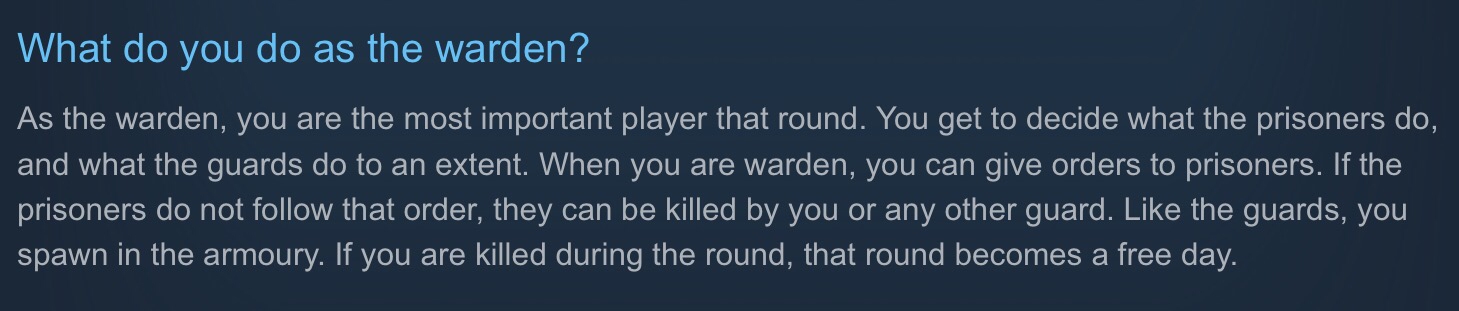
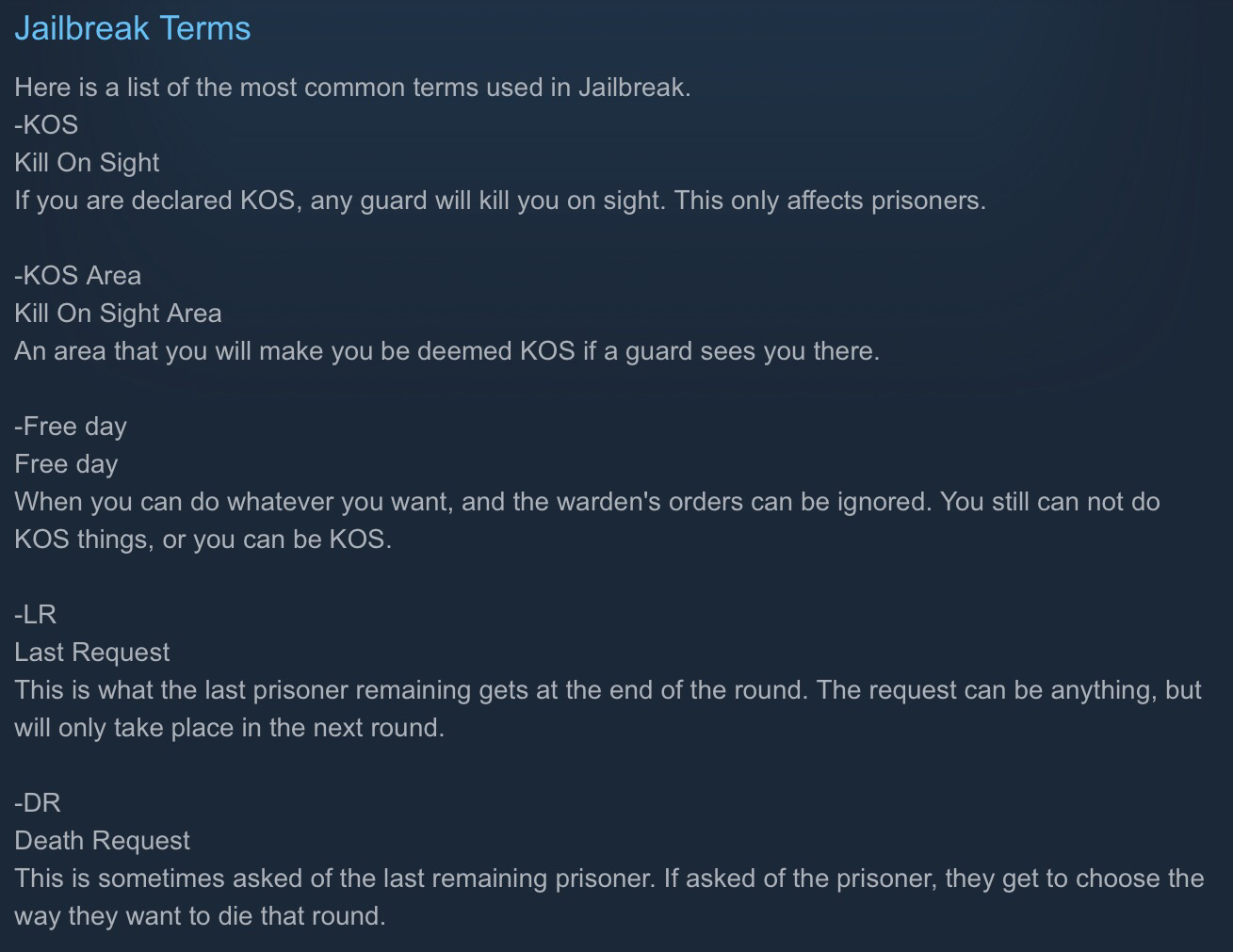
    Basically its an RPG (Role Playing Game) where you act as the Warden, Guard or Prisoner. The game rules (link here) give you a flavour of what it’s about – warning – it’s no a picnic in the woods (I’ve put some of the rules at the end of the post).

    Below is a link to a video tutorial explaining the basic rules of Jailbreak – I had to search hard for one that is reasonably safe to view in work (no extreme swearing or violence). If you want to see more, a GMod Jailbreak YouTube search will bring up over 40,000 results – it is popular. Do approach carefully though, many of the YouTube videos of actual ‘game time’ are very violent. Maybe that’s to do with the fact is a ‘game’ and people are playing roles without having to face consequences?

    I’ve been trying to find out how much time is spent playing GMod Jailbreak, but its not easy. Over the last week some of my associates have been checking how many people are playing at certain times. Figures like: “Tuesday, 198 people on 37 servers between 6-8pm”, have been thrown at me. By my calculations that’s roughly 400 hours of ‘experiment’ time in just one evening. There were similar figures across the rest of the week (Mon – Friday 6-8pm = approximately 2000 hours)

    If you consider that the actual Stanford Prison Experiment ran with a maximum of 21 people for 6 days – a rough estimate of around 3000 hours of experiment time wouldn’t be unreasonable?

    Stanford Prison Perpetual – would there be any purpose? You might have spotted where I’m going here… GMod Jailbreak is Stanford Prison Perpetual.

    There are hundreds of people playing thousands of hours of the game each and every day. Could you look on this as a huge ongoing experiment into how prisoners, guards and wardens behave? Would it be possible to draw any conclusion from how people behave by playing GMod Jailbreak? Would it support or contradict the Stanford Prison Experiment?

    Unfortunately, the answer is, I don’t know (yet – there might be something out there).

    The other big question is; could you extend this online game playing approach to looking at other behaviours? Again I don’t know, but I does feel like the might be an opportunity. Surely it ought to be possible to put all of this effort to some other use that goes beyond pure entertainment? 

    That feels like a good place to pause and mention a follow up post I’m writing about another online prison game: Prison Architect and Sustainable Decision Making Behaviour. To be continued…

    So, what’s the PONT? (more questions than answers)

    1. Is there opportunity to work with people who spend their time online gaming to better understand human behaviour?
    2. Would this actually help to understand certain types of behaviour, or does the Hawthorn Effect overcome everything?
    3. Ultimately, would people be willing to take part in ‘modified’ games help people to change their behaviours?

    Here’s the Philip Zimbardo TED Talk, The Psychology of Evil I promised earlier. Some of the rules for GMod Jailbreak are below it.

    IMG_5753


    IMG_5754


    IMG_5752


    Picture source: https://www.psychologytoday.com/blog/freedom-learn/201310/why-zimbardo-s-prison-experiment-isn-t-in-my-textbook


  • Behaviour Change and The Wellbeing of Future Generations Act have featured a lot for me over the last 12 months.
    Here is something I wrote in an attempt to bring the two together.
    There is a lot more to it than this than 1000 words will allow, and more posts will follow.
    Title wise, I think I should have called it:
    “Hyperbolic Discounting and the WFG Act, Living in Interesting Times”.

  • Obviously I wore socks, I'm not an Anarchist!
    Obviously I wore socks, I’m not an Anarchist
    #getnakedandgotowork is a the end – feel free to scroll down.

    Back in my school days I was reported for wearing ‘subversive trousers’.

    The trousers had been cunningly tailored (by my sister) and were transformed from a dull pair of standard grey school trousers, into the tightest fitting trousers I’ve ever worn (with the exception of Lycra cycling leggings – but we won’t go there). Matched up with a pair of pointy shoes, I was cool and I was compliant.

    The only part of school uniform rules that specified ‘width’ was an attempt to reduce the size of flares (this was late 1970’s/ early 1980’s). There was nothing about minimum size. This fact was confirmed by the House Master, much to the irritation of the Senior Prefect, who’d complained about my revolutionary act of wearing ‘subversive trousers’.

    Being Cool or Pushing The Boundaries? To be honest I’ve no recollection of wanting to push the rule boundaries back then, I just wanted to look cool and impress someone from the Girls School (my wife as it happens).

    What the incident did wake me up to was the idea of resisting authority and how some people challenge the rules. Thinking back, there were many things that I did as a teenager that were completely within the rules, but had consequences that the rule writers definitely hadn’t intended – like the 6th Form Bar ‘two pint’ limit, that works fine… if it’s not two pints of sherry.

    Anyway, where do pushing the rules, passive resistance and malicious compliance all fit together? And, why should anyone care?

    Pushing the Rules: We’ve all been teenagers (or have probably met some), so I’m guessing you’ll know what ‘pushing the rules’ is all about? If you don’t….. I’d suggest some involvement.

    If you’ve got a clever idea for some ‘rules’ on how people should behave (for their own good, or others), ask a bunch of teenagers to ‘critically review’ your proposals, and don’t get upset by the response.

    Passive Resistance: this is a fascinating subject that has been part of human behaviour for 1000’s of years. The basic idea is that you refuse to comply with the rules imposed by authority by using passive or non-violent methods (you can read more here). The campaign led by Gandhi to oppose British rule of India is a famous example.

    One of my favourites is the Singing Revolution that took place in the Baltic States during the late 1980’s. Hundreds of thousands of people gathering to peacefully sing protest songs eventually led to independence from the Soviet Union, and there’s even a film of it.

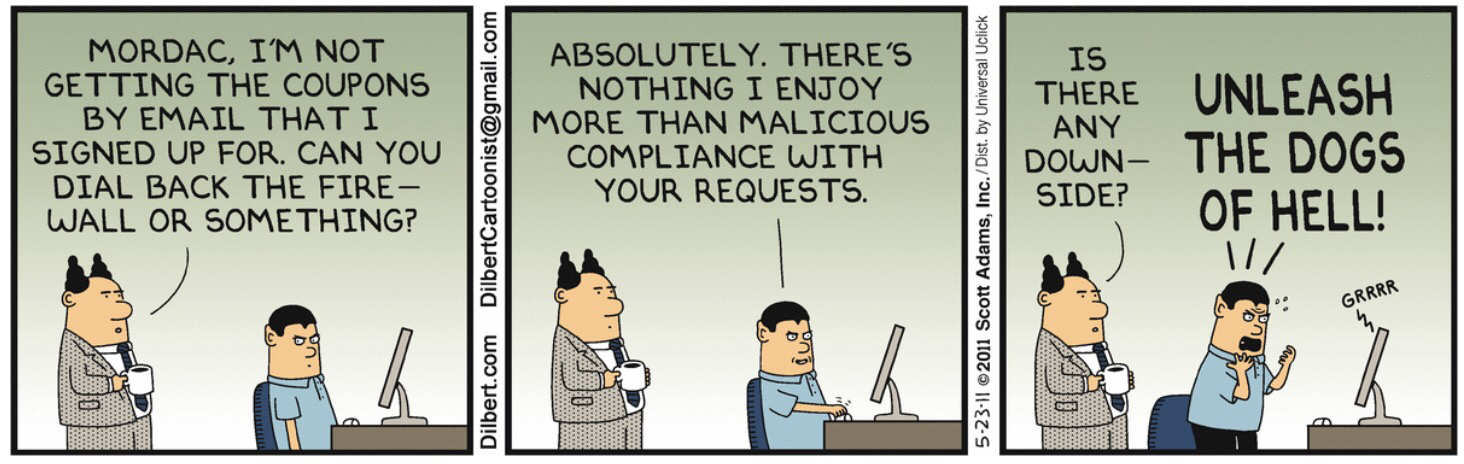
    Malicious Compliance: This is an interesting/curious way to behave;

    • Basically you follow the rules or instructions, to the absolute letter,
    • However, many rules and instructions will have a flaw,
    • Something the ‘rule writers’ didn’t quite anticipate,
    • You exploit this flaw and do something that has a negative consequence,
    • When the person in authority experiences the negative consequence, you don’t get punished because you were only ‘following orders/complying with the rules’.

    The full definition:

    IMG_5669Lots of the examples of malicious compliance seem to originate with people’s military experience or school life. Hierarchical institutions where people in charge sometimes enforce petty rules over their subordinates.

    A frequently quoted example is two soldiers being told to ‘paint the whole room white’ by a petty superior. They do in fact ‘paint the whole room white’; including light fittings, Windows, desks and chairs. This act of malicious compliance is difficult to punish as the offenders were only ‘doing what they were told’, to the letter.

    If you are interested in malicious compliance I’d recommend looking at the following; The Good Soldier Švejk and Tales From Tech Support on Reddit.

    The Good Soldier Švejk is a character created by Czech author Jaroslav Hašek and describes his experiences during the First World War, fighting for the Austrian Hungarian Empire. Švejk basically manages to frustrate the military rules by behaviour that his superiors cannot prove is deliberate. The idea of ‘dumb insolence’ fits nicely alongside malicious compliance and the word ‘Švejk’ has entered the vocabulary to describe that sort of behaviour. Thank you to Jon Beech (@_jonb) who pointed me in the direction of Švejk.

    Tales From Tech Support (TFTS). If you’ve ever been involved in a skirmish with someone from an IT department, TFTS  on Reddit  gives you an insight into life on the other end of the phone. It also provides a warning about the terrifying consequences of being rude to Tech Support, that’s all I’m saying…

    Malicious compliance pops up frequently in the TFTS world on Reddit. Here’s a link to an example which talks about ‘blind ticketing machines’. I’ve no idea what it means, I’m just worried by the sinister comment at the end, ‘malicious compliance is the best compliance’. Beware!

    ‘Mordac the Preventer of Information Services’ from Dilbert explains malicious compliance far more clearly.

    IMG_5644

    Why should anyone care about Malicious Compliance etc? We live in a world where institutions tend to impose rules on people to get them to do ‘the right thing’. These rules are probably well-intentioned, logical, equality compliance assessed and future proofed. You might even be a ‘rule writer’.

    I would argue however that no rule is perfect, and there will be flaws. When you throw into the equation the idea that people are capable of malicious compliance, this could lead to some unforeseen, interesting and potentially damaging consequences.

    If you need to have rules, I’d suggest you develop them with the people who might be most effective at undermining them, possibly teenagers (in my subversive trouser based experience).

    If you are wondering about #getnakedandgotowork…. that’s at the end (it’s like click bait round here at the moment)

    So, What’s the PONT?

    1. Written rules are unlikely to be perfect. There will always be flaws.
    2. People (some) have a tendency to push the boundaries of rules, which exposes the flaws.
    3. Developing rules with the people who are subject to them might generate a better result (co-design, co-development or co-production if you like)

    #getnakedandgotowork. I know this seems unlikely, but it does appear to be true. A bit like the worst ever ‘dress down friday’. Anyway what happened was the President of Belarus getting his words mixed up in a speech about the country needing to embrace technology and work harder.

    Apparently President Alexander Lukashenko (61) urged the people of Belarus to “get undressed and work until you sweat”. And that’s just what the people did. They also recorded their naked working in pictures they posted to social media with the #getnakedandgotowork hashtag.

    I guess that’s a fairly mild example of malicious compliance, you can read more about it in this Evening Standard article. Nothing more exciting than a picture of the President mopping his fevered brow from me…

    work until you sweat…..
    work until you sweat…..

  • img_2714

    The Parable of the Good Samaritan by Balthasar van Cortbemde (1647) Source: Wikipedia Creative Commons Licence.

    The Good Samaritan Experiment. This is a really interesting bit of work for anyone involved in how care is provided.

    Dave Snowden originally switched me on to it. Dr Rebecca Sharp picked it up again at the Bangor University Festival of Behaviour Change (#behfest16 link here) in a session about how ‘Good People do Bad Things’. Before I get onto the experiment, please consider the following situations, and try to keep them to mind:

    • A social worker with a packed caseload of children at risk,
    • A nurse working on a busy ward with ‘not enough hours in the day’,
    • A primary school teacher with a class of 35 kids, four of then with additional needs,
    • A young person, in full-time education, caring for a family member,
    • A home carer with a list of eight, ’15 minute visits’ between 10am and midday, and
    • A manager with 25 ‘reports’, an inbox with 240 unread emails and pressure from their  Senior Leadership Team boss to get all the annual performance appraisals done by the deadline.

    Princeton University Theological Seminary 1973. The experiment was carried out by John Darley and Daniel Batson, and you can read the original Journal of Personality and Social Psychology paper here: “From Jerusalem to Jericho”.

    To set the scene there are a couple of things you need to know. First is the Parable of the Good Samaritan (see image from the Balthasar von Cortbemde above). If you are unfamiliar with the parable, have a look at Luke 10: 29-37, but the basics of the The Good Samaritan story are:

    • A man is travelling from Jerusalem to Jericho,
    • He is attacked by robbers and left for dead by the side of the road,
    • A priest passed by, ignored the man and went past,
    • A Levite passed by, and did the same, hurried on his way,
    • A Samaritan passed by, stopped and helped the man,
    • The Samaritan went as far as taking the injured man to a place of safety and paid for his care,
    • Jesus asks, ‘which three of these was a good neighbour?’,
    • Answer, ‘he who showed mercy, the Samaritan’,
    • Jesus then instructs people to ‘go and do likewise’.

    The second thing you need to know is that the people involved in the experiment were attending the Princeton Theological Seminary. These weren’t Microbiologists, Lawyers or Chemists. They had more than a passing interest in Theology. They were likely to become involved in the world of religion themselves. The Parable of the Good Samaritan is likely to have meant something significant to them.

    How the Experiment Worked: There’s a useful video that explains this below, but in shorthand:

    1. A group of 40 students are carefully selected to avoid bias and other ‘contamination’,
    2. They are split into 2 groups, and each group was asked to prepare a lecture, which they will have to present,
    3. One group has the topic of the Parable of the Good Samaritan,
    4. The other group is talking about job opportunities for people studying theology,
    5. They are then told that the lecture is to be delivered in separate building, a distance away,
    6. They are given times to get to the building;
      • small amount of time (they will have to rush),
      • reasonable amount to time,
      • plenty of time, absolutely not need to rush.
    7. On their way to the venue, it has been set up so that they will encounter a person in distress. Someone who is coughing and has abdominal pains (an injured traveller?).
    8. The whole point of the experiment is to observe their reactions to the injured traveller.  Do they ‘pass to the other side of the road’ or do they stop to help?

    Who stops to help? Before revealing the results, what do you think?

    • Does ‘framing’ The Good Samaritan Story beforehand have an impact? Do the people going to deliver that lecture behave differently to the people going to talk about jobs?
    • Does time pressure have an impact? Do the people in a rush behave differently to those with plenty of time on their hands?

    Here is the video from Bo Bennett at sociallypshyced.org  (worth watching for the last sentence)

    The Results. Hopefully you’ve watched the video, but just in case:

    • Framing of The Good Samaritan Story. There was no difference between how the people who were giving a lecture about jobs and those giving a lecture about the Parable of the Good Samaritan, responded to the injured traveller.
    • Degree of Hurrying. I find this interesting, some people were in such a rush that they literally stepped over the person in distress. Getting back to the test groups, the percentage of people who offered help were:
      • Low Hurry – 63%
      • Intermediate Hurry – 45%
      • High Hurry – 10%

    Pause for a Moment and Think About This. For people in rush, only 1 out of 10 people stopped to help someone on distress. Even for those people with plenty of time, almost 4 out of 10 also passed straight by.

    There are some interesting implications of this research. Thinking about those people I mentioned earlier (the Nurses, the Teachers, the Home Carers, the Manager etc), what does it mean to be in a big hurry? Do the pressures imposed by the ‘system’ and world around you reduce your capacity to care?

    One Final Thought. What about robot carers? Completely rational machines that are programmed not to be rushed, and to deliver the care that is needed. Could they be more caring than a human under time pressure? Shirley Ayres will have a view on this, are robots the future of care?

    So, What’s the PONT?

    1. Is ability to care, linked to the ‘time available’ to care?
    2. If you are working in a highly time pressured environment, is your ability to care reduced?
    3. Would ‘giving more time’ automatically mean a greater level of caring?

    Image Source: Parable of the Good Samaritan by Balthasar van Cortbemde (1647) https://commons.wikimedia.org/wiki/File:Balthasar_van_Cortbemde_-_The_Good_Samaritan.jpg

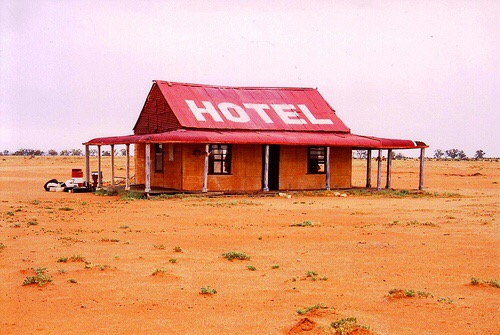
  • IMG_5379This is a brilliantly weird story I heard last week. Thank you to Andy Middleton from TYF for letting me share it.

    Saturday Night at the Pub. Picture saturday night in an Australian Outback mining settlement, a good few years ago. At the local (only) Pub is a younger Andy, sampling the hospitality.

    As the night wears on one of the operatives from the local mine, a Mr Digger, enters a state of ‘advanced refreshment’ (as do most of the Pub’s inhabitants).

    During a conversation between Mr Digger and the Boss of the Mine, it becomes apparent that they need to discuss some aspect of workplace performance. An impromptu ‘Performance Review’ if you like.

    I was once given an ‘impromptu performance review’ by an ‘over refreshed manager’ at a  conference – I strongly recommend against the practice. Good or Bad news, it never works out in the morning…

    Back to Mr Digger and the Boss. In the way of these things, it was decided to continue the conversation, ‘outside on the porch…’

    Guess what happens next? I bet you are thinking, “I know what happens next… spilt beer, broken chairs, a bloody nose and Mr Digger gets sacked on Monday morning”. An excellent guess, possibly based on years of experience, but wide of the mark.

    What actually happens is as follows. The Boss steps out of the back door of the pub. Mr Digger takes a brief detour out the front heading for the road. Everyone sighs, thank goodness, ‘Digger’s seen some sense and is heading home’.

    In fact Mr Digger does not head home, instead he steps up to the nearest, and only, street light in the settlement. Being the only outside light source, for 500 square miles, it does a fine job of attracting swarms of flying insects that hang about the outback on a saturday night. Mostly moths as it happens. Massive great clouds of them, flapping around the light bulb.

    Mr Digger approaches the light carefully scoops up a large cupped handful of moths and places them in his mouth. You get the picture, puffed out cheeks, a weird look in his eyes and a strange ‘flapping’ noise coming from his general direction. Then what happens is truly bizarre.

    Mr Digger walks back around the corner of the Pub, towards the Boss, gets up good and personal and opens his mouth. The moths, delighted at their new-found freedom make a dash for safety, in the direction of the Boss. Sadly, some of the moths didn’t make it (survival of the fittest huh!) and just dribble down Mr Diggers chin in their final death throes.

    Apparently that was the end of the ‘performance review’ conversation. People went back to drinking beer, and resumed work on Monday morning like nothing unusual had happened.

    Key Skills & Behaviours. I’ve spent a lot of time thinking about what happened here, it’s either genius or lunacy.

    You are in a ‘no win’ situation with your Boss, what do you do? Do you choose the ‘standard’ option and get sacked, or something; new, innovative and completely bizarre. In my view Mr Digger displayed some exemplary behaviours that should have got him promoted on Monday morning:

    1. Thinking on your feet,
    2. Flexibility and creative thinking,
    3. Handling difficult situations,
    4. Well managed risk taking (some species of moth are poisonous – probably all of them in Australia),
    5. Excellent forward planning skills. If this ever got to a Disciplinary Hearing, who on earth is going to believe a Boss who says ‘Employee X disrespected me by speaking with a mouthful of moths…’ Ha ha ha.

    On the subject of Moths.

    Moths can be a bit of a nuisance is Australia. Here is a link to an article describing how the town of Winton in Queensland was invaded by ‘Millions’ of moths.

    The Moth, is an event in New York (and other places) where people stand on stage and share stories (a bit like this one). They are worth looking at. In particular, have a look at this description of life on an outback ranch where the speaker has his ‘trousers eaten by a giant lizard’. I have a friend who had his shoes stolen by a fox (only ever one shoe at a time) but that’s another story. Video of the giant lizard storybelow:

    One final thing. If you are wondering how on earth we got onto the subject of moths (me too) I think it was to do with me referencing their use as a tool of sabotage. In a previous post I mentioned an old CIA Field Sabotage Manual,where it was recommended you take moths to the cinema in bag, to release during propaganda films. I was going to write an update to that post, but to be honest, Andy’s ‘Speaking Moth’ story is much more interesting.

    So What’s the PONT?

    1. None really, that’s just a great story, thanks Andy.
  • Dangerous Olives (in the wrong hands)
    Dangerous Olives (in the wrong hands)

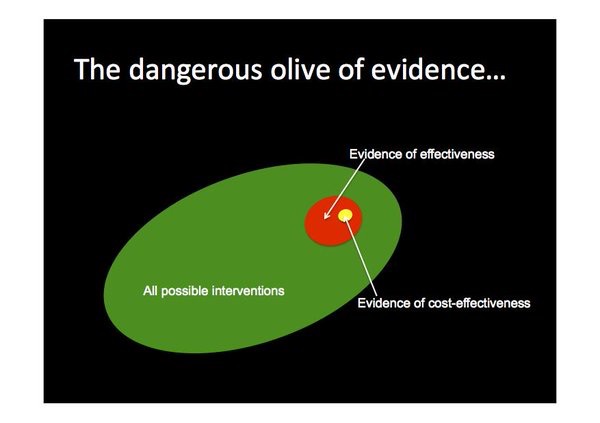
    The Dangerous Olive of Evidence. Yes, that does sound a bit weird, but please stick with me for the explanation. Close your eyes and just imagine an Olive (don’t worry, I’m not trying to trick you into a Mindfulness experiment).

    Imagine a nice plump juicy green olive; Spanish, Greek, Italian, take your pick. Enjoy the taste of that delicious olive flesh, until your teeth inevitably crunch upon the little wooden pip. Perfect, unless you buy the de-pipped type, but I’m sure you get my point.

    Well that was delicious, but what’s an olive got to do with evidence? First off, you have imagine the whole olive is all of the evidence that is potentially available about a particular topic or subject. Secondly you have to think of the small wooden pip as the amount of evidence that people actually use to make decisions or policy.

    The ‘dangerous olive of evidence’ theory works on the basis that only a very small proportion of what could be used, is actually used. If you subscribe to that view that, a good decision is based upon using as much information as possible (within reasonable boundaries of time & cost), ignoring so much potentially useful information isn’t good practice, look at what you are missing.

    This idea was put across by Dr Fiona Spotswood last week at #behfest16, and it immediately struck a chord. Not just with me, but with quite a few people. In fact, the Future Generations Commissioner for Wales also picked up on it. The idea is explained further in this article ‘Olives and Elephants: the evidence problem in behaviour change’, where Dr Harry Rutter from Public Health England is credited with introducing the phrase.

    For me, there are some key points relevant to #behfest16 in Dr Spotswood’s paper:

    • Is all evidence equal? Is there a preference for quantitative ‘hard’ data over everything else?
    • What to collect? Does this lead to a bias towards the evidence we ‘can’ collect, rather than evidence we ‘need’ to, or ‘should’ collect?
    • Over Simplification. Does this miss out on the complexities of real life and try to over simplify things that aren’t actually straightforward?

    There’s a huge amount to think about here, I have written about something similar previously in Expert Bias and The Ladder of Inference.  It needs a lot more thinking and debate, hopefully at #behfest16, which I can report on in a future post.

    Credit: Dr Harry Rutter
    Credit: Dr Harry Rutter https://www2.uwe.ac.uk/faculties/BBS/BUS/Research/BSMC/Spotlight_32_FS.pdf

    Behaviour Change Techniques and Theory Taxonomy.  Another part of Dr Spotswood’s paper links to work that has been done to try to bring together the large number of behaviour change techniques that exist (the whole olive) into something with some order and structure (a taxonomy if you are feeling scientific).

    I highly recommend having a look at the Behaviour Change Techniques and Theory website, hosted by UCL, to get an idea of the work carried out by a number of Universities.

    One stand out statistic can be found in the Annals of Behavioural Medicine, Volume 46, August 2013, link here. In summary, the paper reports that there are 93 distinct Behaviour Change Techniques (BCTs). Each one of the 93 BCTs was proven to work and had evidence to support this, which is why it had found itself on the list of 93.

    Are We Wasting Time Chasing Innovation? The fact there are 93 proven BCTs that already exist in the world, does raise an interesting question. Shouldn’t we be trying some these before we go looking for something new? Is ‘innovation’ something you try once you’ve exhausted the existing possibilities?

    This is an interesting question I’ve heard raised several times at #behfest16, frequently by Dr Carl Hughes, the Director or the Wales Centre for Behaviour Change. As with the ‘dangerous olive’ question, this is something else that could do with a bit more discussion across the community.

    So, What’s the PONT?

    1. The amount and type of evidence people use to make decisions (or policy) can depend upon may variables. Overall it is probably better to have a lot of evidence from a wide range of sources, rather that a small amount from a very narrow field.
    2. Choosing what us useful evidence is difficult, but it shouldn’t be driven by what ‘can’ be collected in favour of what ‘should’ be collected.
    3. There are a lot of BCTs in existence (93) that have evidence to prove they work. Should we be looking at these before chasing ‘new’ and ‘innovative’ alternatives?

    This was post from week 2 the Festival of Behaviour Change at Bangor University, programme link here.

  • IMG_5157

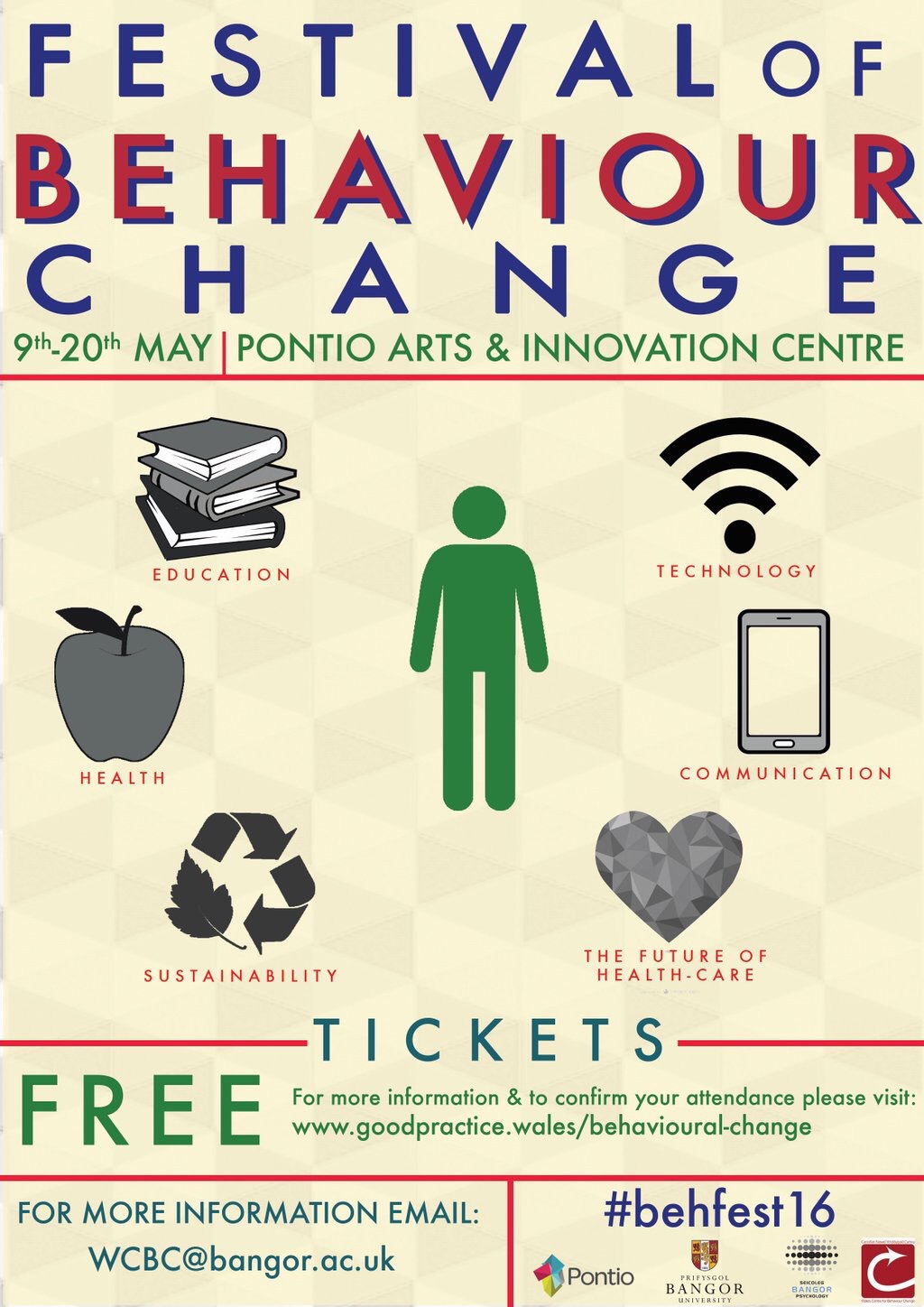
    Here’s a rapid post to share a few of the things I’ve learnt from Days 1& 2 of #behfest16,the Behaviour Change Festival currently happening at Bangor University (details here).

    Details for each day, and some of the resources can be found on Good Practice Wales here:

    It is difficult to compress 2 days, but here are my 4 key learning points:

    Evidence and Data Live Here. I know I shouldn’t be surprised by this but… in two days I’ve seen more data, graphs, error bars and ‘p values’ than I encounter in about six months. Proper statistical stuff that’s been generated through rigorous scientific methods.

    The key point for me is that there is a goldmine of information sitting in Universities. I get the feeling that; whatever I could possible imagine as a challenge, or issue I need to get a better understanding of, there is likely to be someone who can help. They might not know the exact answer themselves, but they can certainly point me in the right direction. This leads onto my next point.

    Experimentation. I’ve forgotten what it’s like to carry out proper experiments. Having an idea (or several ideas) about something that might work, and testing them to see if they do actually work (or not).

    The work around the Gamification of the Behaviour Change Festival is a great example of this. There is theory and research about the approach, and it’s being tested here. What feels different is the ‘experimentation mindset’, where everything is about testing and learning.

    I do wonder if we have lost this ‘experimentation mindset’ in the corporate world? Challenges often leap straight to ‘pilot projects’ that are in reality, just small-scale versions of the big project someone wants delivered. The testing of ideas, failing, evaluating, learning and moving on doesn’t always happen.

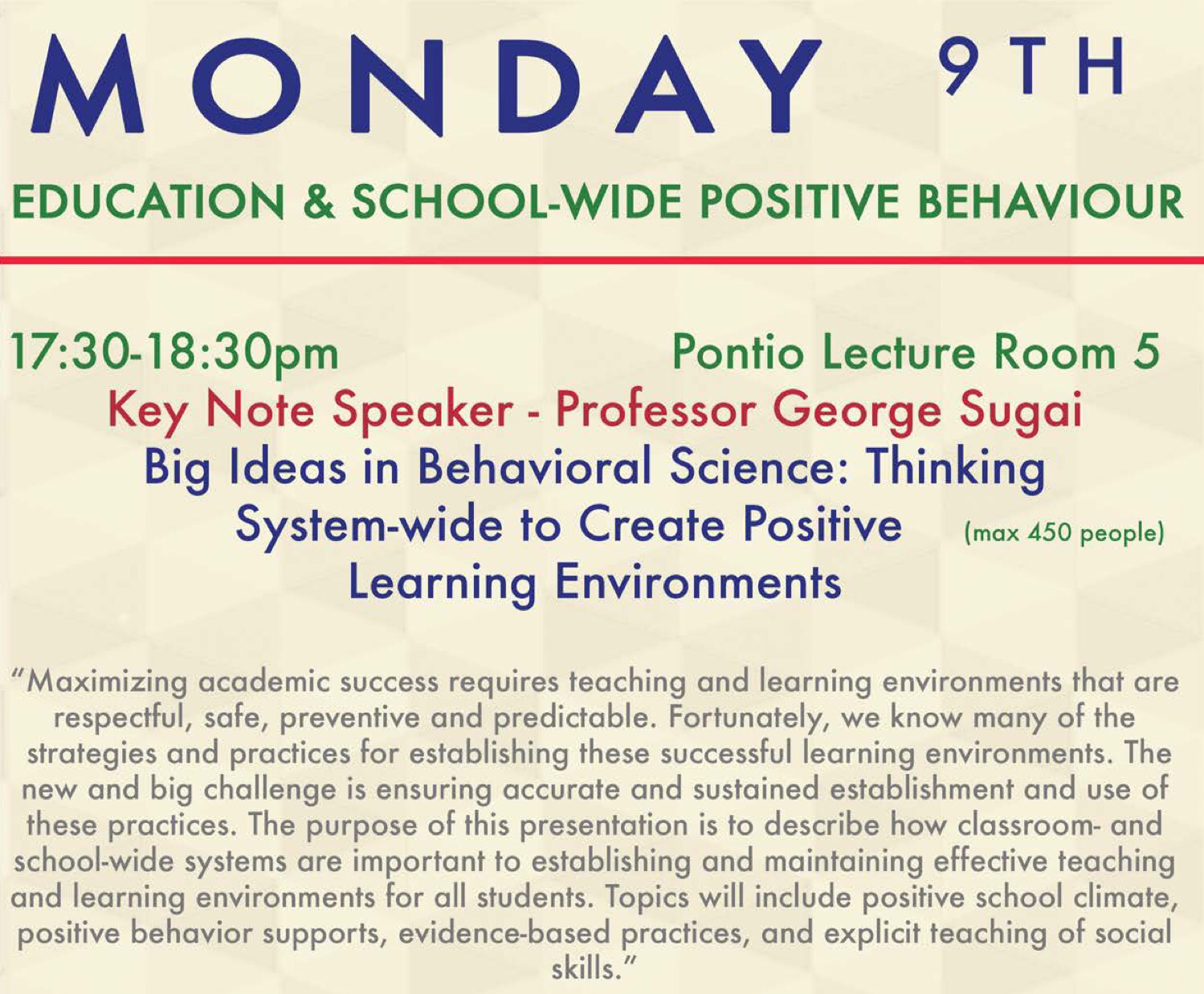
    Schools are just like ‘Grown Up’ Organisations.  Monday night Professor George Sugai gave an excellent keynote lecture on the work he has been doing on School Wide Positive Behaviour programmes in the US and around the world. You can watch a video of his talk here, I very much recommend it.

    This might be a bit controversial but, the challenges of creating positive behaviour with; individual students, in classrooms, in whole schools, across school districts and States felt a bit familiar. It sounded like many of the ‘transformation programmes’ and ‘culture change initiatives’ I’ve encountered over the years. The difference is that Professor Sugai was able to demonstrate that what he is doing has worked, he had plenty of evidence. By contrast, most of the ‘culture change’ initiatives I’ve seen…… anyway….. moving on quickly…..

    The point I’m trying to get to is that if the approach to developing positive behaviour in schools works (a culture change?) could it work in organisations full of ‘grown ups’? It might be worth a look. To be frank, I’ve also met a few people in ‘grown up organisations’ who could do with re-learning some of the social skills taught in schools.

    IMG_5186Integration Happens in Unexpected Places. I’m trying not to over use words like ‘inspiring’, but listening to Professor Judy Hutchings really was inspiring. Professor Hutchings talked about the KiVa work to reducing bullying in schools, which was developed in Finland and is being applied in Wales (link here). This is really important work that has a huge impact on individual students and their future prospects. No surprise, there was huge amounts of data and evidence to demonstrate it works.

    One thing that really intrigued me was that Powys Local Health Board were delivering the KiVa programme with schools. This seemed a bit unusual, a health body delivering things in schools which traditionally look like the preserve of the educationalist. What’s going on?

    The explanation is quite obvious when you think about it. Being subjected to bullying can have considerable negative effects on your emotional health, that can contribute to depression, anxiety and affect your ability to learn in school. Why wouldn’t a health body want to invest in something that helps to prevent some of those mental health issues, even if the delivery is happening in schools?

    What does this mean for the Wellbeing of Future Generations in Wales? One additional thing I’ve been involved in over these 2 days is trying to draw out what might be useful for the implementation of the Wellbeing of Future Generations Act in Wales. Linked to my 4 key learning points I hope this helps the group that are picking this up for the rest of the Festival, good luck.

    1. Data and Evidence Live Here. Bangor University (and others, I’m sure) have a goldmine of knowledge, data and evidence that can help. They also seem to be very happy to share it.
    2. Experimentation Mindsets. Lots of the people I’ve met are comfortable with testing ideas. If the Future Generations Act needs some different ways of doing things, this ‘experimentation mindset’ might help.
    3. Schools can help ‘grown up’ organisations. Does the work Professor George Sugai has been doing with the school system have application to other organisations and systems?
    4. Integration is already happening. There are some very interesting examples of organisations already working together to deliver long-term prevention activities. We should be on the look out for them.

    Keep and eye on #behfest16 or Good Practice Wales for more updates on the Behaviour Change Festival. There might be some spaces left if you want to come along – booking via this link.

    IMG_5175

  • IMG_5104This is an experimental post, please be tolerant. It is linked to the Festival of Behaviour Change at Bangor University (9th-20th May), programme and booking details available here.

    Olwen Williams (@OlwenOlwen) asked me to help out with the #wedocs Twitter chat on the 18th May, by writing a blog post to help prompt the discussion. The topic on the 18th is Behaviour Change and the Future of Healthcare. I’m delighted to have been asked, but slightly angst at the prospect of writing for the #wedocs community, so this is a test piece.

    Behaviour Change and the Future of Healthcare, is a huge proposition. It’s rapidly dawned on me that it might be the second hardest question ever; the first being “What is the answer to; Life, The Universe and Everything?” (and we all know the answer to that one!)  So here goes…

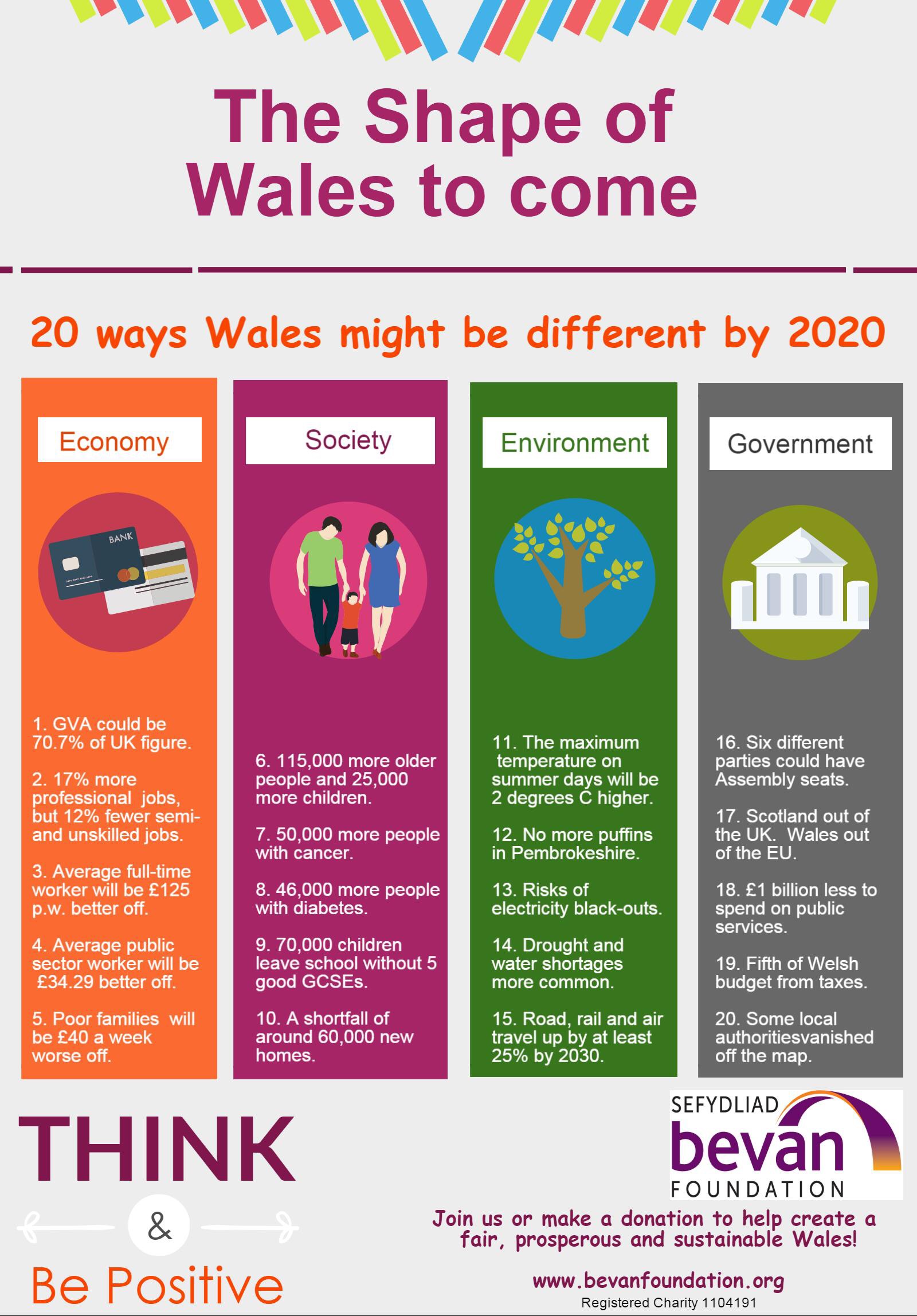
    We are not on the road to Nirvana. Just to narrow the scope a bit, I’m focussing on Wales for the moment.  I’ve had a look at what The Bevan Foundation (an Independent Group) have to say about the future. Their report, The Shape of Wales to come, is an analysis of what Wales might be like in 2020. This isn’t an overly cheerful report, basically the commentary concludes with; …”the direction of travel is clear – Wales is not heading for Nirvana”.

    When you extract some of the messages relevant to the Future of Healthcare from the report, the following things stand out:

    • The will be 115,000 more older people (inferring additional healthcare needs),
    • There will be 50,000 more people with cancer,
    • There will be 46,000 more people with diabetes, and
    • There will be a lot less money available for the delivery of public services.

    For a population of around 3 Million, these are quite daunting numbers, and they present huge challenges for the future of healthcare. I do suspect that they also have relevance beyond Wales, which might play out in the #wedocs Twitter chat.

    IMG_5103How do we get back on the road to Nirvana? If you believe in the idea that ‘prevention is better than cure’, part of the response to this predicted ‘shape of Wales to come’ is about prevention and changing behaviours. Just getting better at what we do already probably isn’t the answer.

    There’s nothing really new in the idea that better, healthier lifestyles will help to reduce the incidence of cancer and diabetes. However the predicted increase in numbers doesn’t really suggest that the current efforts are having the desired impact. Do we need to be doing something different to change behaviours? Is this something not just to do with changing the behaviour of the ‘done to’, but also changing the behaviours of the service providers and decision makers?

    Here are a few ideas/prompts for the #wedocs discussion.

    Is Peer to Peer more effective than Professional to Patient?  I’ve been watching the rise of ‘Park Runs’ for a few years. They have grown into a ‘movement’ which is actively embracing ever more people, including a few I know, who might never have considered running. There has been no government or public services ‘push’ behind ‘Park Runs’ as far as I can see, they just happened. A group of enthusiasts who wanted to encourage people to take part and experience the joy of running. There are now over 62,000 Park Runs taking place at 398 locations across the UK, with almost a million runners.

    Taking up running involves a shift in behaviour that has potentially positive benefits for the people who do it. How did this happen? Based upon the few cases I know of, this has been about peer to peer support rather than any professional intervention. The question this raises for me is, how do we build upon the power of peer to peer networks to encourage positive behaviour change? Is influencing the ‘peer to peer’ relationship a legitimate role for healthcare professionals?

    Making the most of our Natural Assets. There appears to be growing evidence that physical activity in the natural environment has a positive impact on our health and wellbeing. This report in Proceedings of the National Academy of Sciences, by Gregory Bratman, talks about the positive impact on mental heath of walking in natural areas.

    I have heard of examples where people have been ‘prescribed’ courses of outdoor activity. These approaches aren’t however widespread and according to people who support this approach, they say that ‘pharmaceutical’ solutions are overwhelmingly favoured. A ‘course’ of healthy walks in the woods doesn’t seem to have the same profile as a packet of anti-depressants or blood pressure tablets.

    There seems to be a question here about how do you influence a shift in the behaviour of two groups:

    • how would you encourage people to seek the outdoor option in favour of a pharmaceutical solution?
    • how would you encourage the ‘prescriber’ or commissioner to choose this approach ahead of the tablets?

    Can a small networked Country act as a test-bed? There are some interesting things that have happened in Wales over recent years that have had a significant impact upon healthcare.

    • A ban on smoking in enclosed spaces,
    • A presumption of consent for organ donation

    These happened ahead of legislation in other countries, and seem to suggest that a small networked country can adopt practices quicker than somewhere larger. I do wonder if the recognition of; being in the forefront, and doing things differently nurtures an environment where the population is more willing to adopt legislative changes? If there is a ‘disposition to change’ there might be an opportunity to respond creatively to some of the challenges posed in the Bevan Foundation report?

    So,  4 Prompting Questions for the #wedocs Twitter Chat

    1. Should healthcare professionals seek to influence behaviour change through peer to peer networks?
    2. How do you influence patients/service users to seek ‘green alternatives’ to pharmaceuticals?
    3. How do you influence the prescribers to consider ‘green alternatives’ to pharmaceuticals?
    4. Does being a small networked country make you more disposed to testing healthcare that promotes behaviour change?

    Will any of this help us get back on the road to Nirvana? Any comments on my ‘experimental post’ are gratefully received. Depending on how it goes, this might feature on #wedocs next week.

    Thanks

    IMG_5056By the way, here is a link to The Festival of Behaviour Change and the Future of Healthcare day, 18th May.


  • Guess what these people are doing - sun soaked selfies…. What are they doing – sun soaked selfies….? Pic source – see video below

    Question: What do people want/desire the most if they happen to be lying on a lovely sunny beach?

    • A refreshing cool drink (of your choice) – you need to stay hydrated?
    • A good book to read – that’s what relaxing on the beach is all about?
    • Sun tan cream (with a high SPF factor)?
    • A suitable companion to apply the sun tan cream?
    • A great view of the sparking blue sea? or
    • WiFi – to keep in touch with people stuck back at home in the rain, and send them sun soaked selfies?

    Answer: WiFi, obviously.

    Maslow's Hierarchy of Basic Human Needs (updated) Maslow’s (updated) Hierarchy of Basic Human Needs

    Maslow’s Hierarchy of Needs and WiFi. You’ll probably be aware of Maslow’s Hierarchy, and have seen the attached graphic illustrating how it has been updated for the internet generation.

    In the ‘updated’ Hierarchy, WiFi has become the most basic of all human needs. Have a think about that proposition for a moment……

    Basically, the Hierarchy of Needs is a theory about human motivation that psychologist Abraham Maslow published in 1943. The idea is that humans have 5 sets of needs that come in a particular order.

    This is often represented as a triangle to illustrate that needs lower down the triangle have to be satisfied before you move upwards. The theory is frequently used in business as a way of understanding staff motivation. So much so that this BBC article says, “….on management training courses it’s as inevitable as biscuits and role-playing”.

    From my own experiences I’m inclined to believe that WiFi has assumed the status of a basic ‘need’ for many people. If you know any teenage kids you’ll understand exactly what I mean. I did write a post about it following my experiences of hillwalking in the Brecon Beacons, in the pouring rain, not quite a sunny beach but the same principles apply.

    How do you exploit Maslow’s Hierarchy for Public Health? Getting back to the sunny beach, and main point of this post, I think this is a really clever idea…… Shadow WiFi in Peru.

    In 2015 the Peruvian League Against Cancer, worked with an organisation called Happiness Brussels to raise awareness of the risks of getting skin cancer by spending too much time in direct sunlight. Organisations worldwide have been doing this for a number of years, using a variety of awareness raising methods to coax people into changing their behaviour. What was clever about the activities in Peru was that they actually got people to change their behaviour by altering the physical environment. They tapped into one of or most basic human needs – the need for free WiFi – and they provided it, but with conditions.

    It would have been fairly straight-forward to provide free WiFi. You click a link and get to read some safety advice about exposure to the sun and the risk of skin cancer in the ‘sign up’. We’ve probably all experienced this sort of ‘hassle’ before you get free WiFi – it’s usually providing an email address to bombard you with advertising spam at a later date.

    However, they went one step further in Peru, and provided free WiFi that only worked in the shade. To do this they constructed a screen that provided the shade and placed the WiFi transmitter at the top. The transmitter had a device that tracked the sun and only provided WiFi within the area of shadow. In direct sunlight, no free WiFi, brilliant!

    The Happiness Brussels video below gives a good explanation if what they did, or you can read about it in this psfk.com article.

    What does behaviour change cost? I’m struggling to find any details of how much the Shadow WiFi in Peru cost. However, based upon the little bit I know about scaffolding (to hold the sun shade) and WiFi technology, I’m guessing it’s in the thousands of pounds rather than tens or thousands of pounds.

    When you put this in context of the costs of skin cancer this seems like a very cost-effective way of preventing costs further down the line. If you are interested in this sort of thing have a look at:

    IMG_5056If you are really interested in this sort of thing…… You should come a long to the Festival of Behaviour Change at Bangor University between the 9th -20th May, #BehFest16. You can see the programme and book via this link on www.goodpractice.wales/bangor.  19th May is a specific day where we will be focussing on the use of technology to promote behaviour change.

    So, What’s the PONT?

    1. Some People can become so used to having something (like WiFi) that it can appear to be a ‘basic human need’, on which they depend.
    2. If you are that dependant upon something, there are opportunities to use that dependency to influence other behaviours.
    3. Using technology (or other methods) to influence behaviour can have a positive effect on People and prevent significant costs in the future. Prevention is always better than cure.
  • IMG_4906A long time ago I was part of an undercover squad that would move beds around at weekends and in the evenings.

    These weren’t ordinary beds. These were the sort of beds you see in hospitals (the really expensive ones), with mechanical parts that allow you to lie down, sit up or position yourself in about 40,000 different ways. There were also the mattresses, equally complicated.

    They were very technical, very heavy, and awkward to move up steps, through doors and around the corners in small houses. On one occasion I think we even removed the glass from a front window to get a bed in (and out). But it was all quite necessary and helpful, especially if you were planing to eventually die in your own home, surrounded by the people you love, on a specialist bed.

    None of this seemed unusual at the time. It was just part of helping out the District Nurses that operated in the Community.

    A Community Going Above and Beyond. Basically the District Nurses had ended up going ‘above and beyond’, to provide nursing care for people who were terminally ill. Somehow they had acquired bits and pieces of equipment that helped people live, and eventually die, more comfortably at home. Eventually this escalated into one of these incredibly heavy but extremely comfortable beds. From what I remember, some of the people who had passed away would leave donations in their Wills to a Community Nurse Fund, to provide this sort of equipment to help others.

    Within the Community word got around and District Nurses eventually had control of 3 beds which could be placed in the homes of terminally ill people.

    Did I mention the beds were incredibly heavy? This is where the ‘secret bed transportation squad’ came in. Moving these beds around a hospital is a reasonably straightforward activity, you just push them along nice flat surfaces and stick them in a lift to move between floors. Unfortunately the ‘role description’ and ‘scope’ of the people who do this doesn’t extend beyond the hospital front door.

    Out in the community things are a bit different and the District Nurses just got on with it, and formed a ‘bed transportation squad’. The squad comprised: 

    • A mate with a van. He was actually a proper removal man, used to shifting heavy awkward equipment, so he doubled up as the Brains of the operation.
    • The ‘Technician’ someone good on the mechanical stuff who knew how these beds worked, and
    • The Donkeys. People who were quite strong, willing to work, and did as they were told. I was a Donkey.

    A Secret Bed Transportation Squad. The ‘secret’ part of the squads work was due to our operating hours. We all had other occupations and activity was determined by when the van was available, usually weekends and evenings. This was all done voluntarily and no money was ever exchanged, even the cost of fuel for the van was politely refused.

    Another ‘secret’ element was the fact that this wasn’t really ‘officially approved’, it was sort of ‘under the radar’. I’m not sure what was known or understood at Health Bureaucracy Headquarters, but that didn’t really worry the ‘bed transport squad’. We were just happy to be doing something that was helping out the District Nurses and the Community. This was helped by the fact that generally we all had some sort of connection (family, friend, colleague) with the people in whose homes we were scuffing the paintwork and wallpaper (collateral damage, a small price to pay….).

    Those were great days and on occasions, even many years later, people would insist on buying me a beer in the Rugby Club; to say thank you for what we’d done. If I’m honest, I used to struggle to remember some of the people / events, but I was happy to accept the beer, particularly as it made them so happy……

    IMG_4904The Abominable NO Man/Woman. All good things come to an end, and so did the ‘secret bed transportation squad’. I’m not sure of the exact circumstances but there were the usual rumblings about ‘policies’; Health and Safety Assessments, Risk Assessments, Procurement of Equipment Requirements, etc etc.

    The Abominable NO Men (and Women) in the Heath Bureaucracy Headquarters had started to get their teeth into in what the District Nurses were doing.

    I’m sure that many of these ‘policies’ were very necessary for very good reasons, like patient safety, but looking back I do think we’ve lost a lot, not just for the individuals who used the beds, but more widely:

    • The engagement of a wide range of people in helping the Community to fix it is own problems,
    • Being part of the ‘secret bed transport squad’ felt like I was doing something really useful in my Community,
    • The ability of a team of District Nurses to manage themselves, and the resources of the Community they worked in – for the benefit of people in that community – seems to have been diminished,
    • The ability of people to spend the last days of their life in their homes, surrounded by the people they loved. Having watched a relative die in hospital fairly recently, I know where I would rather spend my last days, and it’s not hospital,
    • Finally – I’m making a guess that the costs of spending your last days in hospital are significantly greater that what used to happen in the days of the ‘secret bed transport squad’.

    What’s this got to go with Buurtzorg? This slightly ‘rose tinted spectacle’ reminiscence, has been prompted by a blog post Annie Cooper wrote about her visit to Netherlands to look at the Buurtzorg model of District Nursing.

    In a brief discussion with Annie and Matt Wyatt, it did strike me that some if what was being described in the Buurtzorg model, was similar to what I’d experienced with the ‘secret bed transportation squad’. A smallish group (6 minimum ,12 maximum) of District Nurses, having the power and autonomy to ‘do the right thing’, with limited interference from above.

    25 years ago one of their actions had been to create the ‘secret bed transportation squad’ (before the Abominable NO Men / Women got their teeth into it). In her post Annie talks about the fact we are frequently operating from a ‘brownfield site’. I agree and sometimes we might need to think about going ‘back to the future’?

    So, What’s the PONT?

    1. People and Communities have considerable resources and the abilities to do great things.
    2. Sometimes, well-intentioned rules and regulations, imposed by well-intentioned public services can diminish what is possible in those Communities and People.
    3. We’ve done this sort of thing before. We can do it again, it might not be easy, but it’s worth a go.

    Links: Annie Cooper’s blog, ‘Why can’t we be more like Buurtzorg?’

    The Royal College of Nursing ‘observations’ of the Buurtzorg model.  Interestingly this sums up by saying that yes, the model has many merits but picking it up and replicating it in the UK isn’t straightforward. There are lots of complicating factors. A similar sort of point to what Annie is making about ‘brownfield sites’.

    Finally. I could not resist this. Here is the finest instructional video ever on how to move heavy, difficult bits of furniture around a domestic home. Courtesy of A.Shifter and Sons.

  • IMG_4869Before launching into; the ‘Good Practice Is a Bad Traveller Delusion’, one of my favourite topics, how about this……

    Cockney Cash Machines (ATMs if you like). This is brilliant, a while back a company that provides cash machines built them with the option of conducting your transaction in your chosen language of; English or Cockney.

    This probably wouldn’t work brilliantly well in the rural areas of Gwynedd, but for East End London it was a success.

    According to this BBC article, where there was a choice, almost 20% of people chose to carry out their transactions through the medium of Cockney (Cor Blimey, sorry I couldn’t resist).

    IMG_4848So, if you are looking for; some Sausage and Mash, and can remember your Huckleberry Finn; you’ve a choice between a Lady Godiva, Speckled Hen, Commodore, Horn of Plenty, Pony, Dirty or a Nifty. Oh, and don’t forget your Fleet Street. Cushty!

    How to rob cash machine? Massive disclaimer – this isn’t advice. Under NO circumstances should you do any of the following.

    A little while ago, using an exemplar of international ‘good practice’, there was a spate of cash machines being robbed across the UK. You can read about it in this example that happened in South Wales (the Bandits came across the border, from Bristol, obviously).

    The innovate piece of ‘good practice’ that the robbers implemented involved the following:

    • Target an isolated cash machine, at a quiet time (industrial estates on the weekend are good),
    • Use a heavy steel bar to prize open the money dispensing slot,
    • Insert the gas pipes from an Oxygen & Acetylene welding kit into the slot,
    • Flood the cash machine with gas,
    • Spray petrol onto the cash machine and ignite with your lighter,
    • Don’t  forget to stand well back…..
    • Pick up the cash after the ensuing explosion
    • Make a quick getaway (back to Bristol)

    Cash Point Explosion Good Practice Case Studies. I’m not saying that there is a case study written up on ‘how to blow up a cash machine, with commonly available tools’. However when you put ‘how to blow up a cashpoint machine’ into your internet search engine, there is a lot of information available, and it doesn’t take a genius to work out what to do.

    This link to a 2015 an article in the Daily Mirror talks about the ‘craze spreading from Mainland Europe’, while in 2014 the English Russia website reported ‘raids on 20 ATMs’. If you look closely enough at the internet, you’ll find quite a lot about cash machine robbery.

    Getting back to how this knowledge has spread quickly across Europe, two people I know provided an insight, I am paraphrasing, but I’m sure you get the gist:

    Law Enforcement ‘Friend’: “this started in Russia and Eastern Europe. Organised criminals are very effective at exchanging information on how to commit crime”.

    Slightly Dodgy Geezer ‘Friend’: “there’s probably an instructional ‘how to’ video about this on the Darknet*. Do you want me to look…..”  Me: Nooohhhh, please don’t, stop now!

    *I should explain, Darknet is somewhere you don’t want to go. It’s the sort of place that if criminals did have an organised method for sharing ‘good practice’, it would probably exist on the Darknet,  a sort of ‘Evil Twin’ to what they do at GoodPractice.Wales.

    Good Practice IS a Good Traveller. Getting right back to where I started, it seems clear from the spread of ‘alternative methods of cash point opening’  that some good practice does travel, extremely well.

    What seems to work in its favour is:

    • A genuine need for the ‘good practice’,
    • People willing to share what they know (it’s hard to cover up after a cash point explosion),
    • People willing to receive knowledge, with a high level of motivation to learn and improve,
    • ‘Instruction’ that isn’t too prescriptive. Here are the general principles, feel free to adapt them to your own circumstances, and
    • Effective measurement of progress; “Are we still alive? Did we get any cash? Have we been caught?”

    I’m not sure we can replicate this context in the world of public service good practice. It does however serve as a good reminder that using the phrase ‘Good practice is a bad traveller’ doesn’t really stand up. It’s not a simple process, if the circumstances are right, good practice goes off with a bang……. (I’m sorry).

    So, if anyone uses the phrase in front of you again, just respond deliberately and slowly in a low tone…. “what about blowing up cash machines……”. You could even try it in a Cockney accent…..

    So, whats the PONT?

    1. Good practice does travel, you just need the right circumstances
    2. The circumstances that support travelling depend a lot on how willing people are to learn
    3. In the internet age, almost anything you need to know can be found online (just be careful about what you put into your search engine)

    Linked Posts:


  • IMG_4859How about this for an act of ‘transformation’. Publicly blow up (yes, with explosives) one of your cherished Civic Buildings.

    Not some ugly multi-storey concrete carpark. No, go for a Hospital; a large, relatively new one, in the middle of a City. Now that screams ‘TRANSFORMATION’…….things will never be the same again.

    I know that I advocated a ‘Small and Imperfect, Minimum Viable Transformation’ approach in my last post, but sometimes we do need to do big things. Big symbolic things that absolutely demonstrate that things really have changed significantly, transformed.

    Who would blow up a Hospital? The Canadians it turns out. They were quite busy blowing up hospitals back in the late 1990s. That’s not as reckless as it sounds, these weren’t random acts of civic vandalism, there was a clear strategy behind the ‘controlled demolition’. It was all part of their ‘transformation’ of health services, and response to the extreme financial pressures on public services (sound familiar?).

    I’m not about to advocate a similar approach in the UK, but now that the dust has settled (literally) I do think its worth looking at what the Canadians did almost 20 years ago.

    Before getting into the detail, here’s a shortened video (14mins) of the hour-long special News Channel report, broadcast on the day of the ‘implosion’ of the Calgary General Hospital, 9am, 4th October 1998.

    Learning from the Past. Obviously there was a lot more to the changes in the Canadian healthcare system than just ‘blowing up hospitals’. I am intrigued though, if the changes are ever discussed, it is generally the ‘blowing up hospitals’ part that gets mentioned.

    The memory and symbolism of such a destructive act lives on and dominates the public service narrative. Anything else that happened around these relatively few acts is ignored, forgotten or dismissed. It’s almost like a huge programme of transformation is defined by a limited number of ‘controlled explosions’. The likelihood that ‘we could never do that here’ (blow up hospitals), means that anything else they did isn’t relevant to us either……? I’ve included an example of this selective remembering in a video from the ITN World News at the end of the post.

    If you want a much deeper analysis of what happened in Canada during the 1990s have a look at these resources from the Canadian Foundation for Healthcare Improvement (CFHI): Healthcare Challenges in a Period of Fiscal Restraint; lessons learned and enduring legacies.

    It is interesting to note that on the home page of the resources there is the aphorism from the Spanish Philosopher George Santayana: “those who cannot remember the past are condemned to repeat it”. I’ll leave it up you to work out what’s behind using that phrase and whether or not the ‘enduring legacies’ of the changes in Canada were; good, bad, or a bit of both?

    Just to whet your appetite here are a few of the key things I took from reading the report and watching the videos on the CFHI pages:

    • Canada had a huge financial problem that drove the changes.
    • Everyone speaking in the videos knew the numbers, they could confidently quote the figures.
    • Government in Ontario created a separate Arms Length Commission which was mandated to take decisions around closure and consolidation of facilities.
    • The Commission was made up of appropriately qualified people, who acted in the ‘Public Interest’.
    • The Politicians in charge, supported the work of the Commission, and ‘wore the decisions’ (that’s an interesting phrase / idea).
    • In Ontario, they moved from 225 down to 150 facilities, which included the closure of 30 hospitals.
    • Securing a level of acceptance from service users involved ‘showing people a better future for healthcare’, not just structural change in response to the financial pressures.
    • Service users often reserved their judgement on the impact of the change for many years.
    • One impact of reducing the number of staff was an increase in productivity.
    • Another impact was an increase in waiting times.
    • 20 years later, there has been a re-investment in healthcare.

    If you only have time to look at one thing from the CFHI resources I’d recommend this interview with Mark Rochon talking about the Ontario Arms-Length Restructuring Commission.

    Symbolic Transformation. The act of ‘blowing up a hospital’ is hugely symbolic. It screams out….. things are going to be different! For better, or worse, nothing will be the same again.

    This does make me think that if you are planning for a BIG Transformation (rather than the Minimum Viable Transformation approach), is it worth thinking about some big symbols to go along with it? You don’t have to just ‘blow things up’ either, building things is also an option. It’s the sort of thing that people remember for years, so it’s worth getting right.

    Here is the link to the ITN World News video I mentioned earlier.


    So what’s the PONT?

    1. Big symbolic acts send a very clear message, and get remembered for years.
    2. If you really want to change (transform) something on a big scale, it’s worth thinking about the big symbols.
    3. Other people have done this, it’s worth a look at what happened, otherwise as George Santayana says: “those who cannot remember the past are condemned to repeat it”

    IMG_4854

  • IMG_4794Speeches you never hear at a Corporate Conference: “… Our Transformation Programme is going to be small and imperfect. We are going to do many small things that probably won’t work straight away. However, we will learn lessons from these ‘experiments’ and apply the learning to a better next small thing, making sure we progressively move forward, in the right direction…”

    If you have heard this sort of thing at your Corporate Conference, you probably don’t work in public services, and you can switch of now if you like.

    Transformation is a BIG word. Most ‘Transformation Programmes’, (particularly anything to do with Culture, Values or Behaviour) talk about BIG changes, often in impressive language. This frequently involves the following; a clearly defined vision for the endpoint, a communications plan, milestones and targets, and a carefully crafted ‘road map’ which ‘articulates the journey’ to the troops.

    As far as I’ve seen the idea of small ‘experiments’, testing multiple ideas, accepting that failures will happen, and a process of learning and iteration rarely feature. The ‘Transformation Programme’ is about certainty and guaranteed success, there can be no room for failure (it’s too big to fail). I’ve touched on this idea before in the comparison of Trojan Mice with Trojan Horses.

    Minimum Viable Transformation. Have a look at this graphic from Deloitte University Press before I continue.

    Source:http://dupress.com/articles/minimum-viable-business-model-transformation-business-trends/
    Source:http://dupress.com/articles/minimum-viable-business-model-transformation-business-trends/

    The Minimum Viable Transformation business model explained in the Deloitte University Press article builds upon the  concept of Minimum Viable Product (MVP).

    MVP has been around in the world of digital startups and IT development for a while and seems to work as an alternative to the traditional: ‘Big Bang, linear path focused on excellence of delivery and detailed planning’.

    It think MVP is a really useful approach which could be applied to any change in how services and products are delivered in public services – and even the ‘transformation programmes’.  You can read more about Minimum Viable Products here. In essence the basic process involves:

    • You identify what needs to be changed / done / produced (this should involve some market research),
    • You develop the ‘minimum viable product’ (MVP) that you can get away with (this will require some judgement and discipline –   problem solvers love to solve problems and will often do more than is necessary),
    • You share the MVP with some ‘early adopters’, people who ‘get’ what you are trying to do. The idea is that they will tolerate the imperfections because they are interested in the concept and what you are trying to achieve,
    • Your ‘early adopters’ give you feedback. Lots of lovely, very honest feedback,
    • You ‘suck up’ the feedback, learn the lessons and change your product. This could be improvements, it could be major changes, or you might just STOP. This idea was never going to work so end things right now,
    • You quickly repeat the process until you have reached a point where you have a product that meets many needs,  and
    • It’s a huge success.

    MVP’s and Public Services – A Marriage Made in Heaven.  For me, there seem to be a number of opportunities and benefit in using the MVP approach to tackle some of the challenges facing public services:

    • Co-Production. The process of testing very early ideas with ‘early adopters’ and using their feedback to shape a better product seems to have a lot in common with what co-production is trying to achieve.
    • Well Managed Risks. A MVP is by definition ‘minimum’ so therefore probably quite small in terms of scale and the potential impact. The potential for damage if it doesn’t work can be managed into the territory of ‘safe to fail’.
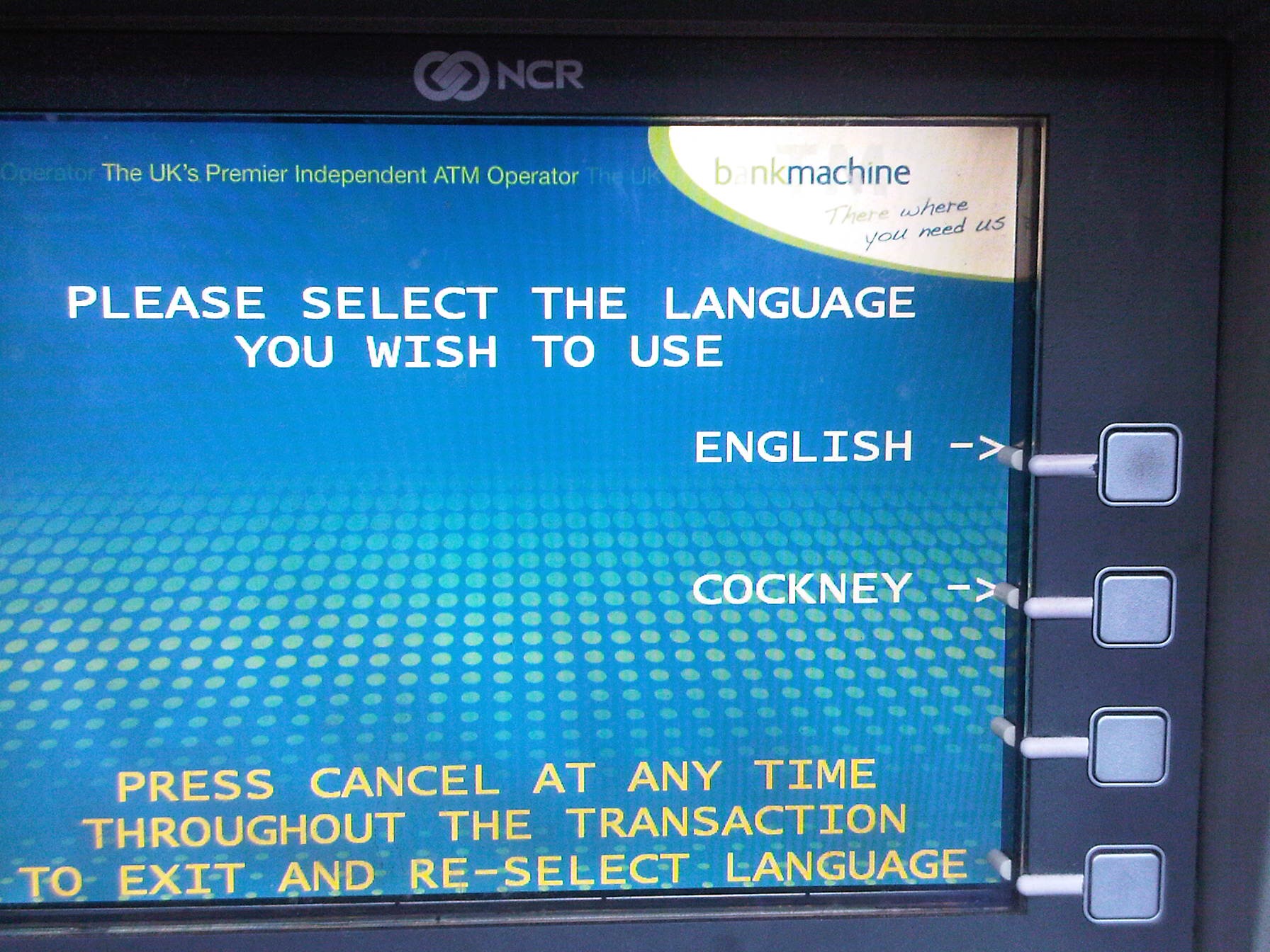
    • Learning from Failure. Linked to above, if we are a bit more explicit about failure happening, and even expecting and planning for it, there is more likelihood that we will look for learning rather than pretending it didn’t happen.
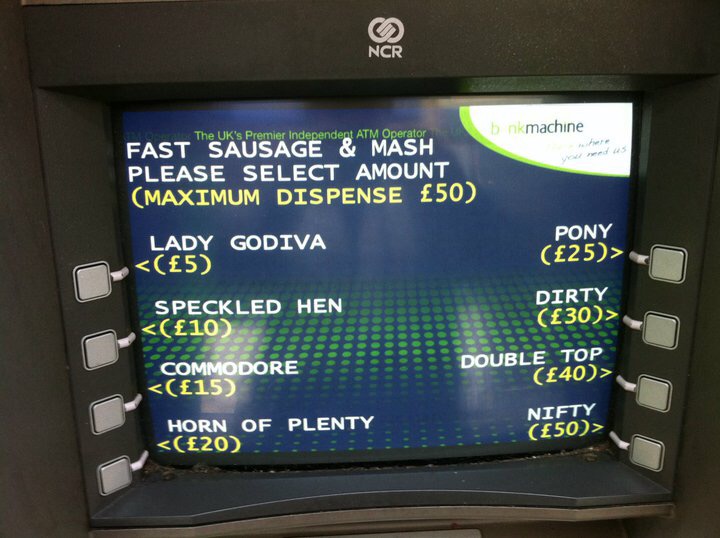
    • Different ways of thinking. Working on ‘low risk’, ‘safe to fail’ projects might encourage the involvement of people who aren’t the usual ‘safe pair of hands’. This might help introduce some of the different ways of thinking that is so desperately needed.

    img_2984

    If it’s that easy, why don’t we do it?

    The Deloitte article is well worth reading. Minimum Viable Transformation is a useful concept, but will need some serious thinking and behaviour changes if people are to use it.

    One of the areas Deloitte article mentions is ‘working at the edges’. It is far easier to do this sort of thing in places where the ‘core business’ isn’t threatened and you aren’t fighting against long-established views and  power structures.

    I do hope the graphics I’ve used here are helpful in getting the ideas across. In particular the first one where a Transport MVP starts as a set of disconnected wheels whilst the other (better approach) starts with a skateboard and builds to a car. Good Luck!

    So, What’s the PONT?

    1. Most Transformation Programmes are about BIG ideas (and BIG language), where there is little room for experimentation and learning from (safe) failure.
    2. Testing and development of small ideas is much lower risk and potentially leads to solutions that work better for more people.
    3. The Minimum Viable Product (MVP) approach offers something different that could be widely applied to most changes in public services, even the ‘too big to fail’ Transformation Programmes.

    Picture Source: searchmuse.com

    Linked Posts: Trojan Mice, why it matters to win small.

    Update: A number of people have pointed out that the skateboard to car graphic is useful as an illustration, but not representative of what actually happened – cars did actually appear in the world before skateboards (if you want to get technical it could be an example of ‘forking’). The graphic does get the point across though. For something more realistic have a look  at the Minimum Viable Bridge (MVB) example below, from caroli.org.  Image Source: http://www.caroli.org/mvp-examples/

  • IMG_4683

    This is nothing to do with any clever neuroscience about the ‘teenage brain’ and why they are ‘wonderfully creative and innovative young people’, blah, blah, blah….

    It’s a rant.

    A cheesed off, frustrated, parent of teenagers, fed up rant……

    This is how it goes:

    • Tuesday night you lovingly prepare food for the teenagers.
    • You then do all of the dish washing  (they are too busy to help because of school/university assignments).
    • You leave them a single item of washing up near the kitchen sink.
    • Wednesday morning you leave home very early for work in a distant location that keeps you away for 2 nights.
    • Friday night you return home to find every surface in the kitchen covered with an assortment of; dishes, cooking implements, food wrappers, cutlery and other things that completely confuse you.
    • Buried at the back of the detritus is the item you left on Tuesday night. Proving nothing has been washed up since you last did it .
    • This is where the innovation comes in.
    • It turns out that the ‘things that confuse you’ are actually items that have been ‘re-purposed’ to allow the teenagers to continue their ‘plague of locusts’ advance through every edible item in the kitchen and surrounding environment.
    • The way that some of these things have been ‘re-purposed’ is actually quite imaginative, possibly innovative.
    • So, running through the ‘day of a teenager’* this is how it works. (*actually ‘day’ = ‘mostly night’, get up at 2pm, go to sleep about 3am).

    Staple Diet – Bowls of Cereal

    • This generally requires; a bowl, a spoon, some cereals and milk.
    • Bowls and spoons do however require washing should you eventually run out of clean ones.
    • Washing dishes is something a bone idle teenage would never consider, so they get innovative:
    • How about, a flower vase and a fork? Make sure you don’t use a really long-necked vase though. That will require 2 litres of milk to float the Wheetos to the top.
    • A saucepan and a decorative wooden spoon. Very classy.
    • A really dodgy plastic bowl (probably a dog bowl) from some ancient camping equipment found lurking at the back of the cupboards – with plastic camping cutlery.
    • I could go on…….
    • How many bowls of cereal is it possible to eat in a single day?
    • If I had my way eating bowls of cereals would be illegal outside the hours of 5am -10am. No concessions.

    Main Meals – Something Warmed Up

    • Basically something pre-prepared – that requires minimal teenage effort.
    • These can be homemade (to your very exacting requirements), lovingly cooked by your Mum, Dad, Grandmother or Uncle Alfie and placed on a dish in the fridge for you to ‘warm up’. Simple!
    • They can also be shop bought (but only the expensive stuff from Waitrose and none of the things your tight-fisted Dad buys in Aldi).
    • So, these things need a tray to sit on in the oven to warm them up.
    • A bit like cereal bowls the world has a finite supply of oven trays….although, I’ve just washed about 20 oven trays. We probably have more than a commercial kitchen!
    • This is where teenagers get innovative:
    • Use some of those disposable aluminium trays you found with the old camping equipment. Clever but not particularly innovative.
    • A metal shelf from a cupboard in the garage – hah! should have checked the paint wouldn’t burn and produce toxic smoke.
    • A metal hub cap – perfect for individual frozen pizzas. Nice one, there might be a future in that approach…..

    IMG_4680The ‘power’ of Lazy Employees has gone mainstream, here’s the Dilbert Cartoon.

    Details of who the ‘experts’ might be and where the idea originated at the end of the post.

    Necessity (and a Teenager Slacker), the Mother of Invention. I suppose that’s what I’m getting at here. When you combine ‘necessity’ with slacker teenagers (lazy), you’ve got the perfect combination for innovation.

    The trick is to get the teenagers working on problems we actually need solved.

    One other thing…..spending some time writing about your frustrations with your teenage kids (having a rant) is extremely cathartic. I feel so much better now.

    So, What’s the PONT?

    1. Necessity can be the ‘mother of invention’. Creating an environment that replicates the ‘necessity’ could help with innovation.
    2. There might be something in the Bill Gates quote, ‘give a difficult job to a lazy person’. Maybe we don’t appreciate the ‘special skills’ of ‘lazy’ people?
    3. Teenagers could be brilliant for innovation. Perhaps we should be ’employing’ more of them in this role?

    Bill Gates Quote: There is some doubt that Bill Gates actually made this statement. In fact there is a claim it goes back to the 1920’s when it featured in Popular Science Monthly, and was attributed to Frank B. Gillbreth Sr. who was involved in workplace productivity studies. This article (link here) by Quote Investigator gives a very good summary of the origins of the quote.

    Thanks to Charles Beauregard (see comments below) who alerted me to the ‘Attribution Matrix for Officers’ that was developed by Field Marshal Helmuth Moltke (Prussian Army) in the 1800’s. There is nothing new in the world…… I’m just wondering what ranks I will assign to my teenagers……

    Image from wikipedia: https://commons.wikimedia.org/wiki/File:Attribute_Matrix_for_Officers_by_Field_Marshal_Helmuth_Karl_Bernhard_von_Moltke.svg

    IMG_4694